Civil Activist Sepideh Gholiyan Arrested by Security Forces in Ahvaz

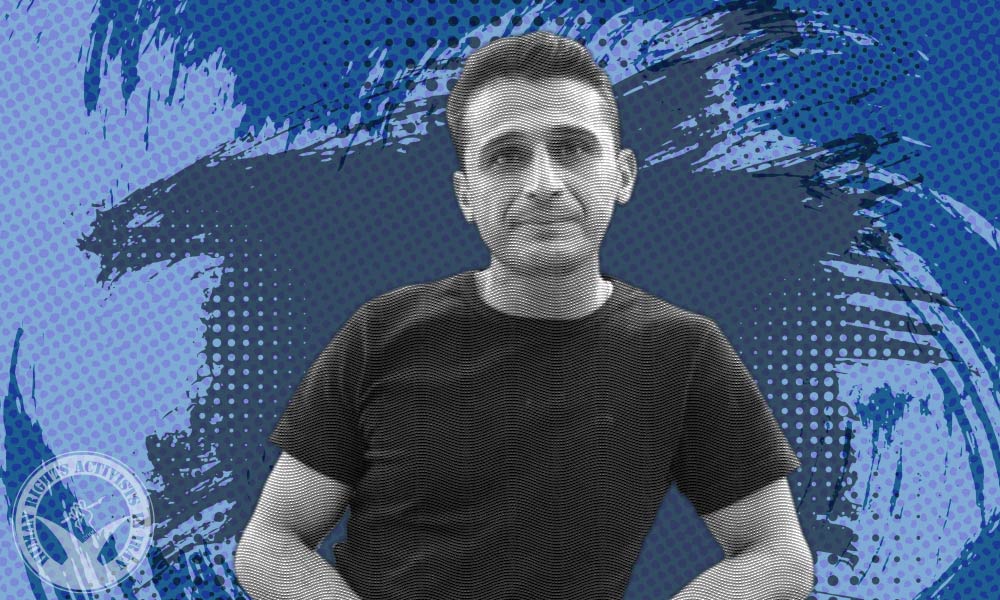
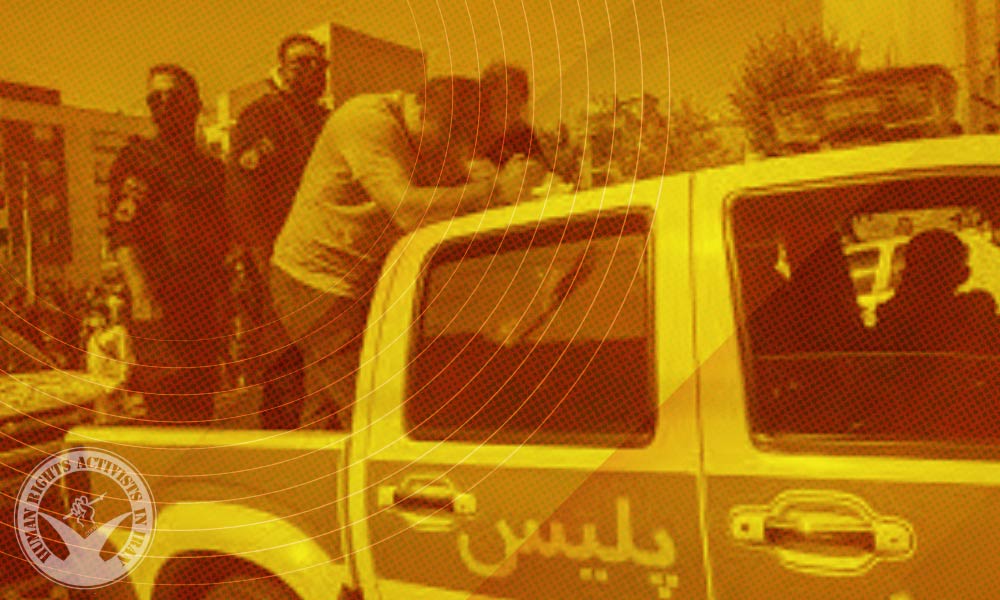
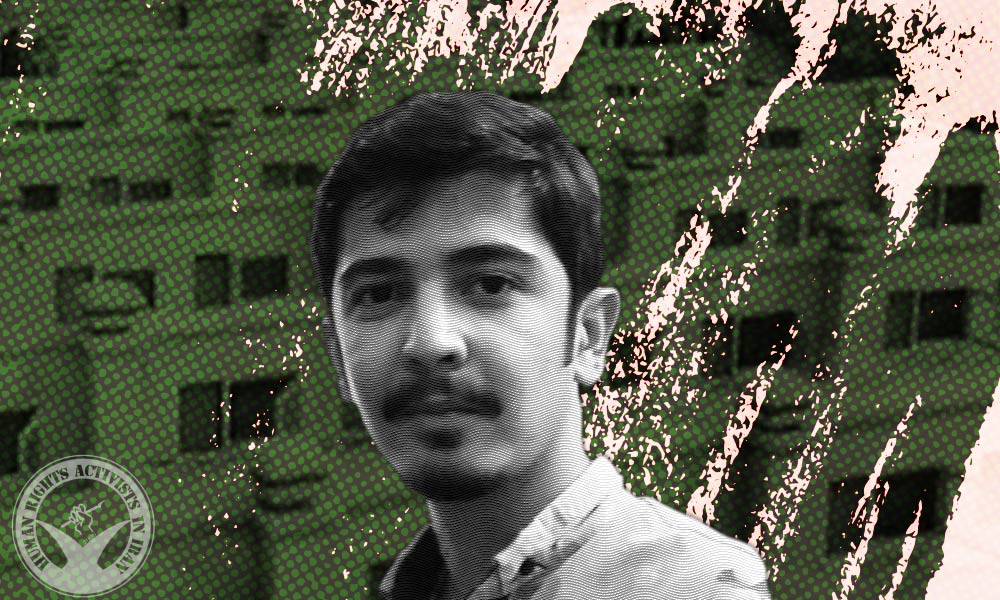
Civil activist Sepideh Gholiyan, who has been on leave from Bushehr Prison since August 19, was recently arrested by security forces in Ahvaz from her sister’s home to serve the rest of her sentence.

According to HRANA, the news agency of Human Rights Activists, security police confiscated the cell phones of all family members during the arrest.

Confirming Gholiyan’s arrest, an informed source told HRANA, “Thirty male and female security forces entered her sister’s home, arrested Mrs. Gholiyan, and confiscated the cell phones of all family members.”

Before this arrest, on her personal page on social media, Gholiyan had informed that she had been summoned to Bushehr prison and commented “Ten days ago, they called me from Bushehr Prison that I have to return to there. I told them that I am supposed to go to Tehran where the Executive Branch of the Department of Justice would decide to which prison I had to be sent. Seemingly, they are searching to find somewhere worse than Bushehr Prison.”

On November 18, 2018, Sepideh Gholiyan was arrested along with at least 19 others, including members of the Assembly of Representatives of Haft-Tappeh’s workers, several workers’ activists and company personnel and managers by security police of NAJA in Shush city. She was released on bail on December 18, 2018.

After broadcasting her forced confession as well as some other workers’ activists, including Ismail-Bakhshi on national TV channel, they announced that the “confessions” were extracted under torture by security forces. Soon after this announcement, the security police arrested them.

On October 26, 2019, she was released on bail until the end of legal proceedings. On December 14, 2019, she was sentenced to 5 years imprisonment by Tehran appellate court.

On June 21, 2020, she began serving her prison term in Evin prison. On March 10, 2021, she was exiled to Bushehr Prison, where she was held until being granted leave, and to where she is now being transferred back.

Inmate Hanged in Birjand Prison on Drug-Related Charges

Earlier this Monday, October 11, an inmate was executed in Birjand Prison.

According to HRANA, the news agency of Human Rights Activists, Omid Sarani, a native of Zabol, had previously been sentenced to death on drug-related charges.

According to the last report of the Statistics and Publication Center of the Human Rights Activists in Iran (HRA), between October 8 of 2020 and October 9 of 2021, at least 266 citizens were executed and 90 citizens were awarded death sentence.

As the report points out, Iran’s judicial authorities do not publicly announce over 82% of carried-out executions, dubbed as “secret executions” by human rights organizations.

Sarani’s execution has not been announced by official sources in Iran as of this writing.

Supreme Court Confirms Shaker Behrouz’s Death Sentence Despite Evidence Pointing Towards His Innocence

Branch 31 of the Supreme Court of Iran recently confirmed the death sentence of political prisoner Shaker Behrouz, who is currently being held in Urmia Prison, despite a strong alibi pointing to his innocence.

According to HRANA, the news agency of Human Rights Activists, Branch 31 of the Supreme Court confirmed the death sentence of 33-year-old Shaker Behrouz last Tuesday, October 5. The verdict was confirmed in spite of the alibi statements of 12 witnesses, all of whose testimonies the court refused to hear.

The indictment alleges that Behrouz murdered a member of the Islamic Revolutionary Guard Corps (IRGC).

According to an informed source, security agents threatened the victim’s family’s, who was an IRGC member, to cut their allowance from the Foundation of Martyrs and Veterans Affairs, if they refused to accuse Behrouz.

Another informed source close to the victim’s family also said that the family does not believe he is guilty and are ready to testify to his innocence.

Twelve eye-witnesses signed a statement expressing their readiness to testify that Mr. Behrouz was in his shop when the crime was committed. Despite all the above, the court convicted the defendant without the presence of the family as accusers and hearing of eye-witnesses.


Political Prisoners Beaten After Being Held in Ward for Inmates Convicted of Violent Crimes

On Friday, October 8, in Greater Tehran Prison, a number of political prisoners were beaten by fellow inmates convicted of violent crimes.

According to HRANA, the news agency of Human Rights Activists, contrary to the laws of the prison, these political prisoners are being housed in the same ward as the prisoners of violent crimes.

In the incident, Shapur Ehsani-rad, Pouya Ghobadi, Ismail Gerami, Akbar Bagheri and Akbar Faraji were injured and a few were hospitalized.

The political prisoners held in this ward had already complained and asked the prison officials to relocate them to other wards.

Workers’ rights activist, Shapur Ehsani-rad is serving his six-year sentence. Despite poor health condition and backache, he has been denied furlough for medical treatment.

Political prisoner, Pouya Ghobadi is serving his five-year sentence. In August of this year, the trial addressing the second part of his for the charge of ” enmity against God” was held.

Recently, in the court of appeal, workers’ rights activists Ismail Gerami was sentenced to five years imprisonment and flogging of 74 laches and paying a 20-million fine.

In 2018, Akbar Bagheri was sentenced to a nine-year imprisonment. The court of appeals upheld the verdict without making any changes.

On February 10, 2019, Akbar Faraji was arrested by security forces for online political activities and sentenced to six years imprisonment by Branch 26 of the Revolutionary Court. This verdict was upheld by Branch of 36 of Appellate Court. On September 6, 2020, he was arrested to serve his term in Greater Tehran Prison.


Four Inmates Executed in Yazd and Kermanshah Central Prisons

Four inmates were recently executed in Yazd and Kermanshah Central Prisons. None of these executions have been announced by official sources in Iran as of this writing.

According to HRANA, the news agency of Human Rights Activists, on Sunday, October 10, two inmates who had previously been convicted for drug-related offenses were executed in Yazd Central prison. The prisoners have been identified as father and son, Hossein and Ramin Dadkhah. They were executed after five years of imprisonment.

Similarly, on Friday, October 8, two inmates, convicted on charges of murder, were executed in Kermanshah Central Prison. One of these inmates, Ismail Soltan-Abadi, had been convicted in the oath ceremony. He was executed after 23 imprisonments, without the notification of his family and hence was deprived of the chance for a final visitation.

Oath ceremony (Ghassameh), whereby the conviction is grounded merely on the swearing of accusers and their relatives (who don’t need to be eyewitnesses) stands in violation of the right to have a fair trial. According to the Islamic penal code, in case of lack of compelling evidence, the judge may hold this ceremony wherein the swearing of 50 people for premeditated murder and 25 people for quasi- premeditated murder will be enough to verdict the accused guilty.

The other inmate, Afshar Fathi, 28 years old, was executed after four years imprisonment on the charge of murder.

Iran ranks first in the world in executions per capita, according to international organizations. The Statistics and Publication Center of the Human Rights Activists in Iran (HRA) reported that between January 1 and December 20 of 2020, at least 236 citizens were executed.


Subscribe to Our Newsletter

Now is definitely not the time to stop reading!

Soheil Arabi and Behnam Moosivand Refuse to Appear in Court

On Wednesday, October 6,  prisoner of conscience Soheil Arabi and political prisoner Behnam Moosivand refused to appear on the court holding for the unjustified new cases opened against them during their imprisonment.

According to HRANA, the news agency of Human Rights Activists, the deputy head of Rajai Shahr Prison Valiollah Muhammadi threatened them with a beating following their refusal.

“Disturbing prison order” and ” offensive statements against the supreme leader of Iran” have been listed as among the new charges. According to an informed source, on the same day, these two prisoners were interrogated online.

While serving out the seven and a half year sentence, Soheil Arabi has been convicted on the charges of two new cases.

In the first new case, On May 24, 2021, he was indicted on the charge of “agitation against the regime and Disturbing public opinions” via a video conference by Branch 3 of the Evin Investigation Office.

In the second new case, Soheil Arabi was condemned to 2 years imprisonment, paying a fine, and a ban from leaving the country and once every three times appearance at the Supervision and Follow-up office of Judiciary by Branch 26 of Tehran’s revolutionary court. His court session to address these charges was held on July 28.

Since November 7, 2013, he has been held in detention as well as prison and has never been granted leave.

On February 1, 2018, the intelligence officials raided Behnam Moosivand’s home and transferred him to the detention facility of the intelligence ministry in Evin Prison, known as section 209. He was released on bail on March 19, 2018.

Thereafter, in September 2019, branch 28 of Tehran’s revolutionary court sentenced him to five years in prison on charges of “assembly and collusion in the purpose of acting against national security, and to one year on a charge of “agitation against the regime”. The verdict was upheld at appeal. On June 14, 2020, he appeared at the executive branch of Evin Prison to serve his six-year sentence.

World Day Against the Death Penalty: Annual Report on Execution in Iran 2020-2021

On the World Day Against the Death Penalty, the Center of Statistics of Human Rights Activists in Iran (HRAI) has published its annual report , in efforts to sensitize the public about the situation of the death penalty in Iran.

HRANA’s Statistics Center relies on the work of HRANA reporters, as well as a network of independent and verifiable sources. It also incorporates disclosures to the media by judicial authorities announcing or confirming prisoner executions, and as such is exposed to a margin of error representing efforts by the Iranian authorities to omit, conceal, or restrict the collection of such data.

Between October 8, 2020, and October 9, 2021, executions and the death penalty have been the focus of 253 HRANA reports. Over this time period, the Iranian authorities issued the death penalty sentence to 90 individuals and have already carried out 266 executions.

Click here to download report in PDF format

Women account for only 9 of the 266 HRANA-confirmed execution victims this year. In addition, 3 juvenile offenders, under the age of 18 when they allegedly committed the crime they were charged with, were executed.

The report includes a breakdown of executions by capital offense: 55.8% were charged with murder, 33.5% were charged with drug and narcotic offenses, 3.4% were charged with Rape, 4.8% were charged with armed robbery/offenses classified as “corruption on earth”, 1.5% were charged with political or security-related offenses, and 0.74% had unknown charges.

The chart below displays execution numbers by the province in which they took place. According to this chart, Khorasan Razavi had the highest number of executions at 17.7%.  Alborz and Sistan and Baluchestan came in second and third, with 13.2% and 9.4% respectively.

The chart below depicts the distribution of executions’ information sources. The chart indicates that 82% of HRANA-confirmed executions were not announced by the official Iranian sources. Undisclosed executions are referred to as “secret” executions.

***

Click here to download the report in PDF format.

For further inquiries please contact Skylar Thompson, Senior Advocacy Coordinator Human Rights Activists in Iran (HRA) at skylar@hramail.com

HRANA Recap: This Week’s Protests in Iran

According to HRANA, the news agency of Human Rights Activists, a number of protests took place this week in Iran, many of which were continuations of ongoing movements.  Read our recap below for details, photos, and videos from the demonstrations.


Saturday, October 2

This Saturday and Sunday, a group of environmental activists of Sanandaj in the vicinity of Vahdat Dam gathered to protest against the years-long negligence from local authorities in addressing the area’s unsafe drinking water. Because of the city water is contaminated, residents are forced to carry water from the springs surrounding the city.

Sunday, October 3

Employees of coal mining company Pabdana in Kerman Province assembled this Sunday at their workplace entrance gate and protested the company’s low wages, arguing that, compared to state-owned mining companies, private companies such as Pabdana pay employees less for longer hours.

About 400 drivers of the transport unit of South Zagros Oil and Gas Production Company, for a second consecutive day, assembled to protest the company’s decision to change their contracts. The new agreements are set up so that that workers will  be employed by a contractor rather than the company, meaning lower wages and fewer benefits.

In Bandar Imam Khomeini, a number of workers working for subsidiary companies of Persian Gulf Holding in the petrochemical special zone assembled to protest against wage discrimination. They asked for a direct contract with the company rather than contractors who enforce lower wages and harder work.

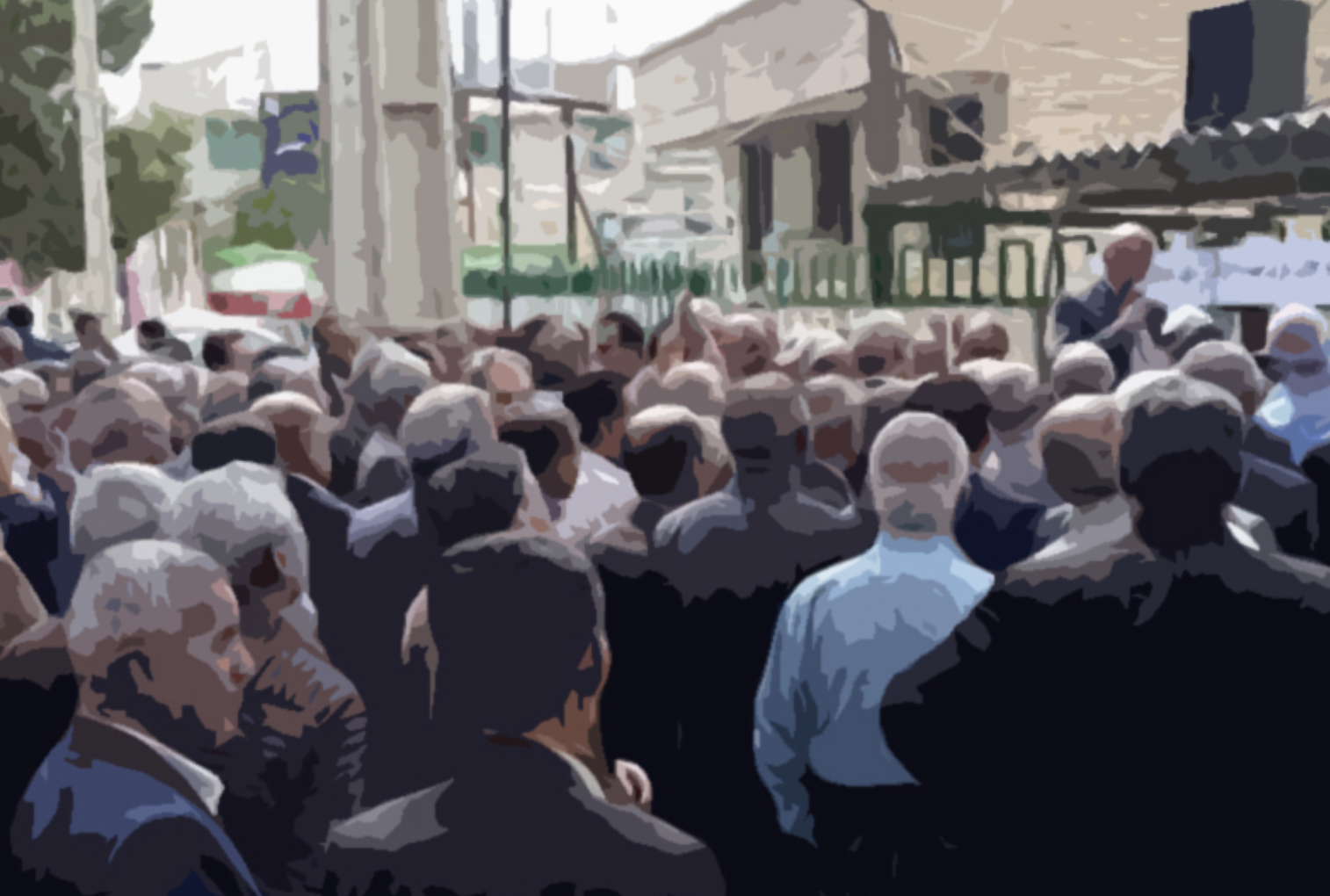
The retirees of the Social Security Organization assembled in front of this organization’s buildings in cities of Ahvaz, Rasht, Kermanshah, KHORAM-Abad, Tehran, Mashhad, Tabriz, and Qazvin, to ask for their demands. Their demands included levelling up pensions in proportion with the poverty line, enforcing the equating wages act, enforcing Article 96 of Social Security Act, addressing the issues regarding supplementary insurance, receiving end-of-year bonuses and taking work records in difficult-dirty-and-dangerous jobs into pension calculations.

A number of teachers and educators protested in front of the Parliament building in Tehran and the Ministry of Education’s buildings in the cities of Ahvaz, Shiraz, Zanjan, Darab, Bandar-Abbas and Isfahan. They asked for better enforcement of the Equating Wages Act for retirees and the Ranking Plan Act.

Personnel of the Municipality of Khorramshahr assembled in front of the government building to protest against a 6-month payment delay and a 10-month-unpaid insurance premium.

Retirees of the steel company Fulad protested in front of the company’s headquarters in Isfahan and Khuzestan provinces. They asked for levelling up their pension in proportion with the poverty line and enforcing the Equating Wages Act and addressing the problems of supplementary insurance.

A number of Haft-Tappeh’s workers continued to protest on the sixth day of their strike.

Monday, October 4

A number of students and alumni of pharmacology assembled in front of the building of the Ministry of Health and Medical Education in Tehran to protest against the monopoly on establishing pharmacies. They asked for the acceleration in enforcing the new regulations thereby the establishment of pharmacies in deprived areas would be facilitated.

On the seventh day, the workers of Haft-Tappeh company went out on strike. They assembled in front of the governorate building in Shush city.

Several workers for private coal mining companies in Kuhbanan county went on strike for the sixth consecutive day at their place of work. The workers said that, despite higher productivity and better quality of coal, they have been paid 4 to 5 million tomans less than workers of state-owned companies. Reportedly, in Kuhbanan County, more than 3000 workers are working for these private coal mining companies.

A group of personnel of social emergency workers of state welfare organization assembled in front of the parliament in Tehran and demanded changing work contract party from private to state section as well as the approval of the social emergency bill by parliament.

A group of retirees and working personnel of airline company Homa assembled in front of the building of Planning and Budget Organization. The retirees said that, despite promises from their supervisors, pensionsv for last month have not  been paid.

Tuesday, October 4

On the eighth day of their strike, Haft-Tappeh’s workers assembled in front of the governorate building in Shush city and then marched through the streets.

More than 500 workers of private companies, who are working on copper mining Sungun Varzaghan, assembled and went out on strike against low wages and hard work conditions.

Workers of the petrochemical special zone, including Persian Gulf Holding, assembled and demanded equal wage for equal work according to article 38 of Iran’s labour code and ILO Convention No. 100.

Wednesday, October 5

In response to recent violence against women (such as Faezeh Maleki-Nia who was burned to death by her father) and the negligence of the police and judiciary to prosecute and punish the offenders, a group of civil activists assembled in front of the Building of the Ministry of Justice in Sanandaj.

On the ninth day of the strike, in Shush city, Haft-Tappeh workers assemble again in front of the governorate building and then marched toward the building of the ministry of the judiciary.

For the second day, workers of private companies working on copper mining Sungun Varzaghan, refused to work and assembled at their workplace. These workers had spent last night in their tents in the same place of assembly.


Thursday, October 6

Following the protest of women in Sanandaj on previous day, several women protested in Marivan and asked that the case of Faezeh Maleki-Nia (who was burned by her father) be addressed, and called for an end to violence against women.

In Khorramshahr, a number of citizens assembled to protest against negligence and shortcomings of the municipality in collecting garbage. As a demonstration of protest, they piled up garbage bags in front of the municipality building.

In their tenth days of strike, Haft-Tappeh workers continued to protest in front of the governorate building in Shush.

A number of workers of Non-Industrial Operations Company Pazargad in Pardis Jam Town went out on strike at the workplace.


Homes Demolished and Citizens Mistreated by Municipal Agents in Zahedan

On Tuesday, October 5, on the outskirts of Zahedan, municipal agents demolished another home, leaving an entire family without shelter.

According to HRANA, the news agency of Human Rights Activists, the destroyed home is one of several like it that the municipality claims has been built on non-residential premises, despite clear preliminary real estate contracts to the contrary. One of the officials involved reportedly claimed that the municipality was permitted by a judicial order to demolish these houses.

“Four municipal agents demolished our only shelter,” a woman says in a video that was posted on social media following the incident. “They threw me down to the ground and forced my husband to get into their car. This home was my only shelter. From all these houses in the city, why did they demolish my home? We built this house hardly and we couldn’t afford even to finish the walls…It is not fair that I have to become homeless.”

“If these pieces of land do not have any legal document, why do they let the real estate’s sell these houses?” another citizen asked. “Why the officials don’t do their job properly so that people don’t fall into the mistake to purchase these houses. Why don’t they prevent people from construction in the first place? Unfortunately, it is their mismanagement that gets us into trouble.”

An urban expert also commented on the event, suggesting an ulterior incentive for authorities to “condemn” such residences.

“Province officials have to hinder those who in some ways grab these great pieces of land,” the expert said. “They claim ownership of these lands by fencing and sell the parcels illegally to poor people for low prices.”

Three workers, Including a Child, Killed in Zahedan Due to Unsafe Conditions; One Worker Injured in Shiraz

In recent days, in Zahedan, three workers, including a child, died in a work accident. In Shiraz, one additional worker was injured. Iran ranks 102nd in workplace safety out of 189 countries.

According to HRANA, the news agency of Human Rights Activists, quoting Rokna, on Thursday, October 7, a worker was injured severely at the workplace. A young worker’s hand stuck between a trolley and wall lift while moving items to the top floor of the store. After firefighters freed his hand, the emergency response team transferred him to the hospital.

According to Baloch Campaign, In Zahedan, on Tuesday, October 5, three workers, one of whom was a minor, lost their lives while digging a well due to falling well walls.

Two of these workers have been identified as  16-year-old Naser Ghanbarzehi and Musa Ghanbarzehi.