Appellate Court Sentences Reza Eslami to Five Years in Prison

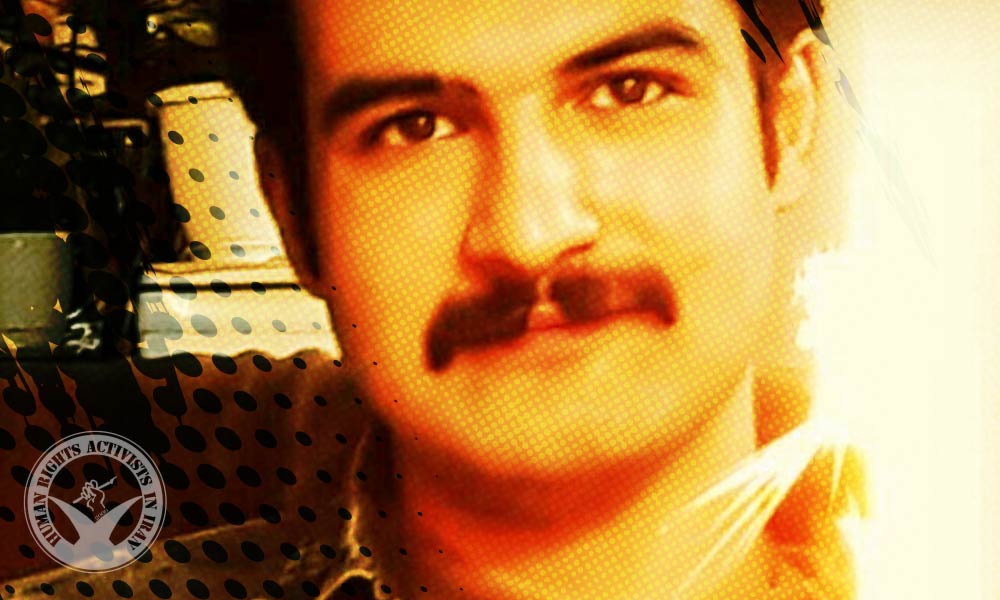
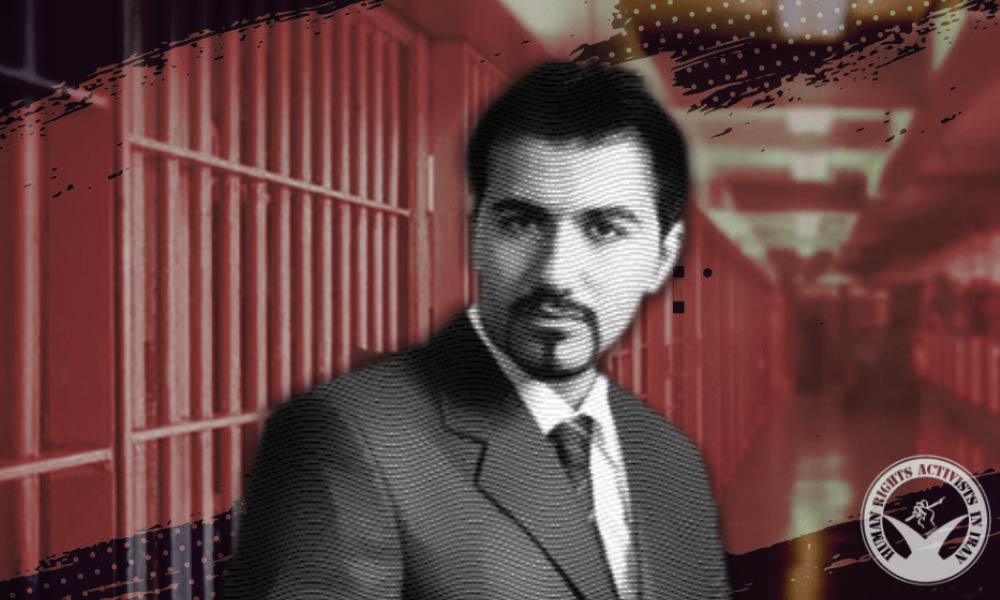
Reza Eslami, an Iranian-Canadian faculty member at Shahid Beheshti University, was recently sentenced to five years imprisonment in the Court of Appeals in Tehran.

According to HRANA, the news agency of Human Rights Activists, Branch 15 of the Revolutionary Court previously issued an initial verdict of seven years imprisonment and prohibition of teaching and leaving the country.

Eslami’s lawyer, Rasoul Koohpayeh, confirmed this sentence and told IRIP, “Despite the final verdict of five years imprisonment, there are still legal capacities for my client such as enforcing article 477, the request for retrial or request for parole. Also, given that he has been 18 months in detention, I will request for granting furlough.”

Mr. Eslami was indicted on the charges of “collaboration with adverse foreign countries (the U.S.A.) against the regime through participation in educational courses about the rule of law in the Czech Republic”.

The case for which Reza Eslami has been indicted, has 15 accused from whom 14 have been exonerated from the charge of ” collaboration with a hostile foreign country”.

On May 10, 2020, Reza Eslami was arrested by intelligence agents and transferred to a detention center known as Ward 209 of Evin Prison. After arrest, the agents inspected his office in the law faculty and confiscated his personal belongings like his cell phone and laptop. Recently, he was relocated to the public ward of Evin Prison after completing the interrogation process.

Reza Eslami is married and the father of two children, a dual Iranian-Canadian citizen, a member of the faculty and law professor at Shahid Beheshti University. Eslami has published more than 70 essays on human rights in law journals in Iran and abroad. In addition, he has translated and authored more than 10 books about human rights.

Update on Political Prisoners’ Living Conditions in Rajai Shahr Prison

This report sheds light on the situation of 27 political prisoners in Rajai Shahr Prison. Some of these prisoners are suffering from poor health conditions due to lengthy imprisonment or being beaten in detention.

Rajai Shahr Prison, previously known as Gohardasht Prison, is located in Karaj City in Alborz Province. Although the prison is built for housing the inmates convicted of violent crimes, for years it has been used by security forces as an exile prison for political and prisoners of conscience.

According to HRANA, the news agency of Human Rights Activists, Rajai Shahr Prison, like many other prisons of the country, has long failed to provide inmates with adequate medical treatment.

Rajai Shahr Prison is composed of 10 wards with three salons for each ward. There are two types of salons in each ward.

Salon type 1: In the ’80s, the cells of this salon were used as solitary confinement. This salon contains 30-35 small size cells in each of which two or three inmates are housed.

Salon type 2: These Salons are composed of 15 large rooms in each of which 5 to 7 inmates are held. In each salon, there are three toilets, three bathrooms and a room to be used as a shared kitchen.

The Canteen (prison commissary) of the prison is run by the companies affiliated with the Prisons and Security and Corrective Measures Organization. The store sells products that are marked up 10 to 20 percent. Last year, prices decreased somewhat due to complaints from inmates, but after a while, the store increased the prices again. Products not available in the Canteen are available only on written request, which must be approved by the head of the prison.

Despite being classified as a jailhouse for housing the inmates convicted of violent crimes, Rajai Shahr Prison has additionally been used for a high number of political prisoners. Considering the long history of violence against political prisoners and prisoners of conscience, the monitoring of this infamous prison by human rights activists is of great importance.

It is worth mentioning that along with political prisoners held in Salon No. 10, there is a salon allocated to Sunni-faith prisoners, who mostly are imprisoned for national-security-related charges. HRANA is working on a report about their latest situation as well.

Currently, 24 political prisoners are housed in Salon No. 10 in Rajaie Shahr Prison. The latest updated list of these prisoners goes as follows:

1. Saeed Masouri, arrested on January 8, 2001, on a charge of “enmity against God (Moharebeh) through membership in The People’s Mujahedin Organization of Iran”. In 2003, the Revolutionary Court in Tehran sentenced him to the death penalty, which later was reduced to life imprisonment. Dr. Saeed Masouri was born in 1965. He is serving the twenty-first year of his sentence.

2. Afshin Baymani, arrested on September 5, 2000, on a charge of “enmity against God (Moharebeh) through collaboration with The People’s Mujahedin Organization of Iran”. The Revolutionary Court in Tehran sentenced him to death which later was reduced to life imprisonment. Afshin Baymani is now serving the twenty-second year of his sentence.

3. Motalleb Ahmadian, arrested on October 5, 2010, on a charge of “membership in one of opposition political groups”. He has sentenced to 30 years imprisonment by the Revolutionary Court.

4. Hamzeh Savari was arrested on September 2, 2005, on the charge of ” enmity against God (Moharebeh) and acting against national security”. The Revolutionary Court of Ahvaz sentenced him to capital punishment, which later was reduced to life imprisonment. He was 16 years old at the time of arrest and currently he is serving the seventeenth year of his prison sentence.

5. Mohammad Ali (Piruz) Mansouri, arrested in September 2007, on a charge of “enmity against God (Moharebeh) through advocacy for The People’s Mujahedin Organization of Iran”. The Revolutionary Court of Tehran sentenced him to 20 years imprisonment. Following his heart attack, on September 9, 2021, he was granted furlough for the first time after fourteen years.

6. Hassan Sadeghi, arrested on January 28, 2013, on a charge of “enmity against God (Moharebeh) through advocacy for The People’s Mujahedin Organization of Iran “. The Revolutionary Court of Tehran sentenced him to 15 years imprisonment and the confiscation of his property (an apartment and a store). He is 58 years old and serving the ninth year of his sentence. Also, he had been spending in prison from 1981 to 1987.

7. Abolghasem Fouladvand, arrested in 2031 on a charge of “enmity against God (Moharebeh) through advocacy for The People’s Mujahedin Organization of Iran”. The Revolutionary Court sentenced him to 15 years imprisonment. He is 59 years old and currently serving the eighth year of his sentence.

8. Soheil Arabi, arrested on November 7, 2013, on charges of ” blasphemy”, “propaganda against the regime”, “offensive statements against the supreme leader of Iran”. In his first case, he was sentenced to five years imprisonment. For the second case, he was sentenced to two years imprisonment, two years exile in Borazjan and paying a fine for 4 million tomans, on the charge of “spreading lies in the purpose to disturbing public opinions and the propaganda against the regime” and one year and eight months on the charge of ” destruction of state property”. In addition, for another new case, he has been sentenced to two years imprisonment, paying a fine, being banned from leaving the country and once every three times mandatory appearance at the Supervision and Follow-up office of Judiciary by Branch 26 of Tehran’s revolutionary court.

9. Saeed Eghbali, arrested on February 1, 2018, on a charge of “assembly and collusion in purpose to act against national security and propaganda against the regime.” The Revolutionary Court sentenced him to six years in prison, which was upheld on appeal. Currently, he is serving the second year of his prison sentence.

10. Behnam Moosivand, arrested on February 1, 2018, on a charge of “assembly and collusion in purpose to act against national security and propaganda against the regime.” The Revolutionary Court sentenced him to six years in prison. The court of appeal upheld the sentence. Currently, he is serving the second year of his prison sentence.

11. Reza Mohammad-Hosseini, arrested in May 2019, on charges of ” assembly and collusion, offensive statements against the supreme leader of Iran, illegal border crossing, illegally entering the county, disobeying the orders of the agents.” The Revolutionary Court sentenced him to 16 years and 6 months imprisonment, which was upheld on appeal. While he was serving his term in prison, in a new case he was sentenced to flogging with 50 lashes on the charge of “offensive statements against the on-duty-government officer”. He is serving the third year of his sentence.

12. Mehdi Meskin Navaz, arrested on May 5, 2019, on charges of “assembly and collusion, acting against national security, offensive statements against the supreme leader of Iran”. The Revolutionary Court sentenced him to 13 years imprisonment and two years of compulsory residency in Ghahraj city in Kerman Province and prohibition from membership in political parties and groups. Currently, he is serving the third year of his sentence. As of this writing, Meskin Navaz has been transferred to the quarantine section after testing positive for Covid-19.

13. HooshangRezaie, arrested in 2010 on a charge of “membership in Komola (Kurdistan’s Organization of the Communist Party of Iran), spying, murder and adultery.” The Revolutionary Court of Tehran sentenced him to death which was later reduced to 15 years imprisonment. Hooshang Rezaie was transferred to the quarantine section after testing positive for Covid-19.

14. Ahad Barzegar, arrested in 2019 on charges of “advocacy for The People’s Mujahedin Organization of Iran”. The Revolutionary Court of Tehran sentenced him to six years imprisonment. According to Article 134 of the Islamic Penal Code, the severest enforceable punishment for this charge is only five years. He is serving the second year of his sentence. He has also been imprisoned in the ’80s for political-related charges.

15. Ali Eshagh, arrested on November 21, 2019, and sentenced to 5 years imprisonment on a charge of “membership in Fedaian Organisation (Minority)”. He was born in 1950. He had also been spending in prison from 1983 to 1989 for the same charge.

16. Arash Nasri, arrested on December 19, 2019, on charges of “membership in Komola (Kurdistan’s Organization of the Communist Party of Iran) and Khabat (The Organization of the Iranian Kurdistan Struggle), illegal border crossing, illegally entering the country, holding illegal firearms”. Currently, he is waiting for his trial. These accusations are based on the publication of two photos on her personal Instagram account with the clothes of the mentioned groups.

17. Iraj Hatami, arrested on October 18, 2010, and sentenced to 10 years imprisonment on the charge of spying for the U.S.A. He had been working in Iran’s Ministry of Defense, from 1991 to 2004. Since two years and three months of his detention period in the military Detention Center has not been subtracted from his sentence term, he is still in prison. To protest, in June of this year, he went on a hunger strike.

18. Arsham (Mahmood) Rezaei, arrested on January 7, 2019, on charges of “propaganda against the regime, assembly and collusion to act against national security, offensive statements against the supreme leader of Iran.” The Revolutionary Court sentenced him to eight years and six months imprisonment, which was upheld by the appellate court. According to article 134 of Iran’s penal code, five years as the severest punishment is enforceable for the above-mentioned charges. He is serving the first year of his sentence. Recently, he has been transferred to the quarantine section of Rajai Shahr Prison in Karaj after testing positive for COVID-19.

19. Nasrollah Lashni, arrested in 2014 on charges of “assembly and collusion to act against national security and propaganda against the regime.” The Revolutionary Court sentenced him to six years imprisonment and two years prohibition from political activities. This verdict was upheld by the appellate court. In October 2020, as punishment for not returning to prison after a furlough, he was sentenced to flogging of 40 lashes, which was reduced to 30. In addition, he has two open cases with the charges of “illegal border crossing” and “membership in one of opposition political parties”.

20. Ali Musa-Nejad Farkoosh, arrested on January 10, 2019, on charges of “assembly and collusion to commit a crime and act against national security, offensive statements against current and former supreme leader of Iran and propaganda against the regime.” The Revolutionary Court sentenced him to eight years imprisonment. According to article 134 of Iran’s penal code, 5 years as the severest punishment is enforceable for the above-mentioned charges. He is serving the first year of his sentence. A while ago, he was granted furlough for medical treatment.

21. Farzin Rezaei Roshan, arrested in June 2017, on charges of “assembly and collusion to act against national security and propaganda against the regime.” The Revolutionary Court sentenced him to four years imprisonment. He is serving the second year of his sentence.

22. Abdul Rasoul Mortazavi, arrested in August 2019, on charges of “forming illegal political groups, propaganda against the regime and offensive statements against the supreme leader of Iran”. The Revolutionary Court sentenced him to 26 years imprisonment from which 11 years as severest punishment are enforceable.

23. Pouria Vahidian, arrested on November 21, 2020, on charges of “collaboration with The People’s Mujahedin Organization of Iran.” He is still waiting for issuing verdict by the court. Earlier in July 2018, he has been also sentenced to three years and six months imprisonment on the charges of “collaboration with The People’s Mujahedin Organization of Iran through writing political slogans on walls.” Back then, he was released after serving one year of his term.

24. Amir Doorbin Ghaziani, arrested on December 13, 2013, arrested on November 21, 2020, on a charge of spying for the U.S.A. The Revolutionary Court sentenced him to ten years imprisonment. He is serving the eighth year of his sentence.

Currently, there are three political prisoners being housed in other wards.

1. Farhad Fahandezh, arrested on August 16, 2012, on charges of “Propagation of the Baha’i Faith and directing Baha’i organizations.” The Revolutionary Court sentenced him to ten years imprisonment. He was born in 1959. Currently, he is serving the ninth year of his sentence. Earlier, he was arrested in 1983 and spent 6 years in prison.

2. Farhad Meysami, arrested on July 31, 2018, on charges of “assembly and collusion to commit a crime against national security and propaganda against the regime.” The Revolutionary Court sentenced him to six years imprisonment and two years prohibitions from membership in political groups and parties, engagement in media and leaving the country. By enforcing Article 134 of the Islamic penal code, five years of this sentence is enforceable. He is serving the fourth year of his sentence.

3. Arjang Davoudi, arrested on November 9, 2002, on charges of “forming illegal political groups and membership in one of opposition political parties, offensive statements against the supreme leader of and high-ranking regime officials.” The Revolutionary Court sentenced him to fifteen years and eight months imprisonment which later was reduced to ten years and eight months on appeal. In 2012, on the new charge of “advocacy for The People’s Mujahedin Organization of Iran”, he was sentenced to death. The verdict was revoked in the supreme court of Iran and instead changed to five years imprisonment in an exile prison in Zabol. Also, he had been spending a while in Bandar-Abbas Prison.

It is worth mentioning two other political prisoners who have been recently released from Rajai Shahr prison. Peyman Arefi was arrested in May 2009 on the charges of ” insult against Prophet of Islam and advocacy for Kingdom Assembly of Iran “. The Revolutionary Court of Tehran sentenced him to 15 years imprisonment in exile. A few months ago, he was released on probation with an electronic tag on his ankle. In September of this year, Asghar Padashi was released from the Rajai Shahr prison after serving three years of his ten years prison term. He was sentenced to ten years imprisonment and paying a fine of 34000 dollars on the charges of “spying for Mossad.”

From the above-listed political prisoners, 15 inmates suffer from serious diseases or injuries.

As domestic law, as well as international law and other human rights documents, affirms, each prisoner has the right to receive adequate medical treatment. Various articles of Iran’s Executive regulations of the Prisons Organization have specified inmates’ disease and treatment. Nonetheless, Rajai Shahr prison officials violate the rights of these political prisoners for adequate medical treatment and endanger political prisoners’ lives.


Three Inmates Executed in Zanjan, One in Zahedan

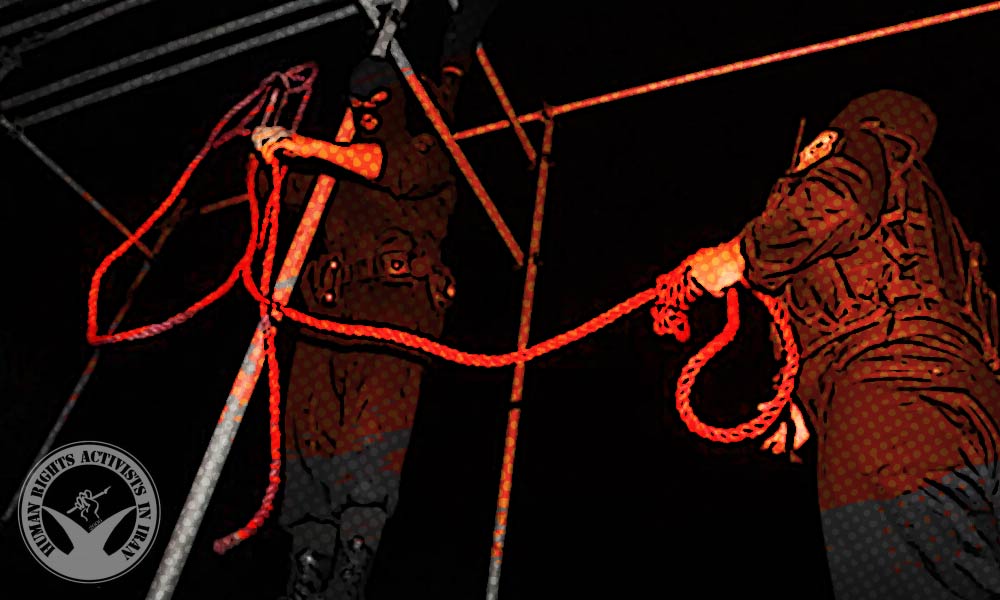
Last Wednesday, October 13, three inmates who had previously been sentenced to death on drug-related charges were hanged in Zanjan Prison.

According to HRANA, the news agency of Human Rights Activists, quoting Iran Human Rights, 41-year-old Hamed Jafar-Zadeh, 39-year-old Soheil Hojjat-Far,  and Yunes (last name unknown ) were executed in Zanjan Prison.

The Baloch Activists Campaign also reported the execution of one inmate in Zahedan Prison on Monday, October 18. According to this report, two days ago, Musa Sheh-bakhsh was transferred to a solitary confinement cell in order to be executed. The charges for which he was convicted are still unknown.

The most recent report of the Statistics and Publication Center of the Human Rights Activists in Iran (HRA) states that between October 8 of 2020 and October 9 of 2021, at least 266 citizens, including three juvenile offenders, were executed and 90 citizens were sentenced to death.

As the report points out, Iran’s judicial authorities do not publicly announce over 82% of carried-out executions, dubbed as “secret executions” by human rights organizations.

None of these executions have been announced by official sources in Iran as of this writing.

Two Workers Fatally Killed in Accident Due to Unsafe Workplace Conditions in Babaheydar City

On Saturday, October 16, in Babaheydar City, two workers lost their lives in an accident due to unsafe workplace conditions.

According to HRANA, the news agency of Human Rights Activists, quoting Rokna, in Babaheydar city located in Chaharmahal and Bakhtiari Province, two workers died while working on a well after the structure’s walls caved in.

“In this work accident which happened on Saturday, the walls of the well fell and two workers were trapped deep in the well,” the public relations officer of the Urgency Center of the Province Mohsen Ibarhimi commented. “The emergency response team was immediately sent, but they died of injuries on the spot.”

New Details Emerge on Inhumane Treatment of Lawyer and Human Rights Activist Payam Derafshan

Saeed Dehghan has revealed more details about the arrest of his colleague, lawyer and human rights activist Payam Derafshan.

According to HRANA, the news agency of Human Rights Activists, Dehghan claims in a note on his personal social media page that on June 7, 2020, 17 security agents raided Derafshan’s office and arrested him.

The post says, the agents took him to a so-called safe house and then, from there, to a solitary confinement cell in detention center No 2A. There they injected him with an unknown drug causing seizure and subsequent hospitalization.

“Not just a human rights activist, (Derafshan) was the secretary of the commission for the Protection of Lawyers, which is devoted to protects the lawyers who face security and judicial issues,” Derafshan’s note reads. “On June 7, 2020, 17 security forces raided his office, inspected the office and confiscated his personal computer and other documents…From the very time of arrest through the interrogation process, the interrogators of IRGC’s intelligence unit wanted to find out why he accepted Kavous Seyed-Emami’s case…They transferred him with a blindfold to a safe house rather than a detention centre. In addition to denying access to a phone call and informing his family and lawyer, his confinement in a dark cell without any windows in summertime put the maximum mental and corporeal pressure on him. Thereafter, they transferred him to detention centre No 2A, which is at the disposal of IRGC.  Being held in a cell with always-on-bright lamps, noisy ventilation and stinky toilet and long interrogation were making sleeping hard for him.”

When Mr. Derafshan complained about this situation, he was reportedly threatened with an electric shocker and then taken to prison healthcare where he was injected with an unknown drug. This injection caused a seizure, tongue biting and subsequent fainting and internal bleeding.

According to the note, they transferred him to the hospital the following day for surgery on his tongue. Thereafter, they extended the detention period and sent him back to the public ward of Evin Prison without providing any medical treatment for recovery time after surgery. When he got seizures again, they hospitalized him in a psychiatric hospital where he received electric shocks, which not only exacerbated his seizure problem, but also caused brain damage and consciousness disorders.

On July 6, 2020,  the Branch 26 of Tehran Revolutionary Court, headed by Judge Iman Afshari sentenced Payam Derafshan to two years and six months imprisonment on the charge of “the propaganda against the regime, spreading lies and disturbing public opinions and carrying illegal shocker and sprays”. He was exonerated on the charge of “assembly and collusion against national security”. The verdict was upheld on appeal but reduced to two years grounded on the applicability of “Punishment Reduction Law”.  After issuing the sentence, he was sent on furlough and after serving one-third of his term, he was released on probation to complete the treatment process.

In a previous case, Branch 1 of Karaj Revolutionary Court had sentenced him to two years imprisonment and two years occupational deprivation as a lawyer on the charge of “offensive statements against the supreme leader of Iran”. The imprisonment was reduced to one year on appeal. The conviction was held in suspension. It is unknown whether, after the last final conviction, this previous conviction will come out of suspension.

Payam Derafshan has been the lawyer of many political prisoners and prisoners of conscience such as Muhammad Najafi, Vida Movahed, Nasrin Sotoudeh,  Kavous Seyed-Emami’s family, Fatemeh Khishavand, Sekineh Parvaneh and a number of arrestees in the nationwide protests of November 2019.

Subscribe to Our Newsletter

Now is definitely not the time to stop reading!

Two Participants in July Protests in Khuzestan Arrested in Behbahan

Two participants in this July’s Protests in Khuzestan were arrested this weekend in Behbahan.

According to HRANA, the news agency of Human Rights Activists, Gholam Tayebi and Muhammad Khalili were arrested by security forces and transferred to an unidentified location on Saturday, October 16 and Sunday, October 17, respectively.

In the company of the police of NAJA (Disciplinary Force of the Islamic Republic of Iran), security forces arrested the citizens separately in Behbahan City, where they were forced to flee from their home in Kurdistan Bozorg Village. After the wave of arrests from this village, they did not return home due to the prosecution. According to this report, Ali Tayebi, another resident of this village, has also been arrested.

An informed source told HRANA that most of the arrestees from this village in regards to July protests in Khuzestan are farmers–biggest victims of water resources mismanagement of the government. A while back, an official of the Ministry of Agriculture Jihad had informed about the delay in autumn planting due to lowering reservoir levels of dams in this area.

According to Summary Report from the Khuzestan Protests in 41 Cities published by HRANA, 171 people were arrested in the July protests. The protests erupted on July night 15, 2021 in Khuzestan province to outcry over water shortages and water supply mismanagement. These protests lasted two weeks spreading over 41 cities of the province. Reportedly, dozen people were killed and wounded and hundreds were arrested.


HRANA Recap: This Week’s Protests in Iran

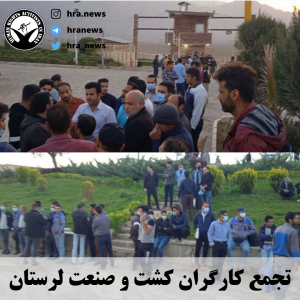
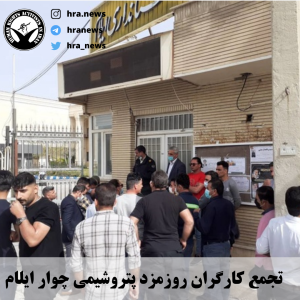
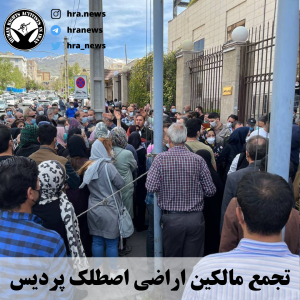
According to HRANA, the news agency of Human Rights Activists, a number of protests took place this week in Iran, many of which were continuations of ongoing movements.  Read our recap below for details, photos, and videos from the demonstrations.


Saturday, October 9

In Rameshk city, in Sistan and Baluchestan Province, a number of citizens assembled in front of a copper mining company called “Rameshk” to protest the company’s confiscation of their pieces of land without providing compensation.

Sunday, October 10

On the thirteen day of their strike, Haft-Tappeh’s workers assembled in front of the governorate building in Shush city and then marched in the streets. They chanted “this
revolutionary government has just empty slogans”.

These workers demand paying delayed wages, immediate returning the company from the private sector to state section, returning fired workers to work, extending the contracts of both seasonal workers and workers of the pest control department, carrying out repair operations.

A group of depositors of Caspian, a finance and credit institution, assembled in front of the building of the Central Bank in Tehran to protest against the sham investment scheme of the institution and ask for the return on their investment.

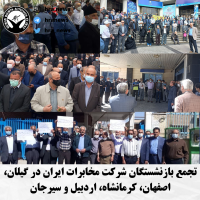
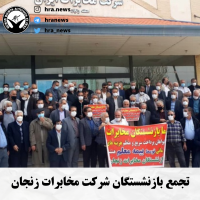
A number of retirees of the pension fund of steel corporation Fulad assembled in front of the company’s buildings in Isfahan and Khuzestan. They asked for levelling up their pension in proportion with the poverty line, enjoying adequate benefits and the supplementary insurance as set by the by-laws of this corporation.


Monday, October 11

For the second consecutive day, a number of workers of Jovein cement company in Mashhad assembled at company premises to ask for implementing Job Classification Plan and holding the employers to his promises.

A group of poultry farm workers assembled in front of the Governor’s office in Shahrekord city in Chaharmahal and Bakhtiari Province. They protested against the high costs of feeding and chicks for incubators in comparison to the low chicken prices.

On the fourteenth consecutive day, Haft-Tappeh workers assembled in front of the governorate building in Shush city and then marched in the streets.

The contracted workers the company SAAPEC in Asaluyeh went on strike and assembled in company premises in protest against two-months unpaid wages.

For the second consecutive day, a number of citizens in Rameshk city, in Sistan and Baluchestan Province, assembled in front of a copper mining company Rameshk. Reportedly, to build a copper mine site, this company has confiscated their pieces of land without paying any compensation.

Tuesday, October 12

The workers of Abnieh Fanni, a railway company in the Azerbaijan zone, which are working on rail lines of counties Salmas, Jolfa, Azarshahr, Marand and Ajabshir, went on strike in protest against the two-month delay in payment and employer’s contribution in the health insurance. According to these workers, their problems began when the project was outsourced to private-sector companies.

On the fifteenth consecutive day of the strike, workers of Haft-Tappeh Company assembled at their workplace. These worker demands, among other things, paying delayed wages, immediate returning the company from the private sector to state section, returning fired workers to work, extending the contracts of both seasonal workers and workers of the pest control department, Carrying out repair operations.

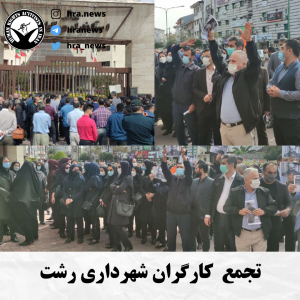
The workers of the Isfahan municipality assembled to ask for levelling up wages and other demands in front of the municipality headquarter.

In front of the building of the Tehran Planning and Budget Organization, a number of last-year-retired teachers protested unpaid pension income.

Wednesday, October 13

A number of school service personnel working for the Ministry of Education of Qom assembled in the premises of the Ministry of education’s building. They protested low wages,forced and unpaid overworking, cutting off work uniform quota and the lack of promotion and other job-related improvements for those who have obtained the university degree

On the sixteenth day of their strike, Haft-Tappeh’s workers assembled in front of Labor office in Shush city.

A number of contractual teachers assembled in front of the Provincial Government building in Shahrekord in Chaharmahal and Bakhtiari Province. These teachers protested against the lack of job security and low wages in comparison to teachers who are hired by the ministry of education. They demanded to come under contract with the ministry of education.

Thursday, October 14

In response to the call of the Coordinating Council of Iranian teacher Unions, working and retired teachers and educators in at least 40 cities assembled to ask for their demands.

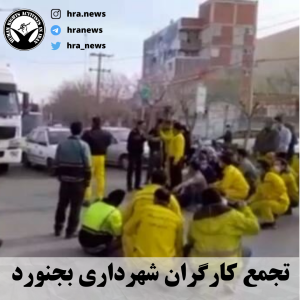
A number of workers of the municipality in Khorramshahr city assembled to ask for six
months unpaid wages.

The workers of private companies which are working as contractors on coal mines in Kerman assembled in front of the Provincial Government building. They asked for implementing the Job Classification plan and other demands.

The retirees of Gilan Ministry of Health assembled in the premises of the University of Medical Sciences in Rasht to ask for closing pension gap and other demands.

On the Seventeenth day of their strike, the workers of Haft-Tappeh Company assembled at their workplace.

At Least Eight Inmates Executed this week in Multiple Prisons, Including Qom, Kermanshah and Isfahan

This week, at least eight inmates were executed in multiple prisons, including Qom, Kermanshah and Isfahan.

According to HRANA, the news agency of Human Rights Activists, quoting Iran Human Rights, two inmates were executed in Kermanshah Prison on Monday, October 11, four inmates were executed in Isfahan on Tuesday, and two others were executed in Qom Prison on Wednesday.

Two inmates who had been convicted of murder were executed in Diezl-Abad Prison in Kermanshah on Monday, October 11. One of the inmates has been identified as 23-year-old Muhammad Latifi. The report suggests that it is likely more inmates were executed on that day than have been confirmed.

Iran Human Rights also has reported the execution of four inmates in Dastgerd Prison in Isfahan. These inmates had been convicted for drug-related crimes.

In another report, on Wednesday, October 13, two inmates, convicted of murder, were executed in Qom Central Prison. One of the inmates has been identified as Ali Amrollahi, a native of Afghanistan. He has been imprisoned since four years ago when he was convicted of “honor killing”.

The most recent report of the Statistics and Publication Center of the Human Rights Activists in Iran (HRA) states that between October 8 of 2020 and October 9 of 2021, at least 266 citizens were executed and 90 citizens were sentenced to death.

As the report points out, Iran’s judicial authorities do not publicly announce over 82% of carried-out executions, dubbed as “secret executions” by human rights organizations.

None of these executions have been announced by official sources in Iran as of this writing.


Kolbar Jian Ali-Pour Shot Dead by Regime Military Forces at Border Areas of Sardasht County

On Thursday, October 14, a kolbar was killed by the direct shooting of military forces in border areas near Sardasht.

According to HRANA, the news agency of Human Rights Activists, quoting Kurdpa, on Thursday, the man has been identified as Jian Ali-Pour, a resident of a village in County Sardasht. He was married with two children. According to this report, the military forces shot him dead without any warning beforehand.

Many poor people living in border areas turn to this illegal work and carry loads on foot through borders to make ends meet. Yearly, dozens of kolbars are injured and killed from accidents, dangerous conditions, and border guard shootings.

HRANA’s annual human rights report has specifically documented cases in which military forces’ use of live ammunition against citizens has led to their injury or death.

According to the 2020 report, other than material damages like loss of pack animals due to road accidents, frost, or avalanche, 36 cross-border laborers (kolbars) have been shot dead, and 109 have been injured by military forces and border guards.


Sunni Prisoner Zaher Roozkhun Released on Bail

On Thursday, October 14, Sunni prisoner Zaher Roozkhun was released temporarily on bail until the end of criminal proceedings.

According to HRANA, the news agency of Human Rights Activists, quoting Kurdpa, Mahabad resident Zaher Roozkhun was released on bail for 350 million tomans (approx. 13,000 US dollars). He has been denied access to lawyer and family visitation during the detention.

Roozkhun had been previously arrested by security forces before too on August 29, 2021. After completing the interrogation process, he was sent from a detention center in Urmia to Mahabad Prison.

As of writing this, the reason for his arrest and the charges is unknown.