Azerbaijani Turk Activist Violently Arrested and Transferred to Tabriz Prison

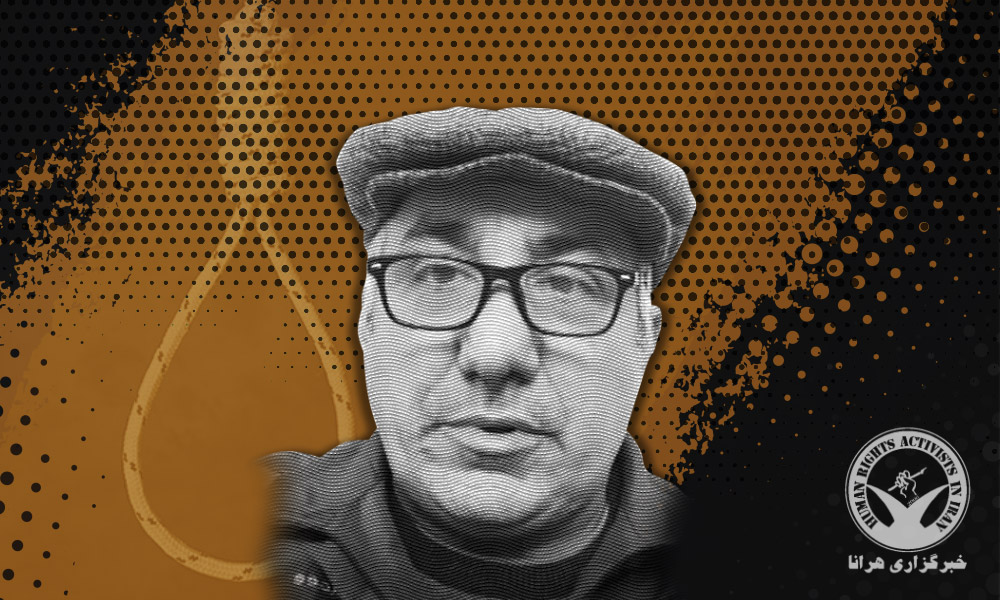
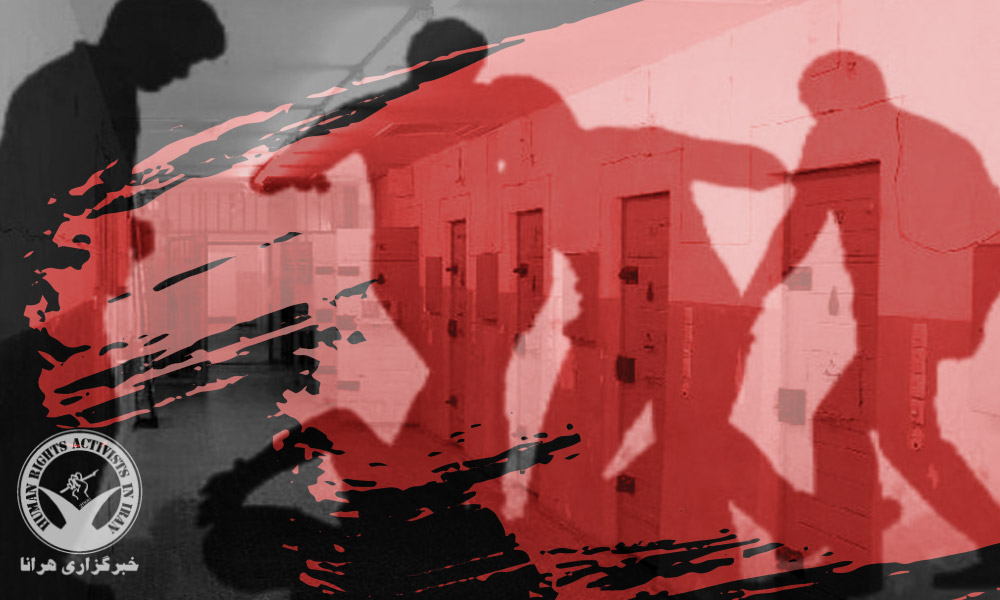
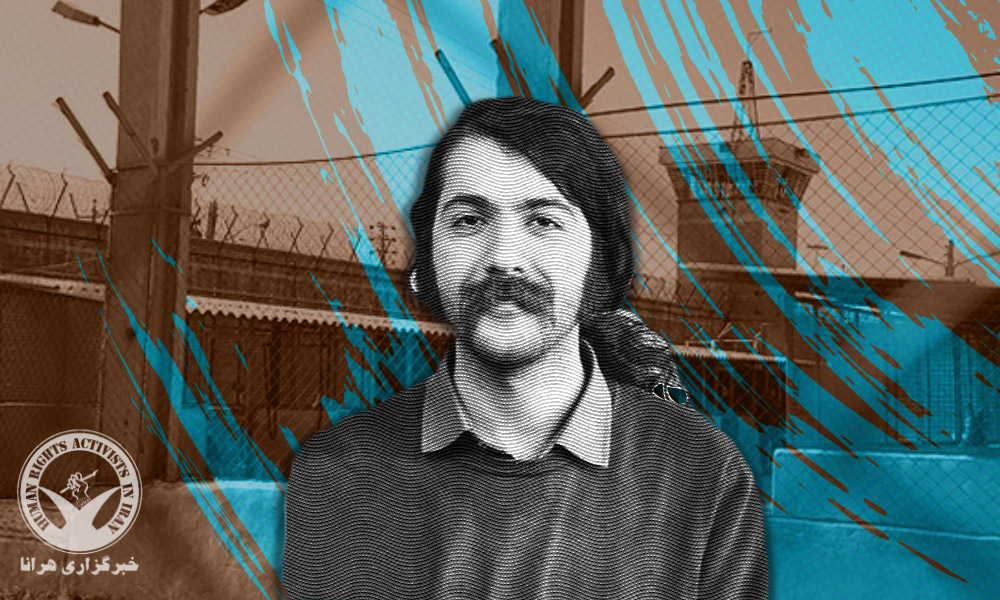
Azerbaijani Turk activist Roozbeh Piri has been transferred to Tabriz Prison following his violent arrest by security forces.

According to HRANA, the news agency of Human Rights Activists, Iran’s intelligence and security police arrested Piri on September 9 in Tabriz, and, as an act of “enforced disappearance”, transferred him to an unidentified location.

According to reports he is currently in quarantine has suffered injuries from being beaten by police during the arrest.

His family has filed a complaint in the prosecutor’s office in Tabriz and asked to bring those who are responsible for beating Roozbeh Piri to justice.

Mr. Piri has already been subjected to unlawful arrest and conviction over his non-violent civil activities. At the time of nationwide protests in November 2019, he was arrested and subsequently sentenced to 10 months imprisonment later on reduced to 91 days on appeal. He was released on July 5 2020 after serving out his sentence.

After a while, a judge in Tabriz sentenced him to pay the fine on a charge of the so-called “spreading lies” on the internet. Reportedly, his brother was also subjected to police harassment and torture.

Thirteen Baha’is Have Been Barred From Higher Education So Far This Year

Tehran resident Negar Sobhani Azabadi has become the 13th Baha’i citizen this year to be barred from higher education on the grounds of her faith.

HRANA, the news agency of Human Rights Activists, has identified one more examinee of the university entrance exam who has been rejected due to her belief in the Baha’i faith.

Azabadi received the rejection message when visiting the school website to view her exam results. It read “Rejected due to General ineligibility”, indicating that she had been identified as Baha’i and was thus ineligible to enter the university.

Each year, there are numerous reports about Baha’is who are barred from higher education once detected as Baha’is even on the verge of graduation.

At odds with Iran’s law clarifying the rights to education indiscriminately for all citizens, the enactment of the Supreme Council of the Cultural Revolution of Iran, which oversees to ensure that education and culture remain Islamic, barres Baha’is from taking an occupational position as well as tertiary education.


Baha’i Citizen Sheida Taeed Arrested in Ghaemshahr

On Thursday, September 23, Sheida Taeed, a Baha’i citizen living in Ghaemshahr in Mazandaran Province, was arrested in her home by security forces.

According to HRANA, the news agency of Human Rights Activists, Taeed  was taken by security forces to an unknown location following the arrest.

Security forces also raided her home and confiscated a number of her belongings, including her mobile phone, electronics, books, photographs, and manuscripts.

According to an informed source, the security forces initially put Farideh Taeed, Sheida’s elderly mother, in the car as well, and dropped her off somewhere along the road.

Ms. Taeed has a history of detention and conviction. She was arrested in the city of Noor in January of 2013 and was finally sentenced to one year in prison in 2015, which she served out in Babol Prison.

According to unofficial sources, it is estimated that more than 300,000 Baha’is live in Iran, but the Iranian constitution recognizes only Islam, Christianity, Judaism, and Zoroastrianism. Because their faith is not considered legitimate by authorities, the rights of Baha’is in Iran have been systematically violated for years.

This deprivation of the freedom to practice their religion is a breach of Article 18 of the Universal Declaration of Human Rights, and Article 18 of the International Covenant on Civil and Political Rights. The United Nations covenant holds that every person has the right to freedom of religion, freedom of converting religion, as well as freedom of expression, individually or collectively; openly or secretly.

Arman Asadi Arrested by Security Forces in Divandarreh

On Monday, September 27, Arman Asadi was arrested by security forces and transferred to the Sanandaj Intelligence Detention Center.

According to HRANA, the news agency of Human Rights Activists, Asadi, who is a native of Divandarreh in Kurdistan Province, informed his family  yesterday that he had been transferred to this security detention center.

“Mr. Asadi was detained by security forces when he was closing his shop for lunch,” an informed source told HRANA.

The reasons for Asadi’s  arrest and the charges against him are not known as of this writing.

HRA Presents Spreading Justice at Human Rights Council 48 Side Event

On September 21st, a number of prominent human rights organizations, including HRA, Impact Iran, HURIDOCS, and the Abdorrahman Boroumand Foundation , hosted a virtual discussion in the margins of the 48th session of the United Nations Human Rights Council on how online databases can help monitor human rights in Iran and support accountability efforts.


In an announcement of the event, Impact Iran stated, ​​”In recent years, human rights organizations have developed a range of online tools that have strengthened the capacities of rights defenders to advance evidence-based reporting and advocacy aimed at generating a culture of accountability and transparency in pursuit of the realization of human rights for all persons.”

United Nations Special Rapporteur on the situation of human rights in Iran Dr. Javid Rehman delivered the event’s opening remarks, in which he highlighted the important work of the organizations represented by the panel. He mentioned Abdorrahman Boroumand Center’s OMID Memorial, the Spreading Justice’s Initiative by Human Rights Activists in Iran, and Impact Iran’s Iran Rights Index, which is a culmination of work by the Impact Iran Secretariat and coalition members including HRA.

“The individual characteristics of the different databases that are the topic of discussion today… all indicate that civil society organizations have clear goals in their well-coordinated documentation efforts,” Rehman stated. “Each of these databases serves a valuable goal for public information advocacy, memorialization, or support accountability mechanisms.”

In demonstrating how HRA’s Spreading Justice database can contribute to accountability efforts, panelist and HRA Senior Advocacy Coordinator Skylar Thompson outlined the functions and goals of the project.

“Spreading justice is a database of Iranian Human Rights violators, both individual and institutional violators,” Thompson said. “This database, which is available in both English and Farsi, currently contains over 250 profiles, ranging from Iranian president Ibraham Raisi himself to lesser known violators that continually commit heinous acts, and yet fly almost silently under the radar.”

On the functions of the database, Thompson said,  “If an individual were doing research on an individual victim’s case, they could, for example, search Nazanin Ratcliffe and find all violators associated with her case.”

The profiles also include detailed legal reviews prepared by experts in international human rights law. HRA collects information from open source research, and through its wide network of volunteers inside Iran. Volunteers receive training aimed at strengthening organizational documentation capacity, which includes online security, diversity and inclusion, neutrality, informed consent.

“The information that is collected through this network is extremely important to our work,” Thompson said. “It also gives us unparalleled access to victims.”

On the use of the database, Thompson stated that there is a real need for governments to work alongside civil society, in their efforts to hold perpetrators accountable, and added that this was a core motivation behind the development of Spreading Justice.

She continued, “If we can begin to close the accountability gap in Iran, we will begin to see a disruption in the continuous cycle of abuse,” Thompson said. “The truth is that the international community has a number of tools available to hold perpetrators of serious human rights violations accountable, particularly when domestic judicial remedies are unavailable, such as is the case in Iran. The use of these tools is lacking.”

Subscribe to Our Newsletter

Now is definitely not the time to stop reading!

Nine Citizens Arrested in Qom, Alborz, and Tehran Provinces for Supporting Erfan-e-Halgheh

The IRGC in Qom recently announced the arrest of nine supporters of Erfan-e-Halgheh (Circle of Mysticism).

According to HRANA, the news agency of Human Rights Activists, quoting Fars, the arrests took pace in the three provinces of Qom, Alborz, and Tehran.

According to Fars, nine “main members of Erfan-e-Halgheh” were arrested and sent to prison with a court order. The report does not mention the identities or whereabouts of these citizens.

Inter-universalism is known  as Erfan–e Halgheh (Circle of Mysticism) in Iran.

Two Citizens Violently Arrested by Security Forces Without a Warrant in Zahedan

On September 26, Yaser Narouie and Yasin Narouie were beaten and arrested by security forces in Zahedan.

According to HRANA, the news agency of Human Rights Activists, quoting the Baloch Activists Campaign, the report quoted an informed source as saying, “Agents beat and arrested the two citizens in Khavar mall of Zahedan in Sistan and Baluchestan Province without showing a court order and transferred them to the office of C.I.D Police of NAJA in handcuff and shackles.”

As of this writing, no information is available on the reasons for the detention of these citizens.

Teachers Union Activist Aziz Ghasemzadeh Arrested in Gilan

On Sunday, September 26, Aziz Ghasemzadeh, the spokesman of the Gilan Teachers and Education Staffs union, was arrested at his father’s house.

According to HRANA, the news agency of Human Rights Activists, quoting Coordination Council of Iranian Education Associations’ channel,  agents searched the house and confiscated Mr. Ghasemzadeh’s personal belongings during the arrest.

As of this writing, the whereabouts of the detainee and the charges against him are unknown.


Baha’i Citizens Hayedeh Forootan and Mehran Mosallanejad Arrested in Shiraz

On Thursday, September 23, two Baha’i citizens were arrested at the office of CID by NAJA police.

According to HRANA, the news agency of human rights activists, the citizens have been identified as Shiraz residents Hayedeh Forootan and her son Mehran Mosala-Nejad.

On Wednesday, September 22, agents searched the home of these citizens and confiscated some of their belongings, however, were not able to detain Ms. Foroutan as she was not home at the time. Ms. Foroutan and her son were summoned to the Shiraz CID Police of NAJA office to give explanations, and were arrested upon their arrival.

On Wednesday, September 22, Moin Misaghi and Negareh Ghaderi, two other Baha’i citizens, were also arrested by security forces and taken to an unknown location.

According to unofficial sources, it is estimated that more than 300,000 Baha’is live in Iran, but the Iranian constitution recognizes only Islam, Christianity, Judaism, and Zoroastrianism. Because their faith is not considered legitimate by authorities, the rights of Baha’is in Iran have been systematically violated for years.

This deprivation of the freedom to practice their religion is a breach of Article 18 of the Universal Declaration of Human Rights, and Article 18 of the International Covenant on Civil and Political Rights. The United Nations covenant holds that every person has the right to freedom of religion, freedom of converting religion, as well as freedom of expression, individually or collectively; openly or secretly.

Seven Baha’i Citizens Barred from Continuing Education

Seven citizens who attended this year’s national university entrance exam were barred from access to education because they were Baha’is.

According to HRANA, the news agency of Human Rights Activists, the citizens have been identified as Nasim Shahriari Zavareh, Mahsa Forouhari, Elena Gholizadeh Roshankoohi, Nora Nabipour Klankari, Parsa Charkhand, Mesbah Misaghi, and Forouzan Nikukar.

Every year, numerous reports indicate that Baha’is are being barred from continuing their studies at Iranian universities. Students are even sometimes dismissed from universities while on the verge of graduation if administration learns that the student is a Baha’i.

According to an informed source, when Ms. Shahriari contacted to follow up on this issue, she was told that the Ministry of Intelligence had given them her record.

She was also asked questions about her religious beliefs, and was told, “If you insist that you are a Baha’i, your problem will probably not be solved at all.”

Despite the explicit wording in the constitution in which the right to education is a fundamental right, according to a resolution of the Supreme Council of the Cultural Revolution of Iran, Baha’is are barred from university education, besides being barred from holding public office.

According to unofficial sources, it is estimated that more than 300,000 Baha’is live in Iran, but the Iranian constitution recognizes only Islam, Christianity, Judaism, and Zoroastrianism. Because their faith is not considered legitimate by authorities, the rights of Baha’is in Iran have been systematically violated for years.

This deprivation of the freedom to practice their religion is a breach of Article 18 of the Universal Declaration of Human Rights, and Article 18 of the International Covenant on Civil and Political Rights. The United Nations covenant holds that every person has the right to freedom of religion, freedom of converting religion, as well as freedom of expression, individually or collectively; openly or secretly.