Nayeb Askari on a Hunger Strike in Urmia Prison to Protest Authorities’ Refusal to Transfer him to a Hospital

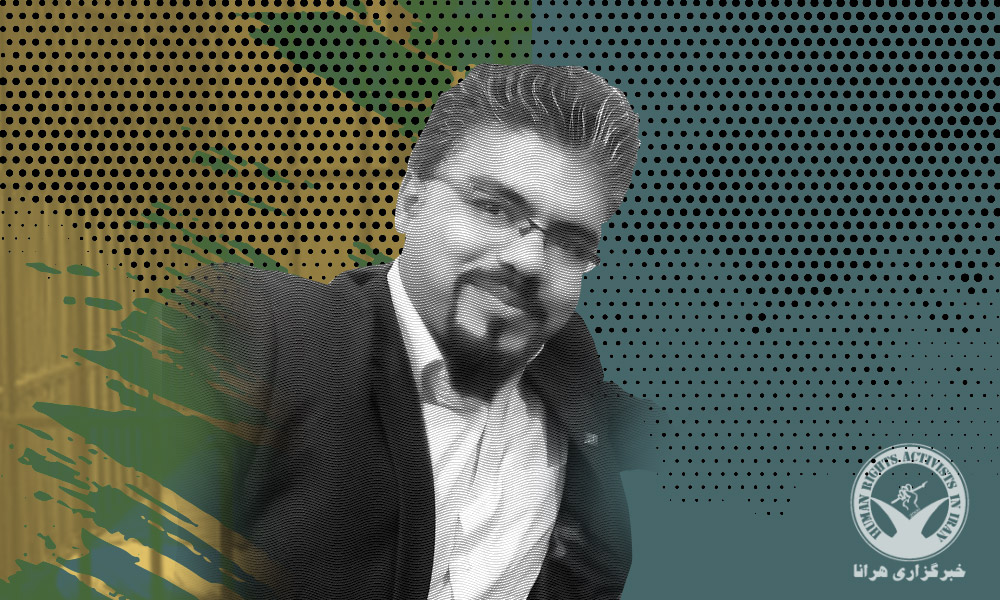
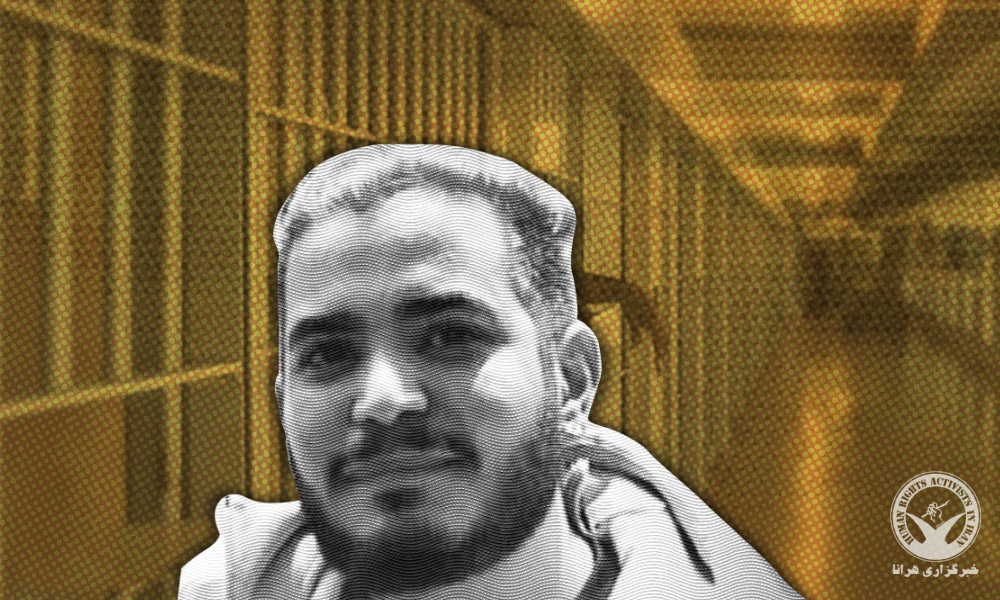
Today, August 26, political prisoner Nayeb Askari went on a hunger strike in Urmia Prison.

According to HRANA, the news agency of Human Rights Activists, Askari went on a hunger strike to protest the prison authorities’ refusal to send him to the hospital throughout his battle with kidney disease.

An informed source spoke to HRANA about the reasons for Mr. Askari’s hunger strike.

“Mr. Askari, who suffers from kidney disease, has been denied being sent to the hospital despite the prison doctor’s diagnosis following opposition of the prison’s supervisor judge,” the source said. “Askari has gone on a hunger strike to protest.”

Nayeb Askari was arrested by IRGC intelligence agents in Urmia in April and transferred to one of the detention centers of this security institution. He was eventually transferred from the IRGC Intelligence Detention Center to the city prison in June, after completing the interrogation process. Mr. Askari has been charged with “collaborating with an opposition party”.

On July 12, Branch 119 of the second Criminal Court in the city of Urmia sentenced Mr. Askari. Nayeb Hajizadeh Yangjeh, and Keyhan Mokarram al-Nabi, to three months each in prison and 50 lashes on a charge of “disturbing the order of the prison” after they protested the beating of Nayeb Hajizadeh by two prisoners accused of violent crimes.

Ebrahim Sedigh Hamedani Facing Medical Negligence in Urmia Prison; Family is Concerned

According to HRANA, the news agency of Human Rights Activists, political prisoner Ebrahim Sedigh Hamedani is currently facing medical negligence from authorities in Urmia Prison.

On Wednesday, August 25, a source close to Hamedani’s family told HRANA, “Mr. Hamedani has diabetes and, despite passing two months (without medical care), he has been denied access to his medicines, and is in poor physical condition.”

According to this informed source, doctors in Urmia Prison have been on strike and have been refusing to attend the prison for about a month. Ebrahim Sedigh Hamedani, along with his son and daughter Salar and Maryam, was arrested in February 2019. They were transferred to the city’s central prison in late April after two months of interrogation, where Maryam released on a bail.

Branch 2 of the Urmia Revolutionary Court sentenced Ebrahim and Salar Sedigh Hamedani to 16 years each in prison on charges of “acting against national security through membership in an opposition organization,” and “propaganda activities against the regime”.

During interrogation, a new case was open against the two political prisoners. They were charged on “propaganda activities against the regime in prison” and sentenced by the First Branch of the Revolutionary Court of Urmia to 11 additional months in prison.

It is said that Ebrahim Sedigh Hamedani was arrested earlier in 2005 on charges of “collaborating with an opposition organization” and was sentenced to six years in prison. After serving two years, he was released on parole.

“They Arrest first, Then Look for a Reason”: Security Forces Search Homes of Detained Lawyers and Civil Activists Raising Concerns of Fabricated Evidence

"Eleven security officers who raided Arash Kaykhosravi's father's house today closed his room’s door for a few minutes and did not allow family members to enter. This is the prelude to 'gathering evidence' through embedding the evidence in the room. They arrest first, then look for a reason."

In recent days, a number of civil activists and lawyers have been arrested under dubious pretenses, many of whom are still in detention.

According to HRANA, the news agency of Human Rights Activists, some of the arrested have had their homes searched by security forces, raising concerns of fabricated evidence.

On Saturday, August 14 Arash Kaykhosravi, Mostafa Nili, Mohammad Reza Faghihi, Mohammad Hadi Erfanian Kasb, Leila Heidari, Mehdi Mahmoudian, and Maryam Afrafaraz were arrested by security forces in Tehran and taken to an unknown location. Mohammad Hadi Erfanian Kaseb and Leila Heydari were released hours after their arrest, but the others remain in detention.

On the afternoon of Wednesday, August 25, security forces searched the home of lawyer Mostafa Nili and the home of Arash Kaykhosravi’s father.

Saeid Dehghan, Mr. Kaykhosravi’s lawyer, wrote on his social media page, “Eleven security officers who raided Arash Kaykhosravi’s father’s house today closed his room’s door for a few minutes and did not allow family members to enter. This is the prelude to ‘gathering evidence’ through embedding the evidence in the room. They arrest first, then look for a reason. They took the CCTV camera with them so that there is no evidence of their attack.”

On the same day, the house of Mohammad Reza Faghihi was searched by security forces. Earlier, Mr. Nili’s lawyer, Zahra Minouei, expressed that she does not have access to her client’s case.

“Because I am not a trusted lawyer accepted by the judiciary in security cases, they have not allowed accessing my client’s case,” Minouei said. “After the release of the videos related to Evin Prison [by hackers], the mental condition of my client’s family is not good and their concerns have been greatly increased.”

Arash Kaykhosravi, Mostafa Nili, Mohammad Reza Faghihi, Mohammad Hadi Erfanian Kasb, and Leila Heidari are lawyers, Mehdi Mahmoudian is a journalist and member of the Central Council of the Etihad Mellat party, and Maryam Afrafaraz is a civil activist and a member of the Imam Ali Charity Association.

Regarding the reason behind these arrests, an informed source earlier said that the lawyers and activists were talking in a meeting about the negligence of the officials and its contribution to the spread coronavirus, and expressed possible complaints against some officials. But they had not reached a complete conclusion and were arrested.

Officials React to Confirmed Videos from Inside Evin Prison Published by Hackers

In recent days, a hacker group called Adalat Ali has published videos from inside Evin prison.

According to HRANA, the news agency of Human Rights Activists, some scenes from the obtained footage show prison officials beating prisoners, prisoners committing suicide and self-harm, and an unconscious prisoner being inhumanely treated.

Mohammad Mehdi Haj Mohammadi, the head of the country’s prisons organization, has confirmed the accuracy of the published videos and has accepted responsibility for the mistreatment of prisoners. He has apologized to God, the supreme leader, the people, and the prison guards for inappropriate behaviors in prisons on his twitter account.

His apology, which is directed to prison guards rather than the prisoners themselves, has provoked reactions from many users on social media. Haj Mohammadi also called the treatment of prisoners “unacceptable” and apologized for it.

On his Twitter, Haj Mohammadi wrote, “Regarding the videos published from Evin prison, I accept responsibility for the unacceptable behaviors and commit to prevent a repeat of such bitter incidents and to seriously encounter with violators. I apologize to God Almighty, our dear leader, the noble nation, and the decent prison guards whose efforts of course will not be ignored under the influence of these mistakes.”

Recently elected head of the judiciary, Gholam Hossein Mohseni Eje’i , has also ordered an immediate investigation into the officers’ treatment of prisoners. Mohammad Bagher Ghalibaf, the speaker of the parliament, in response to the request of the representatives to deal with the publishers of these videos, said that a Commission, with the collaboration of the prosecutor’s office is following up the whole issue.

In some of these videos, prisoners clash with each other without the intervention and prevention of prison guards. In one video, prison guards are seen preparing to attack one of the prison wards. A video broadcast compares one of the prison’s solitary confinement cells with a well-equipped solitary confinement cell attributed to former President Hassan Rouhani’s brother Hossein Fereydoun; this video has provoked people’s reaction in cyberspace.

These cells are said to be in Ward 240 of Evin Prison and are under the supervision of the Prisons Organization. These cells are the place where prisoners are held before execution, and in some cases, prisoners are transferred to as punishment. Formerly, transgender prisoners used to serve their sentences in these cells. Also, some videos have been released from the basement of ward 1 of the main complex of Evin Prison. In a video, a transgender prisoner commits suicide in the bathroom.

In some of these videos, the low quality of health amenities and consumables in Evin prison can be seen. Conditions that have a direct impact on the lives of the residents of this prison. Meanwhile, a number of former political prisoners and civil activists have described the situation in other prisons in the country as much worse than in Evin Prison.

Spreading Justice, the database of human rights violators in Iran, had previously introduced Gholam Hossein Mohseni Eje’i and Mohammad Mehdi Haj Mohammadi as two prominent human rights and prisoner rights violators.

Today, Wednesday, August 25, Amnesty International issued a statement regarding the videos released from Evin Prison, described it as “the only tip of the iceberg of the torture epidemic in Iran”, and a sign for “the immunity of prison officials” in Iran, and called for independent inspections of the country’s prisons. Amnesty International also called for the establishment of a mechanism for investigation and accountability by the UN Human Rights Council.

Below is the full video from Adalat Ali of the conditions inside Evin Prison.

CW// The following video contains acts of violence that may be disturbing to some viewers. Discretion is advised:


Death Sentence Issued to a Defendant in Tehran

According to HRANA, the news agency of Human Rights Activists, quoting Rokna News, a defendant in Tehran was sentenced to death by the First Criminal Court of Tehran Province for a murder he committed in 2018.

Iran ranks first in the world in citizen executions per capita, according to international organizations. The Statistics and Publication Center of the Human Rights Activists in Iran (HRA) reported that between January 1 and December 20 of 2020, at least 236 citizens were executed.

One of these citizens was executed publicly, and two were juvenile offenders. An additional 95 citizens were sentenced to death. According to the same report, more than 72% of executions in Iran are not reported by the government or the judiciary, which human rights organizations call “secret” executions.

Subscribe to Our Newsletter

Now is definitely not the time to stop reading!

Man Acquitted for a Murder that was Ordered by his Father with Consent of Victim’s Father

According to HRANA, the news agency of Human Rights Activists, quoting Rokna, a man in Tehran who had killed a young man at the request of father was acquitted of severe punishments with the consent of the victim’s father.

Under the laws of the Islamic Republic, the father, as the “rightful parent”, is spared serious punishment in the event of murder or complicity in the murder of their child. This issue has long been criticized by critics of the current laws in the country. In some cases, fathers have committed murders after finding out that a father is safe from severe punishment for the murder of their own child in Iran.

On this subject, the former head of the Tehran Criminal Court stated, “According to the Islamic Penal Code, the mother will be punished more severely than the murderer father under the heading of ‘complicity in murder of child’. Based on Article 127 of the Islamic Penal Code, fathers will be sentenced to between 3 and 10 years imprisonment while it is 15 years for the mothers.

Khaled Pirzadeh on a Hunger Strike in Sheiban Prison in Ahvaz

Political prisoner Khaled Pirzadeh has been on a hunger strike in Sheiban Prison in Ahvaz since Monday, August 23.

According to HRANA, the news agency of Human Rights Activists, Pirzadeh is protesting the officials’ refusal of his request for parole, the non-observance of the principle of separation of crimes, and the violent treatment of his family by law enforcement officers when handing over the eviction order.

Khaled Pirzadeh, who was taken from the quarantine in the Greater Tehran Prison on July 14 and was transferred to the Sheiban Prison in Ahvaz, is being held in Ward 5 of this prison next to prisoners of violent crimes, which is a violation of the principle of separation of crimes. His COVID test also recently came out positive and he got transferred to the prison’s quarantine.

Khaled Pirzadeh has gone on hunger strikes several times, the last of which was on May 31, when he expressed in a note that he would continue his strike until his legal request was granted. He ended his strike on June 24, after he was promised to be sent to a sick leave connected to his release on parole. He returned to the Greater Tehran Prison on July 7 but authorities transferred the political prisoner to Sheiban Prison in Ahvaz rather than granting parole as they had promised.

“Yesterday, police officers went to Mr. Pirzadeh’s rented house and asked his family to evacuate, the officers’ treatment of his wife was insulting and they frightened Mr. Pirzadeh’s 10-year-old daughter,” a source familiar with Mr. Pirzadeh told HRANA. “Khaled Pirzadeh is being held in Ahvaz prison and his request for parole is not being accepted so that he can take care of his family more quickly.”

A video of this harsh treatment from the on-duty officers has reached HRANA. The footage is attached here

Maryam Ebrahimvand Arrested by Security Forces in Tehran

On the morning of Sunday, August 22, Maryam Ebrahimvand, a director, filmmaker, and former prisoner, was arrested by security forces and taken to an unknown location.

According to HRANA, the news agency of Human Rights Activists, she was released after a couple of hours interrogation.

According to a close source to Ms. Ebrahimvand, she had gone to the Ministry of Culture and Islamic Guidance to seek permission for her confiscated films, and was arrested in front of the Ministry’s building in Tehran.

“A few months ago,” the source told HRANA, “Ms. Ebrahimvand was told by the Ministry of Guidance that after receiving a letter working ban from the IRGC,  it is not possible to grant permission for her films.”

Ms. Ebrahimvand had previously been detained and convicted. IRGC intelligence agents arrested Ms. Ebrahimvand in September 2016. After 35 days, she was released on  a bail of 300 million Tomans from the IRGC Intelligence Detention Center, Ward 2A, Evin Prison.

Nearly two years later, in July 2018, Ms. Ebrahimvand was arrested again after being summoned to Branch 4 of the Culture and Media Court. She was transferred to Ward 2A of the IRGC, and then was transferred to prison a month after interrogations ended, while a bail of 10 billion Tomans was issued for her.

Ms. Ebrahimvand, who had been detained in the Women’s Ward of Evin Prison from July 2018, was sentenced by Branch 1059 of the Government Employees’ Court to ten years in prison in November of last year on charges of “making a vulgar film”, “insulting the President”, and “spreading lies against the Islamic Revolutionary Guard Corps”.

In the second part of her case, Branch 26 of the Revolutionary Court of Tehran sentenced her to 6 months in prison on charges of “propaganda against the regime,” and in the final verdict, she was sentenced to a total of ten years and six months in prison.

Ms. Ebrahimvand was finally informed of her release in June of this year after appearing before the Culture and Media Court.

Maryam Ebrahimvand is a writer, film director, and producer of “Comedy of Love”, “We Are All Alone”, and “Girls’ Boarding House”.

Shahbaz Jadidi Executed in Yasuj Prison in Kohgiluyeh and Boyer-Ahmad Province

On July 18, Shahbaz Jadidi was executed in Yasuj Central Prison in Kohgiluyeh and Boyer-Ahmad Province.

According to HRANA, the news agency of Human Rights Activists, quoting the Iran Human Rights (IHR), 39-year-old Jadidi had previously been sentenced to death on a charge of murder.

Iran ranks first in the world in citizen executions per capita, according to international organizations. The Statistics and Publication Center of the Human Rights Activists in Iran (HRA) reported that between January 1 and December 20 of 2020, at least 236 citizens were executed.

One of these citizens was executed publicly, and two were juvenile offenders. An additional 95 citizens were sentenced to death. According to the same report, more than 72% of executions in Iran are not reported by the government or the judiciary, which human rights organizations call “secret” executions.

Mr. Jadidi’s execution has not been announced by Iranian media or official sources as of this writing.

HRANA Report: COVID-19 Vaccinations Underway in Iranian Prisons

A number of prisons, including Evin in Tehran, Rajai Shahr in Karaj, Qarchak in Varamin, Lakan in Rasht, Urmia in Urmia, and Qom Coastal Prison, have been examined as a statistical sample in this report.

According to HRANA, the news agency of Human Rights Activists, the vaccination of inmates in different prisons throughout the country has started this month.

A number of prisons, including Evin in Tehran, Rajai Shahr in Karaj, Qarchak in Varamin, Lakan in Rasht, Urmia in Urmia, and Qom Coastal Prison, have been examined as a statistical sample in this report.

According to reports received by HRANA, in some prisons in the country, prisoners have been forced to receive the Iranian vaccine “Barekat”, and many others have refused to receive the Barekat vaccine due to doubts about production conditions and the lack of WHO approval. In some prisons, vaccination has been partially abandoned due to the lack of enough dosage per the Ministry of Health.

Although this action of the Prisons Organization has given a bit of hope to the prisoners and their families, reports received by HRANA from various prisons across the country indicate that -regardless of the quality and type of vaccine used- a small percentage of inmates have been vaccinated and that most of the inmates still have not been vaccinated against COVID.

Prisoners in the women’s ward of Lakan Prison in Rasht were vaccinated with the Barekat vaccine. According to an informed source, the vaccination process has started in this prison in late July this year; first the prison officials, then the male prisoners, and finally the female prisoners have been vaccinated.

As of this writing, a small percentage of inmates in Urmia Prison are vaccinated. An informed source about the vaccination process in this prison told HRANA, “At first, the Iranian vaccine Barekat was sent for Urmia prison, but prisoners refused to inject, then a small number of Chinese vaccines arrived which only was enough for a few. Though the vaccine was given to all prisoners in the political prison, and any of them who wished was vaccinated.”

According to the source, prison officials, along with a limited number of other detainees were vaccinated with the AstraZeneca vaccine.

Since mid-August of this year, some prisoners in various wards of Evin Prison have received the first dose of the vaccine. Initially, the vaccination was carried out with the Barakat vaccine, but this process was stopped due to the refusal of many prisoners to inject the Iranian vaccine. A few days later, some prisoners were injected with the Chinese vaccine Sinopharm. According to an informed source, in many wards of the prison, even prisoners with underlying diseases who are at risk of infection have not been vaccinated yet.

Political prisoners in Rajai Shahr Prison in Karaj have also been injected with the first dose of the Sinopharm vaccine. According to an informed source, in other wards of the prison, vaccination was going on based on the age priority and people with underlying diseases until prison officials announced that the vaccination would be halted and postponed until the Ministry of Health and the Prisons Organization were able to provide the vaccine.

The HRANA investigation shows that most of the prisoners in Qarchak Prison in Varamin have been injected with the Sinopharm vaccine, but new inmates, whose numbers are very high, are still not vaccinated as there are not enough vaccines for them.

In Qom Coastal Prison, only the clergy prisoners being held in the special ward for clergies have been fully vaccinated. According to an informed source, 20 prisoners in this ward, along with a small number of prisoners from other wards, have been vaccinated so far. Prisoners in Bushehr Prison in Bushehr Province have not yet received any vaccine.

These are the reports from prisons while in early August, Mohammad Mehdi Haj Mohammadi, head of the Prisons Organization, claimed on his Twitter account that 50 percent of the country’s prisoners had been vaccinated.

Although the prisoners’ vaccination could help to control the spread of coronavirus in prisons, the effectiveness of vaccination is still unclear as spaces in prisons are closed, pre-and post-vaccination health protocols are not met, principles of quarantine are not observed, and prison populations are large. Also, some prisoners have received the Iranian Barekat vaccine, whose effectiveness is highly questionable.

The negligence of the authorities towards the situation of sick prisoners, lack of proper medical care in prisons, the strictness of the authorities in sending prisoners to medical leave and hospitals, and the lack of adequate sanitary facilities in prisons have all contributed to and intensified the spread of the disease.