The use of torture in Iran is vast, often state-sanctioned, and continually occurs with impunity. While States bear the sole responsibility for protecting the human rights of individuals within their jurisdictions, if they are unable or unwilling to do so, the international community must work towards ensuring that there is accountability for violations on part of the State.
Throughout history, and oftentimes in reaction to a negative international image, Iran has ratified five out of the ten core human rights treaties. In light of the upcoming World Day to Support Torture Victims, the international community must commit to working together to ensure there is justice and accountability for said violations.
State Obligations
The Islamic Republic is a State party to the ICCPR, with no reservations or derogations, thus obliging the State to respect all provisions within. Article 7 of the ICCPR expressly prohibits the use of torture, providing that “no one shall be subjected to torture or to cruel, inhuman or degrading treatment or punishment […]”. Article 7 is additionally complemented by positive obligations in Article 10 paragraph 1, which sets forth that “all persons deprived of their liberty shall be treated with humanity and with respect for the inherent dignity of the human person”.
The meaning of Article 7 has been debated and expanded upon throughout the years, most notably in UN Human Rights Committee (HRC) general comment no. 20.
In addition to international obligations, Article 38 of the Constitution of the Islamic Republic of Iran states, ‘The use of any type of torture for extracting information or confession from a person is not allowed. Forcing a person to testify, take an oath, or confess is not allowed and such statements given under pressure are invalid. Those violating this principle will be punished according to relevant laws.’
There is an ever-present culture of impunity in Iran. Closing the accountability gap requires a bold stance from the international community to commit to understanding the widespread use of torture in Iran and utilizing that information to hold human rights violators accountable. The brief analysis that follows aims to demonstrate Iran’s extensive use of torture in every meaning of the term – notwithstanding obligations under the ICCPR and domestic law. The examples given are by no means exhaustive.
Physical, mental integrity and prolonged solitary confinement
The prohibition of torture outlined in Article 7 relates not only acts that cause physical pain but also to acts that cause mental suffering to the victim. It is widely recognized that prolonged solitary confinement may amount to torture. In addition, prolonged solitary confinement is proven to cause both mental and physical suffering to the victim.
The use of physical torture in Iranian prisons can be divided into the following 3 categories:
– Inflicting physical pain: floggings, use of handcuffs and shackles for prolonged periods of time, the beating of prisoners, hanging prisoners, amputation of body parts, and more.
It should be noted the above are a mere few examples of physical torture present in Iranian prisons. Amputations and floggings are provided for under domestic punitive law.
– Deprivations: long periods of time in which prisoners are deprived of food, water, medical and sanitary products, sleep, fresh air, space to move, and/or healthcare.
There are several examples of prisoners kept in small spaces, denied medical and sanitary products, and healthcare. All of the above are instances that amount to torture. In addition, the denial of medical care is a violation of the right to the highest attainable standard of health. Where the lack of medical treatment leads to avoidable death there is an additional violation of the right to life.
– Exploiting cultural taboos: sexual harassment of both men and women, force-feeding, harassing loved ones, and beating prisoners with items that might be sacred to their religion or culture.
This type of torture is physical, but it also has a deep psychological impact.
The use of psychological torture in Iran is widespread. Psychological torture negatively impacting an individual’s mental health and is aimed at breaking down the victim leading to a negative interpretation of self-worth and altered perspectives.
Examples of psychological torture common in Iran over the past 4 decades:
– Prolonged solitary confinement: limits all the sensory experiences and leaves the victim fully dependent on the interrogator or prison guard for every basic necessity of life, including food and communication.
In Iranian prisons often solitary confinement cells have their lights on 24 hours a day, making it extremely difficult for prisoners to count the days or sleep.
– Control of access to information: many prisoners have stated how they were fed wrong information about the outside world while they were in solitary confinement. At times, they are told their friends or family members were also arrested, killed, or testified against them. There have been documented instances of individuals being told that their loved one was seeing someone else or had forgotten about them. There are also times that individuals are completely cut off from the outside world given no access to newspapers or the like. The latter is in addition to psychological torture, a violation of Nelson Mandela Rules.
– Verbal threats: Individuals are threatened with physical torture such as; the rape of oneself or a family member, killing, or additional false sentencing in the name of societal shame i.e. changing one’s charge to moral corruption.
– Creating shame and disrespect: examples: ethnic individuals forced to speak in Farsi, religious minorities forced to disrespect their own religion, and sexual minorities forced to deny and or insult their sexuality. In addition, female prisoners have documented instances of having been repeatedly told to list the men they have slept with.
– Witness suffering: prisoners are forced to hear or witness the suffering of others. This includes: hearing others being beaten, watching executions, or watching others being tortured.
Interrogation and forced confessions
The use of statements or confessions obtained through torture is not legally admissible in a trial of the accused. The Human Rights Committee has expressed that forced confessions amount to torture under Article 7 of the ICCPR. These acts are also expressly prohibited in the Iranian Constitution.
Access to doctors and lawyers
Under the ICCPR, there should, in all cases, be prompt and regular access to doctors and lawyers. In the case of Iran, once imprisoned, many political prisoners and activists are denied access to both medical care and legal counsel. Instances of denial are well documented in HRANA reports. In addition, particularly in the case of those detained in Evin Prison, the lack of adequate medical care has been documented to lead to avoidable illness and death. There are serious concerns regarding the consequences of the denial of medical care.
The right to an effective remedy
Positive obligations onto the State include effective remedies for victims of torture, including compensation. However, victims and families of torture victims are often harassed, intimidated, and bribed. Iranian authorities systematically repress the efforts of those seeking justice for crimes committed against them including for torture.
Victim testimonies: physical and psychological torture
Yashar Piri
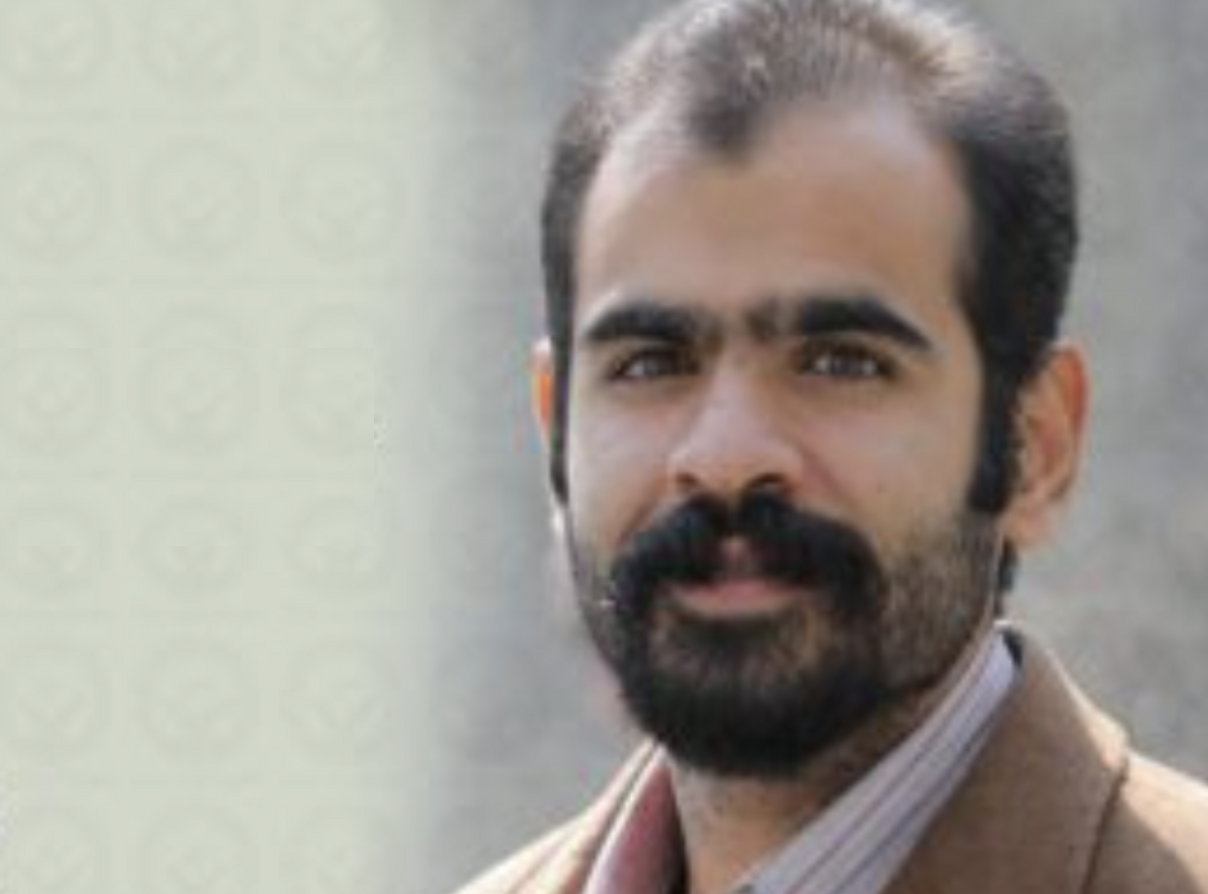
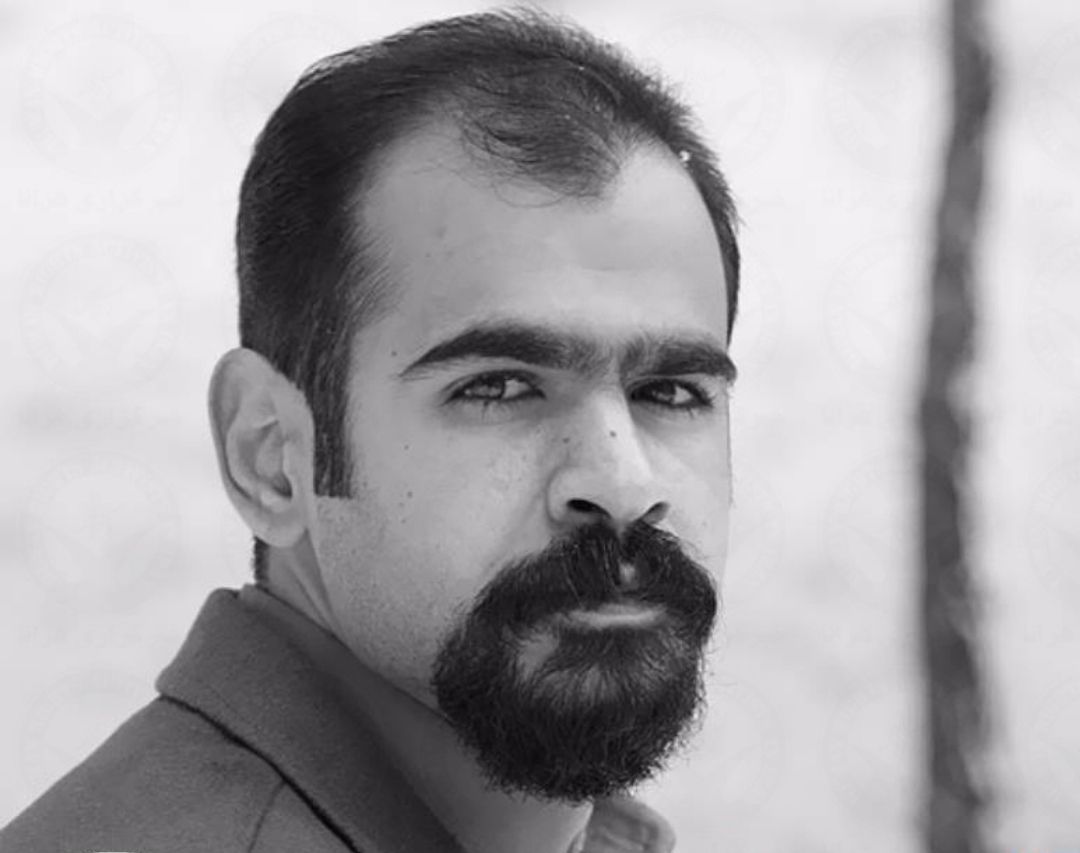
Yashar Piri, a Turkic ethnic activist from Tabriz city, was beaten during both his arrest and interrogation. His brother, Rouzbeh, wrote in a note that “Basij members in plain clothes arrested Yashar without providing a court order or a judicial officer card“. He continued, claiming that when “Yashar was arrested, he was hit on the head with an electric shocker and then pepper-sprayed in his mouth, his legs were tied with a belt, and after handcuffing him, the beating continued until he was drug to the ground and transferred to an unknown place while unconscious”. Yashar was released 3 days after his arrest and has been in the hospital since being treated for his injuries obtained in this event.
Mohammad Doji
On November 18 of last year, 19-year-old Mohammad Doji died following severe physical torture in Amirabad Prison in Gogan city. Prisoners who witnessed the incident have stated, “There was a clash in the prison and the guard officer took off his [Mahammad Doji’s] clothes to punish Mohammad. He tied his hands and feet while he was naked and hung him from the ceiling of the prison in the cold. They beat and beat him until he was unconscious, they poured cold water on him, and all this was done in front of our eyes to teach us a lesson. Unfortunately, this morning he could not stand the torture anymore.“
Hamid Rastbala
In August 2020, Hamid Rastbala, a Sunni Prisoner held in Vakil Abad Prison of Mashhad, wrote in a letter about the torture that he and other Sunni prisoners faced. He details torture aimed at forced confessions below.
Parts of this letter reads:
They recklessly call the Sunnis the military enemies of the Islamic Republic. We were tortured in solitary confinement for almost ten months to obtain false confessions. Many of us Sunni political prisoners were greeted with severe floggings and severe shocks (electrical shocks by shockers). Some of us were even sexually abused by spraying pepper spray on our genitals and anus.
They threatened to arrest, torture, assassinate and rape our families. Many of us suffered severe mental health concerns, and to halt the torture and pressure, we accepted any accusation that was leveled against us.
We even admitted and repeated these accusations in front of the video camera so that they would not harm our families. This is human rights and human dignity in the Islamic Republic.
Mohammad Alijani
Mohammad Alijani was arrested during the nationwide protests of November 2019 in Islamshar. He is currently being held at Greater Tehran Prison and is facing charges of Muharebah. In July 2020, Alijani wrote a letter about the physical and mental torture he faced.
Parts of his letter reads:
I, Mohammad Alijani, Reza’s son, was arrested by the security and intelligence police during the protests in November 2019. I was severely tortured physically and mentally.
I was made to confess to charges such as disturbing public order by participating in the riots and destroying public property of the Basij base, insulting the leadership, by force, and under physical and psychological torture.
I am the breadwinner of my home and my absence from home has caused problems such as falling rent and family problems to pay for the house. My family and I suffer greatly from this.
Abolfazl Karimi
Abolfazl Karimi was a juvenile at the time of arrest during the November 2019 protests. On March 16, 2020, Karimi wrote a heartfelt letter about his conditions and the torture he faced in Evin Prison.
Below is an excerpt from the letter:
I suffered a lot in ward 2A of Evin prison and was unaware of my mother’s pain [who had recently gone under surgery]. Because they did not allow me to contact my family and kept me in solitary confinement for 50 days. During interrogations, I was threatened with the arrest of my mother and father. I was also beaten with a shocker by the Akbarabad Revolutionary Guard’s intelligence; they claimed that I had killed one of the officers. Officers broke my head and pulled my toenails. Even now, all my toenails are falling out. They broke one of my teeth by kicking my face and during the interrogation in Branch 1 of Baharestan, they forcibly accused me of the crime. My request to everyone is to please not say that the IRGC intelligence does not hurt anyone. The IRGC’s intelligence is crueler than Shimr (Shimr is referred to as who is said to have killed Hossein (one of Shia 12 Imams) in the battle of Karbala).
The Afkari brothers
The Afkari brothers, arrested in relation to nationwide protests of August 2018, are said to have been made to confess against each other under severe torture. Even after one of them, Navid Afkari was executed, the others continued to be tortured and kept in solitary confinement.
Their parents wrote a letter to the Judge Supervisor of the prison. An excerpt follows:
Mr. Hashemi, Judge Supervisor of Adelabad Prison of Shiraz; My children Navid, Vahid, and Habib Afkari were beaten and transferred to solitary confinement on 3 and 5 September 2020. For this reason, they demanded that their complaint be investigated, and the family also demanded that the beating and torture of their sons by Ali Khadem al-Husseini, a prison guard, be investigated. We demanded a forensic doctor go to the prison and record the injuries inflicted on my children, which were 17 in the case of Navid and about 15 in the case of Vahid and Habib.
However, 47 days later, no action has been taken and the office of Mr. Rezaei Dana, the director of Adelabad Prison, claims that the complaints were registered by Mr. Rezaei Dana. However, the reviewing authority does not give us the date of registration of the complaint and the letter number.
Niloufar Bayani
Niloufar Bayani, an environmental activist who worked as an expert at the Parsian Wildlife Institute, was arrested along with eight other environmental activists in early 2018. The arrests took place in a coordinated operation by the IRGC’s intelligence on charges related to “espionage”.
There are multiple reports that these individuals were physically and psychologically tortured. During the interrogation carried out by IRGC intelligence interrogators, Niloufar Bayani was abused and harassed. She was made to be completely naked and endured sexual assaults including inappropriate touching. She was threatened with rape and was severely beaten by officers using cables and hoses.
Bayani wrote a letter describing her detention conditions stating she was kept in solitary confinement for 8 months and was interrogated daily from 8 to 12 hours a day.
An excerpt of her letter follows:
“I was blindfolded, while being interrogated I was made to stand, spin or squat and stand again, I was threatened with the arrest and torture of my 70-year-old mother and father. They threatened me to be physically tortured by showing me images and descriptions of torture devices. And I heard hours about the suffering and pain that torture causes.”
The above are a mere few recent examples of many more known and unknown cases of physically tortured prisoners across the country. It should be noted that many cases of physical torture are never revealed and there can be no correct statistic given in this regard. These few cases were chosen to show that physical torture is being used widely for various reasons being punitive, making examples for others, extracting false confessions, and more. The examples also provide insight into the widespread use of torture not limited to one institution, rather country-wide. The featured cases also aim to highlight that the victims of torture can be anyone including juvenile offenders, women, ethnic minorities, religious minorities, and more.
Accountability
The frequent use of acts amounting to torture illustrates the deep level of impunity enjoyed in Iran. Closing the accountability gap requires a bold stance from the international community to commit to understanding the widespread use of torture and utilizing that information to hold human rights violators accountable.
Torturer Violator Spotlight

Sohrab Soleimani
Sohrab Soleimani has been directly involved in and responsible for countless violations of fundamental human rights as the director-general of prisons in Tehran Province. These violations have included harassment, torture, and pressure on prisoners, especially in political and ideological prisons. There are many reported incidents of brutality against prisoners at the hand of Sohrab Soleimani. Imprisoned journalist Issa Saharkhiz suffered from frequent seizures while held in solitary confinement and protested the lack of medical care for political prisoners under Saleimani’s directorship. Article 10 of the ICCPR, as noted above, mandates that “all persons deprived of their liberty shall be treated with humanity and with respect for the inherent dignity of the human person”. In addition to the countless violations of both Article 7 and 10 related to torture, Soleimani is responsible for widespread violations of the non-derogable right to life. Soleimani and all of those acting under his control should be held accountable. Read more about Soleimani’s violations here.

Bahram Reshteh Ahmadi
As the Deputy Prosecutor for Security and the Head of the Evin Security Court, Bahram Reshteh Ahmadi has played a key role in violating the rights of defendants and political prisoners, as well as in detaining political, civil, and human rights activists. Ahmadi has additionally been directly involved in the harassment of political prisoners through the denial of access to legal counsel, a right expressly guaranteed under the ICCPR. Read more about Ahmadi’s violations here.

Hamid Mohammadi
Since June 2020, Hamid Mohammadi has been the warden of Evin Prison. As warden, Mohammadi carries the ultimate responsibility for the life and wellbeing of prisoners held there. Mohammadi is responsible for the cruel, inhumane, and often degrading treatment in Evin Prison in the form of torture, beatings, interrogation, and solitary confinement. He also bears responsibility for inmates’ frequent deprivation of health and medical care, which has led, in several cases, to avoidable physical and mental suffering and even death. Under Mohammadi, political prisoners and journalists such as Nasrullah Lashani, Keyvan Samimi Behbahani, Majid Asadi, and Golrokh Iraee have experienced harsh interrogations, prolonged solitary confinement, and lack of access to medical care, family, or lawyers.
Read more about Mohammadi’s violations here.
Additional Iranian human rights violators complicit in acts of torture can be found at www.spreadingjustice.org using the searchable tag ‘torture’ and include among others:
Seyed-Kamal Hadianfar, Seyed Ebrahim Raisol-Sadati, Mohammad-Hassan Sadeghi Moghaddam, Mohammad Mohammadi Reyshahri, Ali Fallahian, Mohammad Mahdi Haj-Mohammadi, Ali Sheikhloo, Heydar Moslehi, Ruhollah Rezaei Dana, Hassan Karami, Saeed Jalili, Seyed-Mahmoud Alavi, Ali Larijani, Gholam-Hossein Esmaeili, Hamid-Reza Baharvand, Mostafa Nazari, Mohsen Rezaee, Mohammad-Bagher Ghalibaf, Esmaeil Fallah, Morteza Bahmani, Mohammad Shahriari, Sadegh Jafari Chegeni
For media inquires please contact Senior Advocacy Coordinator Skylar Thompson [email protected]