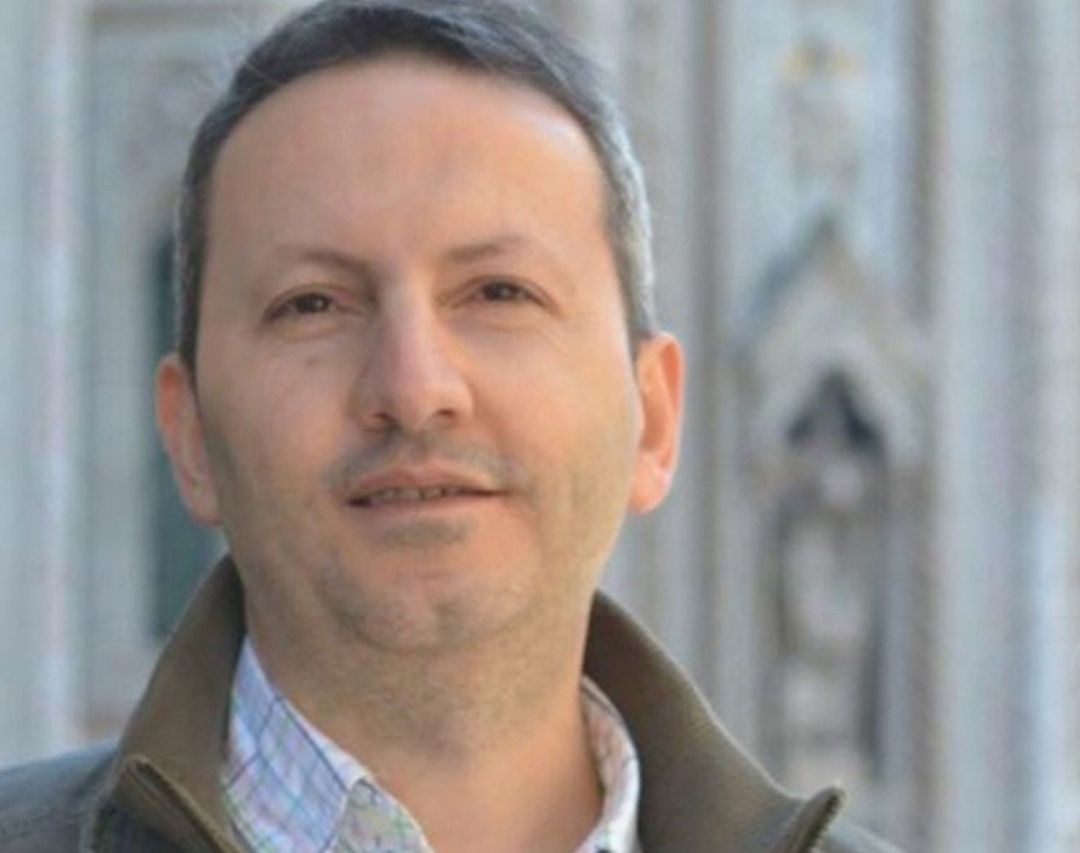
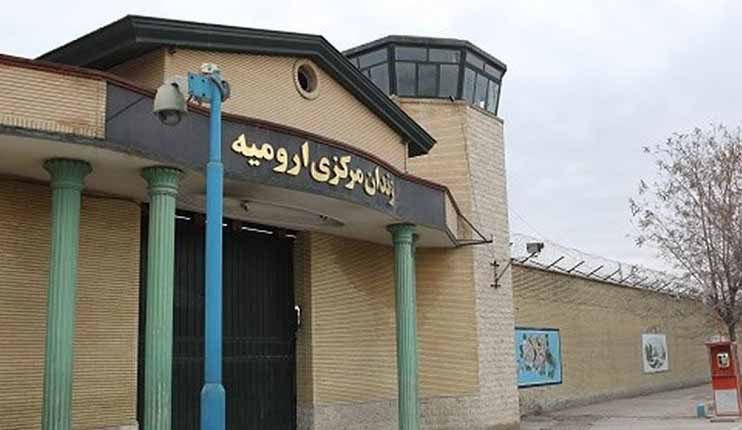
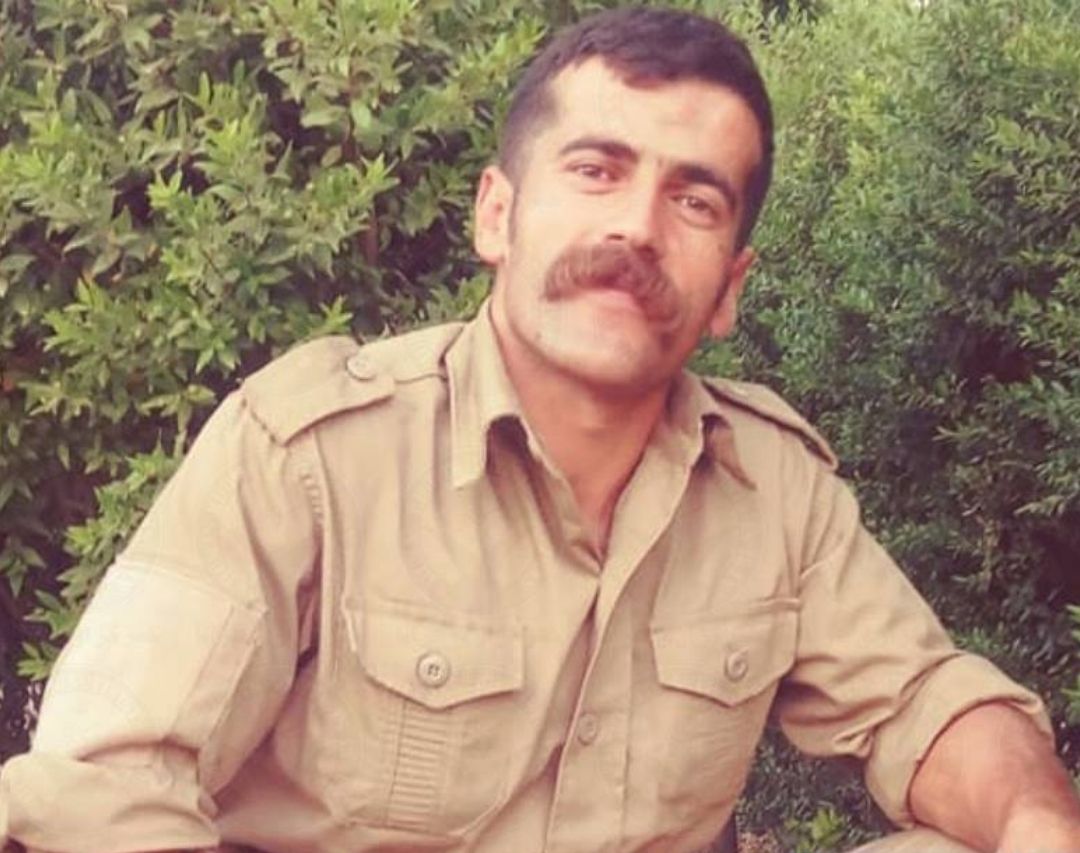
Court Hearing Postponed Again for Amirhossein Moradi, Mohammad Rajabi, and Saeed Tamjidi

On May 12th, the court hearing for political prisoners Amir Hossein Moradi, Saeed Tamjidi, and Mohammad Rajabi, detained since the national protests of November 2019, was postponed for a second time.

According to HRANA, the news agency of Human Rights Activists, the prosecutor’s representative, defendants, and lawyers were all present, but the hearing was unable to proceed in the absence of a second judge. The hearing has not yet been rescheduled.

Amir Hossein Moradi, Saeed Tamjidi, and Mohammad Rajabi were previously sentenced to death by the Tehran Revolutionary Court. They were also sentenced to a total of 38 years in prison and 222 lashes.

On Jun 24, 2020, the Human Rights Activists News Agency (HRANA)  announced that the death sentence of the three political prisoners had been upheld by the Supreme Court. On July 14, 2020, the spokesman of the Judiciary officially announced the confirmation of their  death sentence and said that the sentences had been sent to the prosecutor’s office for execution.

However, according to the lawyers, permission to enter the trial and study the case was given to them on July 15, 2020–weeks after HRANA news agency reported that the death sentence was confirmed in the Supreme Court.

Less than an hour after the official confirmation of the death sentences for Amir Hossein Moradi, Saeed Tamjidi, and Mohammad Rajabi, “#Don’t_execute” became the world’s top trend with hundreds of thousands of tweets. Human Rights Watch, US President Donald Trump, the Writers’ Association of Iran, and others all reacted to this news. The hashtag has now been used more than ten million times.

The following day, UN human rights experts issued a statement and condemned the death sentences. The statement expressed that Amir Hossein Moradi, Saeed Tamjidi, and Mohammad Rajabi were tortured and forced to confess and that these forced confessions were later used against them in their trials. HRANA has previously conducted numerous conversations with informed sources and extensive research to determine what happened to the prisoners in the various processes of activity up to the conviction.

On July 19, 2020, the three defendants’ lawyers issued a joint statement announcing that the case had been referred to a different branch for retrial after the Supreme Court’s acceptance of Article 477.

In mid December of 2020, in the aftermath of the global outcry, the young activists’ request for a retrial was finally accepted by Branch 1 of the Supreme Court and their death sentences were overturned.

The case was then referred to Branch 23 of the Revolutionary Court of Tehran, but, due to a change of chief judge of the branch, the first hearing was postponed from March to May 12th.

Now, it has been postponed from May 12th to a date that has yet to be determined.

The Continued Detention of Baha’i Citizens Vahid Dana and Saeed Abedi in Shiraz 

After three weeks, Bahai citizens Saeed Abedi and Vahid Dana are still detained in Shiraz in the Intelligence Ministry’s detention center known as No. 100. Following mass arrests and home searches of Bahai citizens in Shiraz, Abedi and Dana were arrested by intelligence agents on April 28th.

According to HRANA, the news agency of Human Rights Activists, Vahid Dana has an acute type of chronic hypertension, and was under supervision of a specialist doctor prior to the arrest due to symptoms of angina pectoris. According to a source close to his family, Dana’s heart problems started in 2014, during a previous detention. The continued detention of the two citizens during the COVID-19 outbreak, coupled with the failure of officials to provide any update on their condition, has raised concern among their families.

Abedi and Dana were arrested in their homes by intelligence agents and then transferred to the detention center. Officers searched their homes and confiscated some of their personal belongings, including cell phones, personal computers, books, and images related to the Baha’i faith.

With the beginning of the wave of pressure on Baha’i citizens, 7 additional Baha’i citizens from Shiraz, (Saeed Ittihad, Qasem Masoumi, Siamak Honarvar, Soroush Abadi, Sedigheh Aghdasi, Alieh Foroutan, and Behrooz Farzandi Ardakani) were also arrested by agents in March. Their houses were searched, and some personal belongings seized by security forces. They were gradually released on bail after about a month.

Vahid Dana and Saeed Abedi had been previously arrested and charged in August of 2018. Each were sentenced to one year in prison and one year in exile, in absentia and without their or their lawyers’ information, by Branch 1 of the Revolutionary Court of Shiraz. These sentences were then reduced to 6 months imprisonment each by Branch 17 of the FarsProvince Court of Appeals. Later that year, they were both pardoned on the anniversary of the Iranian Revolution.

According to unofficial sources, more than 300,000 Baha’is live in Iran, but the Iranian constitution recognizes only Islam, Christianity, Judaism, and Zoroastrianism. Because their faith is not considered legitimate by authorities, the rights of Baha’is in Iran have been systematically violated during recent  years. This deprivation of the freedom to practice their religion is a violation of Article 18 of the Universal Declaration of Human Rights, and Article 18 of the International Covenant on Civil and Political Rights. The United Nations covenant holds that every person has the right to freedom of religion, freedom of converting religion, as well as freedom of expression, individually or collectively; openly or secretly.

It is unclear when Dana and Abedi will be released.


Sistan and Baluchestan Province : Two Citizens Detained by Security Forces in the Cities of Konarak and Chabahar

On April 30, 2021, two citizens were arrested by security forces in the cities of Konarak and Chabahar and taken to an unknown location.

According to HRANA, the news agency of Human Rights Activists, quoting the campaign of Baluch activists, Molavi Yousef Abasteh, son of Yar Mohammad, was arrested by IRGC intelligence forces in his home, in the city of Konarak.

Another citizen, 19-year-old Ismail Parwan, son of Sediq and a resident of Bahu Kalat village, was also detained by Chabahar Ministry of Intelligence officials in Chabahar.

As of this writing, no information is available on the whereabouts of the detainees or the charges against them.

UN Experts Express Concern Over the Health Condition of Mohammad Nourizad in Evin Prison

On Tuesday, May 4th, UN experts issued a statement expressing concern over the health condition of civil activist Mohammad Nourizad and calling for his immediate release from Evin Prison. Javid Rehman, Special Rapporteur on Human Rights in Iran, Niels Melzer, Special Rapporteur on Torture and Other Cruel, Inhuman or Degrading Treatment or Punishment, and several other UN experts stated that Mr. Nourizad has been in critical condition for some time, and continued deprivation of treatment could prove fatal.

According to HRANA, the news agency of Human Rights Activists, UN experts have stated that Mr. Nourizad’s case is “emblematic of the situation many Iranian political activists face in detention” , citing the transfer of Mr. Nourizad to Loghman Hospital in Tehran, on April 14, 2021, after fainting. The statement reveals that once revived, Mr. Nourizad “found someone injecting him with an unknown substance, that he did not consent to or was informed of”. Nourizad was denied information about the substance or its purpose from officials, despite his explicit requests.

66-year-old Nourizad is an Iranian director, screenwriter, journalist, and activist. Nourizad became an outspoken critic of the Islamic Republic a decade ago, and has since been arrested and imprisoned several times for his civic work and visits to families of political prisoners.

In mid-August 2019, 14 activists, including Nourizad, signed a letter calling for the resignation of Ayatollah Khamenei. Several signatories were arrested, and others were pressured after the letter went public. Mr. Nourizad was arrested by security forces on August 11, 2019, along with several union and civil activists and sent to Vakilabad Prison in Mashhad (he was later transferred to Evin Prison, where he currently resides).

In the first part of his case, Mr. Nourizad was charged by Branch 4 of the Revolutionary Court of Mashhad, presided by Judge Mansouri, on charges such as “insulting the founder of the Islamic Republic, insulting sacred values, insulting the leadership, disturbing public opinion, cooperating with foreign media, and participating in illegal gatherings”, and was sentenced to 15 years in prison, 3 years of exile to Izeh, and a 3-year ban from leaving the country. Branch 35 of the Appeals Court in Razavi Khorasan Province revised the verdict to 15 years in prison, 2 years of exile to Izeh, and a 2-year ban on leaving the country.

In August 2020, in the second part of his case, he was sentenced by Branch 2 of the Mashhad Criminal Court to 8 months imprisonment, 74 lashes, and exile to Tabas on the charge of “disturbing public order” for appearing in front of the building where Kamal Jafari Yazdi was appearing; and sentenced to another 74 lashes on a charge of “spreading lies”. This verdict was confirmed by the Court of Appeal of Khorasan Razavi Province.

In May of this year, Mr. Nourizad announced that he has been sentenced to another year in prison on a charge of defending the rights of Baha’i citizens living in Ivanki, prompting this public concern. Mohammad Nourizad suffers from myriad underlying conditions, including asthma, heart problems, and high blood pressure. The forensic medicine organization previously ordered his release for medical reasons. According to these UN experts, considering Nourizad’s critical health condition and overwhelming consensus from professionals,  he cannot stay in prison.

Akbar Gholizadeh sent  to Tehran Prison After Appeal Denied

On May 12, 2021, civil activist Akbar Gholizadeh (Yashar Tabrizi) was arrested and transferred to the Greater Tehran Prison to serve out a 3 month and 1 day sentence

According to HRANA, the news agency of Human Rights Activists, Akbar Gholizadeh  was arrested on charges of “propaganda against the regime”.

The charge is said to be related to a news report he prepared about working children, the homeless, and grave dwellers (a particular form of homelessness in Iran).

Gholizadeh, son of Baitullah, has served time for his human rights work before. In March of 2018, he was arrested and then temporarily released 12 days later.  Gholizadeh was given this latest sentence by the Shahriar Revolutionary Court, which was then upheld by Branch 54 of the Tehran Court of Appeals.

Subscribe to Our Newsletter

Now is definitely not the time to stop reading!

Civil Activist Saba Kord Afshari on Hunger Strike in Qarchak Prison

According to HRANA, the news agency of Human Rights Activists, civil activist Saba Kord Afshari went on a hunger strike on Saturday, May 8th.

22-year-old Kord Afshari, currently imprisoned in Qarchak Prison in Varamin, went on said strike to protest the increasing pressure on her family and other political prisoners in the aftermath of her public criticism of the compulsory hijab.

Kord Afshari demands the release of her mother, Raheleh Ahmadi, who was sent to Evin Prison for giving information about her daughter’s [Saba’s] living conditions in Qarchak.

While in Evin Prison, Raheleh Ahmadi developed a ruptured disc which relegated her to a walker, likely due to chronic stress after her daughter’s imprisonment. Ahmadi was granted medical leave on bail on March 14th, but was denied by prison authorities the two-month recovery period recommended for her surgery.

On April 3, 2021, Saba Kord Afshari was granted a short-term leave on a bail and returned to prison on April 10. On that same day, Ahmadi was returned to Evin Prison.

Kord Afshari’s embroilment in the penal system has been ongoing . In February 2019,  the young activist was released from the women’s ward of Evin Prison from her previous conviction. In June 2019, she was again detained by security forces and was later transferred to prison after interrogations.

In August 2019, Branch 26 of the Revolutionary Court of Tehran, presided over by Judge Iman Afshari, sentenced Saba to 15 years imprisonment on the charge of “spreading depravity by uncovering a hijab and walking without a hijab”; 1 year and 6 months in prison on the charge of “Propaganda against the regime;” and 7 years and 6 months in prison for “Gathering and colluding with the intention of committing a crime against the security of the country”– a total of 24 years in prison along with other social deprivations.

Due to the multiplicity of offenses and previous criminal record, each of the charged sentences were cumulative, of which 15 years in prison was enforceable.

With a correction of judicial misconduct that had caused two and half times to increase in the sentences, and with punishment reduction law, 7 years and 6 months imprisonment will be enforceable.

Saba Kord Afshari has suffered from gastrointestinal bleeding several times before. This, along with the hunger strike has raised concerns about her health among her family members.

Christian Convert Reza Zaeemi’s Prison Sentence Reduced to Nine Months by Appeal Court

The sentence of Reza Zaeemi, a Christian convert, was reduced by the Alborz Court of Appeals to 9 months in prison and a two-year ban from leaving the country. 40-year-old Zaeemi was sentenced by the Karaj Revolutionary Court to one year and six months in prison and a two-year ban from leaving the country in early February.

According to the HRANA, the news agency of Human Rights Activists, quoting Article 18, Reza Zaeemi was sentenced by the Alborz province court of appeals to nine months in prison and a two-year ban from leaving the country, a significant reduction from his previous sentence.

In January 2021, Mr. Zaeemi was sentenced to one year and six months in prison and a two-year prohibition of leaving the country by Branch 4 of the Revolutionary Court of Karaj, presided by Judge Shabani. Mr. Zaeemi was charged with propaganda against the regime through propagation of evangelical Christianity.

Zaeemi was arrested in November 2020 by undercover forces near his residence  in Karaj. He was transferred to an IRGC intelligence detention center from an unknown location, four hours later, and denied access to a phone for the eight day duration of his detention, during which time his home was searched by security forces.

After ten days, Zaeemi was transferred from the IRGC Intelligence Detention Center to Ghezel Hesar Penitentiary by the order of the Judge of the Revolutionary Public Prosecutor’s Office in Karaj and was released on bail of 60 million Tomans after one week.

Reza Zaeemi is a Christian convert from Karaj.


Eight Citizens Summoned and Arrested in Hamedan Province for Supporting Erfan-e-Halgheh (Circle of Mysticism)

According to HRANA, the news agency of Human Rights Activists, quoting Tasnim, the public relations officer of the IRGC in Hamadan announced the summoning and arrest of eight supporters of Erfan-e-Halgheh (Circle of Mysticism).

Declaring these citizens to be members of the Erfan-e-Halgheh, Ali Akbar Karimpour said “Eight members of this sect were arrested and summoned, and their cases have been sent to the province judicial for legal proceedings.”

The report does not mention the identity or whereabouts of these citizens.

Mohammad Hosseini Ajdadi Summoned for Enforcement of Judgment

According to HRANA, the news agency of Human Rights Activists, Mohammad Hosseini Ajdadi, a citizen of Lahijan City in Gilan province, was summoned  for enforcement of judgment by the executive branch of the Second Criminal Court in Tehran.

In December of 2020, Hosseini Ajdadi was  unknowingly sentenced to two years in prison and a substantial fine, after his 2019 case was reopened in connection with new materials published online.

In the summer of 2019, Mohammad Hosseini Ajdadi was arrested by IRGC intelligence agents in Lahijan, on charges of “spreading lies against the country’s officials to disturb the public mind”. He was released on a 200 million Toman bail, paid for by his mother.

In December of that year, Hosseini Ajdadi was sentenced to two years in prison and fined 4 million Tomans by Branch 1037 of Tehran’s Second Criminal Court, but was later acquitted from “insulting the leadership” charges.

All steps of Mr. Hosseini Ajdadi’s latest trial took place without his presence or information. In fact, he only finally became aware of his conviction sentence while checking on the status of  judiciary paperwork for his previous summon.

It is worth noting that in 2019, Iran’s Judiciary Chief Ebrahim Raisi,  with the support of Supreme Leader Ali Khamenei, removed a section of Constitution requiring the presence of a defendant, plaintiff, or legal representative at appeal hearings.

Hosseini Ajdadi’s mother was informed by the Lahijan Judiciary on behalf of the Tehran Criminal Court that the bail bond will be confiscated if Mr. Ajdadi does not show up on time.

Arash Sadeghi freed from Rajai Shahr Prison in Karaj

According to HRANA, the news agency of Human Rights Activists, on May 1, 2021, political prisoner Arash Sadeghi was freed from Rajai Shahr Prison in Karaj. After serving 5 years and 6 months in prison, including his previous detention, Mr. Sadeghi was released under Article 12 of the law on reducing sentencing. Previously, he was sentenced by the Revolutionary Court to 15 years, of which 7 years and 6 months were enforceable with the application of Article 134 of the Islamic Penal Code. Since Mr. Sadeghi’s previous suspended sentence of 4 years had been served, only 7 years and six months of imprisonment remained enforceable after sum up of the issued sentences.

Despite the early release, Sadeghi’s time in prison has not been without cost. Until he was freed, Arash Sadeghi had been denied the right to visit and call his wife, Golrokh Ebrahimi Erayi, a political prisoner in Amol Prison. The couple had been prohibited from visiting, despite legal provisions for meetings between imprisoned family members residing in different prisons.  In 2017, Sadeghi went on a hunger strike for more than seventy days to protest her re-arrest, and the prolonged hunger strike caused irreparable damage to his physical health.

While in Rajai Shahr, Sadeghi also developed a malignant type of bone cancer called chondrosarcoma. Sadeghi underwent surgery to combat the disease, but prison officials denied him access to the tri-annual post-surgery treatment recommended by physicians, leading to myriad complications. The lack of adequate treatment, coupled with the permanent physical damage from his 2017 hunger strike had devastating effects; Sadeghi’s chrondrosarcoma returned, and he needed to undergo an additional 30 sessions of radiotherapy and kinesiotherapy.

This is the most recent release of political prisoner Arash Sadeghi, who has spent the last decade serving a series of sentences for his human rights work. Sadeghi was first arrested by Ministry of Intelligence agents in July 2009 in front of Allameh Tabatabai University in Tehran along with several students protesting the 2009 election results. He was released on bail 90 days later. In 2010 he was re-arrested and imprisoned in ward 350 of Elvin Prison for 15 months. Sadeghi was arrested yet again in 2014 by IRGC intelligenge, and released on a bail of 600 million tomans in March of 2015. Finally, and most recently, he was arrested in June 2016 and sent back to Elvin Prison, and then transferred to Rajai Shahr, where he  remained until his May 1st release.

Whether Sadeghi is able to recover from his time in prison remains to be seen, but a recent bone marrow scan test confirms promising signs in the body.