Nationwide Protests in Iran Continues on Day Nine

On September 25, the nationwide protests continued nine days after the death of Mahsa Amini. Demonstrations continued in at least 19 cities and universities, as the number of arrests and the individuals injured or killed increased. There were disruptions and outages in internet and phone services and social media was filtered. 

On September 24,25, 2022, despite the heavy presence of riot police and plainclothes security agents, people held demonstrations in many cities, including Shahin-Shahr, Karaj, Shiraz, Amol, Babol, Sanandaj, Tehran, Fardis, Isfahan, Tabriz, Zahedan, Fuman, Sabzevar, Qaen, Shahr-e-Rey, and Nowshahr. 

The Sharif University of Technology and the University of Tehran students held protests on campus, chanting slogans  such as “Death to the dictator”, “Jailed student should be freed”, and “We will fight, we will die, but we will take back Iran.”

The two maps below show the geographical distribution and concentrations of the protests until the seventh day of protests. 

On September 25, the Coordination Council of the Iranian Teachers Trade Association issued a statement asking teachers and students all over Iran to join the general strike.

 It is estimated that many individuals have been arrested, as 450 arrests were reported only in the city of Sari. However, HRANA, the news agency of Human Rights Activists, is still working on fact-checking and reviewing the reports independently. HRANA has identified and verified 48 individuals arrested so far.

There were also reports of several individuals killed as a result of the brutality of the security apparatus. The Islamic Republic of Iran Broadcasting reported 41 deaths, of which HRANA has identified 38.

The map below shows the distribution of the death toll as of the seventh day of protests.

Below is a compilation of the videos gathered on the eighth and ninth days of protests in Iran.

Mahsa Amini’s Death Sparks Nationwide Protests

The death of Mahsa Amini has sparked nationwide condemnation and protests in several cities in Iran. Amini was a 22-year-old woman from Saqqez, Kurdistan Province. She was arrested by Tehran Morality Police at a train station for improper hejab. She fell into a coma where she was in custody and then died in a hospital in Tehran.

Since Amini’s death, hundreds of individuals have organized protests, and businesses in a number of cities were closed in protest. On Saturday, September 17, there were also angry demonstrations during her funeral at her burial and in front of the governorate building in Saqqez, Kurdistan Province. The police used violence against the protestors using tear gas and gunshots. Several people have been injured. Kurdpa has identified Kian Derakhshan as being in critical condition. The video below shows the moment he was injured. 

Another individual identified as Parsa Sehat was injured in the eye and nose and is hospitalized in Tabriz.

The protests continued on Sunday, September 18. In Sanandaj, Kurdistan Province, people rallied and chanted slogans against the regime such as “Kurdistan, a graveyard for fascists”, and “Death to Dictator”. The police used the shooting to crack down on the protestors. Sanandaj’s residents have reported internet disruptions. Some videos show the deployment of special guard forces and water cannons. Moreover, several pictures on social media show some citizens have been injured by pellet guns.

Confirming the arrest of several protestors, the Deputy Governor of Kurdistan claimed that so far no one has been killed in the past two days.

In Mahabad, The police with a heavy presence attempted to scatter the crowd in order to prevent the protest.   

The University of Tehran students held a protest on campus. Also, in the Gohardasht district of Karaj, Mahabad, Sanandaj, Rasht, and several other cities demonstrations were held, where people chanted “death to the dictator”, “death to Khamanei”, and “woman, life, freedom.” 

Report: Prisoners’ Families Demonstrate as Executions Surge

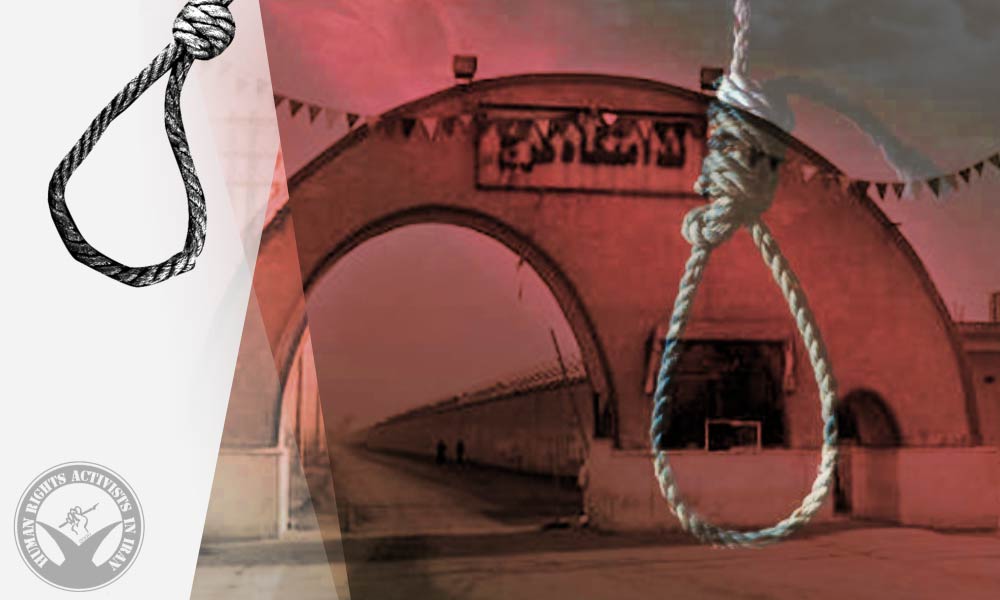
Since May 2022, the number of executions, especially of prisoners convicted of drug-related crimes has significantly increased. Since the judiciary carries out the executions without prior notice, the new wave has raised concerns among the prisoners’ families, who organized protests in Tehran and Karaj during the past six days. Although the protests have been peaceful, the police have arrested several individuals.

According to HRANA, the news agency of Human Rights Activists, from May 22 to June 21, the number of executions spiked to 99 cases, four times more than the months before. Executions have remained at this high rate since, causing panic among death row prisoners and their families.

During this period, half of the executed inmates had been convicted of drug-related offences. Unlike murder cases in which the convict is at the mercy of the victim’s family for judgment, the execution of inmates convicted of drug-related crimes is decided by the judicial authorities’ decision.

The families have been gathering peacefully for six consecutive days in Tehran and Karaj. On September 11, the protest turned violent and 30 people were arrested, of which eight currently are kept in detention.

As the figure below illustrates, the judicial authorities have not been transparent as only 39% of the executions have been reported by official sources and media outlets inside Iran so far.

From March 21, 2022 (the beginning of the Iranian year) to September 11, 2022, the Judicial authorities have executed a total of 306 people, including 267 men, 30 women and 30 gender-unspecified individuals. Four of these individuals were under the age of 18 at the time of the arrest. One Pakistani and one Afghan National are among these individuals.

The figure below illustrates the breakdown of executions by capital offence.

Of these convictions, 151 people had been convicted of murder (Qisas or reprisal), 130 of drug-related crimes, 12 of rape, and two of security charges. The charges against 11 individuals remain unknown.

Geographically, 56 executions have been carried out in Sistan and Baluchestan Province. Fars Province ranks second with 28 executions.

In the above-mentioned period, the authorities have sentenced 42 defendants to the death penalty.

One prisoner’s spouse expressed to HRANA that the number of executions has increased exponentially in recent weeks and the prisoners live in fear of imminent execution. 

A prisoner who is currently on furlough said the prisoners are fearful and worried about the prospects of speedy Judgements. 

According to the head of State prisons and the Security and Corrective Measures Organization, 45% of prisoners in Iran are jailed for drug-related offences.

Since under international law, drug smuggling does not fall into the category of violent crimes,  the government has been criticized by the Human Rights Organization and the UN Special Rapporteur on Human Rights in Iran for the execution of drug-related offenders.

In 2017, the former prosecutor of Tehran, Abbas Jafari Dolatabadi, announced the reform in drug-related crime laws and promised the reduction of the death sentences and executions. According to the recent report from the Statistics and Publication Center of the Human Rights Activists in Iran (SPC-HRA), drug-related executions have been reduced, but the number of recent executions is alarming. 

According to the SPC-HRA report, between January 1, 2021, and December 20 2021, at least 299 individuals, including four juvenile offenders were executed. 85 others were sentenced to death. 

The video reportage is a compilation of  26 videos of recent protests.

HRANA’s Daily Review of Protests in Iran

On Wednesday, September 7, 2022, at least three protests took place in Iran.

For the second consecutive day, a group of families and relatives of prisoners presently on death row protested before the Judiciary building in Tehran and the Revolutionary Court in Karaj. These protestors held placards asking to stop executions. In August, HRANA identified 46 death row convicts in Ghezel Hesar Prison.

In Pardis Town, Tehran, several individuals protested in front of the Prosecutor’s Office to claim property rights. Pardi Omran Company obstructs the enforcement of the court order confirming the ownership of these individuals, protesters said.


HRANA’s Daily Review of Protests in Iran

On Wednesday, August 24, 2022, at least five protests took place in Iran.

The workers of Agro-Industry Complex Karoon held a protest at their workplace. The workers said that unlike promises made during the last negotiation, their demands have not yet been addressed.

The firefighters in Karaj City gathered in front of the Municipality to protest against their poor living conditions, unpaid wages and benefits including extra pay for working night shifts.

For the second consecutive day, the workers of the vegetable oil company Jahan held a protest in front of the Ministry of Labour in Zanjan. The Factory managers have laid off 60 out of 85 workers due to financial issues.

In Shiraz, a group of working and retired workers of the vegetable oil company Narges protested against low wages and their poor living conditions. The protestors said that the factory directors sell the factory amenities, lands and machinery for their own profit.

A number of citizens who have been victims of the fraudulent activities of two car dealership companies Pars and Karma demonstrated before the company to ask for the apprehension of two fugitives company managers.


Subscribe to Our Newsletter

Now is definitely not the time to stop reading!

HRANA’s Daily Review of Protests in Iran

On Sunday, July 31, at least 16 protests took place in Iran.

In Tehran, Kermanshah, Shahrekord, Karaj, Tabriz, Urmia, Isfahan, Ahvaz, Bojnurd, and Sanandaj, the pensioners of the state-owned Iran Telecommunication Company held protests against the non-payment and reduction of their benefits. In Tehran, the police dispersed the protest gathering and several pensioners were arrested.


The pensioners of the Social Security Organization continued their protests in front of this organization in Rasht and Kermanshah.

In Ahvaz, the pensioners held a protest together with Ahvaz National Steel Industrial Group workers and the nurses of a hospital in front of the Ahvaz Governor-General Building.


The workers of the detergent manufacturing company Darugar continued their protests in front of the factory entrance to ask for five-month delayed wages and insurance payments.


HRANA’s Daily Review of Protests in Iran

On Saturday, July 16, 2022, at least 27 protests took place in Iran

The pensioners of the Social Security Organization protested against low pensions in Karaj, Ahvaz, Isfahan, Arak, Babol, Mashhad, Tabriz, Zanjan, Kerman, Ilam, Khorramshahr, Tehran, Khorramabad, Shushtar, Sirjan, Ardabil, Sirjan, Rasht, Ramhormoz, Sari, Kermanshah, Birjand, Hamedan, Qazvin and Dezful.

In Behbahan, the green maintenance workers of the Municipality gathered to demand their unpaid wages.

Coming from different cities, a number of farmers active in poultry and ostrich farming held a protest in front of the Ministry of Agriculture Jihad.

A group of interns of the Shahid Beheshti University of Medical Sciences protested before a hospital in Tehran.


HRANA’s Daily Review of Protests in Iran

On Saturday, July 2, 2022, fourteen protests took place in Iran. Read our review below for details, photos, and videos from these demonstrations:

Continuing their protests against the insufficient annual pension increase, the pensioners rallied in Shushtar, Shush, Zanjan, Isfahan, Sari, Dezful, Karaj, Ahvaz, Abadan, Khorramabad, Hamedan and Kerman. They chanted slogans against the government and called the president a liar for failing to keep his promises. In Arak, the protest turned violent by security forces.

A number of citizens, who have lost their money in the recent robbery of Iran Safe Deposit Boxes of Melli Bank, protested in front of the central building of the Judiciary in Tehran. They demanded the return of their stolen money.

On June 6, 2022, dozens of safe deposit boxes from Melli Bank were stolen by some burglars. One day after, a protest took place, which turned violent by security forces. According to some witnesses, the police and security agents used live ammunition against the protestors.


Ten Inmates Executed in Rajai Shahr Prison

On Wednesday, June 29, 2022, ten inmates were executed in Rajai Shahr Prison, eight were previously convicted of murder and two of rape.

According to HRANA, the news agency of Human Rights Activists, on Wednesday, June 29, 2022, the executions of ten inmates were carried out in Rajai Shahr Prison, in Karaj, Alborz Province.

HRANA has identified two inmates as Iman Safari-rad and Mehdi Khlagaldi.

These executions have not been reported by official sources and media outlets inside Iran so far. 

The most recent report from the Statistics and Publication Center of the Human Rights Activists in Iran (HRA) states that between January 1 of 2021 and December 20 of 2021, at least 299 citizens, including four juvenile offenders, were executed. In addition, 85 citizens were sentenced to death in this period. 

As the report points out, Iran’s judicial authorities do not publicly announce over 88% of executions. These unreported executions are known as “secret executions” by human rights organizations.

Juvenile Offender Arman Abdolali Executed in Rajai Shahr Prison

Earlier this Wednesday, November 24, juvenile offender Arman Abdolali was executed in Rajai Shahr Prison.

According to HRANA, the news agency of Human Rights Activists, Abdolali was relocated to a solitary confinement cell yesterday as a regular procedure before carrying out the execution, and then executed in the morning.

Judiciary Media Center announced that on Wednesday morning, Arman Abdolali, who was previously convicted of murdering his girlfriend at the age of 17, was executed in Rajai Shahr Prison.

Last night, in response to his relocation to a solitary confinement cell, Amnesty International asked Iranian authorities to halt the imminent execution. Amnesty International had also previously urged that the sentence be stopped and pointed out, “The use of the death penalty against people who were under 18 at the time the crime was committed is prohibited under international law and constitutes an abhorrent assault on child rights.”

In 2013, while he was underage, Abdolali was indicted on the charge of murdering his girlfriend, Ghazaleh Shakur. During interrogation, he confessed to killing her but later on, he denied the charges, claimed that the confession has been extracted under torture and pleaded his innocence. The victim’s body was never found.

After the first confirmation of the sentence, Abdolali’s lawyer claimed him as innocent and asked for a retrial, which was granted by the Supreme Court of Iran. In the second retrial, the death sentence was upheld after six months by the Supreme Court of Iran and thereafter by an appellate court.