Ten Inmates Executed in Rajai Shahr Prison

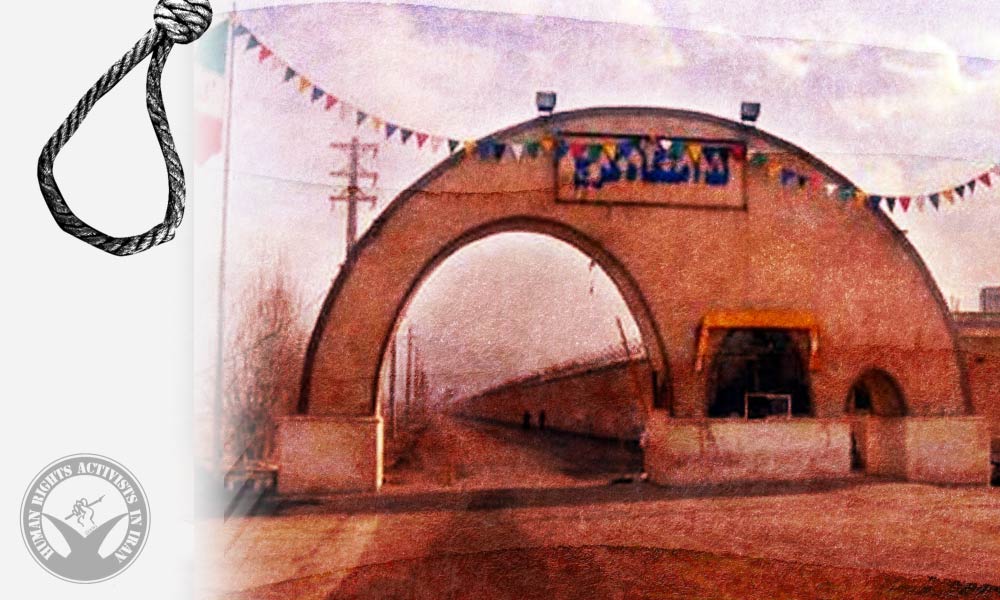
On Wednesday, June 29, 2022, ten inmates were executed in Rajai Shahr Prison, eight were previously convicted of murder and two of rape.

According to HRANA, the news agency of Human Rights Activists, on Wednesday, June 29, 2022, the executions of ten inmates were carried out in Rajai Shahr Prison, in Karaj, Alborz Province.

HRANA has identified two inmates as Iman Safari-rad and Mehdi Khlagaldi.

These executions have not been reported by official sources and media outlets inside Iran so far. 

The most recent report from the Statistics and Publication Center of the Human Rights Activists in Iran (HRA) states that between January 1 of 2021 and December 20 of 2021, at least 299 citizens, including four juvenile offenders, were executed. In addition, 85 citizens were sentenced to death in this period. 

As the report points out, Iran’s judicial authorities do not publicly announce over 88% of executions. These unreported executions are known as “secret executions” by human rights organizations.

Juvenile Offender Arman Abdolali Executed in Rajai Shahr Prison

Earlier this Wednesday, November 24, juvenile offender Arman Abdolali was executed in Rajai Shahr Prison.

According to HRANA, the news agency of Human Rights Activists, Abdolali was relocated to a solitary confinement cell yesterday as a regular procedure before carrying out the execution, and then executed in the morning.

Judiciary Media Center announced that on Wednesday morning, Arman Abdolali, who was previously convicted of murdering his girlfriend at the age of 17, was executed in Rajai Shahr Prison.

Last night, in response to his relocation to a solitary confinement cell, Amnesty International asked Iranian authorities to halt the imminent execution. Amnesty International had also previously urged that the sentence be stopped and pointed out, “The use of the death penalty against people who were under 18 at the time the crime was committed is prohibited under international law and constitutes an abhorrent assault on child rights.”

In 2013, while he was underage, Abdolali was indicted on the charge of murdering his girlfriend, Ghazaleh Shakur. During interrogation, he confessed to killing her but later on, he denied the charges, claimed that the confession has been extracted under torture and pleaded his innocence. The victim’s body was never found.

After the first confirmation of the sentence, Abdolali’s lawyer claimed him as innocent and asked for a retrial, which was granted by the Supreme Court of Iran. In the second retrial, the death sentence was upheld after six months by the Supreme Court of Iran and thereafter by an appellate court.

Narges Mohammadi Still in Solitary Confinement One Week After Arrest

Civil activist and spokesperson of the Defenders of Human Rights Center Narges Mohammadi is still in detention in Ward 209 of Evin Prison a week after her arrest.

According to HRANA, the news agency of Human Rights Activists, Mohammadi was arrested on November 16, during a ceremony honoring Ebrahim Ketabdar who was killed by security forces in Karaj during the November 2019 protests.

According to her husband, Taghi Rahmani, yesterday she was sent to Moghaddas Court to be notified of the charges against her, and then sent back to  solitary confinement.

This year, Branch 1177 of the Criminal Court in the Ghods Judicial Complex in Tehran sentenced Narges Mohammadi to 30 months in prison and 80 lashes, as well as fines. She had been charged with “propaganda against the regime through the issuance of a statement against the death penalty”, “sit-down strike at prison office”, “property destruction by breaking glass” and “libel and assault”.

According to a report published by HRANA, in an open statement, Narges Mohammadi stated of these charges that she will not, “under any circumstances”, attend any court hearing, and will refuse to accept any verdict from the judiciary courts.

From May 5, 2015, until October of last year, Narges Mohammadi was imprisoned.

In December 2019, Mohammadi and seven other political prisoners in the women’s ward of Evin Prison announced in a letter that they would go on a sit-down strike in support of bereaved families who lost loved ones in November 2019 national protests. Evin Prison officials threatened to deport her and others who participated in the strike to prisons known for their harsher conditions. Subsequently, she was punitively transferred from Evin Prison to Zanjan Prison in December 2019.

Based on Article 134 of the Islamic Penal Code and the charges against her, the severest punishment of 10 years was enforceable, but after five years and six months in prison, Narges Mohammadi was finally released from Zanjan Prison. Mohammadi has since been denied a passport and barred from leaving the country to visit her husband and children even though her previous conviction did not mention a supplementary ban on international travel.


Inmates in Women’s Ward of Kachooie Prison Face Poor Conditions

Inmates in the Women’s Ward of Kachooie Prison in Karaj are being held in poor conditions, a new report reflects.

According to HRANA, the news agency of Human Rights Activists, the Women’s Ward is composed of one quarantine section, four salons, one corridor and one kitchen, and houses between 50 and 60 inmates.

Due to an inadequate heating system to warm the wards on increasingly-cold days, many inmates of this ward have gotten sick. Moreover, these inmates have to cope with many additional issues such as a shut-down kindergarten, shortages of bathroom and sanitary services, and a poorly-equipped food store.

This ward has only three toilets and one bathroom for the over 50 inmates. The shared kitchen is small and unsuitable. The food store fails to supply any foods and other requirements.

Some of the inmates are living with their little kids. For unknown reasons, the kindergarten of this ward has been closed.

Despite the inmates’ repeated complaints and demands that the heating system be fixed, the most urgent of these issues as the temperature drops, prison officials have not yet addressed the issue.

One Worker Killed and Seven Injured Due to Unsafe Workplace Conditions

In two separate recent accidents, several child workers were injured and one worker was killed in unsafe work environments.

On Wednesday, November 17, in a workplace accident in Meybod City, seven workers, some of whom are underage, were injured due to gas poisoning. In another workplace accident in Rajai Shahr in Karaj, a worker was killed after falling off a wall in a construction pit.

According to HRANA, the news agency of Human Rights Activists, quoting IRIB News Agency, in an industrial zone in Meybod city, seven workers, several of whom are minors, were poisoned by a gas leak at their workplace and hospitalized.

“On Wednesday morning, seven people with symptoms of gas poisoning were transferred to the Hospital Imam Jafar by the emergence 115 of Meybod County “, the head of the Emergency Department of Meybod city commented. “These workers of a workhouse in Meybod Industrial zone, aged from 17 to 24 years old, have been hospitalized.”

According to IRNAN, the spokesperson of the fire department and the Municipal Safety Services of Karaj reported the death of a worker due to a non-standard excavation in a construction project.

“The emergency team reached the spot after three minutes and pulled the body out of the construction pit”, the spokesperson commented.

Iran ranks 102nd in workplace safety out of 189 countries.


Subscribe to Our Newsletter

Now is definitely not the time to stop reading!

Prisoner of Conscience Soheil Arabi Released From Rajai Shahr Prison

On Tuesday, November 16, prisoner of conscience Soheil Arabi was released from Rajai Shahr Prison after completing his sentence and sent to Borazjan to await the court decision about his two-year exile sentence.

According to HRANA, the news agency of Human Rights Activists, Soheil Arabi was sent to Borazjan City accompanied by a police guard. It is yet to be decided whether he should stay in exile in Borazjan, and if so, how long. Because Arabi’s prison term was longer than the sentence required, either the difference will be subtracted from the current exile period, or the charge will be dropped altogether.

Arabi has been imprisoned since November 7, 2013, and never been granted leave. On January 21, 2020, he was relocated from Evin Prison to the Greater Tehran Prison.

While serving out the seven and a half year sentence, Soheil Arabi was convicted on charges from two new cases. In the first case, the Revolutionary Court of Tehran sentenced him to five years imprisonment on the charge of “blasphemy, propaganda against the regime and an offensive statement against the Supreme Leader”. For the second case, he was sentenced to two years imprisonment, two years of exile in Borazjan City, and paying a fine of 4 million tomans on a charge of “spreading lies in the purpose to disturb public opinion and propaganda against the regime”, and one year and eight months on the charge of “the destruction of public property”.

On September 18, 2020, Arabi was punitively relocated from the Greater Tehran Prison to Rajai Shahr Prison in Karaj. On October 20, 2020, after being held for 33 days in a solitary confinement cell, in a phone call to his family, he informed them about his relocation to the detention center at the disposal of IRGC, known as Ward 2 A of Evin Prison. On November 8, 2020, he was sent back to a solitary confinement cell in Rajai Shahr Prison. After 9 days, he was sent to the public ward of this prison.

Narges Mohammadi Arrested by Security Forces in Karaj During Ceremony Honoring Ebrahim Ketabdar

Prominent civil activist and spokesperson of the Defenders of Human Rights Center Narges Mohammadi was arrested earlier this Tuesday during a ceremony honoring Ebrahim Ketabdar, who was killed by security forces in Karaj during the November 2019 protests.

According to HRANA, the news agency of Human Rights Activists, a gathering of the victim’s family and some civil activists at Ebrahim Ketabdar’s burial place in Karaj city turned violent after the interference of security agents, and Mohammadi was subsequently arrested.

This year, Branch 1177 of the Criminal Court in the Ghods Judicial Complex in Tehran sentenced Narges Mohammadi to 30 months in prison and 80 lashes, as well as fines. She had been charged with “propaganda against the regime through the issuance of a statement against the death penalty”, “sit-down strike at prison office”, “property destruction by breaking glass” and “libel and assault”.

According to a report published by HRANA, in an open statement, Narges Mohammadi stated of these charges that she will not, “under any circumstances”, attend any court hearing, and will refuse to accept any verdict from the judiciary courts.

From May 5, 2015, until October of last year, Narges Mohammadi was imprisoned.

In December 2019, Mohammadi and seven other political prisoners in the women’s ward of Evin Prison announced in a letter that they would go on a sit-down strike in support of bereaved families who lost loved ones in November 2019 national protests. Evin Prison officials threatened to deport her and others who participated in the strike to prisons known for their harsher conditions. Subsequently, she was punitively transferred from Evin Prison to Zanjan Prison in December 2019.

Based on Article 134 of the Islamic Penal Code and the charges against her, a severest punishment of 10 years was enforceable, but after five years and six months in prison, Narges Mohammadi was finally released from Zanjan Prison. Mohammadi has since been denied a passport and barred from leaving the country to visit her husband and children even though her previous conviction did not mention a supplementary ban on international travel.


Three Christian Converts Summoned in Karaj to Endure Their Sentences

Christian Converts Amin Khaki, Milad Goodarzi, and Alireza Nourmohammadi were summoned to appear today, November 10, at the Executive Unit of the Court of Karaj to endure their sentences.

According to HRANA, the news agency of Human Rights Activists, Branch 12 of the Court of Appeals of Alborz Province had previously sentenced each of these citizens to three years in prison.

In their first trial, which took place on June 26 of this year, they were each sentenced to 5 years imprisonment and paying a fine of 40 million tomans by Branch 4 of the Revolutionary Court of Karaj on charges of “propaganda and catechizing deviant against the holy Sharia of Islam”.  Following the verdict, they were released each on bail of 250 million Tomans. On August 22, the verdict was reduced to three years each on appeal.

Despite the fact that Christians are recognized as a religious minority under Islamic law, nevertheless, the security services pursue the issue of Muslims converting to Christianity with particular sensitivity and deal harshly with the converts of the Christian faith.

The Iranian regime targets Christian converts despite Article 18 of the Universal Declaration of Human Rights and Article 18 of the International Covenant on Civil and Political Rights, which state that every individual has the right to freedom of religion and belief and freedom to express it openly or secretly.


The Uprising of the Thirsty; An Analysis of the 2021 Khuzestan Protests

The July 2021 Iranian protests were a continuation of protests that have been erupting sporadically since 2016.

The driving force behind the July/August uprising was to protest the perennial water shortages and rolling blackouts stemming from mismanagement of resources, fueling public anger. The latest round of protests erupted on 15 July, starting in Khuzestan soon spreading to other provinces including Isfahan, Lorestan, Eastern Azerbaijan, Tehran, and Karaj. These protests have been coined the ‘Uprising of the Thirsty’.

As nearly 5 million Iranians in Khuzestan are lacking access to clean drinking water, Iran is failing to respect, protect, and fulfill the right to water, which is inextricably linked to the right to the highest attainable standard of health; both are protected by the International Covenant on Economic, Social, and Cultural Rights (ICESR), to which Iran is a signatory. It is a common cause that Iran’s water crisis has reached a critical point. Even the regime’s state-run media have acknowledged the dire situation, with at least 700 villages out of water.

According to the state-run Aftab News on July 4, 2021, “Of Iran’s population of 85 million, about 28 million live in areas with water shortages and are under pressure in this regard, mainly in the central and southern regions of the country. Water shortages have affected all sections of society, from urban households to agricultural and rural communities.”

It did not take long for the protests to take on a political character, with protesters in various cities calling for the end of the current regime and expanding the subject matter of their protests from water shortages to deteriorating living conditions.

One protester told HRA, “My ideal outcome is to see a regime official resign in response to our suffering. We are tired of all of this misery, poverty, dehydration, neglect, lies, and empty promises.

A protester living in Tehran told HRA, “Besides supporting [the people of] Khuzestan, we are protesting unemployment, high prices, poverty, and the existing problems in the country. We can no longer bear the hardships of life created by unworthy officials. The authorities must address the problems…

In the two weeks of the uprising, Human Rights Activists (HRA) verified 129 videos documenting the protests, 361 arrests, 6 deaths, and several more wounded. HRA’s Spreading Justice team (HRA-SJ) additionally identified individual violators associated with the violent crackdown. The following report analyses the events that occurred as a result of the uprising, those responsible, and concludes with a call for accountability noting that without action, this cycle of abuse will only continue.

Read the full report here.

_________________________

For further inquiries please contact Skylar Thompson, Senior Advocacy Coordinator Human Rights Activists in Iran (HRA) at [email protected]

Two Inmates Executed in Zahedan and Rajai Shahr Prisons

In the last two days, two inmates were executed in Zahedan and Rajai Shahr Prisons.

According to HRANA, the news agency of Human Rights Activists,  an inmate who was previously convicted of murder was executed this Wednesday, November 3, in Rajai Shahr Prison in Karaj.

HRANA has identified the inmate as 33-year-old Manuchehr Kazemi Varmaleh, who was a resident of Harsin County in Kermanshah Province.

Another inmate, who has been identified as Javad Qoljai, was executed on Thursday, November 4, in Zahedan Prison on a charge of murder.

According to HRANA, quoting Rasank, Qoljai was arrested two years ago and convicted of the murder of one of his friends. He had been in prison since, until his execution yesterday.

The most recent report of the Statistics and Publication Center of the Human Rights Activists in Iran (HRA) states that between October 8 of 2020 and October 9 of 2021, at least 266 citizens, three of whom were juvenile offenders, were executed and 90 citizens were sentenced to death.

As the report points out, Iran’s judicial authorities do not publicly announce over 82% of executions. These unreported executions are known as “secret executions” by human rights organizations.

Neither Qoljai’s nor Varmaleh’s executions have been reported by official sources in Iran as of this writing.