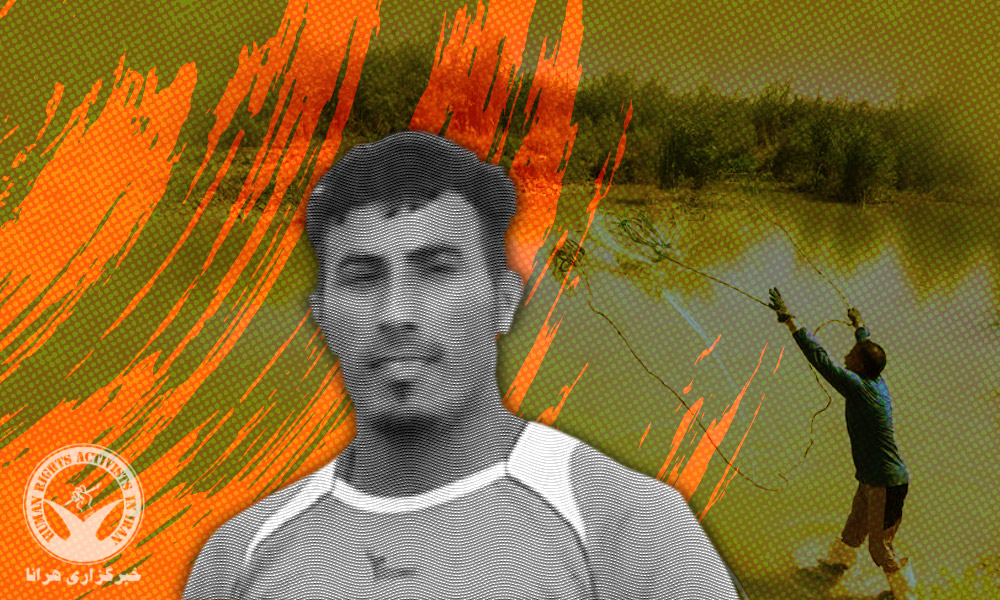
On Wednesday, November 17, a fisher was shot dead by military forces in Hoveyzeh County.
According to HRANA, the news agency of Human Rights Activists, 32-year-old Ahmad Savari, a resident of Rafi-Shahr in Khuzestan Province, was shot dead by military force while he was fishing in Hawizeh Marshes.
HRANA’s annual human rights report has specifically documented cases in which military forces’ use of live ammunition against citizens has led to their injury or death.
According to the 2020 report, 36 cross-border laborers (kolbars), 5 cross-border fuel carriers (sukhtbars) and 33 other citizens have been shot dead by military forces and border guards in the last year. In addition, 130 people have been injured of whom 109 are Kolbars, 5 are Sukhtbars, and 16 are citizens.
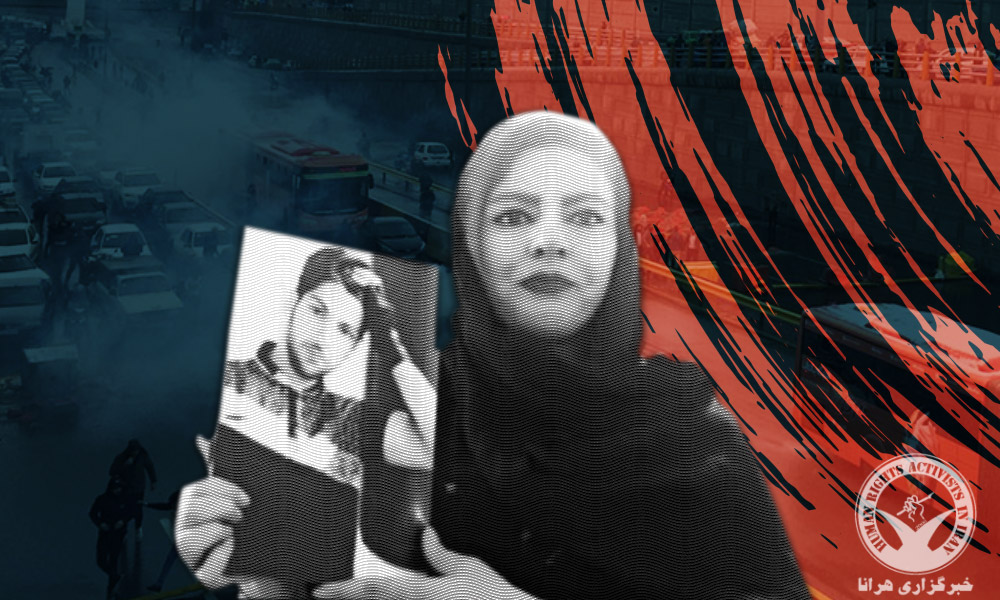
As the anniversary of the nationwide November 2019 protests approaches, security forces have begun to put pressure on victims’ families to deter them from holding ceremonies in remembrance of their killed loved ones.
According to HRANA, the news agency of Human Rights Activists, Farzaneh Ansarifar, the sister of one of the victims, was arrested for a short time to force her to cancel one such ceremony. According to an informed source, she was told that the authorities from Ahvaz had asked for her imprisonment due to inviting people for gathering via Instagram Stories.
In another attempt to deter gathering at the cemetery, the public relations of the Municipality of Behbahan city and the Islamic Council of this city announced that the roads led to the cemetery have been blocked due to the construction. In Behbahan city, the internet connection was intentionally disrupted, and Behbahan citizens Mohsen Ghanavati, Amin Moradi, and Payam Jeyhooni were reportedly arrested by security forces.
During the protests of November 2019 in Behbahan City, security forces used live ammunition against protestors which led to the death of several protestors including Mehrdad Dashinia, Mahmood Dashtinia, Farzad Ansarifar, Mohammad-Hossein Ghanavati and Mohammad Hashamdar.
In November of 2019, an unprecedented increase in fuel prices sparked a wave of protests in dozens of cities across the country. The spokesperson of the Parliamentary National Security and Foreign Policy Commission Seyed Hossein Taghavi announced that 7000 people were arrested during these protests. According to reports of human rights organizations, hundreds were killed by the regime forces.
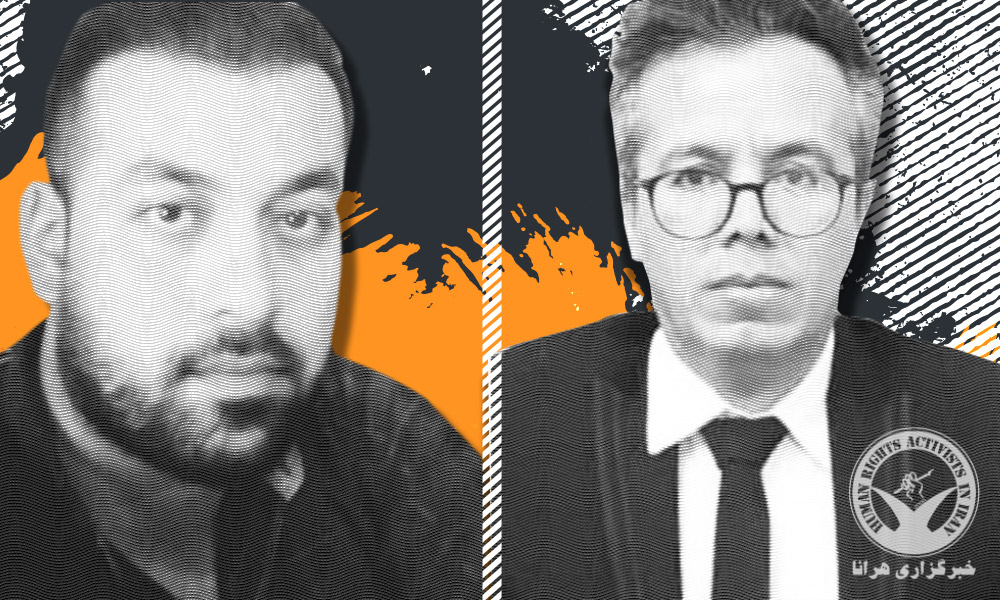
Recently, Branch 111 of Tabriz Criminal Court confirmed sentences of prison time, fines, and flogging for Azerbaijani Turk activists Amir Sattari and Yousef Salahshouri.
According to HRANA, the news agency of Human Rights Activists, Amir Sattari was sentenced to 91 days in prison, of which the detention period will be subtracted, and a fine of 40 million rials after being charged of “inciting violence via cyberspace”. 50 days of this prison term have been suspended for two years.
Salahshouri received a fine of 51 million rials on a charge of “inciting violence”, and sentenced to 37 lashes on a charge of “disturbing public order”.
On July 25, Yousef Salahshouri was arrested by intelligence agents and transferred to the detention center of the Ministry of Intelligence in Tabriz. On August 11, in a phone call, Salahshouri informed his family that he had been transferred to Tabriz Prison. He was released on bail on August 14. Then on October 3, the Revolutionary Court of Tabriz held the first court session.
Sattari was arrested on July 22 by security forces and transferred to Tabriz Prison. He was released from Tabriz prison on August 15.
On July 24, a number of citizens in Tabriz marched and protested in support of the protest of Khuzestan against water shortages and mismanagement of the government. During the protests, a number of these citizens were arrested.
NOVEMBER 15, 2019: A sudden and substantial hike in the cost of fuel sparks unrest across Iran. Individuals across the country pour into the streets in what soon becomes mass protests covering a reported 104 cities across Iran.
As the anniversary of the November protests approaches, HRA has spoken with Iranians calling for concrete action against those responsible for violent crackdowns against protesters including arbitrary and incommunicado detention, illegal use of force, and torture among other serious violations. For nearly two years, perpetrators have, for the most part, enjoyed widespread impunity. Domestically, some have even seemingly been rewarded. Indeed, individuals such as now-President Ebrahim Raisi, a known and serious violator, have risen to top positions of power.
Soheila, a 45-year-old mother whose son was shot in the November 2019 protests, highlights the shortcomings of the judiciary in Iran, telling HRA, “I hope that accountability will mean that next time, my child, instead of taking to the streets, can work through established pathways to hold corrupt people accountable for their actions.”
November 2019 saw the deaths of several hundred Iranians (227 were verified by HRA) in what is arguably a state-sanctioned arbitrary deprivation of life. In addition over 7,100 were arbitrarily detained, some remain detained today. Although the violations noted above have been extensively documented, little has been done to hold perpetrators accountable.
Figure 1: reported November 2019 protest points -black denotes locations where the killing of protester(s) were reported (Human Rights Activists in Iran)
Elika, 25, told HRA, “Without accountability for violations that occurred in November 2019, the cycle of repression and violence will not end. Those that intend to perpetrate future abuse [on us] need to see accountability. Maybe then they will take a moment to think before pulling the trigger.” In a recent post in the Atlantic Council IranSource blog, Skylar Thompson, HRA Senior Advocacy Coordinator, stated similarly, “Without concrete action to fight the plague of impunity that covers Iran, these violent events will only continue to occur and the Iranian people will continue to suffer.”
Iran has proven unwilling to investigate and prosecute those responsible through domestic judicial frameworks. This unwillingness is paired with the fact that Iran’s judiciary is in no way impartial and is in fact led by the very perpetrators responsible for the noted violations. Unfortunately, violations of fair trial standards have become status quo.
When asked what accountability looks like to him, Hafez, 22, told HRA, “They should handcuff the perpetrators. […]. They should be prosecuted in a public court and imprisoned.” He continued, “Once handcuffed, perpetrators should have to look the victim’s mother in the face to calm her heart.” Nazanin, 32, told HRA that accountability, in her view “is [the Islamic Republic] honestly and openly admitting wrongdoing.”
HRA has identified 54 individual and seven institutional violators connected to the November 2019 protests. It Is noteworthy that a number of those violators have also been complicit in numerous additional acts of repression against protesters including in 1988, 2020 (protests over the shooting down of Ukrainian airliner), 2021 (protests over resource mis-management in Khuzestan), and many instances in between. This repeated action is a direct consequence of the lack of accountability.
The following section lists notable individuals responsible for repeated serious and widespread rights violations. Extensive and credible documentation is readily available. HRA calls on the international community to hear the pleas of Iranians like Hafez, Nazanin, and Elika and utilize available documentation to take concrete action against those responsible.
*For a more in-depth look at the listed violators visit www.spreadingjustice.org or select a name and be directed to a violator profile that includes several data points including an overview of violations, employment history, as well as additional evidentiary documentation.
Government
Mojtaba Raei Special Governor, Najafabad City of Isfahan Province Deputy Governor of Isfahan
Seyed-Ahmad Zargar Judge of the Islamic Revolutionary Tribunal of Tehran
Iman Afshari Judge, Head of Branch 26 of the Revolutionary Court of Tehran
Mohammad Mahdi Mahmoodi Deputy Chief Justice of the General and Revolutionary Courts of Shiraz Head of the 2nd Criminal Court Judge of Branch 101 of the 2nd Criminal Court of Shiraz
The July 2021 Iranian protests were a continuation of protests that have been erupting sporadically since 2016.
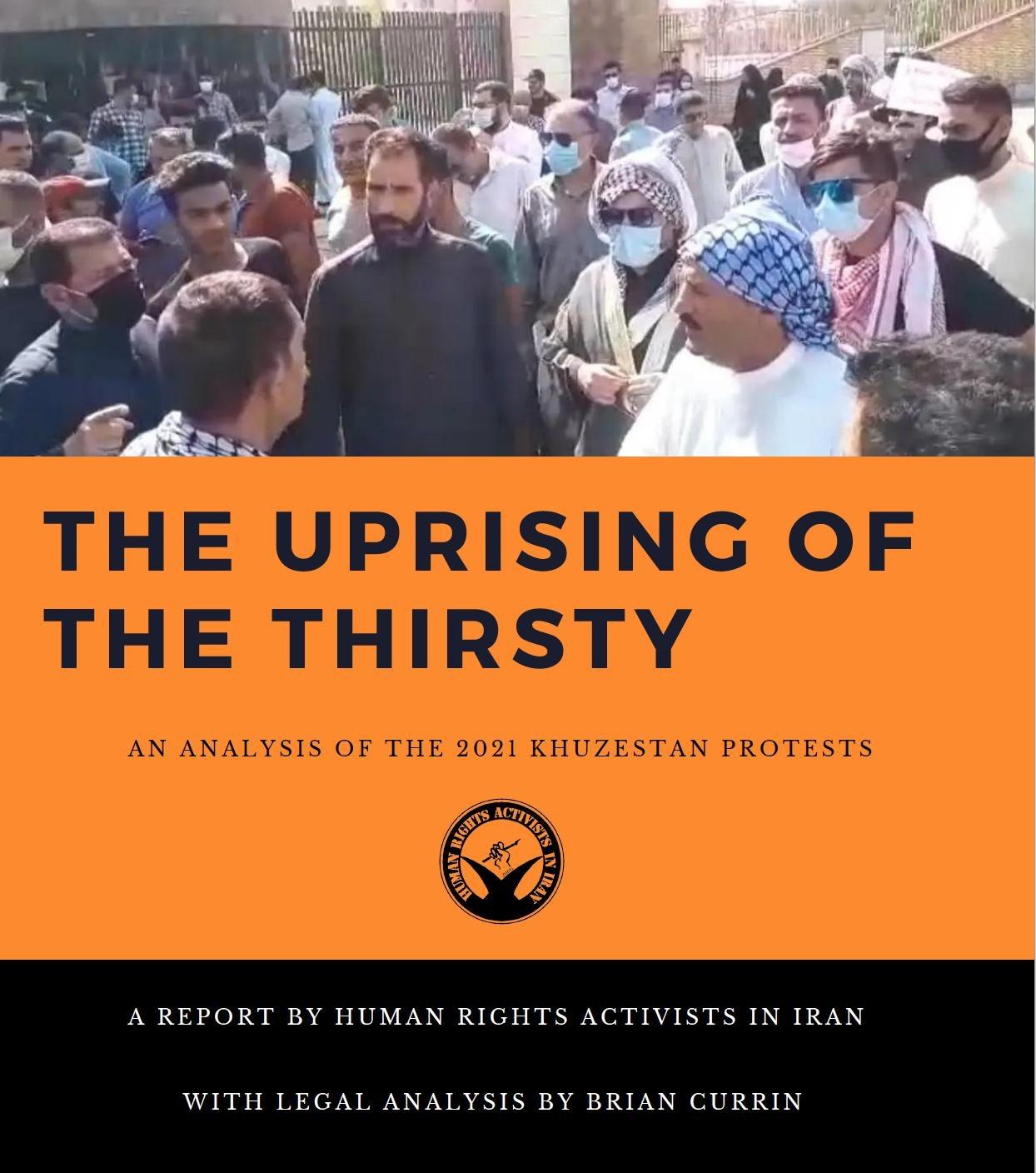
The driving force behind the July/August uprising was to protest the perennial water shortages and rolling blackouts stemming from mismanagement of resources, fueling public anger. The latest round of protests erupted on 15 July, starting in Khuzestan soon spreading to other provinces including Isfahan, Lorestan, Eastern Azerbaijan, Tehran, and Karaj. These protests have been coined the ‘Uprising of the Thirsty’.
As nearly 5 million Iranians in Khuzestan are lacking access to clean drinking water, Iran is failing to respect, protect, and fulfill the right to water, which is inextricably linked to the right to the highest attainable standard of health; both are protected by the International Covenant on Economic, Social, and Cultural Rights (ICESR), to which Iran is a signatory. It is a common cause that Iran’s water crisis has reached a critical point. Even the regime’s state-run media have acknowledged the dire situation, with at least 700 villages out of water.
According to the state-run Aftab News on July 4, 2021, “Of Iran’s population of 85 million, about 28 million live in areas with water shortages and are under pressure in this regard, mainly in the central and southern regions of the country. Water shortages have affected all sections of society, from urban households to agricultural and rural communities.”
It did not take long for the protests to take on a political character, with protesters in various cities calling for the end of the current regime and expanding the subject matter of their protests from water shortages to deteriorating living conditions.
One protester told HRA, “My ideal outcome is to see a regime official resign in response to our suffering.We are tired of all of this misery, poverty, dehydration, neglect, lies, and empty promises.”
A protester living in Tehran told HRA, “Besides supporting [the people of] Khuzestan, we are protesting unemployment, high prices, poverty, and the existing problems in the country. We can no longer bear the hardships of life created by unworthy officials. The authorities must address the problems…”
In the two weeks of the uprising, Human Rights Activists (HRA) verified 129 videos documenting the protests, 361 arrests, 6 deaths, and several more wounded. HRA’s Spreading Justice team (HRA-SJ) additionally identified individual violators associated with the violent crackdown. The following report analyses the events that occurred as a result of the uprising, those responsible, and concludes with a call for accountability noting that without action, this cycle of abuse will only continue.
On October 20, Azerbaijani Turk activist Nader Sadeghian was sentenced to four months in prison by Branch 1 of the Revolutionary Court of Tabriz city.
According to HRANA, the news agency of Human Rights Activists, 100 days of this term has been suspended for four years.
The court, headed by judge Hamlbar, issued the verdict to his lawyer. Mr Sadeghian has been convicted of the charges of “online provoking people to act the violent crimes.”
On Saturday, July 24, a number of Tabriz’s citizens protested in support of Khuzestan protests against water shortages and general mismanagement of the crisis. During this protest, a number of people were arrested.
Nader Sadeghian was arrested on July 25, by intelligence agents and transferred to a security detention center in Tabriz. After 17 days, he informed his family about his relocation to Tabriz Prison. He was released on bail on October 15.
On the morning of Tuesday, October 19, two brothers who had previously been convicted of murder were executed in Sepidar Prison in Ahvaz.
According to HRANA, the news agency of Human Rights Activists, the prisoners’ mother died of a heart attack, which is believed to have been induced by the execution of her children.
HRANA has identified the brothers as 45-year-old Ali-Muhammad Muhammadi and 38-year-old Eslam Muhammadi, both residents of Ramhormoz County in Khuzestan Province.
According to an informed source, the brothers were arrested in regards to a group fight that happened in June 2005, in a Patak-e Jalali village in Khuzestan Province.
The most recent report of the Statistics and Publication Center of the Human Rights Activists in Iran (HRA) states that between October 8 of 2020 and October 9 of 2021, at least 266 citizens, including three juvenile offenders, were executed and 90 citizens were sentenced to death.
As the report points out, Iran’s judicial authorities do not publicly announce over 82% of carried-out executions, dubbed as “secret executions” by human rights organizations.
The execution of the Muhammadi brothers has not been announced by officials or reported by domestic media in Iran as of this writing.
On Monday, October 18, Yousef Salahshour and Amir Sattari Rauf were summoned to Branch 111 of the Criminal Court of Tabriz.
According to HRANA, the news agency of Human Rights Activists, they have received separate summons, issued through the online system of Judiciary (SENA), to appear in court. Salahshour and Sattari Rauf are to appear in court on October 27 and October 30 respectively.
As mentioned in the summons, the charges against Salahshour are “disturbing public order by participation in illegal protests and assembles”, “agitating people for violent act through telecommunication systems in cyberspace” and “propaganda against the regime”.
On July 25, Yousef Salahshour was arrested by the intelligence agents and transferred to the detention center of the Ministry of Intelligence in Tabriz. On August 11, in a phone call, he informed his family that he had been transferred to Tabriz Prison. He was released on bail on August 14, and then on October 3, the Revolutionary Court of Tabriz held the first court session addressing one of his charges.
Mr. Sattari Rauf was arrested on July 22 by security forces and transferred to Tabriz Prison. He was released from Tabriz prison on August 15.
On July 24, a number of citizens in Tabriz marched and protested in support of the protest of Khuzestan against water shortage and mismanagement of the government. During the protests, a number of these citizens were arrested.
Two participants in this July’s Protests in Khuzestan were arrested this weekend in Behbahan.
According to HRANA, the news agency of Human Rights Activists, Gholam Tayebi and Muhammad Khalili were arrested by security forces and transferred to an unidentified location on Saturday, October 16 and Sunday, October 17, respectively.
In the company of the police of NAJA (Disciplinary Force of the Islamic Republic of Iran), security forces arrested the citizens separately in Behbahan City, where they were forced to flee from their home in Kurdistan Bozorg Village. After the wave of arrests from this village, they did not return home due to the prosecution. According to this report, Ali Tayebi, another resident of this village, has also been arrested.
An informed source told HRANA that most of the arrestees from this village in regards to July protests in Khuzestan are farmers–biggest victims of water resources mismanagement of the government. A while back, an official of the Ministry of Agriculture Jihad had informed about the delay in autumn planting due to lowering reservoir levels of dams in this area.
According to Summary Report from the Khuzestan Protests in 41 Cities published by HRANA, 171 people were arrested in the July protests. The protests erupted on July night 15, 2021 in Khuzestan province to outcry over water shortages and water supply mismanagement. These protests lasted two weeks spreading over 41 cities of the province. Reportedly, dozen people were killed and wounded and hundreds were arrested.
According to HRANA, the news agency of Human Rights Activists, a number of protests took place this week in Iran, many of which were continuations of ongoing movements. Read our recap below for details, photos, and videos from the demonstrations.
Saturday, October 9
In Rameshk city, in Sistan and Baluchestan Province, a number of citizens assembled in front of a copper mining company called “Rameshk” to protest the company’s confiscation of their pieces of land without providing compensation.
Sunday, October 10
On the thirteen day of their strike, Haft-Tappeh’s workers assembled in front of the governorate building in Shush city and then marched in the streets. They chanted “this revolutionary government has just empty slogans”.
These workers demand paying delayed wages, immediate returning the company from the private sector to state section, returning fired workers to work, extending the contracts of both seasonal workers and workers of the pest control department, carrying out repair operations.
A group of depositors of Caspian, a finance and credit institution, assembled in front of the building of the Central Bank in Tehran to protest against the sham investment scheme of the institution and ask for the return on their investment.
A number of retirees of the pension fund of steel corporation Fulad assembled in front of the company’s buildings in Isfahan and Khuzestan. They asked for levelling up their pension in proportion with the poverty line, enjoying adequate benefits and the supplementary insurance as set by the by-laws of this corporation.
Monday, October 11
For the second consecutive day, a number of workers of Jovein cement company in Mashhad assembled at company premises to ask for implementing Job Classification Plan and holding the employers to his promises.
A group of poultry farm workers assembled in front of the Governor’s office in Shahrekord city in Chaharmahal and Bakhtiari Province. They protested against the high costs of feeding and chicks for incubators in comparison to the low chicken prices.
On the fourteenth consecutive day, Haft-Tappeh workers assembled in front of the governorate building in Shush city and then marched in the streets.
The contracted workers the company SAAPEC in Asaluyeh went on strike and assembled in company premises in protest against two-months unpaid wages.
For the second consecutive day, a number of citizens in Rameshk city, in Sistan and Baluchestan Province, assembled in front of a copper mining company Rameshk. Reportedly, to build a copper mine site, this company has confiscated their pieces of land without paying any compensation.
Tuesday, October 12
The workers of Abnieh Fanni, a railway company in the Azerbaijan zone, which are working on rail lines of counties Salmas, Jolfa, Azarshahr, Marand and Ajabshir, went on strike in protest against the two-month delay in payment and employer’s contribution in the health insurance. According to these workers, their problems began when the project was outsourced to private-sector companies.
On the fifteenth consecutive day of the strike, workers of Haft-Tappeh Company assembled at their workplace. These worker demands, among other things, paying delayed wages, immediate returning the company from the private sector to state section, returning fired workers to work, extending the contracts of both seasonal workers and workers of the pest control department, Carrying out repair operations.
The workers of the Isfahan municipality assembled to ask for levelling up wages and other demands in front of the municipality headquarter.
In front of the building of the Tehran Planning and Budget Organization, a number of last-year-retired teachers protested unpaid pension income.
Wednesday, October 13
A number of school service personnel working for the Ministry of Education of Qom assembled in the premises of the Ministry of education’s building. They protested low wages,forced and unpaid overworking, cutting off work uniform quota and the lack of promotion and other job-related improvements for those who have obtained the university degree
On the sixteenth day of their strike, Haft-Tappeh’s workers assembled in front of Labor office in Shush city.
A number of contractual teachers assembled in front of the Provincial Government building in Shahrekord in Chaharmahal and Bakhtiari Province. These teachers protested against the lack of job security and low wages in comparison to teachers who are hired by the ministry of education. They demanded to come under contract with the ministry of education.
Thursday, October 14
In response to the call of the Coordinating Council of Iranian teacher Unions, working and retired teachers and educators in at least 40 cities assembled to ask for their demands.
A number of workers of the municipality in Khorramshahr city assembled to ask for six months unpaid wages.
The workers of private companies which are working as contractors on coal mines in Kerman assembled in front of the Provincial Government building. They asked for implementing the Job Classification plan and other demands.
The retirees of Gilan Ministry of Health assembled in the premises of the University of Medical Sciences in Rasht to ask for closing pension gap and other demands.
On the Seventeenth day of their strike, the workers of Haft-Tappeh Company assembled at their workplace.