Over 100 Citizens Arrested During Protests Against Local Election Results in Yasuj

The prosecutor of the Kohgiluyeh and Boyer-Ahmad province announced that more than 100 citizens were arrested on on Sunday, June 20, the day of local elections in Yasuj city.

According to HRANA, the news agency of Human Rights Activists, quoting Tabnak News, the rally turned violent after security forces intervened.

Kohgiluyeh and Boyer-Ahmad Provincial Prosecutor Seyyed Ali Malek Hosseini stated, “On the day of the elections, we had more than 100 detainees aligned with different political views, groups, and families of candidates.”

Hosseini described the secret to success in the previous election cycle, and how the same principles had been applied to Sunday’s demonstrations.

“The key to success in the 2019 election was that the security was our first priority,” Hosseini said. “So we arrested the governor’s representative and closely observed officers of the ballot box.”

But not all agreed with these tactics. Fararo news website published a report that called the Yasuj local elections controversial. The report stated,  “The story of the controversial elections of the city locals in Yasuj stems from problems in the electronic voting system; the announcement of the list of election winners were delayed and suspicions of fraud were raised.”

The identities of the arrested citizens are still unknown.

Amnesty International Announces Imminent Danger of Juvenile Offender Hossein Shahbazi’s Execution

Amnesty International announced the imminent danger of the execution of juvenile offender Hossein Shahbazi, currently on death row in Adelabad prison in Shiraz.

According to HRANA, the news agency of Human Rights Activists, Amnesty said in a statement, “Part of the evidence against the juvenile offender includes confessions obtained through torture”. The statement calls on Iranian authorities to suspend the death sentence and to provide a fair retrial in full compliance with juvenile delinquency principles.

According to the statement, Hossein Shahbazi was sentenced to death by Branch 3 of the Criminal Court of a Fars province, and the sentence was upheld by the Supreme Court in June 2020.

Amnesty International’s deputy director for the Middle East and North Africa office, Diana Elthawy, commented on Shabazi’s sentence.

“Iran’s authorities must immediately halt the execution of Hossein Shahbazi scheduled for June 28,” Elthawy said. “Using the death penalty against someone who was a child at the time of the crime is prohibited under international human rights law and violates Iran’s international obligations. Going ahead with this execution would be an abhorrent assault on children’s rights and would make an absolute mockery of justice.”

According to the annual report of HRANA News Agency for the year 2020, at least 4 juvenile offenders were executed in Iran last year and 2 other juvenile offenders were sentenced to death.

“The Iranian authorities must quash Hossein Shahbazi’s conviction and sentence and grant him a fair retrial in full compliance with the principles of juvenile justice, without resorting to coerced ‘confessions’ the death penalty,” Elthawy stated. “We also urgently call on the international community, including UN bodies and the EU and its member states, to intervene to save this young man’s life.”


Sydney Pen Association Demands Immediate Release of Reza Khandan Mahabadi, Baktash Abtin and Keyvan Bazhan from Evin Prison

On Sunday, June 20, the Sydney Pen Association in Australia issued a statement in light of Ebrahim Ra’isi’s election as next President of the Islamic Republic.

According to HRANA, the news agency of Human Rights Activists, quoting the Writers’ Association of Iran, the statement calls for the immediate release of Reza Khandan Mahabadi, Baktash Abtin and Keyvan Bazhan, currently being held in Evin prison for their writings critical of the State. All three authors are members of the Writers’ Association of Iran, and each has published several books on Iranian history, sociology, and literature.

“The three authors need medical attention and authorities have not taken any of them to hospital,” the statement says.

In April, Baktash Abtin’s lawyer announced that his client had contracted COVID but had not received the necessary treatment. Reza Khandan Mahabadi suffers from osteoarthritis of the neck and Keyvan Bazhan has a thyroid disease. Penn Sydney was recently informed by inmates that another wave of coronavirus has spread to Evin Prison, further endangering the lives of its inmates.

The writers were first sentenced to imprisonment when now-president-elect Ebrahim Ra’isi was head of the judiciary on charges of propaganda against the Islamic Republic and acting against national security. They were also accused of attending the graves of disgruntled poets and writers and critics of the regime.

The prosecution cited the publication of a book on the history of the Writers’ Association of Iran, an institution that has criticized Iran’s past and present governments for decades, and the defendants were sentenced to a total of 18 years in prison by the Revolutionary Court of Tehran.

In January 2019, an appeals court in Tehran reduced the sentence to a total of 15 years and six months in prison. Baktash Abtin and Reza Khandan Mahabadi were sentenced to six years in prison each, and Keyvan Bazhan was sentenced to three years and six months.

Abtin, Khandan Mahabadi and Bazhan were arrested on October 26 of last year, after attending the Judgment Enforcement Unit of the Evin Court, and  were transferred to the infamous Evin Prison to serve out their sentences.

The statement cites a joint text by Reza Khandan Mahabadi, Baktash Abtin and Keyvan Bajan, which was issued from inside the prison on June 6, 2021.

Below is an excerpt from their text:


We are addressing all writers and libertarians who have made “freedom of expression everywhere and for all” the focus of their human endeavors. This is the demand that the historical-global movement for freedom of expression has practically and always pursued. The Writers’ Association of Iran, of which we are three members, has been active as part of this movement for more than half a century; A movement that must be enhanced by its power and volume; Because apart from the daily threat of freedom of expression by the ruling powers, many people in the world are completely deprived of it; Including writers and people of Iran. We are currently in prison, and according to the sentence, we have to endure a total of 13 and a half years in prison because we are writers who oppose censorship and demand freedom of expression without exception. We are not the first prisoners and oppressed of this movement and we will not be the last until “freedom of expression everywhere and for everyone” is achieved.


Reza Khandan Mahabadi, Baktash Abtin, Keyvan Bazhan


Bektash Abtin concluded in his story to Sydney Pen Association president Mark Isaac,  “Freedom is never given to anyone on a gold tray; it comes at a high price. In a country like Iran, death very easily finds intellectuals, libertarians and those who fight for freedom of expression. We are not worried about the trial and the prison and its difficulties, because we have made our decision.”

Political Prisoner Narges Adibi Denied Medical Leave from Evin Prison

Political prisoner Narges Adibi has been denied medical leave from Evin Prison despite having numerous medical problems.

According to HRANA, the news agency of Human Rights Activists, Ms. Adibi suffers from bronchitis, asthma, and severe joint pain.

Branch 26 of the Tehran Revolutionary Court, presided over by Judge Mashallah Ahmadzadeh, sentenced Adibi to 8 years in prison on charges of conspiracy, insulting the leadership, insulting the founder of the Islamic Republic, and propaganda against the regime.

Branch 54 of the Tehran Court of Appeals, presided over by Judge Babaei, reduced the sentence to 3 years and 6 months in May of last year.

58-year-old Narges Adibi is the daughter of Hussein and mother of two children. She was arrested in July of last year and transferred to Evin Prison to serve out her sentence, where she has been held since.


Habib Rezaei Executed on Charge of Murder in Salmas Prison

At dawn on Monday, June 21, Habib Rezaei was executed in Salmas Prison in West Azerbaijan Province.

According to HRANA, the news agency of Human Rights Activists, quoting Kurdpa, Salmas native Habib Rezaei had been previously sentenced to death on a charge of murder under the Qisas (loosely translated as “eye-for-an-eye”) principle of Shariah Law.

The report quotes an informed source as saying, “Three years ago, Mr. Rezaei killed a man in a personal altercation, and then he was sentenced to death by the judiciary”.

According to international organizations, Iran ranks first in the world in citizen executions per-capita. The Statistics and Publication Center of the Human Rights Activists in Iran (HRAI) reported that between January 1st and  December 20th of 2020, at least 236 citizens were executed. One of these citizens was executed publicly, and two were juvenile offenders. An additional 95 citizens were sentenced to death.

According to the report, more than 72% of executions in Iran are not reported by the government or the judiciary. Human rights organizations call these “secret executions.”

Rezaei’s execution has not been announced by Iranian media or official sources at the time of this writing.


Subscribe to Our Newsletter

Now is definitely not the time to stop reading!

Juvenile Defendant Sews his Mouth Closed in Sanandaj Youth Detention Center

On June 19, a teenager in Sanandaj Youth Detention Center sewed his mouth closed to protest the prolonged process of his case by the Second Investigation Branch of Marivan.

According to HRANA, the news agency of Human Rights Activists, quoting Kurdpa, 17-year-old Arman Farahmand is the son of Mokhtar and a resident of Sardush village in Marivan city in Kurdistan Province.

Arman Farahmand is said to have been arrested along with eight others in Marivan in September 2020 following a mass brawl over the murder of a citizen named Pouya Chareh Talab. The rest of the defendants have been acquitted in recent months.

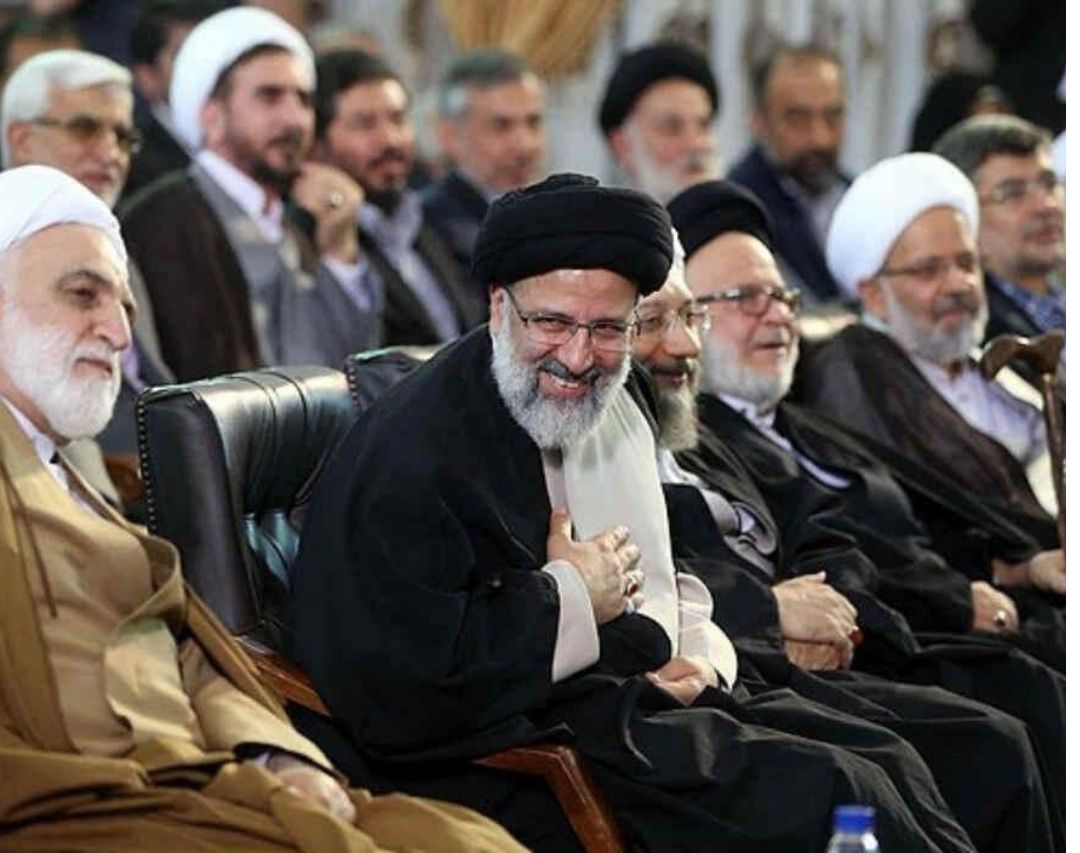
Ebrahim Raisi in Response to Questions About his Role in the 1988 Executions in Iran: “I Should be Praised and Admired”

In his first press conference since being announced as winner of Iran’s presidential election, Ebrahim Raisi was interviewed by Al Jazeera.

According to HRANA, the news agency of Human Rights Activist, Al Jazeera questioned the president elect about his role in the executions of the political prisoners in Summer 1988 in Iran, his inclusion on the human rights sanctions list, and the request for his trial by some human rights organizations.

In response, without claiming to have played a role in the 1988 executions, Raisi claimed that he has “always been a defender of the rights of the people, as a juristic”, and that “human rights has been at the axis of all (his) responsibilities”. He went on to state that he should be “praised and acclaimed” for this.

For the four decades of the Islamic Republic’s existence, Raisi has served in various positions in the judiciary against human rights and been responsible for the execution, imprisonment, torture, amputation to repression, justification of repression, violation of the rights of countless women, Bahai’s and others.

For his role in the massacre of political prisoners in the summer of 1988, in Tehran, he has been called the “Ayatollah of Massacre” by critics.

Ramin Sa’adat Beiglou Executed in Qazvin Prison

According to HRANA, the news agency of Human Rights Activists, quoting Iran Human Rights (IHR), On June 20, Ramin Sa’adat Beiglou, a resident of Zanjan who had previously been sentenced to death for murder, was executed in Qazvin Central Prison.

The report quoted an informed source as saying, “Ramin has been in prison since 2017 on charges of murdering a person who owed Ramin 10 million tomans (less than $200).”

According to international organizations, Iran has the highest rate of citizen executions per-capita. Based on HRANA’s Statistics and Publication Center, during a one year period (January 1, 2020, to December 20, 2020), at least 236 citizens were executed from which two were juvenile offenders, and one case was a public execution. An additional 95 citizens were sentenced to death.

According to the report, more than 72% of executions in Iran are not reported by the government or the judiciary. Human rights organizations call these “secret executions.”

The execution of this prisoner has not been announced by Iranian media or official sources as of this writing.

Ahmad Reza Jalali’s Lawyer Expresses Concern About His Condition in Evin Prison

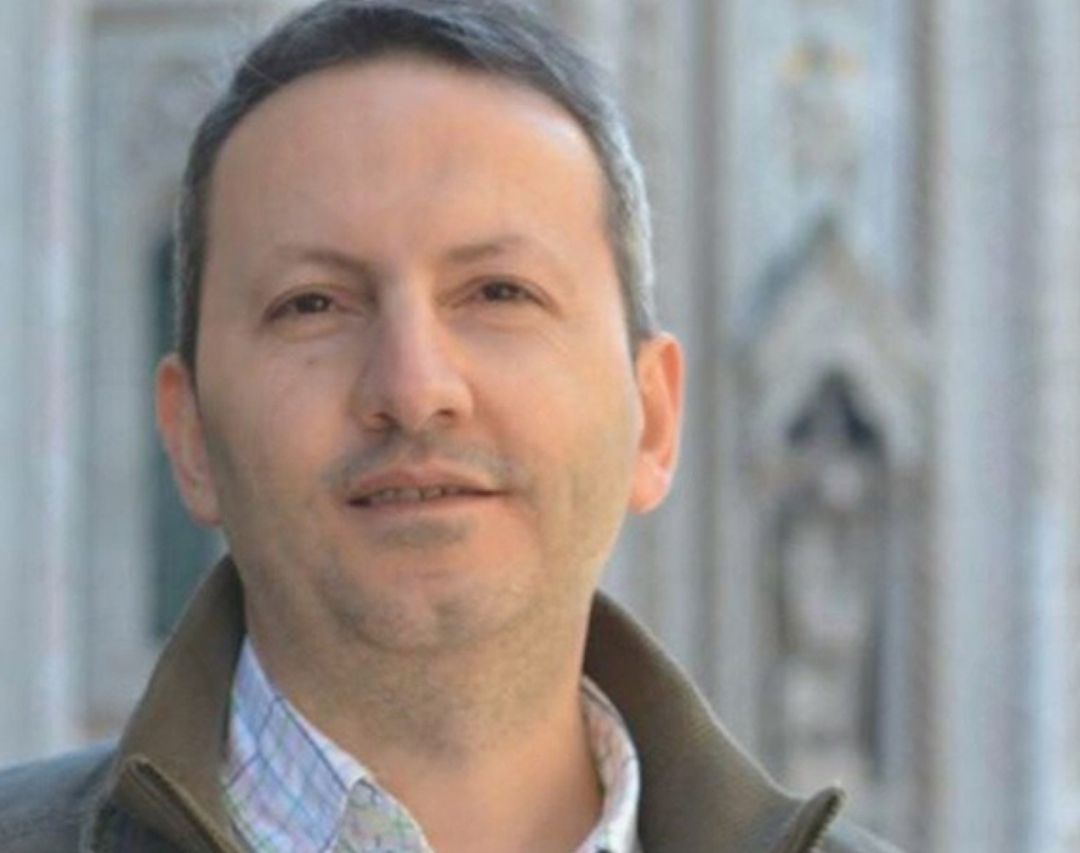
Ahmad Reza Jalali’s lawyer, Helaleh Mousavian, has expressed concern about her client’s condition in Evin Prison. According to HRANA, the news agency of Human Rights Activists, Reza Jalali is a university professor and dual citizen of Iran and Sweden currently on death row.

The professor, who traveled to Iran in May 2016 at the invitation of the University of Tehran, was arrested by security forces on charges of “moharebeh through espionage for Israel”. Moharebeh, loosely translated as “waging war against God”, is a pillar of Sharia Law that is typically applied to those suspected of connection to any acts against the state.

Mr. Jalali was sentenced to death for espionage, and the sentence was upheld by the Supreme Court in December 2017.

Ahmad Reza Jalali worked at the Center for Natural Disasters after graduating from medical school in Iran. He immigrated to Sweden in 2009 to continue his studies and earned a doctorate. He completed his postdoctoral in Disaster Medicine at the University of Piedmont in Italy, and later, settled in Sweden with his wife and two children.

According to a HRANA report published in November 2020, Ahmad Reza Jalali was transferred to solitary confinement for a week to be prepared for execution. In December of that year, Ms. Mousavian was informed that her client’s death sentence was put on hold and he was transferred to ward 209 of Evin prison.

“Fortunately, Mr. Jalali was transferred to a public ward in April, but so far, despite all the efforts, his death sentence has not changed,” Mousavian said. “I am very worried about my client, especially now that the presidential election is over and the result is out. Despite my repeated expressions of concern, no effective action has been taken by the country of dual citizenship and the European Union.”

Azad University Threatens to Expel Students Protesting Professor Who Killed a Healthy Dog For Dissection

On Tuesday, June 16, a professor of Veterinary Medicine in the Shushtar Branch of Azad University in Southwest Iran was criticized by students for killing a healthy dog for the purposes of a dissection lesson.

According to HRANA, the news agency of Human Rights Activists, quoting Rokna, the dog was still conscious after receiving several doses of anesthesia, and only finally died after the professor cut into its leg vein. Students who have criticized the killing and have posted images of the dissected animal online have been threatened by the school’s administration with expulsion.

Students at Azad University have also said that last year a donkey in the same class was killed in the same way. According to student posts online, the animal stumbled around the room for several hours after being beheaded before it died.

In 2019, all three Ministries of Science, Education, and Health issued directives restricting the use of live animals in laboratories and classrooms. The language of the Ministry of Education’s directive is significantly more decisive than its counterparts; it declares that the use of living beings for education is prohibited without exception. The circular of the Ministry of Health, however, despite emphasizing the importance of first seeking out alternative methods that do not harm the animals, states that it is ultimately up to the teachers to use their best judgement.

According to students in the class, the female dog did not have any specific diseases and the teacher had confirmed the dog’s health after the examination. The professor has as of yet not been reprimanded by the school.