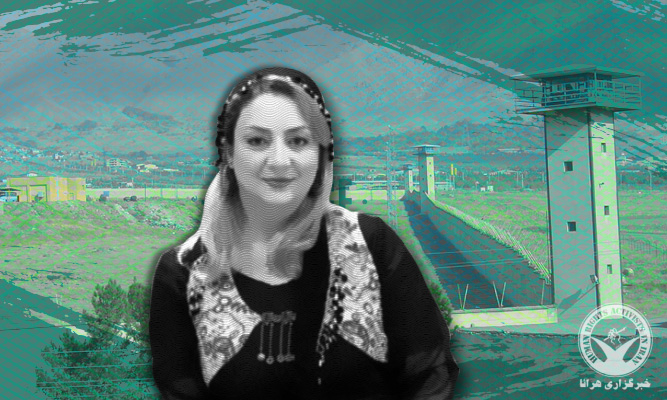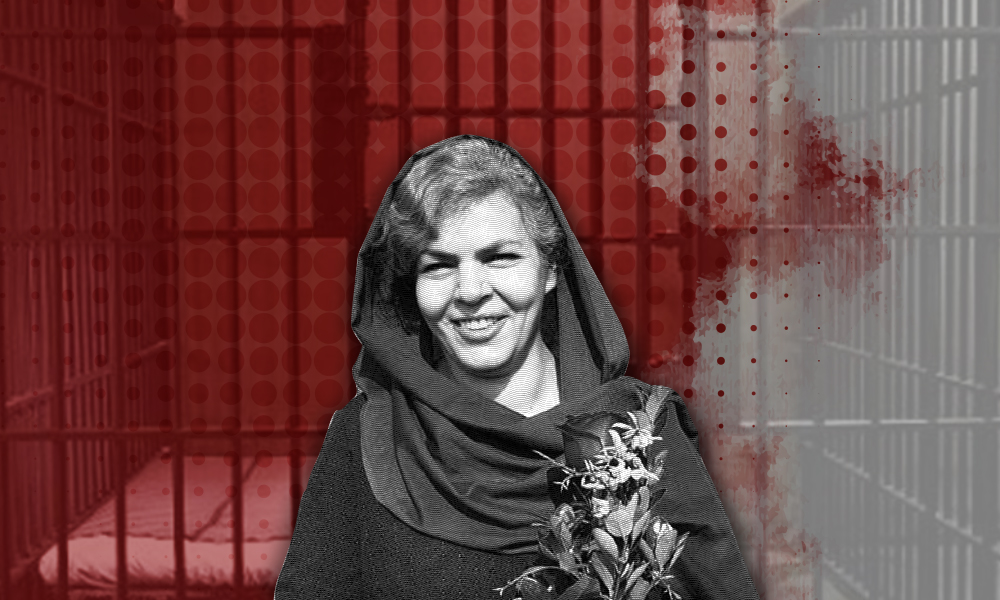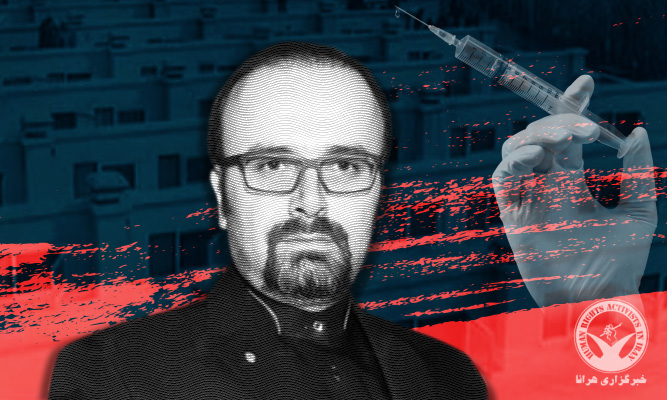
Monireh Arabshahi Forcefully Transferred Back to Kachooye Prison Before Completion of Medical Treatment

On Monday, October 4, civil activist Monireh Arabshahi was forcefully transferred from the hospital back Kachooye Prison in Karaj by judge order, despite not having completed her treatment.

According to HRANA, the news agency of Human Rights Activists, Ms. Arabshahi had been on medical leave since August 4.

Ms. Arabshahi’s medical issues have been ongoing. On May 3, 2020, Arabshahi was granted leave on bail for 500 million tomans to receive surgery to remove her thyroid gland, after which she was sent back to prison.

Yasamin Ariaani, Arabshahi’s daughter and an outspoken opponent of the compulsory hijab in Iran, who had been released after serving out her sentence on February 14, 2019, was arrested again on April 10, 2019 on new charges.

One day after the arrest of her daughter, Mrs. Arabshahi was also arrested and both were relocated to Gharchak Prison. Subsequently,  both were sent to Evin Prison and finally they end up in Kachooye Prison in Karaj.

Branch 28 of the revolutionary court has convicted this mother and daughter to a total of 16 years in prison, which were later reduced to a total of 9 years and 7 months. They were charged with “assembly and collusion against national security”, “propaganda against the regime”,  and “provoking and provision of impurity and indecency”.

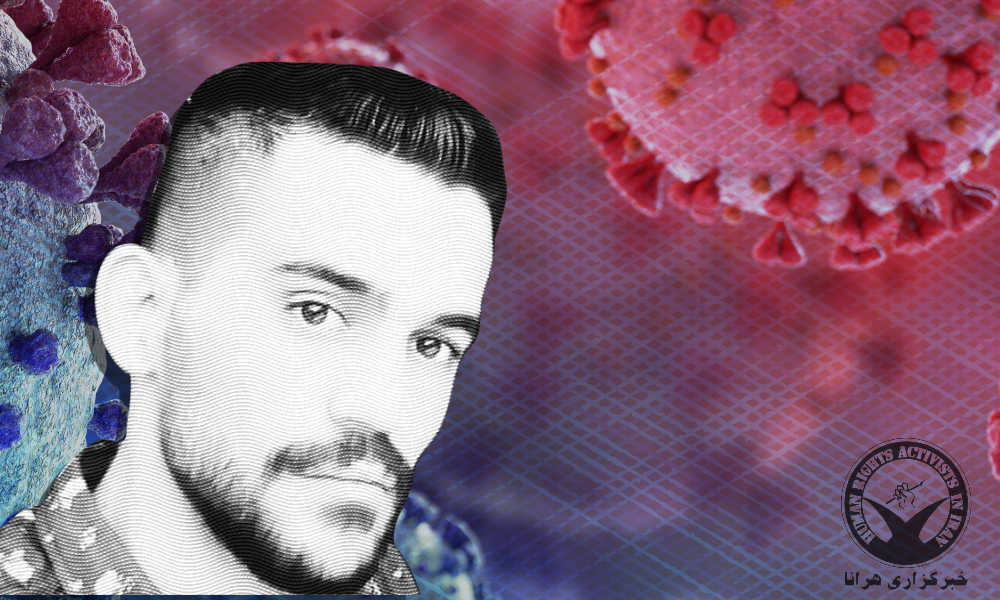
Civil Activist Arsham Rezai in Transferred to Quarantine Ward of Rajai Shahr Prison after Positive COVID-19 Test

HRANA, the news agency of Human Rights Activists, has confirmed that yesterday, September 29, civil activist Arsham Rezai was relocated to the quarantine section of Rajai Shahr Prison in Karaj after testing positive for COVID-19.

The COVID-19 surge in Iran’s prisons has been a major threat to the health and safety of their inmates, who frequently do not receive timely or adequate medical care from authorities.

Arsham Rezai was arrested on January 7 of 2019 by the regime’s intelligence and security forces. On November 13 of that year, he was released on bail for 2 billion Rial (approx. 8000 dollars).

On February 26, 2019, the Islamic Revolutionary court sentenced Mr. Rezai, without informing the defendant’s attorney that the court session was taking place, to eight years and six months imprisonment on the charges “propaganda against the regime”, ” collusion against national security”, and ” offensive statements against the supreme leader of Iran”. Grounded on Article 134 of the Islamic Penal Code, from the charges, the severest punishment of 5 years was enforceable.

To serve his sentence, on October 18, 2020, he was arrested and transferred to a solitary confinement cell in Rajai Shahr Prison. Finally, he was relocated to a public section of this prison on December 19 2020.

On January 20 of this year, on new charges, the revolutionary court sentenced him to an additional 15 months imprisonment (which was later reduced to 11 months on appeal) and 4 months penal labor.

Two Men Spared from Execution, One Sentenced to Death

Recently, two men facing death sentences were spared from conviction while a third was sentenced to death.

According to HRANA, the news agency of Human Rights Activists, quoting Dideban,  one man in Tehran was sentenced to death on a charge of murder on Wednesday, 29 September.

Two men were spared from execution in separate criminal lawsuits, in Urmia and Karaj respectively. Both cases were ruled upon exacting satisfaction from the “avenger of blood”, meaning that the victim’s relative or closest acquaintance agreed to refrain from demanding the perpetrators’ execution.

A man indicted for murder was sentenced to the death penalty. He was detained after one man was stabbed to death in a street fight that took place in a park in Islamshahr, July 2018. This 30-year-old man, named Mahmoud, has denied the charge of first-degree murder and claimed that his actions were self-defense.

According to IRNA, a death-row inmate in Urmia Prison, after 11 years imprisonment, could exact the satisfaction of ‘blood avengers’ with the mediation of elders of the community.

The second spared inmate was a 20-year-old Meysam, who was sentenced to death on a charge of killing a 21-year-old man in a fight. After 5 years, he could exact the satisfaction of the victim’s parent by paying 2.5 billion tomans as reparation.

Prisoner Executed in Karaj Central Prison

At dawn on Wednesday, September 22, a prisoner was executed in Karaj Central Prison.

According to HRANA, the news agency of Human Rights Activists, quoting Tabnak, the inmate had previously been sentenced to death on charges of moharebeh (rebellion, or waging war against God in Shariah Law), disturbing public security, and murder.

Iran ranks first in the world in citizen executions per capita, according to international organizations. The Statistics and Publication Center of the Human Rights Activists in Iran (HRA) reported that between January 1 and December 20 of 2020, at least 236 citizens were executed.

One of these citizens was executed publicly, and two were juvenile offenders. An additional 95 citizens were sentenced to death. According to the same report, more than 72% of executions in Iran are not reported by the government or the judiciary, which human rights organizations call “secret” executions.

The report does not state the identity of this prisoner.

Inmate Executed in Rajai Shahr Prison in Karaj

An inmate whose identity is not known as of this writing was recently executed in Rajai Shahr Prison in Karaj.

According to HRANA, the news agency of Human Rights Activists, quoting Javan newspaper, the man had previously been sentenced to death for murder by Branch 12 of the Tehran Criminal Court

Branch 15 of the Supreme Court of Tehran upheld the death sentence and had sent it to the prosecutor’s office branch for the execution of judgment.

Iran ranks first in the world in citizen executions per capita, according to international organizations. The Statistics and Publication Center of the Human Rights Activists in Iran (HRA) reported that between January 1 and December 20 of 2020, at least 236 citizens were executed.

One of these citizens was executed publicly, and two were juvenile offenders. An additional 95 citizens were sentenced to death. According to the same report, more than 72% of executions in Iran are not reported by the government or the judiciary, which human rights organizations call “secret” executions.

Subscribe to Our Newsletter

Now is definitely not the time to stop reading!

Prisoner Executed in Rajai Shahr Prison in Karaj

On Wednesday, September 15, a prisoner who had previously been sentenced to death for murder was executed in Rajai Shahr prison in Karaj.

According to the HRANA, the news agency of Human Rights Activist, quoting Rokna, six years after the incident, this sentence was referred to the Judgment Execution Branch after being approved by the Supreme Court, and it was carried out last Wednesday.

Iran ranks first in the world in citizen executions per capita, according to international organizations. The Statistics and Publication Center of the Human Rights Activists in Iran (HRA) reported that between January 1 and December 20 of 2020, at least 236 citizens were executed.

One of these citizens was executed publicly, and two were juvenile offenders. An additional 95 citizens were sentenced to death. According to the same report, more than 72% of executions in Iran are not reported by the government or the judiciary, which human rights organizations call “secret” executions.


Inmate Executed in Rajai Shahr Prison in Karaj

A man named Jafar was recently executed in Rajai Shahr Prison in Karaj.

According to HRANA, the news agency of Human Rights Activists, the prisoner had previously been sentenced to death for murder, and the sentence was later upheld by the Supreme Court.

Iran ranks first in the world in citizen executions per capita, according to international organizations. The Statistics and Publication Center of the Human Rights Activists in Iran (HRA) reported that between January 1 and December 20 of 2020, at least 236 citizens were executed.

One of these citizens was executed publicly, and two were juvenile offenders. An additional 95 citizens were sentenced to death. According to the same report, more than 72% of executions in Iran are not reported by the government or the judiciary, which human rights organizations call “secret” executions.

Mohammad Ali Mansouri Sent on Leave after Enduring 14 Years in Prison

On Thursday, September 9, Mohammad Ali (Piruz) Mansouri was sent on leave for the first time after serving 14 years in prison.

According to HRANA, the news agency of Human Rights Activists, Mansouri is a political prisoner in poor health who has been serving out his sentence in Rajai Shahr Prison in Karaj.

Previously, on September 3, following a heart attack, Mr. Mansouri was transferred to a hospital in Karaj, where he was shackled to the bed despite his condition.

Mansouri was arrested in September 2007 after attending the 19th anniversary of the massacre of political prisoners in 1988. Branch 15 of the Revolutionary Court, headed by Judge Abolghasem Salavati, sentenced Mr. Mansouri to 17 years in prison, transfer to Rajai Shahr Prison in Karaj, and a fine of 150,000 tomans on a charge of “communicating and collaborating with the People’s Mujahedin Organization (MEK)”. The sentence was upheld by the Court of Appeals.

In May 2018, on the pretext of [conducting] “activities inside the prison” such as going on a hunger strike, inciting prisoners, and writing a statement in support of the Sunni prisoners, Mr. Mansouri was charged with “community and collusion against the regime” and sentenced to another five years in prison.


Christian Converts Amin Khaki, Milad Goodarzi, and Alireza Nourmohammadi Sentenced to a Total of 9 Years in Prison

On Sunday, August 22, Branch 12 of the Alborz Court of Appeals sentenced Amin Khaki, Milad Goodarzi, and Alireza Nourmohammadi, three Christian converts, to a total of nine years in prison.

According to HRANA, the news agency of Human Rights Activists, quoting Mohabbat News, in their first trial in June this year, Amin Khaki, Milad Goodarzi, and Alireza Nourmohammadi were each sentenced to 5 years imprisonment and fined 40 million Tomans, by the Fourth Branch of the Revolutionary Court of Karaj, on charges of propaganda and catechizing deviant against the holy Sharia of Islam.

Despite the fact that Christians are recognized as a religious minority under Islamic law, the security services nevertheless pursue the issue of Muslims converting to Christianity with particular sensitivity and deal harshly with activists in this field.

The Iranian regime targets Christian converts despite Article 18 of the Universal Declaration of Human Rights and Article 18 of the International Covenant on Civil and Political Rights, which state that every individual has the right to freedom of religion and belief and freedom to express it openly or secretly.

Revolutionary Court of Tehran Reverses Supreme Court’s Ruling and Sentences Davoodi to 30 Years Once Again

Although the supreme court overturned the sentence of 30-year imprisonment and 111 lashes issued by Branch 15 of the Revolutionary Court of Tehran against lawyer-turned-defendant Amirsalar Davoodi, Branch 28 of the Tehran Revolutionary Court later reaffirmed the previous verdict.

According to HRANA, the news agency of Human Rights Activists, Davoodi’s defense attorney Amir Raisian has said he will appeal the verdict.

Raisian wrote in a note on his social media page, “Branch 28 of the Revolutionary Court of Tehran, believing that the ruling of the Supreme Court was wrong, confirmed the original ruling (of Branch 15).”

Amirsalar Davoodi a lawyer, has represented many cases of prisoners and political defendants, including Soheil Arabi and Saeed Shirzad.

After applying Article 134 of the Islamic Penal Code, Davoodi could be sentenced to 15 years in prison.