
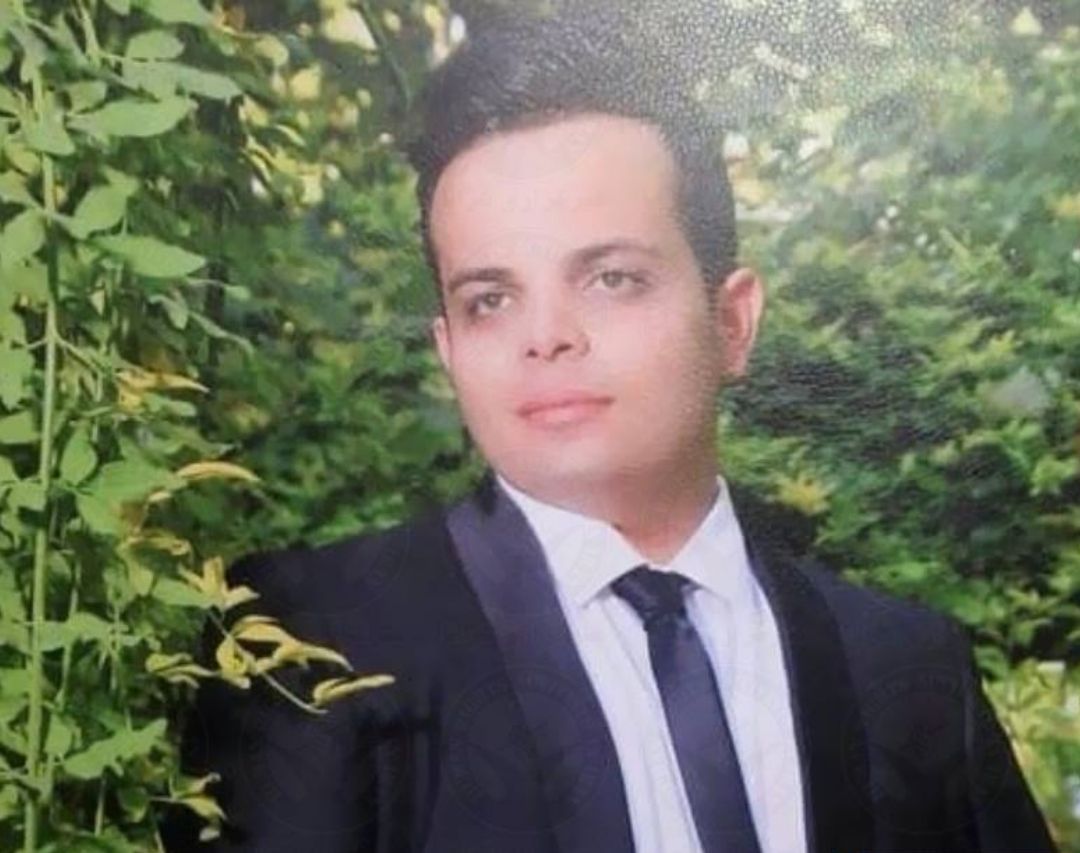
Mohammad Hassan Taheri Haghighi Executed for Murder in Adelabad Prison in Shiraz

On Sunday, July 11, a prisoner who had previously been sentenced to death for murder was executed in Adelabad Prison in Shiraz.

According to HRANA, the news agency of Human Rights Activists, the prisoner’s identity has been verified as “Mohammad Hassan Taheri Haghighi, son of Hassan, 33 years old, from Shiraz”.

Mr. Taheri Haghighi had been in Adelabad Prison in Shiraz since 2019.

Iran ranks first in the world in citizen executions per capita, according to international organizations. The Statistics and Publication Center of the Human Rights Activists in Iran (HRA) reported that between January 1 and December 20 of 2020, at least 236 citizens were executed.

One of these citizens was executed publicly, and two were juvenile offenders. An additional 95 citizens were sentenced to death.

According to the report, more than 72% of executions in Iran are not reported by the government or the judiciary. Human rights organizations call these “secret executions”.

Taheri Haghighi’s execution has not been announced by Iranian media or official sources as of this writing.
Prisoner Released from Gallows After Forgiveness from Parents

A prisoner in the city of Jiroft in Kerman Province, who had previously been sentenced to death for the murder of his brother, was released from the gallows after his family expressed their forgiveness.

According to HRANA, the news agency of Human Rights Activists, quoting Rokna News, a prisoner in the city of Jiroft in Kerman Province was saved from execution following the pardon of his parents.

Mohammad Reza Sharifi, head of the Jiroft Prison Administration, commented on the reversal of the prisoner’s fate.

“With the efforts of the Dispute Resolution Council and the Peace and Reconciliation Committee of the prison, the family of the victim, including his parents, wife, and children, expressed their consent and forgiveness,” Sharifi added, “and the prisoner was released from execution.”

Sharifi stated that the prisoner had murdered his brother with a firearm in one of the villages of Jiroft city in September 2019 due to family disputes, and had been in Jiroft Prison for almost 2 years.

“Due to the consent of the parents, the imprisonment due to the general aspect of the crime was reduced from ten years to three years with a reduction of the sentence, and during the meeting of the prison classification council, it was agreed to employ this prisoner.”

Two Death Sentences Issued in Tehran

Two death sentences were recently issued in Tehran.

According to HRANA, the news agency of Human Rights Activists, quoting Shargh Newspaper, a man was sentenced to death for the murder of a police officer he committed in April, 2004. Mehdi was sentenced under Qisas (“eye-for-an-eye”),  a pillar of Islamic sharia law .

It took 14 years following the incident until police officers discovered that Mehdi had started a secret new life in the city of Bonab and arrested him. Now, three years after his arrest, Mehdi has been sentenced to death, five years in prison, and 50 lashes.

According to HRANA, quoting Shahrvand Newspaper, another man was sentenced to death in Tehran on a charge of Moharebeh. Moharebeh, loosely translated as “waging war against God”, is a pillar of Islamic sharia law that is typically applied to those suspected of connection to any acts against the state.

Per the report, in late May 2017, detectives from the capital’s police station began investigating the case, and several men were arrested for extortion.

The case was sent from the Theft Court to the Revolutionary Court after a confession was obtained from the accused. Finally, the judge sentenced the leader of the extortionists to death.

Iran ranks first in the world in citizen executions per capita, according to international organizations. The Statistics and Publication Center of the Human Rights Activists in Iran (HRA) reported that between January 1st and December 20th of 2020, at least 236 citizens were executed. One of these citizens was executed publicly, and two were juvenile offenders. An additional 95 citizens were sentenced to death.

16-Year-Old Girl Killed by Father in Kermanshah

On Sunday, July 4, 16-year-old Shakiba Bakhtiar was stabbed to death by her father after coming home late in Kermanshah.

According to HRANA, the news agency of Human Rights Activists, quoting the Iran Human Rights (IHR), Iranian law provides for exemptions for those who commit “honor killings”.

It is notable that according to the Islamic Penal Code, a father who kills his child is sentenced to fines and imprisonment, not execution, if convicted in court.

In some cases, fathers have killed their children after learning that under the Islamic Penal Code, a father cannot be executed for the murder of his own child.

Some experts say that the discrimination and weakness of the law has an impact on the frequency of these murders.


Feizollah Ahmad Zadeh Executed in Qom Prison

On the morning of July 7, a prisoner who had previously been sentenced to death on drug-related charges was executed in Qom Prison.

According to HRANA, the news agency of Human Rights Activists, quoting the Iran Human Rights (IHR), Feizollah Ahmad Zadeh was married and had a child.  The report quoted an informed source as saying that Ahmad Zadeh was arrested and sentenced to death about four years ago on drug-related charges.

Iran ranks first in the world in citizen executions per capita, according to international organizations. The Statistics and Publication Center of the Human Rights Activists in Iran (HRA) reported that between January 1st and December 20th of 2020, at least 236 citizens were executed.

One of these citizens was executed publicly, and two were juvenile offenders. An additional 95 citizens were sentenced to death.

According to the report, more than 72% of executions in Iran are not reported by the government or the judiciary. Human rights organizations call these “secret executions”.

Ahmad Zadeh’s execution has not been announced by Iranian media or official sources as of this writing.
Subscribe to Our Newsletter

Now is definitely not the time to stop reading!

21-year-old Mehdi-J Executed in Mashhad Prison

On Monday, July 5, a prisoner who had previously been sentenced to death for murder was executed in Mashhad Prison. The execution took place after the sentence was upheld by Branch 39 of the Supreme Court.

According to HRANA, the news agency of Human Rights Activists, quoting the Khorasan newspaper, the prisoner has been identified as Mehdi-J.

Iran ranks first in the world in citizen executions per capita, according to international organizations. The Statistics and Publication Center of the Human Rights Activists in Iran (HRA) reported that between January 1st and December 20th of 2020, at least 236 citizens were executed.

One of these citizens was executed publicly, and two were juvenile offenders. An additional 95 citizens were sentenced to death.

According to the report, more than 72% of executions in Iran are not reported by the government or the judiciary. Human rights organizations call these “secret executions”.


Idris Gergij and Hashem Torabi Executed in Zahedan Prison

Idris Gergij and Hashem Torabi, two inmates who were previously sentenced to death for murder, were executed last week at Zahedan Prison.

According to HRANA, the news agency of Human Rights Activists, Idris Gergij, who had previously been sentenced to death under the “Qisas” (an eye for an eye) principle of Islamic sharia law, was executed on Monday, July 5. On June 26, 33-year-old Hashem Torabi was executed after having been held in Zahedan Prison for about 7 years.

Iran ranks first in the world in citizen executions per capita, according to international organizations. The Statistics and Publication Center of the Human Rights Activists in Iran (HRA) reported that between January 1 and December 20 of last year, at least 236 citizens were executed.

One of these citizens was executed publicly, and two were juvenile offenders. An additional 95 citizens were sentenced to death.

According to the report, more than 72% of executions in Iran are not reported by the government or the judiciary. Human rights organizations call these “secret executions”.

The execution of Gergij and Torabi has not been announced by Iranian media or official sources as of this writing.

Two Prisoners Executed in Urmia Prison Before Supreme Court Reaches Verdict on Their Appeal

On Saturday, July 3, Nasser Azmoudeh and Shahriar Amiri were executed in Urmia Prison, even though the Supreme Court has not yet reached a verdict on their appeal.

According to HRANA, the news agency of Human Rights Activists, the two prisoners had previously been sentenced to death on drug-related charges.

Azmoudeh and Amiri, who had been kept in Urmia Prison since 2018, were transferred to solitary confinement the day before the execution took place.

The lack of a fair and transparent trial process in the Iranian judiciary, especially in cases that lead to irreversible sentences such as the death penalty, has long been criticized by human rights organizations. Just this week, the death sentence of a prisoner who was executed 10 months ago was overturned by the Supreme Court.

Iran ranks first in the world in citizen executions per capita, according to international organizations. The Statistics and Publication Center of the Human Rights Activists in Iran (HRA) reported that between January 1st and December 20th of 2020, at least 236 citizens were executed.

One of these citizens was executed publicly, and two were juvenile offenders. An additional 95 citizens were sentenced to death.

According to the report, more than 72% of executions in Iran are not reported by the government or the judiciary. Human rights organizations call these “secret executions”.

The executions of Azmoudeh and Amiri have not been announced by Iranian media or official sources as of this writing.

70-Year-Old Man Executed in Mashhad Prison

On June 30, a 70-year-old prisoner who had previously been sentenced to death for the murder of his wife was executed in Mashhad Prison after 9 years.

According to HRANA, the news agency of Human Rights Activists, quoting the Khorasan newspaper, court judges first sentenced the prisoner to death, and then the defendant appealed the verdict issued by the Third Branch of Criminal Court One.

The case was sent to Branch 37 of the Supreme Court for reconsideration, but the death sentence was upheld by the judges. After the verdict was finalized, the execution was carried out.

Iran ranks first in the world in citizen executions per capita, according to international organizations. The Statistics and Publication Center of the Human Rights Activists in Iran (HRA) reported that between January 1st and December 20th of 2020, at least 236 citizens were executed.

One of these citizens was executed publicly, and two were juvenile offenders. An additional 95 citizens were sentenced to death.

According to the report, more than 72% of executions in Iran are not reported by the government or the judiciary. Human rights organizations call these “secret executions”.

Three Inmates Including a Juvenile Offender Executed in Urmia Prison Despite Pleas from Amnesty International

At dawn on Sunday, July 4, three prisoners, one of whom was a juvenile offender, were executed in Urmia Prison despite Amnesty International’s pleas for the execution to be halted.

According to HRANA, the news agency of Human Rights Activists, the three prisoners, who had previously been sentenced to death for murder, were transferred to solitary confinement the day before the sentence was carried out.

HRANA has confirmed the identities of the three prisoners as juvenile offender Baha-al-din Ghasemzadeh, Baha-al-din’s brother, Davood Ghasemzadeh, a native of the Salmas, and  Anwar Abdollahi, a native of Mahabad City in West Azerbaijan Province.

HRANA previously reported on the deteriorating physical condition of the two imprisoned brothers in June of 2018. The Gasemzadeh brothers were executed this Sunday even though Baha al-din was a child at the time of his arrest, and Davood had severe spinal cord injuries from beatings sustained during his detention.

Recently, in an interview with Agence France-Presse, Secretary of the state-run High Council for Human Rights, MajidTafreshi, said that the Islamic Republic executes juvenile offenders “three to four times a year”, and claimed this should not be considered a human rights violation.

Iran ranks first in the world in citizen executions per capita, according to international organizations. The Statistics and Publication Center of the Human Rights Activists in Iran (HRA) reported that between January 1st and December 20th of 2020, at least 236 citizens were executed. One of these citizens was executed publicly, and two were juvenile offenders. An additional 95 citizens were sentenced to death.

“Iranian authorities must immediately stop the execution of Baha al-din Ghasemzadeh,” Amnesty International tweeted the day before the execution took place.  “The imposition of the death penalty on those who were children at the time of the crime is a gross violation of Iran’s international rights and obligations under the Convention on the Rights of the Child.”