Soheila Hejab Beaten in Garchak Prison While on Hunger Strike

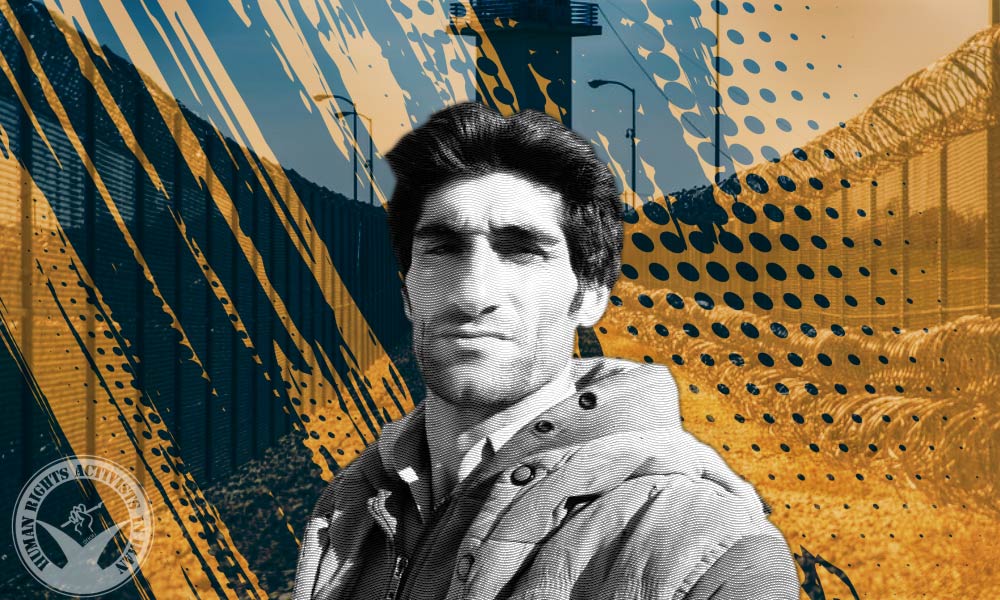
Several inmates convicted of violent crimes recently beat political prisoner Soheila Hejab while she was on a hunger strike in Gharchak Prison in Varamin.

According to HRANA, the news agency of Human Rights Activists, Hejab had been on a hunger strike since September 19 in protest of the increasing pressure on political prisoners and the intrusion of interrogators and other Judicial officers into court processing. Following promises from authorities, she ended her hunger strike on October 3.

“One of the shift officers on purpose opened the door of section 3 where inmates convicted for robbery are held,” an informed source told HRANA. “Several inmates of this section encroached into the section where she was located and took her to their section. They tore her winding-sheet which she was wearing as a sign of protest and forced her to eat in order to broke her strike. Once she resisted, they beat and took her back to her own section by dragged her on the floor.”

Mrs Hejab was arrested by security forces on June 1, 2019, and then released from Evin Prison in Tehran on a bail of 3 billion tomans on March 14, 2020.

Branch 28 of the Revolutionary Court convicted her to 18 years imprisonment on charges of “propaganda against the regime, illegal assembly, incitement of public opinions to riot and organizing unlawful political groups”.

This long imprisonment stands at odds with Article 134 of Iran’s penal code whereupon the severest enforceable punishment is 5 years.

On May 23, 2020, the intelligence unit of the Revolutionary Guards arrested and transferred her to Gharchak Prison in Varamin city to serve out her sentence.

In December 2020, the revolutionary court held a new session for new indictments such as ” propaganda against the regime” and “incitement of public opinions”. Her phone calls while in detention were published online and presented in court as evidence for the above-mentioned charges. Mrs Hejab has been once arrested in Shiraz and released by granting pardon after five-month imprisonment.


Activist and Teacher Aziz Ghasemzadeh Still Incommunicado in Detention

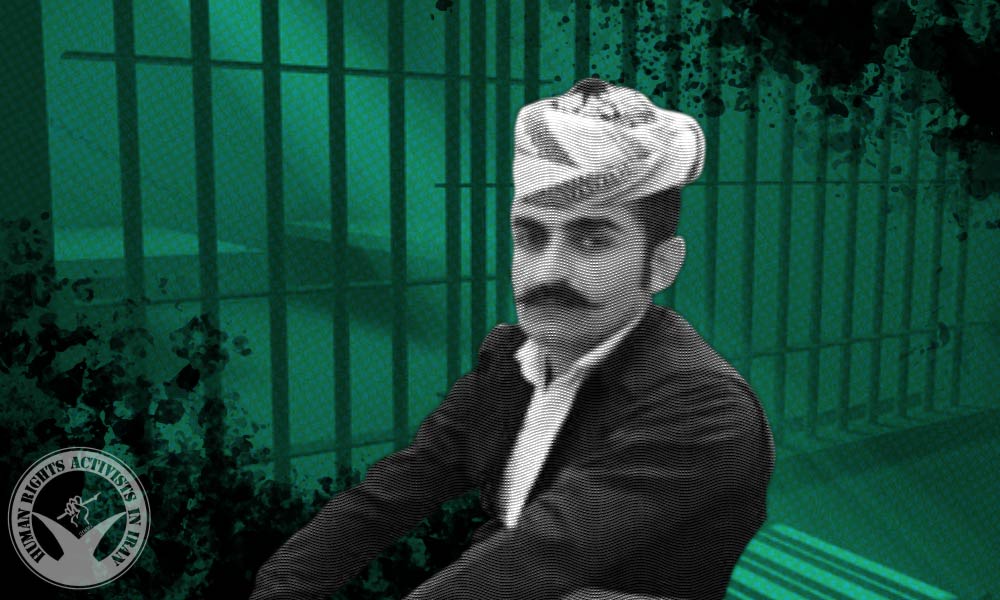
After eight days, teacher and union activist Aziz Ghasemzadeh is still  incommunicado in a detention facility of the intelligence office in Rudsar County in Gilan Province.

According to HRANA, the news agency of Human Rights Activists, Ghasemzadeh has so far been denied access to a lawyer, phone calls and in-person visits.

On September 26 this year, security forces arrested the educator at his parents’ home in Rudsar. During the arrest, security forces inspected the house and confiscated several of Ghasemzadeh’s personal belongings.

The arrest took place the day after working and retired teachers held protests in 36 cities across the country, which were organized by the Coordination Council of Iranian Teachers’ Trade Associations.

According to HRANA, Ghasemzadeh is still being denied access to his lawyer and his temporary detention period has been extended. As of this writing, the charges against him are unknown.


Young Woman Burned to Death by Father in what Islamic Penal Code Deems “Honor Killing”

Early on Sunday, October 3,  news spread on social media of a young woman who was burned to death by her father in Sanandaj, the capital of Kurdistan Province.

HRANA, the news agency of Human Rights Activists, has identified the victim as 22-year-old Faezeh Maleki, who had been living in Dolat-Abad (Kurkureh), a village in Sanandaj county.

Reportedly, after she passed away in hospital, her father was beaten by some people, which led to the arrest of some of these attackers.

“Faezeh Maleki got divorced shortly after her marriage,” an informed source told HRANA. “Thereafter, she wanted to marry a young man but his parent disagreed with this marriage. Once some pictures showing the continuation of their relationship came into the hands of her father, he punished his daughter by burning her with gasoline.”

In a post on social media, the victim’s surgeon announced her death and mentioned having a boyfriend as the reason why his father committed this crime. He said that her father is still free. Thereafter, his post was taken down for unknown reasons.

“They send her to hospital but medical team could not save her life and she passed away from severe injuries,” the source added. “Some furious citizens beat her father, who is drug-addicted, in Eghbal Square in Sanandaj. Police detained the father and some of these attackers.”

According to Islamic penal codes, the severity of a sentence in cases of homicide is in large part determined by the wishes of the “blood avenger”, or closest relation to the victim. If a father is convicted of killing his child, however, he can then act as his own “blood avenger”, which almost always results in a significantly lighter sentence.

Typically, a father convicted of killing his child be sentenced to “Weregild payment” and relatively short imprisonment. As case investigations have shown, this system has at times encouraged parents to commit such so-called “honor killing”, because they are aware of the sentence leniency that will be afforded to them if convicted.

Eight Street Booksellers Arrested by Security Police of NAJA

On Saturday, October 2, Tehran’s Security Police of NAJA arrested eight street booksellers for allegedly selling illegal books.

According to HRANA, the news agency of Human Rights Activists, quoting IBNA, the police confiscated some of the books.

One of the members of the Workgroup for Protecting the Rights of Publishers and Booksellers called these detained booksellers “distributors of illegal and smuggled books”.

The member claimed that part of these confiscated books is the works of the supporters of the restoration of the monarchy in Iran as well as illegal books and unpermitted hard copies of bestselling books.

Nine Fatal Work Accidents in Recent Days Due to Unsafe Work Conditions

According to HRANA, the news agency of Human Rights Activists, nine workers have recently lost their lives in separate accidents due to unsafe workplace conditions.

Last Wednesday, September 29, a labor source reports that in Alborz Province, a gas leak caused the suffocation of three workers led to their death before emergency forces arrived. Reportedly, these workers were hired to illegally branch off the gas pipe for a villa house.

In another accident, on Friday, October 1, in Kashmar City located in Razavi Khorasan, a worker fell into a hundred-meter-deep well and died before reaching the hospital.

That same day in Tehran, a 26-year-old worker of Afghanistan nationality died in a fire accident.

According to Rokna, on Friday, October 1, in Rajaei Port, an operator lost his life due to a rupture of wire rope of a 140-ton crane.

In Isfahan, a construction worker died due to falling debris. He later died in the hospital from severe injuries.

In a similar accident, on Saturday, October 2, in Neyshabur a city in Razavi Khorasan Province, a construction worker died due to the fall from the wall of an old building.

On that day, in Ghaem Shahr in Mazandaran province, a work accident at a construction site took another victim. Reportedly, the victim, Hassan Shaban, 32 years old, was working without having any safety equipment and died after falling from the fourth floor.

Subscribe to Our Newsletter

Now is definitely not the time to stop reading!

HRANA Recap: This Week’s Protests in Iran

According to HRANA, the news agency of Human Rights Activists, a number of protests took place this week in Iran, many of which were continuations of ongoing movements.  Read our recap below for details, photos, and videos from the demonstrations.


Saturday, September 25

This Saturday, the family of Amir Hossein Hatami, who recently died under suspicious circumstances in custody, gathered in front of the Greater Tehran Prison to demand accountability from prison officials. Also, in 36 cities across the country, working and retired teachers rallied in protest. Working and retired workers of Homa Airline gathered in front of the Ministry of Roads and Urban Development building in Tehran, and employees of Iran international General Contractor Company (IGC) went on strike in Asaluyeh.

Working and retired teachers in protesting in 36 cities across the country:


Sunday, September 25

On Sunday, a number of Workers Protests took place. Employees of the road construction and mining company Mobayen, retirees of Fulad steel company in regard to their pension fund in Isfahan and Khuzestan, and employees of Pars Tabiaat Celulose and its parent company, Kaghaz Pars, all held demonstrations.

Retired workers of a steel company (Fulad)’s  about pension funds in Isfahan and Khuzestan:

Employees of the road construction and mining company Mobayen:

Protests of workers of Kaghaz Pars company and its daughter company, Pars Tabiaat cellulose:


Tuesday, September 28,

This Tuesday, a number of Haft Tappeh workers protested once again. Victims of fraudulent activities boycotted a car retail company in Jam County. Additionally, retirees of the Ministry of Health in Khuzestan, Isfahan, Gilan, Golestan, and East Azerbaijan protested.


Wednesday, September 29

Buyers who pre-purchased cars protested Shahrkhodro Company for not receiving thir orders on time. Kerman coal company workers protested low wagest, and workers of Haft Tappeh went on strike for a second consecutive day. A number of truck drivers in Saveh also protested delays in fuel shipments.


Dissatisfied purchasers of cars against ShahrKhodro Company:

Workers of Kerman Coal Company demanding higher wages:

Haft-Tappeh workers on strike:

Thursday, September 30

Teachers in Qom and Markazi provinces demanded better conditions and higher wages this Thursday. Service personel of the ministry of education also protested poor job conditions in Chaharmahal and Bakhtiari.

Teachers in Qom and Markazi provinces regarding wages:

Haft Tappeh workers on strike:


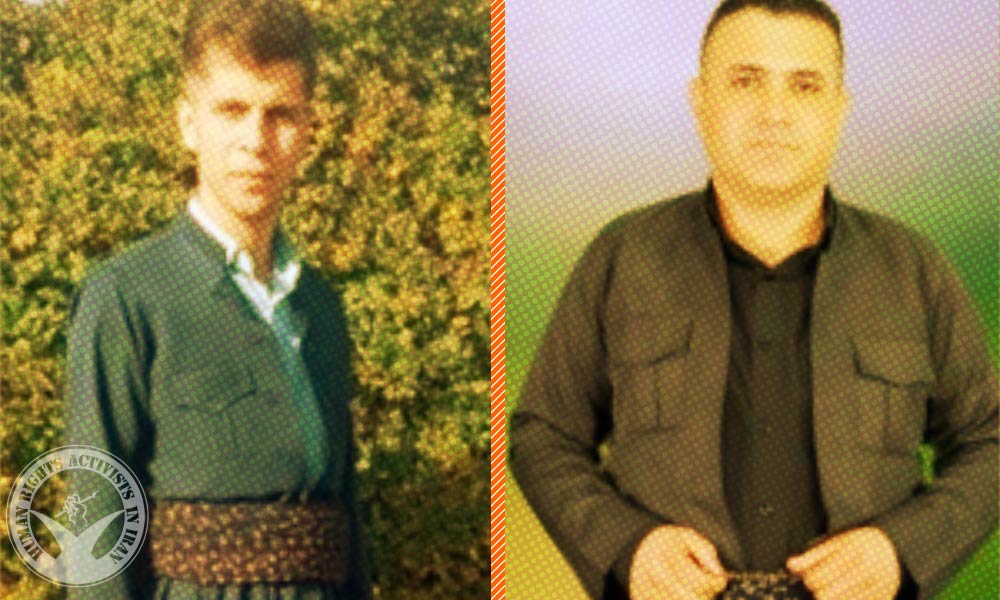
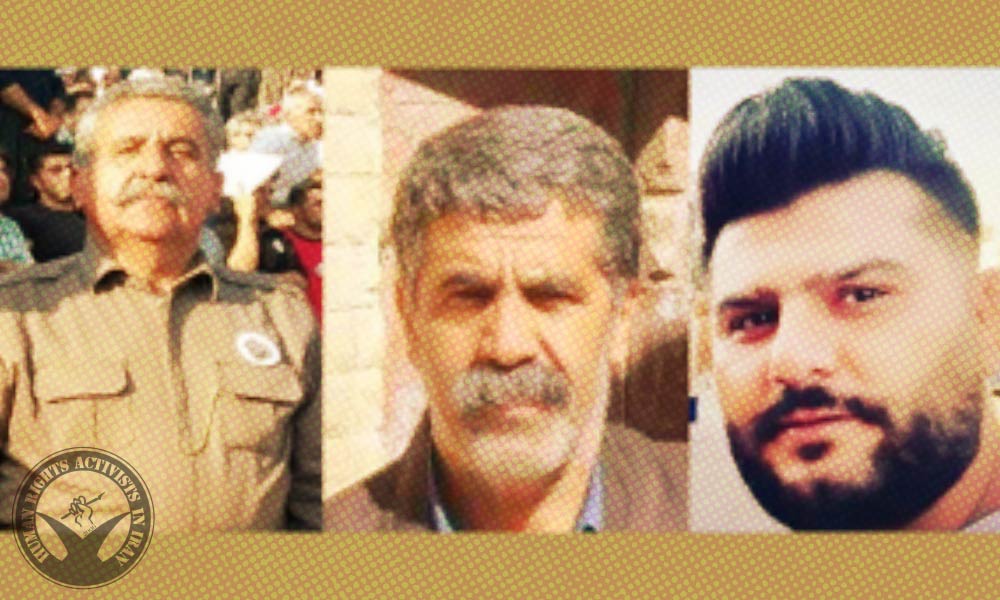
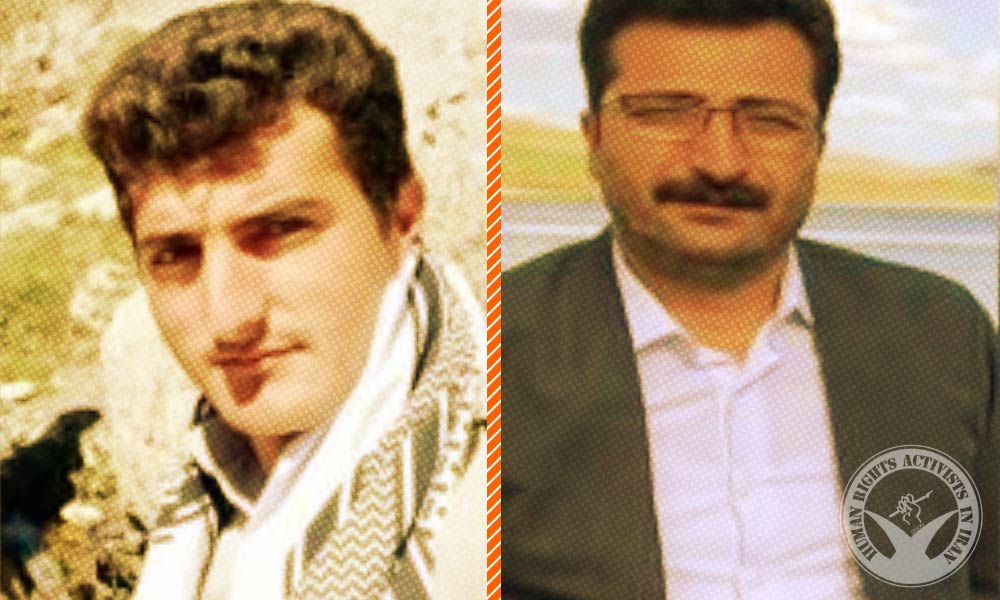
Six Inmates Executed in Shiraz, Two More Executed in Isfahan

On Tuesday October 1, six inmates were executed in Adelabad Prison in Shiraz. The previous day, two additional inmates were executed in Isfahan.

According to HRANA, the news agency of Human Rights Activists, the prisoners had previously been sentenced to death on charges ranging from drug-involvement to murder.

HRANA has identified the name of the four above-mentioned inmates as follows: Rasul Akrami, Omid Keshtkar, Meysam Atef-fard, Hadi Razi. In addition, in the last few days, Mostafa Ostowari, convicted for murder, was transferred to a solitary confinement cell in order to be executed, reportedly tomorrow on Saturday.

As an update to the news about the execution of Abbas-Gholi Salehi in Dastgerd Prison in Isfahan, HRANA has confirmed that on September 29, two other inmates were also executed. Muhammad Bar-Ahooie, an Afghan, and Hamid Shahsenai were executed for drug-related crimes.

Iran ranks first in the world in executions per capita, according to international organizations. The Statistics and Publication Center of the Human Rights Activists in Iran (HRA) reported that between January 1 and December 20 of 2020, at least 236 citizens were executed.

None of the above executions have been announced by any Iranian media or official sources.

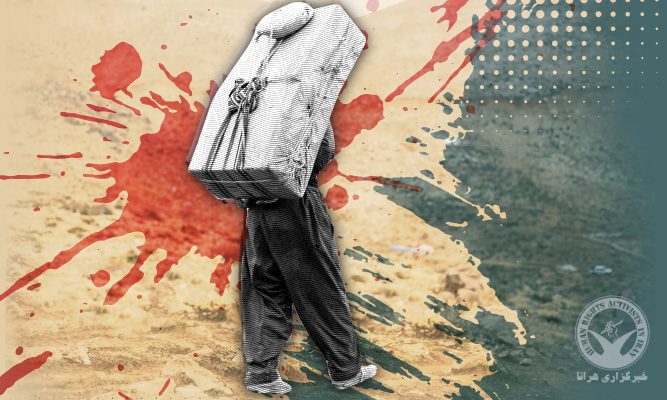
Cross-Border Fuel Carrier Shot Dead In Bashagard by Military Forces

On Wednesday, September 29, military forces opened fired and killed a Sookhtbar (cross-border fuel carrier) in Bashagard City in Sistan and Baluchestan Province.

According to HRANA, the news agency of Human Rights Activists, quoting Resanak, he was carrying fuel with his car when the direct shooting of military forces (called Mersad Forces) towards the car led to his death. The report identifies the victim as Behzad Balavar.

HRANA’s annual human rights report has specifically documented cases in which military forces’ use of live ammunition against citizens has led to their injury or death.

According to the 2020 report, other than material damages like loss of pack animals due to road accidents, frost, or avalanche, 36 cross-border carriers (Kolbars) and  fuel porters (Sookhtbars) , and 33 regular citizens have been killed by the regime’s military forces. 130 people have been injured due to unlawful shootings from which 109 were Kolbars, 16 regular citizens, and 5 fuel porters.


Denial of Access to Higher Education Surges for Baha’i Citizens in Iran

Since the beginning of this year, HRANA, the news agency of Human Rights Activists, has documented 16 cases of Baha’i citizens being barred from higher education due to their faith.

As in previous years, many examinees of the nationwide university entrance exam encountered the message either “Rejected” or “Rejected due to general ineligibility”, indicating that they have been identified as Baha’i and hence barred from higher education.

According to HRANA, each year, numerous Baha’is examinees are rejected as the results of exams for various excuses by the official website of the National Organization of Educational Testing (NOET), an organization for holding the nationwide entrance exam.

Following the call of one of these citizens, NOET mentioned the intervention of the intelligence police as the reason for the rejection and in case an objection is filed, they can pass the written objection on to the intelligence police for further assessment.

In a written response to another citizen, NOET stated, “This message is shown when the intelligence office or any other security institution has an open case regarding the examinee or they have not approved his/her ineligibility. Your objection will be passed on the intelligence office, but until you identify yourself as Baha’i, the objection will not be taken into account.”

After taking exams many times, Some of these citizens are still facing various excuses such as “document defect” and therefore, they are barred from continuing their education due to being Baha’i.

At odds with Iran’s law clarifying the rights to education indiscriminately for all citizens, the enactment of the Supreme Council of the Cultural Revolution of Iran, which oversees to ensure that education and culture remain Islamic, barres Baha’is from taking an occupational position as well as tertiary education.

Baha’i citizens are denied the right to exercise their religion. This systematic deprivation stands in violation of Article 18 of the Universal Declaration of Human Rights and Article 18 of the International Covenant on Civil and Political Rights, which both affirm that everyone has the right to freedom of thought, conscience, and religion.

According to unofficial reports, there are more than 300,000 Baha’is in Iran. While the constitution recognizes Islam, Christianity, Judaism, and Zoroastrianism as accepted religions (People of Book, as articulated in Sharia law), it denies recognizing Baha’i faith, which conclusively leads to the systematic violation of their rights.

Ghasem Bahrami still Detained in Unknown Location

Sixteen days after his arrest in Mashhad, the whereabouts and situation of critical poet Ghasem Bahrami remain unknown.

According to HRANA, the news agency of Human Rights Activists, Mr. Bahrami was arrested by security forces on September 15, and then transferred to an unidentified location where he has since been held incommunicado.

Bahrami is known for expressing political views through his poetry. There is still no concrete information about the reason for his arrest or the charges against him, but is said that his arrest is related to the publicizing of videos and lyrics retrieved from his poems.