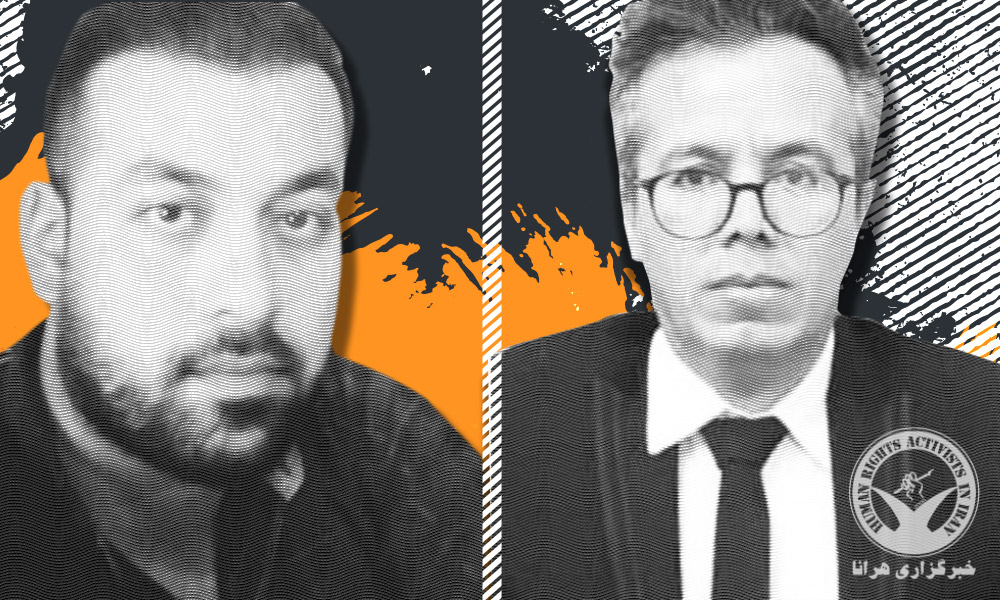
Morteza Parhizgar Released on Probation from Vakilabad Prison

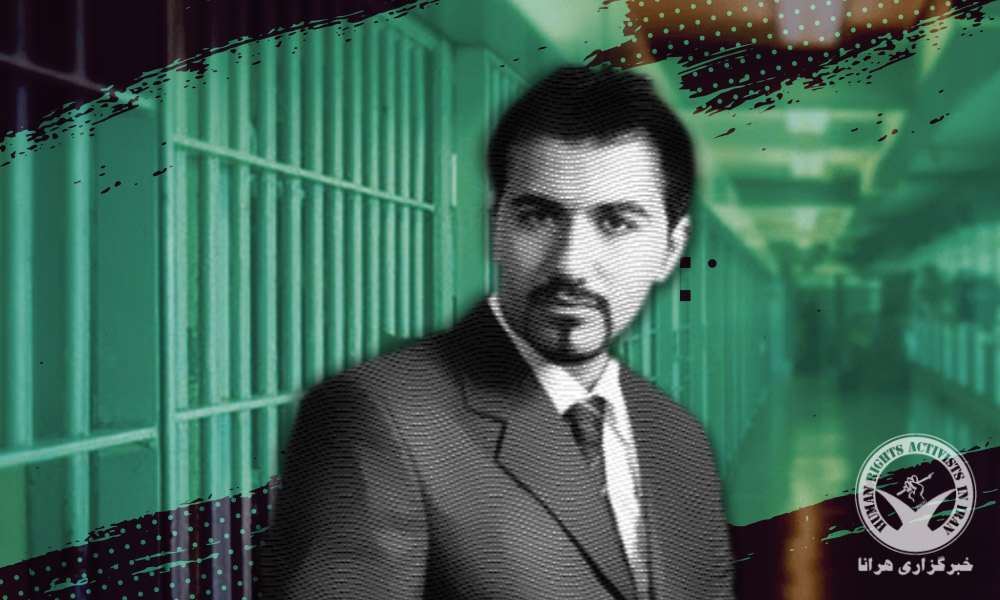
On Sunday night, October 10, political prisoner, Morteza Parhizgar was released on probation from Vakilabad Prison in Mashhad.

According to HRANA, the news agency of Human Rights Activists, Parhizgar was released after spending three years and nine-month in prison and receiving 74 lashes.

On December 30, 2017, Morteza Parhizgar was arrested by security forces amid protests across the country.

After nine months, in December 2018, Branch 131 of criminal court and Branch 4 of the Revolutionary Court of Mashhad, each in a separate case, sentenced him to nine years imprisonment and flogging of 74 whips. They convicted him  on the charges of ” offensive statements against the supreme leader of Iran”,  ” disrupting public order through participation in unlawful assemblies”, “assembly and collusion in the purpose of acting against national security”, ” propaganda against the regime “, “arson of police motorcycles in the purpose of opposing the regime.”

During the nationwide protests in December 2017, numerous citizens in various cities across the country were arrested and interrogated. At least 35 people were killed by police and five thousand were detained.

Inmate Executed in Ghayen Prison on Drug-Related Charges

On Monday morning, October 11, 2021, an inmate who had previously been sentenced to death on drug-related charges was executed in Ghayen Prison.

According to HRANA, quoting The Baloch Activists Campaign, the inmate has been identified as Ibrahim Rakhshani, a native of Zabol.

According to the last report of the Statistics and Publication Center of the Human Rights Activists in Iran (HRA), between October 8 of 2020 and October 9 of 2021, at least 266 citizens were executed and 90 citizens were sentenced to death.

As the report points out, Iran’s judicial authorities do not publicly announce over 82% of carried-out executions, dubbed as “secret executions” by human rights organizations.

This execution has not been announced by official sources in Iran as of this writing.

14 Political Prisoners Punitively Transferred to Locked-Door Ward of Greater Tehran Prison

Following a beating of political prisoners by a mob of fellow inmates of violent crimes in the Greater Tehran prison, the official authorities forced 14 of these political prisoners to relocate to a ward with locked doors and inadequate conditions.

According to HRANA, the news agency of Human Rights Activists, these political prisoners were housed in section 1, type 2 of the Greater Tehran prison. They were said that if they refuse to relocate, Special Prison Guards would take action to relocate them by force.

The inmates have been identified as Hossein Ghasghaie, Mehran Delfan-Azari, Meysam Gholoami, Hojatollah Rafei, Reza Salavati, Morteza Olangi, Shahab Soltanian, Dawood Abdollahi, Shapur Ehsani-rad, Pouya Ghobadi, Ismail Gerami, Akbar Bagheri, Alireza Farshi and Akbar Faraji.

The day after this incident, in response to this news, the head of state prisons and Security and Corrective Measures Organization, Muhammad Mehdi Haj-Mohammadi confirmed the news.

“In regard to inaccurate news of beating in the Greater Tehran prison, I would say that not intellectuals but criminals belong to the prison,” Haj-Mohammadi wrote on his personal page on social media. “Despite all controls, tensions and quarrels happen.”

On Friday, October 8, the above-mentioned prisoners were beaten by a mob of prisoners of violent crimes. Contrary to the laws of the prison, these political prisoners were being housed in the same ward as the prisoners of violent crimes. Reportedly, Pouya  Ghobadi and Akbar Bagheri were severely injured.


Juvenile Offender Arman Abdolali in Imminent Danger of Execution in Rajai Shahr Prison

Arman Abdolali, who was previously sentenced to death for a murder charge from when he was a child, is in imminent danger of execution in Rajai Shahr Prison.

According to HRANA, the news agency of Human Rights Activists, despite his denial of having committed the crime, and despite the fact that the victim’s body was never found, the criminal court of Tehran Province sentenced Abdolali to death. The verdict was upheld twice by the supreme court of Iran.

Abdolali was reportedly transferred to a solitary confinement cell, as is the protocol for inmates on death row in the days before their execution, yesterday. In July of this year, his lawyer had informed about the forwarding Abdolali’s case to the Executive Branch of Tehran Criminal Court.

“Iran continues to use the death penalty for crimes committed by people under the age of 18, in violation of its obligations under the International Covenant on Civil and Political Rights and the Convention on the Rights of the Child,” Amnesty International expressed in a statement, calling for Iranian authorities to halt Abdolali’s execution.

In 2013, when he was underage, Arman Abdolali was indicted on the charge of murdering his girlfriend, Ghazaleh Shakur. During interrogation, he confessed to killing her but later on, he denied the charges and pleaded his innocence.

After the first confirmation of the sentence, Abdolali’s lawyer claimed him as innocent and asked for a retrial, which was granted by the Supreme Court of Iran. In the second retrial, the death sentence was upheld after six months both by the Supreme Court of Iran and thereafter by an appellate court.

Civil Activist Sepideh Gholiyan Arrested by Security Forces in Ahvaz

Civil activist Sepideh Gholiyan, who has been on leave from Bushehr Prison since August 19, was recently arrested by security forces in Ahvaz from her sister’s home to serve the rest of her sentence.

According to HRANA, the news agency of Human Rights Activists, security police confiscated the cell phones of all family members during the arrest.

Confirming Gholiyan’s arrest, an informed source told HRANA, “Thirty male and female security forces entered her sister’s home, arrested Mrs. Gholiyan, and confiscated the cell phones of all family members.”

Before this arrest, on her personal page on social media, Gholiyan had informed that she had been summoned to Bushehr prison and commented “Ten days ago, they called me from Bushehr Prison that I have to return to there. I told them that I am supposed to go to Tehran where the Executive Branch of the Department of Justice would decide to which prison I had to be sent. Seemingly, they are searching to find somewhere worse than Bushehr Prison.”

On November 18, 2018, Sepideh Gholiyan was arrested along with at least 19 others, including members of the Assembly of Representatives of Haft-Tappeh’s workers, several workers’ activists and company personnel and managers by security police of NAJA in Shush city. She was released on bail on December 18, 2018.

After broadcasting her forced confession as well as some other workers’ activists, including Ismail-Bakhshi on national TV channel, they announced that the “confessions” were extracted under torture by security forces. Soon after this announcement, the security police arrested them.

On October 26, 2019, she was released on bail until the end of legal proceedings. On December 14, 2019, she was sentenced to 5 years imprisonment by Tehran appellate court.

On June 21, 2020, she began serving her prison term in Evin prison. On March 10, 2021, she was exiled to Bushehr Prison, where she was held until being granted leave, and to where she is now being transferred back.

Subscribe to Our Newsletter

Now is definitely not the time to stop reading!

Inmate Hanged in Birjand Prison on Drug-Related Charges

Earlier this Monday, October 11, an inmate was executed in Birjand Prison.

According to HRANA, the news agency of Human Rights Activists, Omid Sarani, a native of Zabol, had previously been sentenced to death on drug-related charges.

According to the last report of the Statistics and Publication Center of the Human Rights Activists in Iran (HRA), between October 8 of 2020 and October 9 of 2021, at least 266 citizens were executed and 90 citizens were awarded death sentence.

As the report points out, Iran’s judicial authorities do not publicly announce over 82% of carried-out executions, dubbed as “secret executions” by human rights organizations.

Sarani’s execution has not been announced by official sources in Iran as of this writing.

Supreme Court Confirms Shaker Behrouz’s Death Sentence Despite Evidence Pointing Towards His Innocence

Branch 31 of the Supreme Court of Iran recently confirmed the death sentence of political prisoner Shaker Behrouz, who is currently being held in Urmia Prison, despite a strong alibi pointing to his innocence.

According to HRANA, the news agency of Human Rights Activists, Branch 31 of the Supreme Court confirmed the death sentence of 33-year-old Shaker Behrouz last Tuesday, October 5. The verdict was confirmed in spite of the alibi statements of 12 witnesses, all of whose testimonies the court refused to hear.

The indictment alleges that Behrouz murdered a member of the Islamic Revolutionary Guard Corps (IRGC).

According to an informed source, security agents threatened the victim’s family’s, who was an IRGC member, to cut their allowance from the Foundation of Martyrs and Veterans Affairs, if they refused to accuse Behrouz.

Another informed source close to the victim’s family also said that the family does not believe he is guilty and are ready to testify to his innocence.

Twelve eye-witnesses signed a statement expressing their readiness to testify that Mr. Behrouz was in his shop when the crime was committed. Despite all the above, the court convicted the defendant without the presence of the family as accusers and hearing of eye-witnesses.


Political Prisoners Beaten After Being Held in Ward for Inmates Convicted of Violent Crimes

On Friday, October 8, in Greater Tehran Prison, a number of political prisoners were beaten by fellow inmates convicted of violent crimes.

According to HRANA, the news agency of Human Rights Activists, contrary to the laws of the prison, these political prisoners are being housed in the same ward as the prisoners of violent crimes.

In the incident, Shapur Ehsani-rad, Pouya Ghobadi, Ismail Gerami, Akbar Bagheri and Akbar Faraji were injured and a few were hospitalized.

The political prisoners held in this ward had already complained and asked the prison officials to relocate them to other wards.

Workers’ rights activist, Shapur Ehsani-rad is serving his six-year sentence. Despite poor health condition and backache, he has been denied furlough for medical treatment.

Political prisoner, Pouya Ghobadi is serving his five-year sentence. In August of this year, the trial addressing the second part of his for the charge of ” enmity against God” was held.

Recently, in the court of appeal, workers’ rights activists Ismail Gerami was sentenced to five years imprisonment and flogging of 74 laches and paying a 20-million fine.

In 2018, Akbar Bagheri was sentenced to a nine-year imprisonment. The court of appeals upheld the verdict without making any changes.

On February 10, 2019, Akbar Faraji was arrested by security forces for online political activities and sentenced to six years imprisonment by Branch 26 of the Revolutionary Court. This verdict was upheld by Branch of 36 of Appellate Court. On September 6, 2020, he was arrested to serve his term in Greater Tehran Prison.


Four Inmates Executed in Yazd and Kermanshah Central Prisons

Four inmates were recently executed in Yazd and Kermanshah Central Prisons. None of these executions have been announced by official sources in Iran as of this writing.

According to HRANA, the news agency of Human Rights Activists, on Sunday, October 10, two inmates who had previously been convicted for drug-related offenses were executed in Yazd Central prison. The prisoners have been identified as father and son, Hossein and Ramin Dadkhah. They were executed after five years of imprisonment.

Similarly, on Friday, October 8, two inmates, convicted on charges of murder, were executed in Kermanshah Central Prison. One of these inmates, Ismail Soltan-Abadi, had been convicted in the oath ceremony. He was executed after 23 imprisonments, without the notification of his family and hence was deprived of the chance for a final visitation.

Oath ceremony (Ghassameh), whereby the conviction is grounded merely on the swearing of accusers and their relatives (who don’t need to be eyewitnesses) stands in violation of the right to have a fair trial. According to the Islamic penal code, in case of lack of compelling evidence, the judge may hold this ceremony wherein the swearing of 50 people for premeditated murder and 25 people for quasi- premeditated murder will be enough to verdict the accused guilty.

The other inmate, Afshar Fathi, 28 years old, was executed after four years imprisonment on the charge of murder.

Iran ranks first in the world in executions per capita, according to international organizations. The Statistics and Publication Center of the Human Rights Activists in Iran (HRA) reported that between January 1 and December 20 of 2020, at least 236 citizens were executed.


Soheil Arabi and Behnam Moosivand Refuse to Appear in Court

On Wednesday, October 6,  prisoner of conscience Soheil Arabi and political prisoner Behnam Moosivand refused to appear on the court holding for the unjustified new cases opened against them during their imprisonment.

According to HRANA, the news agency of Human Rights Activists, the deputy head of Rajai Shahr Prison Valiollah Muhammadi threatened them with a beating following their refusal.

“Disturbing prison order” and ” offensive statements against the supreme leader of Iran” have been listed as among the new charges. According to an informed source, on the same day, these two prisoners were interrogated online.

While serving out the seven and a half year sentence, Soheil Arabi has been convicted on the charges of two new cases.

In the first new case, On May 24, 2021, he was indicted on the charge of “agitation against the regime and Disturbing public opinions” via a video conference by Branch 3 of the Evin Investigation Office.

In the second new case, Soheil Arabi was condemned to 2 years imprisonment, paying a fine, and a ban from leaving the country and once every three times appearance at the Supervision and Follow-up office of Judiciary by Branch 26 of Tehran’s revolutionary court. His court session to address these charges was held on July 28.

Since November 7, 2013, he has been held in detention as well as prison and has never been granted leave.

On February 1, 2018, the intelligence officials raided Behnam Moosivand’s home and transferred him to the detention facility of the intelligence ministry in Evin Prison, known as section 209. He was released on bail on March 19, 2018.

Thereafter, in September 2019, branch 28 of Tehran’s revolutionary court sentenced him to five years in prison on charges of “assembly and collusion in the purpose of acting against national security, and to one year on a charge of “agitation against the regime”. The verdict was upheld at appeal. On June 14, 2020, he appeared at the executive branch of Evin Prison to serve his six-year sentence.