HRANA Recap: This Week’s Protests in Iran

According to HRANA, the news agency of Human Rights Activists, a number of protests took place this week in Iran, many of which were continuations of ongoing movements.  Read our recap below for details, photos, and videos from the demonstrations.


Saturday, October 2

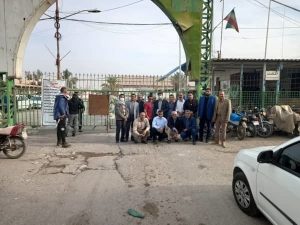
This Saturday and Sunday, a group of environmental activists of Sanandaj in the vicinity of Vahdat Dam gathered to protest against the years-long negligence from local authorities in addressing the area’s unsafe drinking water. Because of the city water is contaminated, residents are forced to carry water from the springs surrounding the city.

Sunday, October 3

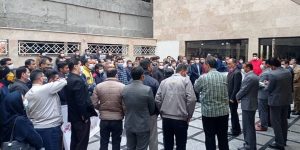
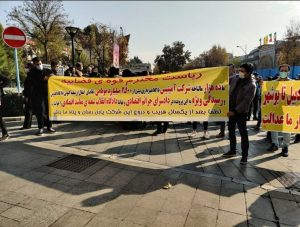
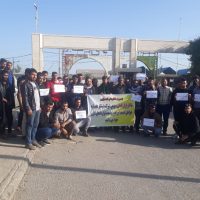
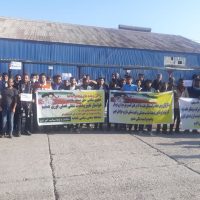
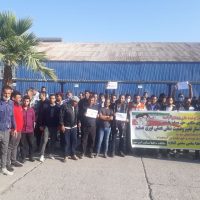
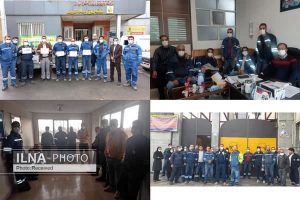
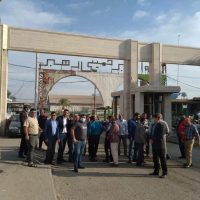
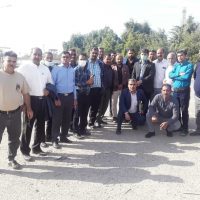
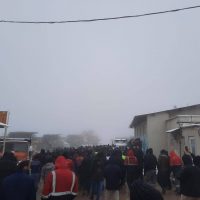
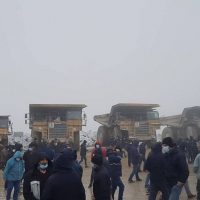
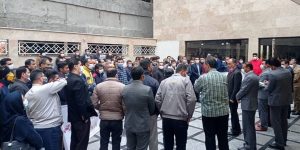
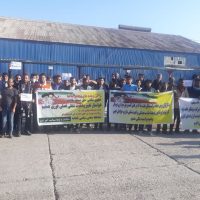
Employees of coal mining company Pabdana in Kerman Province assembled this Sunday at their workplace entrance gate and protested the company’s low wages, arguing that, compared to state-owned mining companies, private companies such as Pabdana pay employees less for longer hours.

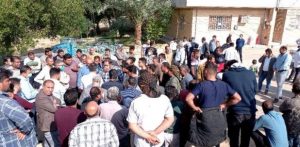
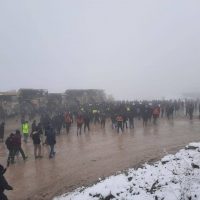
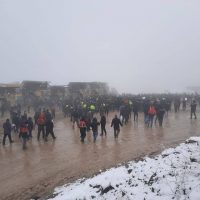
About 400 drivers of the transport unit of South Zagros Oil and Gas Production Company, for a second consecutive day, assembled to protest the company’s decision to change their contracts. The new agreements are set up so that that workers will  be employed by a contractor rather than the company, meaning lower wages and fewer benefits.

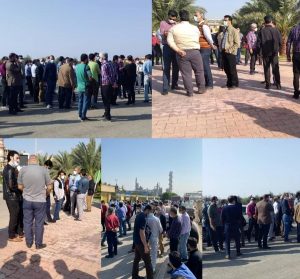
In Bandar Imam Khomeini, a number of workers working for subsidiary companies of Persian Gulf Holding in the petrochemical special zone assembled to protest against wage discrimination. They asked for a direct contract with the company rather than contractors who enforce lower wages and harder work.

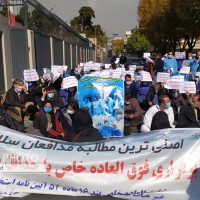
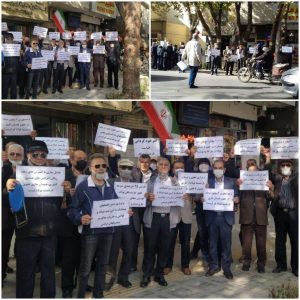
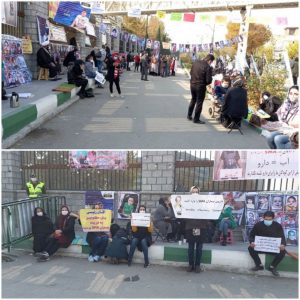
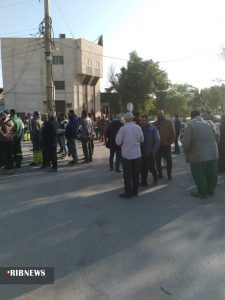
The retirees of the Social Security Organization assembled in front of this organization’s buildings in cities of Ahvaz, Rasht, Kermanshah, KHORAM-Abad, Tehran, Mashhad, Tabriz, and Qazvin, to ask for their demands. Their demands included levelling up pensions in proportion with the poverty line, enforcing the equating wages act, enforcing Article 96 of Social Security Act, addressing the issues regarding supplementary insurance, receiving end-of-year bonuses and taking work records in difficult-dirty-and-dangerous jobs into pension calculations.

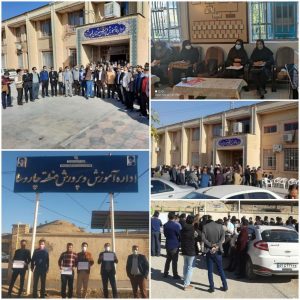
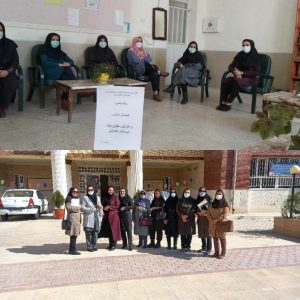
A number of teachers and educators protested in front of the Parliament building in Tehran and the Ministry of Education’s buildings in the cities of Ahvaz, Shiraz, Zanjan, Darab, Bandar-Abbas and Isfahan. They asked for better enforcement of the Equating Wages Act for retirees and the Ranking Plan Act.

Personnel of the Municipality of Khorramshahr assembled in front of the government building to protest against a 6-month payment delay and a 10-month-unpaid insurance premium.

Retirees of the steel company Fulad protested in front of the company’s headquarters in Isfahan and Khuzestan provinces. They asked for levelling up their pension in proportion with the poverty line and enforcing the Equating Wages Act and addressing the problems of supplementary insurance.

A number of Haft-Tappeh’s workers continued to protest on the sixth day of their strike.

Monday, October 4

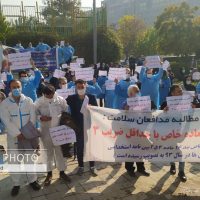
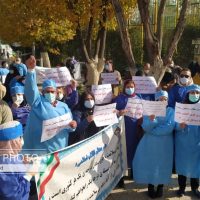
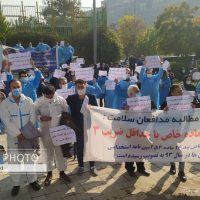
A number of students and alumni of pharmacology assembled in front of the building of the Ministry of Health and Medical Education in Tehran to protest against the monopoly on establishing pharmacies. They asked for the acceleration in enforcing the new regulations thereby the establishment of pharmacies in deprived areas would be facilitated.

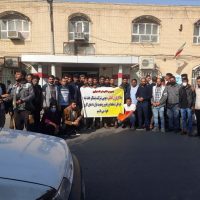
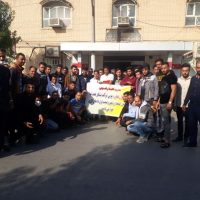
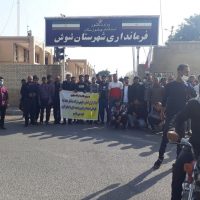
On the seventh day, the workers of Haft-Tappeh company went out on strike. They assembled in front of the governorate building in Shush city.

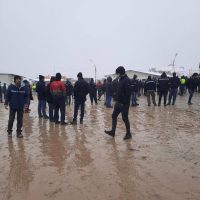
Several workers for private coal mining companies in Kuhbanan county went on strike for the sixth consecutive day at their place of work. The workers said that, despite higher productivity and better quality of coal, they have been paid 4 to 5 million tomans less than workers of state-owned companies. Reportedly, in Kuhbanan County, more than 3000 workers are working for these private coal mining companies.

A group of personnel of social emergency workers of state welfare organization assembled in front of the parliament in Tehran and demanded changing work contract party from private to state section as well as the approval of the social emergency bill by parliament.

A group of retirees and working personnel of airline company Homa assembled in front of the building of Planning and Budget Organization. The retirees said that, despite promises from their supervisors, pensionsv for last month have not  been paid.

Tuesday, October 4

On the eighth day of their strike, Haft-Tappeh’s workers assembled in front of the governorate building in Shush city and then marched through the streets.

More than 500 workers of private companies, who are working on copper mining Sungun Varzaghan, assembled and went out on strike against low wages and hard work conditions.

Workers of the petrochemical special zone, including Persian Gulf Holding, assembled and demanded equal wage for equal work according to article 38 of Iran’s labour code and ILO Convention No. 100.

Wednesday, October 5

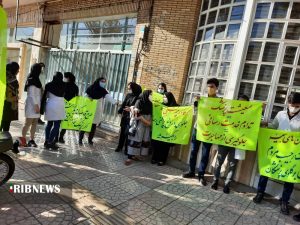
In response to recent violence against women (such as Faezeh Maleki-Nia who was burned to death by her father) and the negligence of the police and judiciary to prosecute and punish the offenders, a group of civil activists assembled in front of the Building of the Ministry of Justice in Sanandaj.

On the ninth day of the strike, in Shush city, Haft-Tappeh workers assemble again in front of the governorate building and then marched toward the building of the ministry of the judiciary.

For the second day, workers of private companies working on copper mining Sungun Varzaghan, refused to work and assembled at their workplace. These workers had spent last night in their tents in the same place of assembly.


Thursday, October 6

Following the protest of women in Sanandaj on previous day, several women protested in Marivan and asked that the case of Faezeh Maleki-Nia (who was burned by her father) be addressed, and called for an end to violence against women.

In Khorramshahr, a number of citizens assembled to protest against negligence and shortcomings of the municipality in collecting garbage. As a demonstration of protest, they piled up garbage bags in front of the municipality building.

In their tenth days of strike, Haft-Tappeh workers continued to protest in front of the governorate building in Shush.

A number of workers of Non-Industrial Operations Company Pazargad in Pardis Jam Town went out on strike at the workplace.


Sajad Zare Released from Prison After Completing Sentence

On October 4, political prisoner Sajad Zare was released from Adelabad Prison in Shiraz after completing his sentence.

According to HRANA, the news agency of Human Rights Activists, on September 26,he was transferred to the detention facility of the intelligence office where he was interrogated for two days. Thereafter, he was sent back to Adelabad prison where he was kept in the quarantine section until his release.

On May 24 of this year, Zare was granted furlough and went back to prison on July 11.

Zare was arrested by the intelligence unit of the Revolutionary Guards on February 10, 2020, and transferred to the detention facility of the intelligence unit in Shiraz. After completing the interrogation process, he was relocated to Adelabad Prison.

Addressing the first part of his case, the revolutionary court sentenced him to 17 months imprisonment on a charge related to “offensive statements against the supreme leader of Iran” and to 7 months on a charge of “propaganda against the regime”.

For the second part, he was condemned to five years imprisonment for the charge of “blasphemy”. The latter was reduced to 2 years by the court of appeal held in Tehran.

Zare is 33 years old and a resident of Shiraz.

Six Inmates Executed in Shiraz, Two More Executed in Isfahan

On Tuesday October 1, six inmates were executed in Adelabad Prison in Shiraz. The previous day, two additional inmates were executed in Isfahan.

According to HRANA, the news agency of Human Rights Activists, the prisoners had previously been sentenced to death on charges ranging from drug-involvement to murder.

HRANA has identified the name of the four above-mentioned inmates as follows: Rasul Akrami, Omid Keshtkar, Meysam Atef-fard, Hadi Razi. In addition, in the last few days, Mostafa Ostowari, convicted for murder, was transferred to a solitary confinement cell in order to be executed, reportedly tomorrow on Saturday.

As an update to the news about the execution of Abbas-Gholi Salehi in Dastgerd Prison in Isfahan, HRANA has confirmed that on September 29, two other inmates were also executed. Muhammad Bar-Ahooie, an Afghan, and Hamid Shahsenai were executed for drug-related crimes.

Iran ranks first in the world in executions per capita, according to international organizations. The Statistics and Publication Center of the Human Rights Activists in Iran (HRA) reported that between January 1 and December 20 of 2020, at least 236 citizens were executed.

None of the above executions have been announced by any Iranian media or official sources.

Baha’i Citizens Hayedeh Forootan and Mehran Mosallanejad Arrested in Shiraz

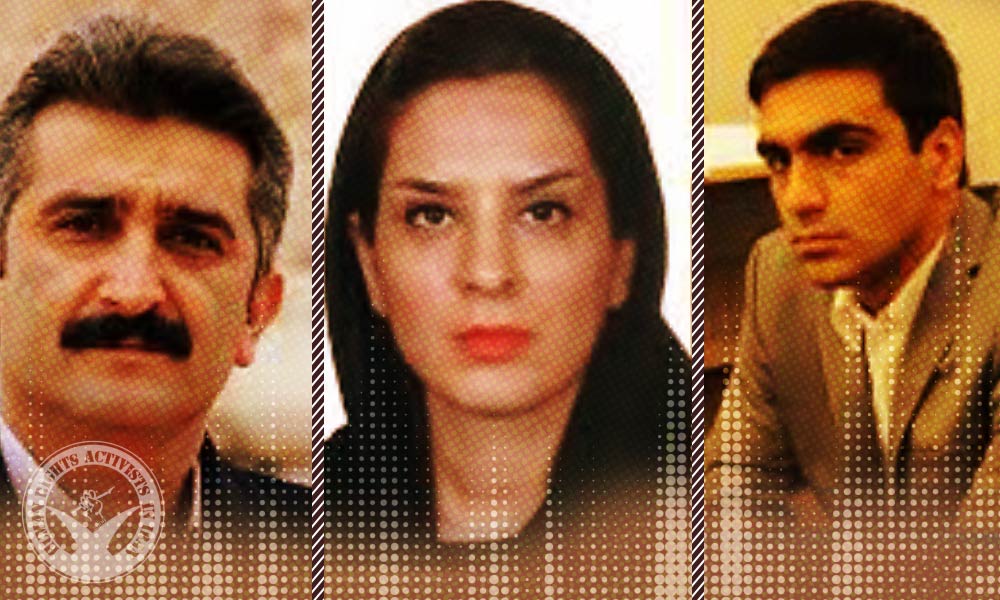
On Thursday, September 23, two Baha’i citizens were arrested at the office of CID by NAJA police.

According to HRANA, the news agency of human rights activists, the citizens have been identified as Shiraz residents Hayedeh Forootan and her son Mehran Mosala-Nejad.

On Wednesday, September 22, agents searched the home of these citizens and confiscated some of their belongings, however, were not able to detain Ms. Foroutan as she was not home at the time. Ms. Foroutan and her son were summoned to the Shiraz CID Police of NAJA office to give explanations, and were arrested upon their arrival.

On Wednesday, September 22, Moin Misaghi and Negareh Ghaderi, two other Baha’i citizens, were also arrested by security forces and taken to an unknown location.

According to unofficial sources, it is estimated that more than 300,000 Baha’is live in Iran, but the Iranian constitution recognizes only Islam, Christianity, Judaism, and Zoroastrianism. Because their faith is not considered legitimate by authorities, the rights of Baha’is in Iran have been systematically violated for years.

This deprivation of the freedom to practice their religion is a breach of Article 18 of the Universal Declaration of Human Rights, and Article 18 of the International Covenant on Civil and Political Rights. The United Nations covenant holds that every person has the right to freedom of religion, freedom of converting religion, as well as freedom of expression, individually or collectively; openly or secretly.

Baha’i Citizens Soroush Abadi and Kiana Shoaei Sentenced to Imprisonment

Baha’i citizens Soroush Abadi and Kiana Shoaei, both residents of Shiraz, were sentenced to imprisonment and banned from leaving the country.

According to HRANA, the news agency of Human Rights Activists, Branch 1 of the Revolutionary Court of Shiraz, presided by Judges Mahmoud Sadati sentenced Mr. Abadi, and Ms. Shoaei each one to 31 months and 16 days in prison and a 2-year ban from leaving the country on the charge of membership in anti-regime groups with the intention of disrupting country’s security, and to Seven months and 16 days in prison on the charge of propaganda activities against the regime in cyberspace.

If the sentences are upheld by the appeal court, after the application of Article 134 of the Islamic Penal Code, the most severe punishment of 31 months and 16 days of imprisonment will apply to Mr. Abadi and Ms. Shoaei.

Ms. Shoaei’s 5 years imprisonment sentence will be reduced to 30 months, but she will have to check in and report her presence to the Shiraz Intelligence Office every month. Kiana Shoaei and Soroush Abadi, along with Farzan Masoumi, were arrested by Ministry of Intelligence agents in October 2019.

According to unofficial sources, it is estimated that more than 300,000 Baha’is live in Iran, but the Iranian constitution recognizes only Islam, Christianity, Judaism, and Zoroastrianism. Because their faith is not considered legitimate by authorities, the rights of Baha’is in Iran have been systematically violated for years.

This deprivation of the freedom to practice their religion is a breach of Article 18 of the Universal Declaration of Human Rights, and Article 18 of the International Covenant on Civil and Political Rights. The United Nations covenant holds that every person has the right to freedom of religion, freedom of converting religion, as well as freedom of expression, individually or collectively; openly or secretly.

Subscribe to Our Newsletter

Now is definitely not the time to stop reading!

Baha’i Citizens Moin Misaghi and Negareh Ghaderi Arrested in Shiraz

On Wednesday, September 22, Baha’i citizens Moin Misaghi and Negareh Ghaderi, both natives of Shiraz, were arrested by security forces and taken to an unknown location.

According to HRANA, the news agency of Human Rights Activists, security forces searched the homes of the citizens and confiscated a number of their belongings during the arrest.

Security forces also visited the home of Hayedeh Mosallanejad, another Baha’i citizen, to arrest her but she was not detained as she was not home.

According to unofficial sources, it is estimated that more than 300,000 Baha’is live in Iran, but the Iranian constitution recognizes only Islam, Christianity, Judaism, and Zoroastrianism. Because their faith is not considered legitimate by authorities, the rights of Baha’is in Iran have been systematically violated for years.

This deprivation of the freedom to practice their religion is a breach of Article 18 of the Universal Declaration of Human Rights, and Article 18 of the International Covenant on Civil and Political Rights. The United Nations covenant holds that every person has the right to freedom of religion, freedom of converting religion, as well as freedom of expression, individually or collectively; openly or secretly.

HRANA Recap: This Week’s Protests in Iran

According to HRANA, the news agency of Human Rights Activists, a number of protests took place this week in Iran, many of which were continuations of ongoing movements.  Read our recap below for details, photos, and videos from the demonstrations.

Saturday, September 11

Several workers of Abadan Municipality and workers of Arvand Free Zone in Abadan, some  workers of Hoveyzeh Municipality, a group of teachers in Ahvaz, a group of Job applicants of Karname-Sabz for the eighth consecutive day in Tehran, shareholders of Amin Khuzestan Fund in Ahvaz, and a group of teachers in Shiraz, in Protest rallies called on their demands to be addressed this Sunday.

Workers of Abadan Municipality:

Workers of Hoveyzeh Municipality:

Protest of teachers in Ahvaz:

Job applicants of Karname-Sabz in Tehran:

Shareholders of Amin Khuzestan Fund:

Protest of teachers in Shiraz:

Sunday, September 12

A group of job applicants of Karname-Sabz for the ninth day in a row in Tehran, a group of retirees of the Isfahan Steel’s Fund, and a number of shareholders of Saipa Diesel Company protested on Sunday.

Job applicants of Karname-Sabz:

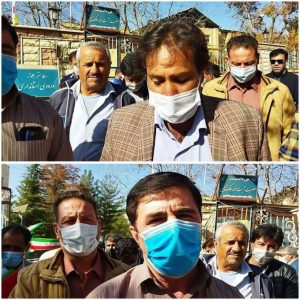
Retirees of the Isfahan Steel’s Fund:

Shareholders of Saipa Diesel Company:

Monday, September 13

A number of shareholders of Cryptoland Exchange in Tehran, a group of workers at the Galltut Coal Mine in Zarand in Kerman province, job applicants of Karname-Sabz for the tenth consecutive day in Tehran, and a number of workers at the Shafa Rud dam in Rezvanshahr county in protest rallies called for their demands to be addressed.


Shareholders of Cryptoland exchange in Tehran:

Workers of the Galltut Coal Mine in Zarand:

Job applicants of Karname-Sabz:

Tuesday, September 14

A number of employed and retired teachers and a group of teachers of the Literacy Movement in Tehran, a group of teachers in Khorramabad, a number of teachers in Ahvaz, a few lost cryptoland exchange shareholders in Tehran, a group of job applicants of Karname-Sabz for the 11th day in a row in Tehran, a group of third-party workers at the Fajr Jam refinery, and workers of Steam company in Bushehr, rallied to call on their demands to be addressed.

Workers of Steam company in Bushehr:

Protest of teachers in Tehran:

Protest of teachers in Lorestan:

Protest of teachers in Khuzestan:

Job applicants of Karname-Sabz:

Retiree teachers in 2020:

Shareholders of Cryptoland exchange in Tehran:

Workers of the Fajr Jam refinery:

Wednesday, September 15, and Thursday September 16

A group of job applicants of Karname-Sabz for the thirteenth day in a row, in Tehran, a number of medical interns at Mofid Hospital in Tehran, a group of workers at Bandar Emam Petrochemical Company, and a number of medical students at the Azad University in Mashhad rallied to call on their demands to be addressed.

Job applicants of Karname-Sabz:

Medical interns at Mofid Hospital in Tehran:

Medical students at the Azad University in Mashhad:

Workers of Bandar Emam Petrochemical:

Saeed Afkari Beaten and Arrested on the Anniversary of the Execution of Navid Afkari

On Sunday, September 12, Saeed Afkari, the brother of Navid Afkari, was beaten and arrested by six plainclothes officers and taken to an unknown location in Shiraz.

According to HRANA, the news agency of Human Rights Activists, he was released after a couple of hours.

Mr. Afkari tweeted the day before that the security forces were pressuring the Afkari family to stop Navid Afkari’s execution anniversary. Following this tweet, Mr. Afkari’s twitter account has become unavailable.

It is also said that during Mr. Afkari’s arrest, security forces beat his sister, Elham Afkari.

Navid, Vahid, and Habib Afkari were arrested in 2018 in connection with the nationwide protests in August 2018. The brothers have been repeatedly beaten and tortured during interrogations. Navid Afkari, an Iranian wrestler, was executed at Adelabad Prison in Shiraz at dawn on September 12, 2020. Habib and Vahid have been sentenced to long imprisonment.

Vahid Afkari’s Request for Retrial Rejected by Supreme Court

Political prisoner Vahid Afkari’s request for retrial was recently rejected by the Supreme Court.

According to HRANA, the news agency of Human Rights Activists, Afkari  is currently imprisoned in Adelabad Prison in Shiraz.

Saeid Dehghan, the lawyer for the Afkari Brothers, wrote in a note on his social media, “Even if they had just skimmed and scanned the case document, there were enough legal reasons to accept a retrial as the verdict contains 24 contradictions and 3 lies.” Dehghan went on to ask, incredulously,  “25 years imprisonment only based on the Judge’s knowledge and without observing Article 211 of the Penal Code?”

Navid Afkari and Vahid Afkari were arrested in September 2018, and Habib Afkari was arrested in December 2018 in connection with the nationwide protests in August 2018. The brothers  have been repeatedly beaten and tortured during interrogations.

After being tried by the Revolutionary Court of Shiraz’s Criminal Court, Navid Afkari was sentenced to 2 death sentences, six years and 6 months imprisonment, and 74 lashes, Vahid Afkari was sentenced to 54 years and 6 months imprisonment and 74 lashes, and Habib Afkari was sentenced to 27 years and three months in prison and 74 lashes.

Despite the serious flaws in the basis of the case against the brothers, and despite a wave of worldwide support for him and calls for authorities to halt the execution, one of the three brothers, Navid Afkari, an Iranian wrestler, was executed at Adelabad Prison in Shiraz at dawn on September 12, 2020.

That same month, Vahid and Habib Afkari were transferred to the isolated ward of Ebrat which is a detention center for prisoners deprived of telephone contact.

Hassan Younesi, one of the Afkari brothers’ lawyers, said in late September of last year, “After the execution of Navid Afkari, Vahid and Habib are not being held in the public ward, and their families and lawyers have not had any (free) meetings with the Afkari brothers.”

Previously, Saeid Afkari, Vahid’s brother, had reported on his social media that he had met with Habib and Vahid Afkari and that they were being held “in solitary confinement, without the right of contact and the right to medical treatment”.

“According to the prison guidelines, convicts should only be kept in public wards under the supervision of the Prisoners’ Organization,” Younesi previously said. “Also, according to the same rules, keeping the accused in detention centers will be possible only with a written order from the judicial authorities, and keeping Habib and Vahid Afkari outside the public prison without meeting (freely) is against the law.”

In May of this year, an interrogation session was held in connection with the Afkari brothers’ complaint about being beaten, long-term solitary confinement, and death threats by two officials. According to Saeid Afkari, the hearing was held in the presence of Vahid Afkari without access to the files and documents of the defendants.

Hossein Abdollah Zadeh Executed in Adelabad Prison

At dawn on Tuesday, July 20, a prisoner who had previously been sentenced to death for murder was executed in Adelabad Prison in Shiraz.

According to HRANA, the news agency of Human Rights Activists, quoting the Iran Human Rights (IHR), the prisoner has been identified as Hossein Abdollah Zadeh from Shiraz.

Iran ranks first in the world in citizen executions per capita, according to international organizations. The Statistics and Publication Center of the Human Rights Activists in Iran (HRA) reported that between January 1 and December 20 of 2020, at least 236 citizens were executed.

One of these citizens was executed publicly, and two were juvenile offenders. An additional 95 citizens were sentenced to death.

According to the same report, more than 72% of executions in Iran are not reported by the government or the judiciary, which human rights organizations call “secret” executions.

The execution of Zadeh has not yet been announced by Iranian media or official sources.