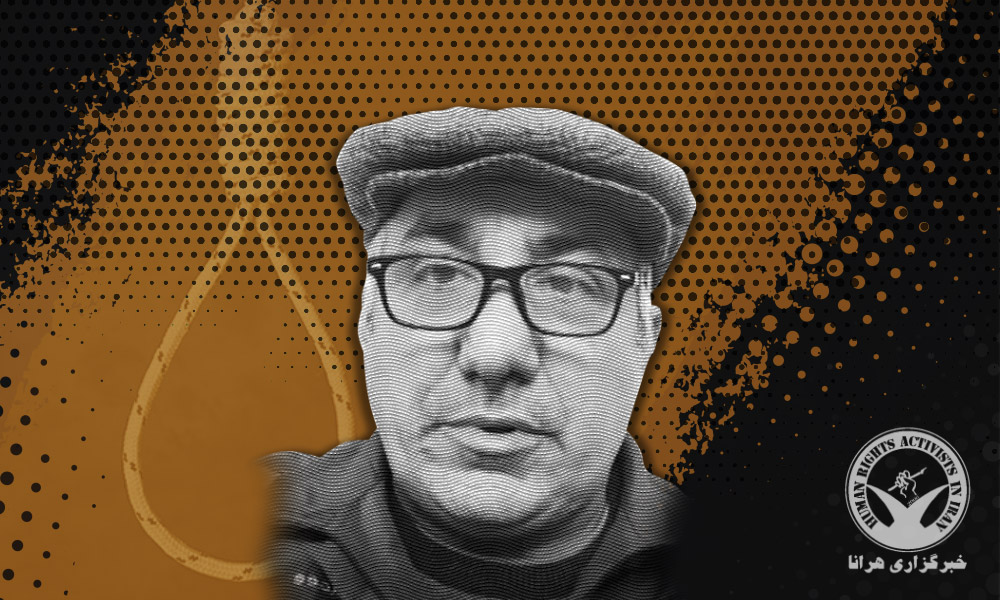
Arash Gangi Detained and Sent to Evin Prison to Endure 11 Year Sentence

On Monday, November 1, translator and board member of the Iranian Writers’ Association (IWA) Arash Gangi was sent to Evin Prison to endure his 11-year sentence.

According to HRANA, the news agency of Human Rights Activists, recently, PEN America in a statement condemned Arash Gangi’s summons and asked for the quashing of this “wildly disproportionate” sentence.

Gangi had been previously sentenced to eleven years in prison by Branch 28 of the Revolutionary Court of Tehran. Grounded on Article 134 of the Islamic Penal Code, a severest punishment of five years is enforceable.

Following the summons he received on October 16 of this year, Arash Gangi appeared at the Executive Unit of Evin prison and from there he was sent to Evin Prison.

On December 22, 2019, the security forces raided his house, and then arrested and transferred him to Ward 209 of Evin Prison, which is at the disposal of the intelligence ministry.  Security agents searched his house and confiscated some of his personal belongings during the arrest.

After a while, he was transferred from the Ward 209 to the public section of Evin Prison. On January 19, 2020, he was released on a bail of 450 million tomans until the end of legal proceedings.

In the first court session, on June 14, 2020, the judge increased the bail to 3 billion tomans, and hence he was arrested and transferred to Evin Prison until providing the new bail. He was released on bail on June 21, 2020.

In the second court session, which took place on November 29, 2020, only his attorney attended the court and Mr Ganji could not appear at the court due to having COVID-19 symptoms.

Ultimately, in December 2020, the court, headed by judge Mohammad-Reza Amoozad, sentenced Gangi to five years in prison on a charge of “assembly and collusion in purpose to act against national security”, one year on a charge of “propaganda against the regime” and five years on a charge of “membership in and collaboration with one of the ant-regime groups.”, for a total of 11 years imprisonment. In February 2021, this verdict was upheld by the court of appeals of Tehran.

According to Naser Zarafshan, Mr. Gangi’s lawyer, all these charges were invoked from his translation of a book under the title of “A Small Key Can Open A Big Door: The Rojava Revolution”, which is about Kurdistan upheavals in Syria.

The non-governmental organization IWA was founded by a group of intellectual writers in 1968, originally with the objective of promoting freedom of speech and fighting against censorship.

Although IWA was banned in 1981 by the Iranian authorities, a group of writers created a “consulting assembly” to revive the banned IWA in 1993. On September 8, 1996, 12 writers who had gathered to draft a new charter for the IWA were arrested, interrogated and warned not to hold further meetings for the advancement of the IWA. Since then, the members and board members of IWA have been subject to systematic persecution, long prison sentences and even targeted killing from 1988–98, when certain Iranian dissident intellectuals who had been critical of the Islamic Republic disappeared and their bodies found afterwards.

Political Prisoner Saeed Sangar Released After 21 Years in Prison

On Saturday, October 30, political prisoner Saeed Sangar was released on parole from Urmia Prison.

According to HRANA, the news agency of Human Rights Activists, Sangar’s release comes after 21 years of imprisonment.

On August 31, 2000, Sangar was arrested. However, in his legal case, October 29 of that year has been wrongly recorded as the arrest date.
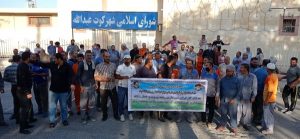
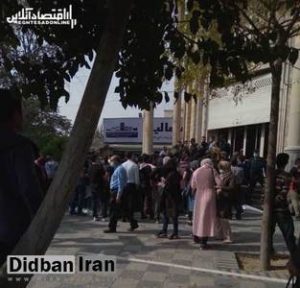
On November 18, 2000, the Revolutionary Court of Sanandaj, headed by judge Fatemi, sentenced him to death on the charge of “enmity against God (Moharebeh) through membership in The People’s Mujahedin Organization of Iran”. Following this conviction, Sangar was transferred from the detention center of the ministry of intelligence in Sanandaj to ward 209 of Evin Prison in Tehran, where he was held in solitary confinement cells until 2003. In the fall of 2003, the appellate court changed the verdict to life imprisonment and sent him to Urmia Prison.

Years later, on December 23, 2016, the executive branch No. 4 of the Department of Justice in Sanandaj reduced the verdict to 18 years imprisonment.

In 2017, a new case was opened against him for the charge of “propaganda against the regime”  of which, however, he was later acquitted.

Despite that by December of 2020, not only he had served out two years more than his 18-years sentence, he was sentenced again to 11 months imprisonment sentence on the charge of ” propaganda against the regime and in favor of dissident groups against the regime”. This sentence was reduced to eight months, which led to his final release this Saturday, October 30.

Ahmadreza Haeri Summoned to the Cybercrime Court of Tehran

Following a complaint from the Prisons and Security and Corrective Measures Organization of Tehran Province (PSCMO), former political prisoner Ahmadreza Haeri was recently summoned to the Cybercrime Court of Tehran.

According to HRANA, the news agency of Human Rights Activists, this Friday, October 29, Haeri was summoned on charges of “spreading lies, accusative, insulting and slanderous words”.

One month after the incident known as “Black Thursday of Evin Prison”, when dozens of political prisoners in Evin Prison were beaten brutally by security agents in Ward 350 of Evin prison, Ahmadreza Haeri was sentenced to 42 months in prison by Branch 15 of the Revolutionary Court of Tehran, headed by Judge Salavati.

This initial verdict was upheld by Branch 36 of the appellate court. However, following his lawyer’s objection, the verdict was revoked and this time the case was undertaken by Branch 54 of the court of appeals which sentenced him to six months in prison and 74 lashes.

On July 25, 2020, Haeri endured the flogging by the Intelligence and Public Security Police of NAJA and then was sent to the Greater Tehran prison to serve his six-month sentence. On October 8, 2020, he was released on probation from the Greater Tehran prison.

In this new subpoena from the Cybercrime Court of Tehran, Haeri was instructed to appear there within five days.

Political Prisoner Injured After Protest by Self-Immolation in Evin Prison

On Wednesday, October 27, political prisoner Mehdi Darini was injured by self-immolation and hospitalized in the healthcare center of Evin Prison.

According to HRANA, the news agency of Human Rights Activists, Darini’s demonstration was in protest of prison authorities’ refusal to release him on probation. He is currently enduring the second year of a five year term in Evin Prison in Tehran.

An informed source told HRANA that Darini had previously warned prison officials about his intentions if the interrogator refused to consider his demand to be released.

During the last interrogation, in response to his stating his intention to go on a hunger strike, the interrogator reportedly said, “All the better; the regime has already too many hungry mouths to feed.”

35-year-old Mehdi Darini, a production engineer, was sentenced to five years in prison by the Revolutionary Court of Tehran on a charge of ” blasphemy” and one year on a charge of “propaganda against the regime”. According to Article 134 of the Islamic Penal Code, a severest punishment of five years is enforceable.

Amir Hossein Moradi Offered Release on Bail

Earlier this Tuesday, October 26, the court granted bail to Amir Hossein Moradi, who was arrested in relation to the nationwide protests of November 2019.

According to HRANA, the news agency of Human Rights Activists, Moradi is currently hospitalized for a skin disease. Based on this court order, if he pays the required 4 billion tomans bail, he will be set free upon being discharged from the hospital. This has been confirmed on the personal social media page of Babak Pak-Nia, Moradi’s lawyer.

Amir Hossein Moradi, Saeed Tamjidi, and Mohammad Rajabi were sentenced to death by the Tehran Revolutionary Court, before a global outcry led to the re-examination of their case.

On Jun 24, 2020, the Human Rights Activists News Agency (HRANA)  announced that the death sentence of the three political prisoners had been upheld by the Supreme Court. On July 14, 2020, the spokesman of the Judiciary officially announced the confirmation of their death sentences and said that the sentences had been sent to the prosecutor’s office for execution.

However, according to the lawyers, permission to enter the trial and study the case was given to them on July 15, 2020–weeks after HRANA reported that the death sentence had been confirmed in the Supreme Court.

Less than an hour after the official confirmation of the death sentences for Amir Hossein Moradi, Saeed Tamjidi, and Mohammad Rajabi, “#Don’t_execute” became the world’s top trend with hundreds of thousands of tweets. Human Rights Watch, US President Donald Trump, the Writers’ Association of Iran, and others all reacted to this news. The hashtag has now been used more than ten million times.

The following day, UN human rights experts issued a statement and condemned the death sentences. The statement expressed that Amir Hossein Moradi, Saeed Tamjidi, and Mohammad Rajabi were tortured and forced to confess and that these forced confessions were later used against them in their trials. HRANA has previously conducted numerous conversations with informed sources and extensive research to determine what happened to the prisoners in the various processes of activity up to the conviction.

On July 19, 2020, the three defendants’ lawyers issued a joint statement announcing that the case had been referred to a different branch for retrial after the Supreme Court’s acceptance of Article 477.

In mid-December of 2020, in the aftermath of the global outcry, the young activists’ request for a retrial was finally accepted by Branch 1 of the Supreme Court and their death sentences were finally overturned.

The retrial process since has been comparably unstructured. The cases were submitted to Branch 23 of the Revolutionary Court of Tehran for retrial following overturn of their death sentnece, but, due to turnover in the head of the branch, the court session was postponed to May 12. Once again, the court session was cancelled due to the absence of the second judge. In July, their court session was postponed for a fourth time.

Moradi’s release would mark a rare victory in the ongoing legal battle facing so many of those who were involved in the nationwide protests of November 2019.

Subscribe to Our Newsletter

Now is definitely not the time to stop reading!

One Worker Killed, Two Others Injured due to Unsafe Workplace Conditions

In recent days one worker lost his life and two others were injured due to due to unsafe workplace conditions.

According to HRANA, the news agency of Human Rights Activists, quoting ILNA, spokesperson of the Tehran Fire Department Jalal Maleki announced the severe injury of one firefighter during a recent firefighting operation.

“At 1:24 am, the Fire Department was called on about an extensive fire in a commercial building and immediately firefighters of five stations dispatched to the spot,” Maleki commented. “The building had three floors as well as an attic. On the third floor, five stores were totally burned and the fire (had) spread to the attic. When the firefighters reached on spot, the fire had swept through the entire third floor. They began immediately to extinguish the fire with regard to all (safety) issues. But a part of the roof was demolished and one of the firefighters who was wounded was transferred to the hospital.”

According to IRIB, a fire incident in a cotton products factory in Garmsir City caused injury to a worker.

“Two teams were dispatched to the spot and extinguished the fire after thirty minutes,” the head of the fire department in Garmsir City commented.

According to him, a man about 70 years old was injured from the fire and subsequently transferred to a hospital.

According to ISNA, the head of the fire department of Mashhad City additionally announced the death of a young worker due to the debris falling in a building during the demolition process.

According to him, for unknown reasons, the debris fell on a worker and killed him, after which firefighters pulled his body from the debris.

Zia Nabavi’s One-Year Sentence Upheld by Court of Appeals

Branch 36 of the Court of Appeals in Tehran recently upheld a one year sentence for student activist Zia (Zia-el-din) Nabavi.

According to HRANA, the news agency of Human Rights Activists, the Revolutionary Court of Tehran had initially convicted Nabavi on a charge of “propaganda against the regime”.

The sentence included one year in prison including other unconventional punishments like monthly attendance of martyrs’ burial grounds in Behesht-e Zahra cemetery, disabled veteran sanatorium, emotional control courses and the prohibition of leaving the country for two years.

On February 25, 2020, Nabavi was arrested by security forces in Tehran and released on bail on March 2, 2020. He had previously faced other arrests and convictions due to his non-violent activities.

Citizen Sentenced to Forty Lashes for Stealing Three Packs of Cashews

A board member of Tehran University revealed a lawsuit wherein in recent weeks a criminal court condemned a citizen to 40 lashes, along with other punishments, just for stealing three packs of cashews.

According to HRANA, the news agency of Human Rights Activists, a board member of Tehran University publicized the court order in which a citizen has been convicted to 40 whips.

This verdict stands in blatant violation of the international covenant on Civil and Political Rights, of which Article 7 prohibits “torture, cruel, inhuman or degrading punishment”.

Despite being a party to the international covenant, Iran’s regime regularly uses inhuman and humiliating punishments like flogging.

HRANA Recap: This Week’s Protests in Iran

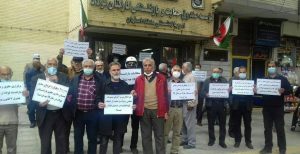
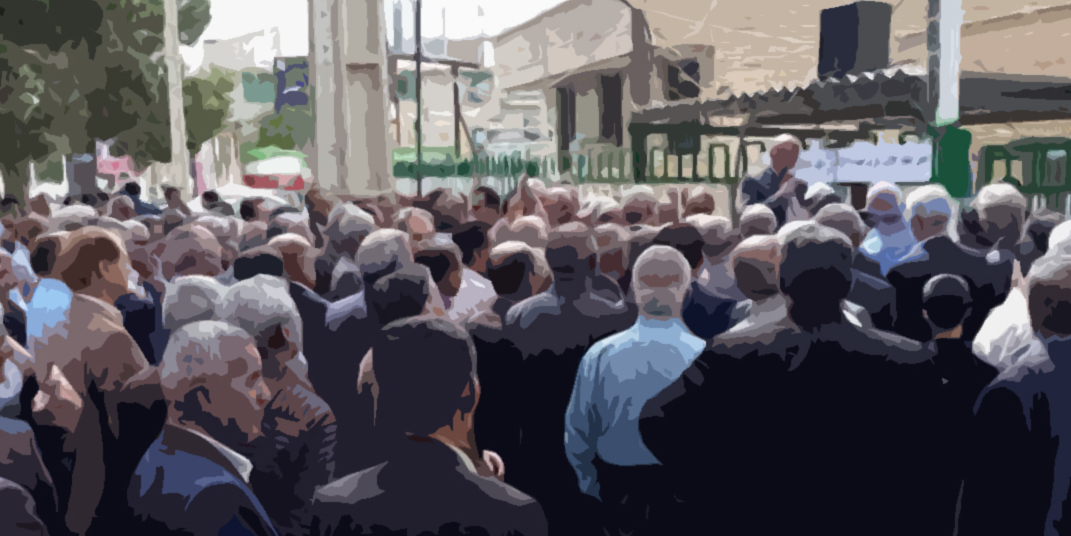
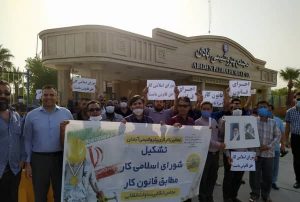
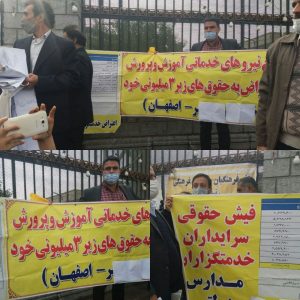
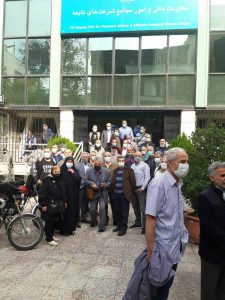
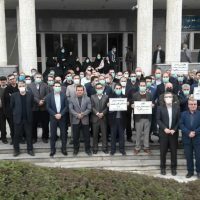
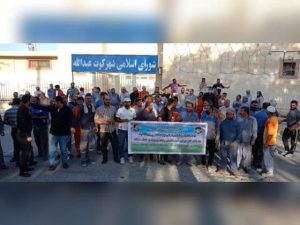
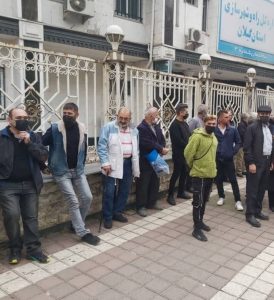
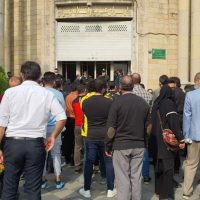
According to HRANA, the news agency of Human Rights Activists, a number of protests took place this week in Iran, many of which were continuations of ongoing movements.  Read our recap below for details, photos, and videos from the demonstrations.


Friday, October 15

In Isfahan, a number of farmers assembled at the office of parliament member Hossein Mirzaie to protest the mismanagement in addressing water shortage. In response to the member of parliament (MP) who had recommended rain praying as the only solution, these farmers asked him to pray.

“We are waiting for the MP to come here and do rain prayer,” the farmers stated. “We go here on sit-down strike until it rains.”


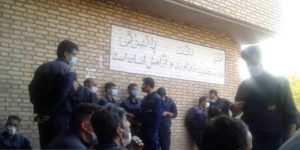
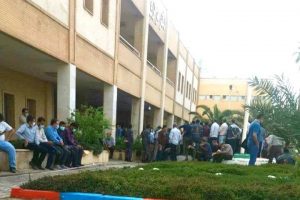
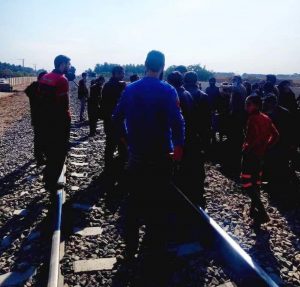
A number of construction workers for a project to build a freeway tunnel from Manjil to Rasht City went on strike to protest against their employer who broke his promise regarding paying delayed wages. According to the workers, after fifteen days, the employer has yet to fulfill his promise to pay four months of unpaid wages.

About 800 workers working on the Shafa Rud dam in Gilan Province additionally went on strike last Friday to ask for the payment of their wages, which are seven months delayed.

“Since last year, I have been trying to address their issues,” Hassan Muhammad Yari , the MP of Talesh City, stated in Parliament. “Many times, I gave speeches in the parliament; however, so far there has been no one to listen. Therefore, these workers went on strike to reach their demands and I will join them from next week.”

Saturday, October 16

A group of workers of Ahvaz municipality protested on Saturday, first in front of the parliament building in Tehran and then at the office of the president. Reportedly, 69 recently-temporarily-laid-off workers of Ahvaz Municipality demanded to return to work. The workers have not been paid for the last six months and are facing a four month suspension from work.

Sunday, October 17

Workers of the Tehran Bus Company, along with the stakeholder of the housing cooperative of this company, assembled in front of the judiciary building in Tehran. The housing cooperative set up Sepidar construction projects 2 and 3 aiming to provide these bus drivers with housing, but 10 years after its introduction the project remains unfinished.

A number of people who have lost money to Cryptoland, a cryptocurrency exchange, assembled in front of the parliament building and demanded the return of their money

A number of retirees of the pension fund of the steel corporation Fulad assembled in front of the building of this corporation in Isfahan. They asked for the improvement of their pension funds in proportion with the poverty line, closing the gap in pension incomes and addressing issues in regard to supplementary insurance.

Bus and minibus drivers working in the transport service of Southern Pars assembled and protested against low wages in comparison to increasing transportation costs.

Monday, October 18

Some personnel of Ahvaz Water and Wastewater Company assembled in front of the company building to protest the upcoming merger with Khuzestan Water and Water Waste company, among other issues. They said that the merger would worsen the financial situation of the company and the quality of their service as happened after the merger of with rural Water & Wastewater Company with its counterpart in the province.

Tuesday, October 19

A number of citizens assembled in front of the parliament building to protest against unfair family laws especially “Mehrieh”, which relates to the certain amount of money or possession paid by the groom before marriage or later at any time on request of the bride.

A group of workers working in ShafaRud dam assembled in on company property in Rezvanshahr City. These workers have not been paid for seven months and more than 700 workers have been laid off due to the shutdown of the project.

A number of workers of Haft-Tappeh Company assembled and protested on company property. They have been on strike for 23 days. These workers demand payment of their delayed wages, an immediate return of the company from the private sector to public, the return of laid off workers to work, extension of the contracts of both seasonal workers and workers of the pest control department, and the carrying out of repair operations.


The workers of Hadid Mobtakeran Company assembled and protested unpaid wages, which have been delayed by two months. 


A number of customers of Azvico company (Azarbaijan Vehicle Industry), who had pre-purchased cars protested in front of the building of Economic Crimes Court in Tehran. These citizens have not yet received their purchased car after three years.


A group of people, who lost their investment in the Aftab Project, assembled in front of Rey City Court.


A group of poultry farmers assembled in front of the building of the Ministry of Agriculture Jihad in Tehran in protest of high incubator costs and government-imposed fixed prices.

A group of people who have not yet received their pre-ordered cars after several years from Persian Khodro Company, Ramak Khodro Company, Seyf Khodro Company, and Karma Company protested on Tuesday.


Workers of the private companies which are working as contractors for Bushehr Petrochemical Company went on strike once again. They demanded increased wages, changing shift-work schedule to 20 days work, 10 days off, improvement of worker accommodations and food. It is worth mentioning that since June 19, these workers have launched a campaign to call all oil industry workers to join the strike.

Wednesday, October 20

A number of depositors of Caspian, a finance and credit institution, assembled in front of the building of the Liquidation Board in Tehran. They said that after six years, this finance institution refuses to return their investments. 

“Today we assembled in front of the building of Liquidation Board,” one of the participants in this protest commented. “Once they did not respond, we went inside and they cut off the power of the building to force us to leave.”

Thursday, October 21

A number of workers for a garment factory Sabalan assembled in front of the governorate building in Ardabil to demand their unpaid wages, which have not been paid for three months. These workers say that while the company spends a lot of money on erecting pavilions, building restaurants in company premises, other expenses for tourist attractions, and paying some former politicians apparently as Consultants or board members, they do not pay workers’ wages.

A group of women’s rights activists and other citizens assembled at the Faezeh Maleki-Nia’s burial place in Dolat-Abad village to ask for the repeal of discrimanatory laws against women. On Sunday, October 3, 22-year-old Faezeh Maleki was burned to death by her father in Sanandaj City.

Farangis Mazloum Summoned by Evin Court to Endure Eighteen Month Sentence

Yesterday, October 19, civil activist Farangis Mazloum was summoned to serve her 18-month prison sentence by Branch 1 of the Executive Unit of Evin Court.

According to HRANA, the news agency of Human Rights Activists, Mazloum was asked to appear at this branch within five days from the date of the summons’ issuance. Branch 29 of the Revolutionary Court had sentenced her to 18 months in prison.

Mazloum is the mother of prisoner of conscience Soheil Arabi, who recently began a hunger strike in Rajai Shahr Prison.

On July 22, 2019, Farangis Mazloum was arrested at her sister’s home and transferred to the detention center at the disposal of the ministry of intelligence, known as Ward 209 of Evin prison. On October 8, 2019, she was released on bail of 250 million tomans (approx. 9300 US dollars) until the end of legal proceedings.

She was indicted by Branch 6 of the Public and Revolutionary Court of Evin Prison.

Initially, the Branch 29 of the Revolutionary Court of Tehran held the trial in absentia and sentenced her to six years imprisonment. In this court, six other people related to this court case were also sentenced to imprisonment. After Mazloum’s objection, in a retrial, the Branch 29 of the Revolutionary Court of Tehran on August 25 and 28 2020 changed the sentence to 18 months in prison.

She was sentenced to one year on a charge of ” assembly and collusion to commit a crime through associating with The People’s Mujahedin Organization of Iran”, and 6 months on a charge of “propaganda against the regime in favor of opposition political groups”.

This verdict was upheld by the appellate court. By applying article 134 of the Islamic Penal Code, the severest punishment of one year from this sentence is enforceable.