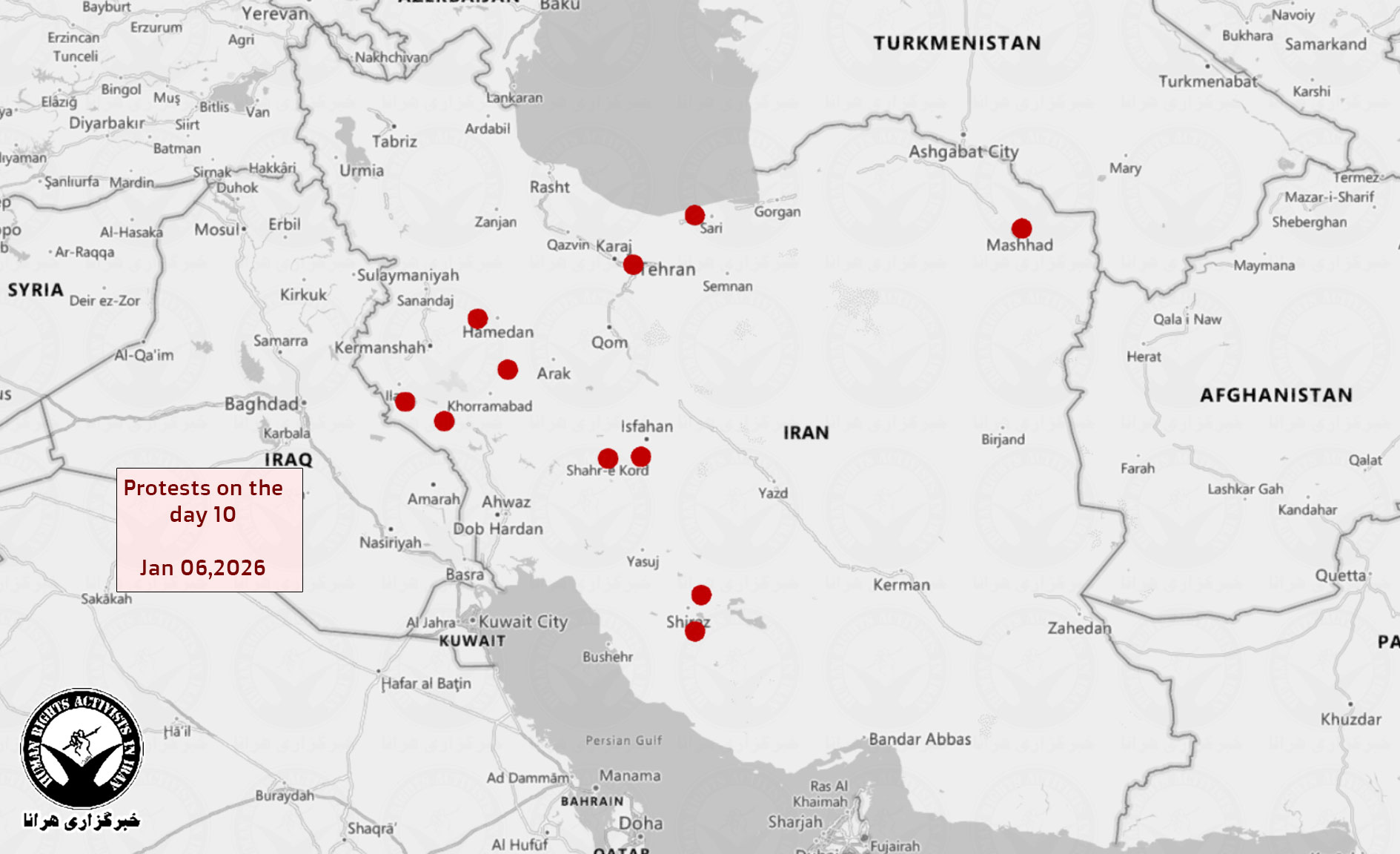
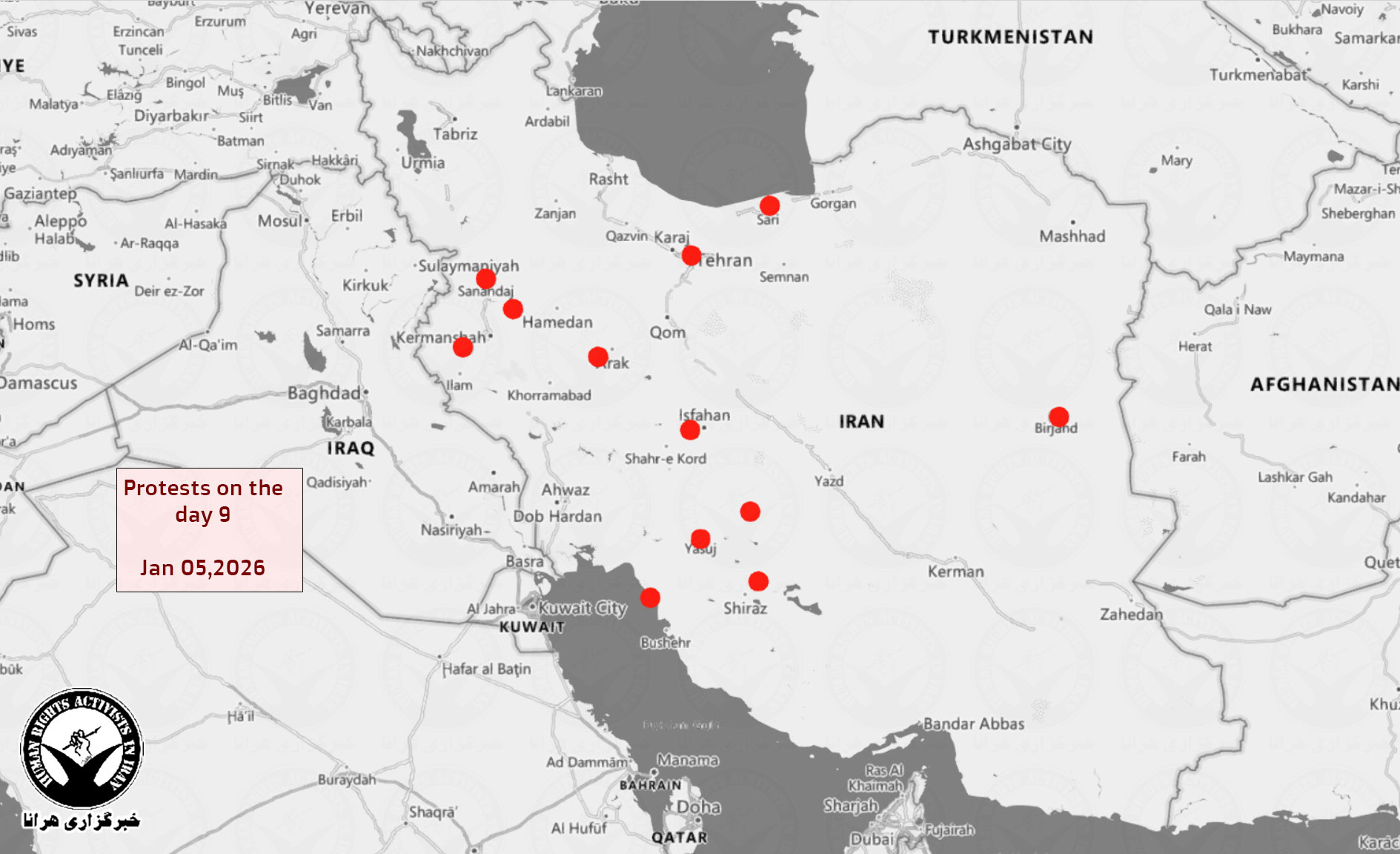
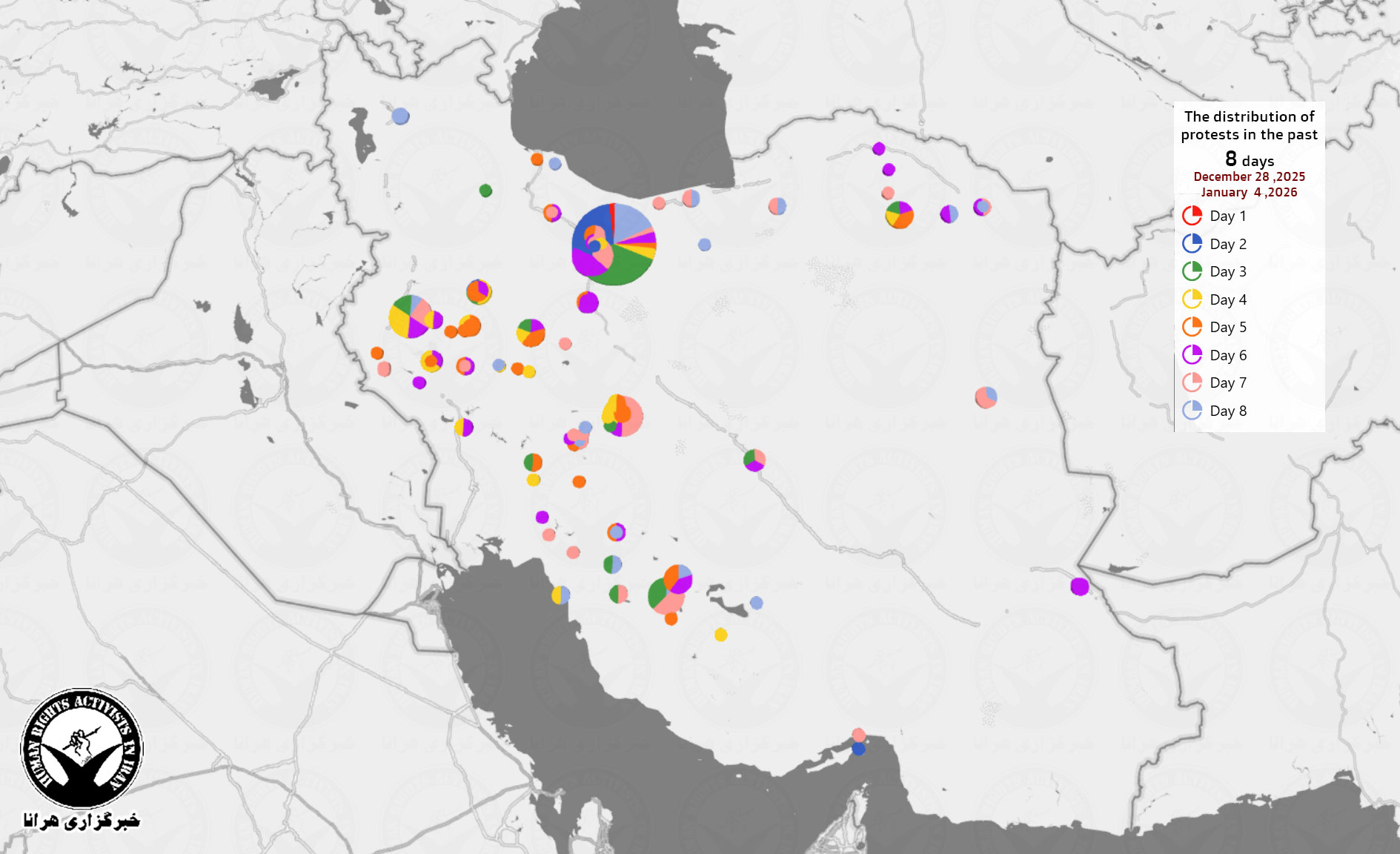
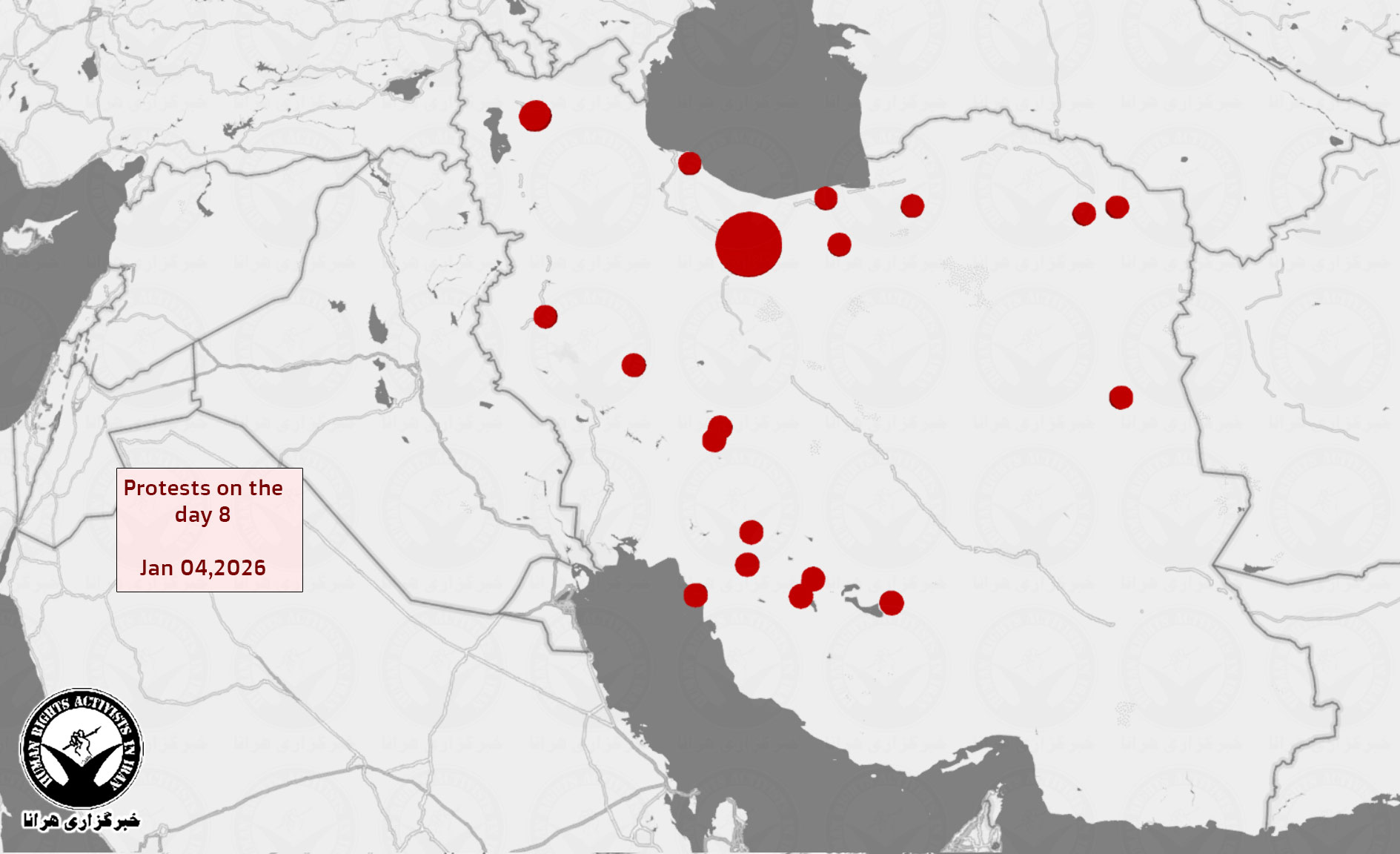
HRANA – Iran’s nationwide protests continued into their thirteenth day amid a widespread internet shutdown. According to HRANA reports, over the past 13 days at least 65 people have been killed, 2,311 individuals have been arrested, and protests have been recorded at 512 locations across 180 cities in 31 provinces. On this day, despite severe restrictions on the flow of information, reports indicated the continuation of nighttime gatherings, an intensification of security crackdowns, and an increase in judicial threats against protesters.
Nationwide protests continued on the thirteenth day, Friday, January 9, while a broad internet blackout severely limited the dissemination of news and the verification of events. Nevertheless, a collection of citizen reports and media coverage pointed to the continuation of nighttime protests in Tehran and several large and small cities. At the same time, security responses intensified, including reports of gunfire, the use of tear gas and pellet shotgun rounds, as well as explicit judicial threats against protesters. Some indications of disruptions to international flights or flight returns, along with official travel warnings issued by foreign governments regarding travel to Iran, were also reported.
Background and Drivers of the Protests
On the thirteenth day, the underlying drivers of the protests remained a combination of political and governance-related grievances and economic pressures. Field reports and published accounts particularly emphasized the following:
• Livelihood crisis and the collapse of the national currency’s value: Some accounts explicitly referred to economic hardship and difficulties in meeting daily needs. Within the protests themselves, the link between street demonstrations and livelihood-related grievances was especially prominent.
• Continuation of the nighttime protest pattern: Calls for nighttime presence and chanting (including from within neighborhoods and from rooftops) continued to be reflected in several cities as a lower-cost method of participation.
• Rising security and judicial costs of participation: Official threats of arrest, “identification at homes,” and the filing of serious judicial charges became more pronounced that same day as tools of deterrence and intimidation.
Geographic Scope and Focal Points of the Protests
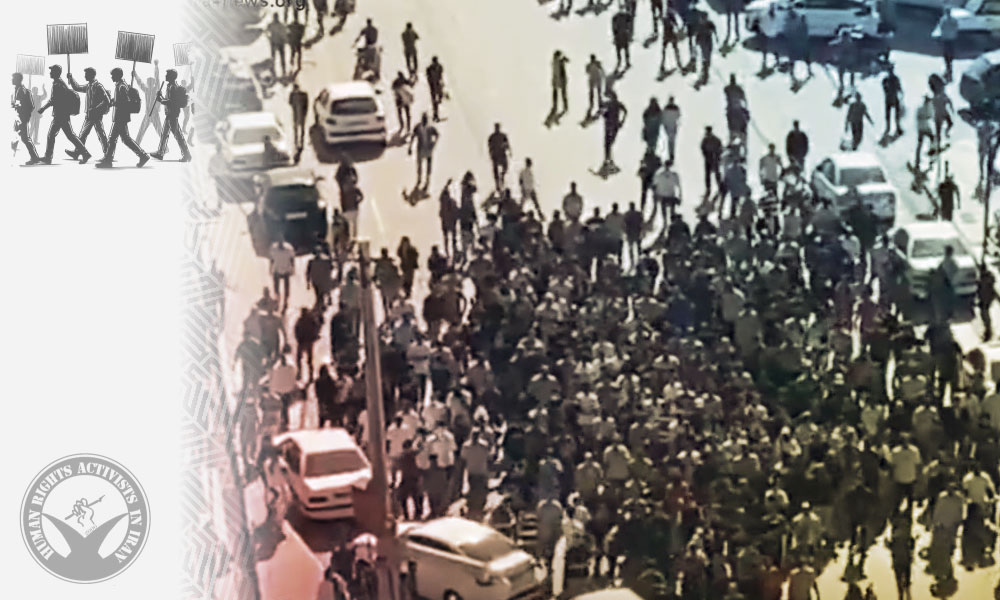
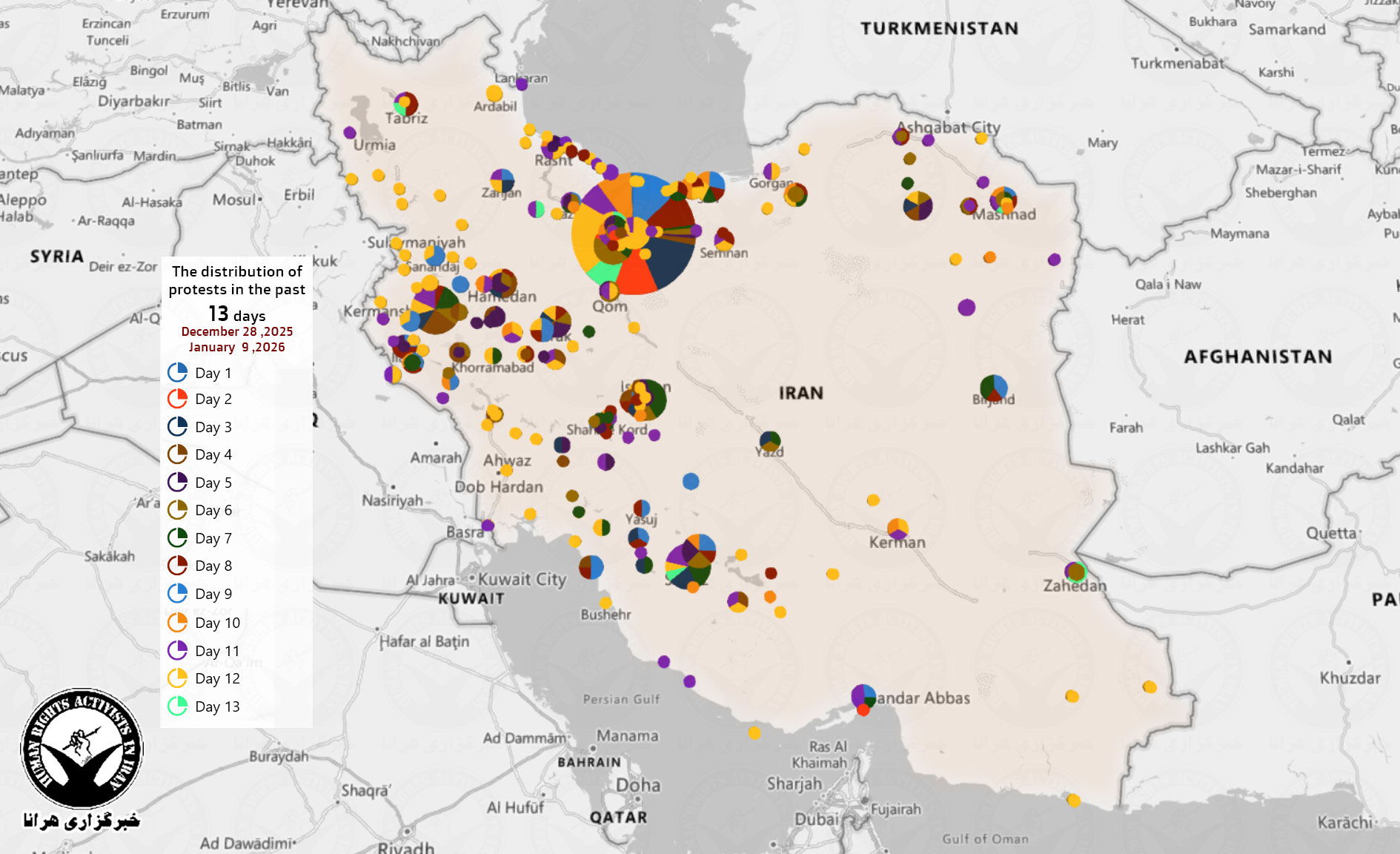
Reports received from Tehran indicate that the protest pattern on the thirteenth day was neighborhood-based and dispersed, yet dense. The dominant pattern included “localized neighborhood gatherings and chanting,” “scattered reports of gunfire and a heavy security atmosphere,” and “symbolic actions (such as setting fire to banners and billboards).” Neighborhoods in Tehran that witnessed protests on the thirteenth day included Chitgar, Moshiriyeh, Punak, Ashrafi Esfahani, Qeytarieh, West Ferdows Boulevard, Tehranpars, Rahahan Town (Railway Town), and Moqaddas Ardabili Street.
In addition to Tehran, received reports also indicate protests in the cities of Mashhad, Tabriz, Shiraz, Abhar, Zahedan, and Karaj.
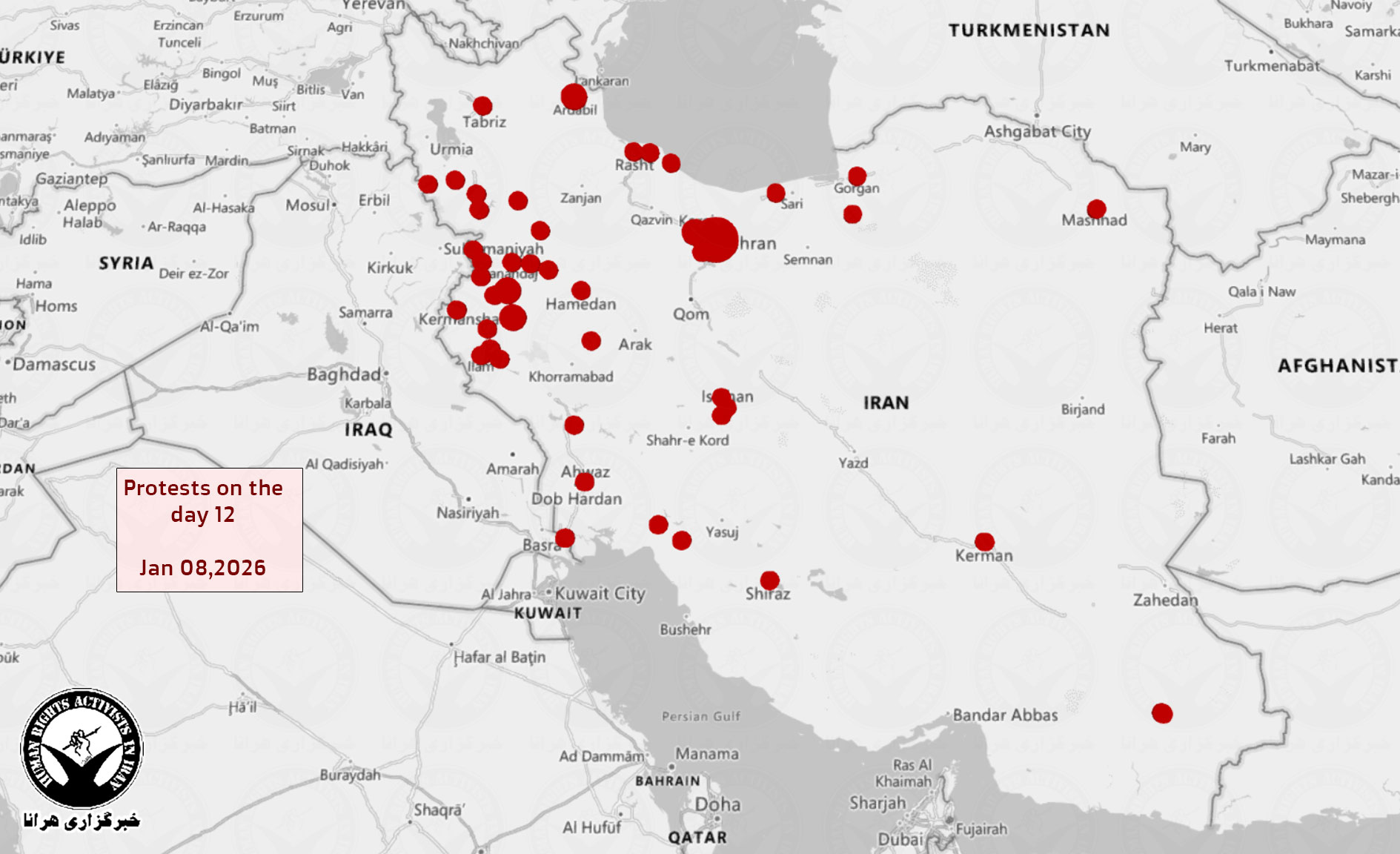
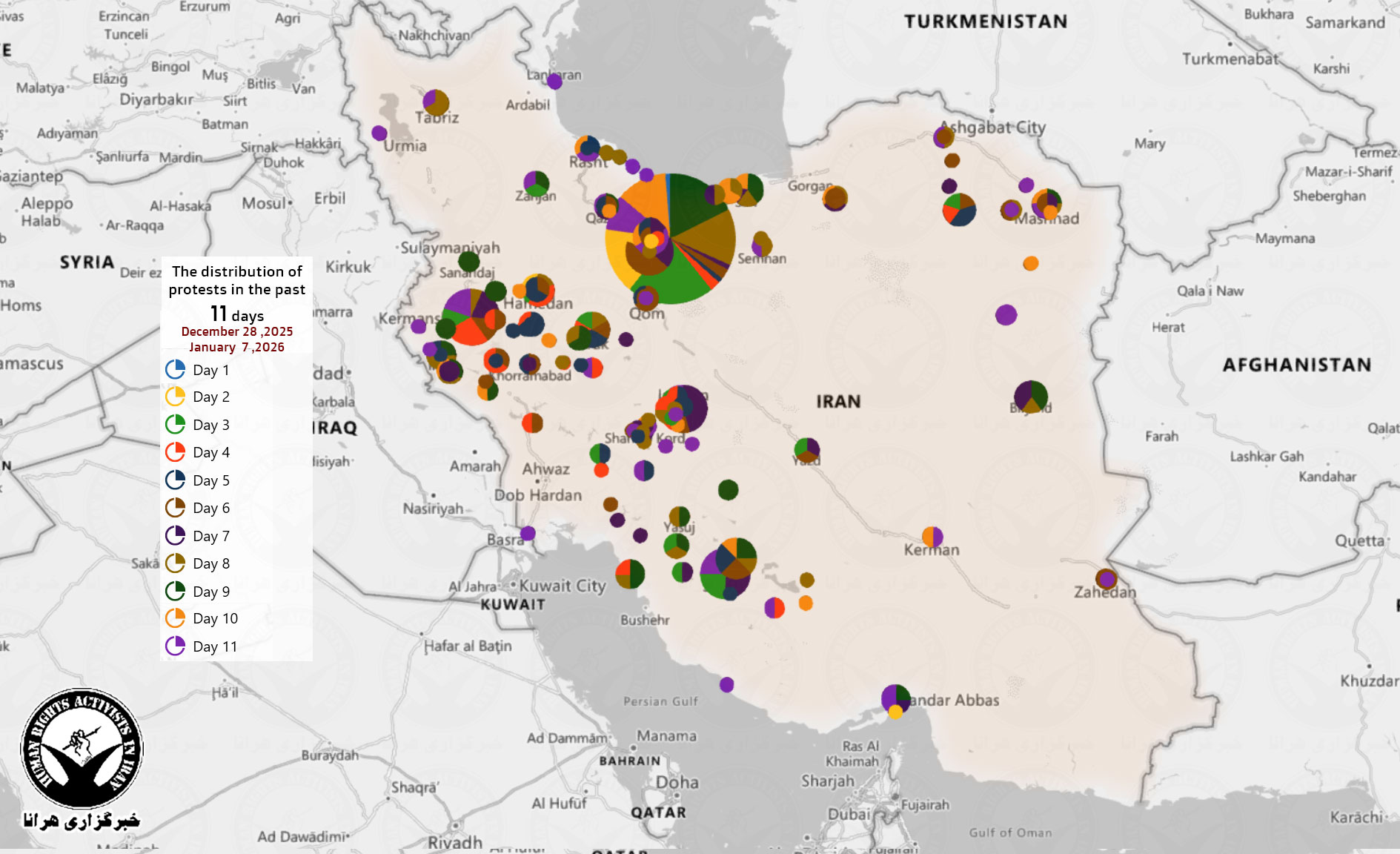
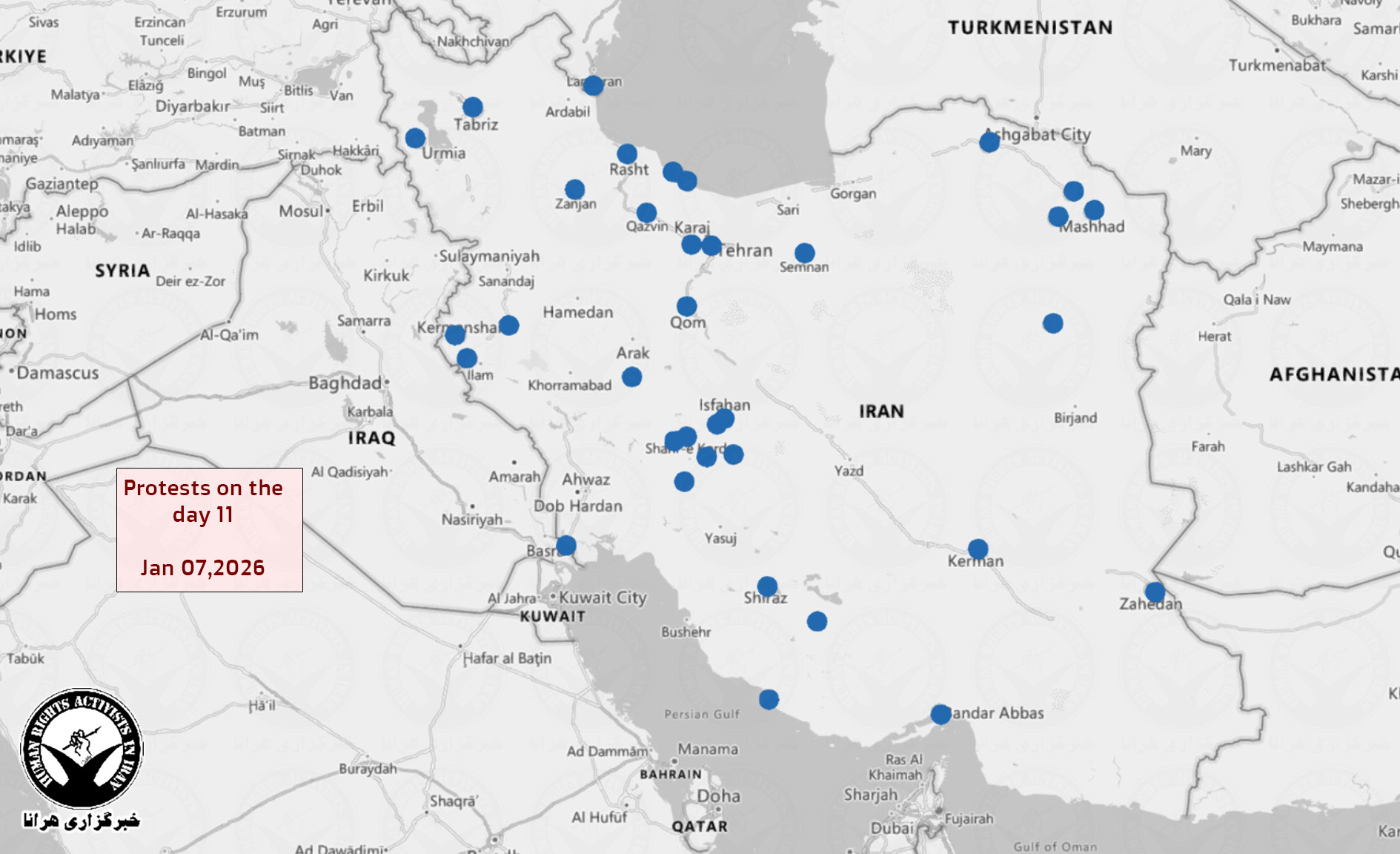
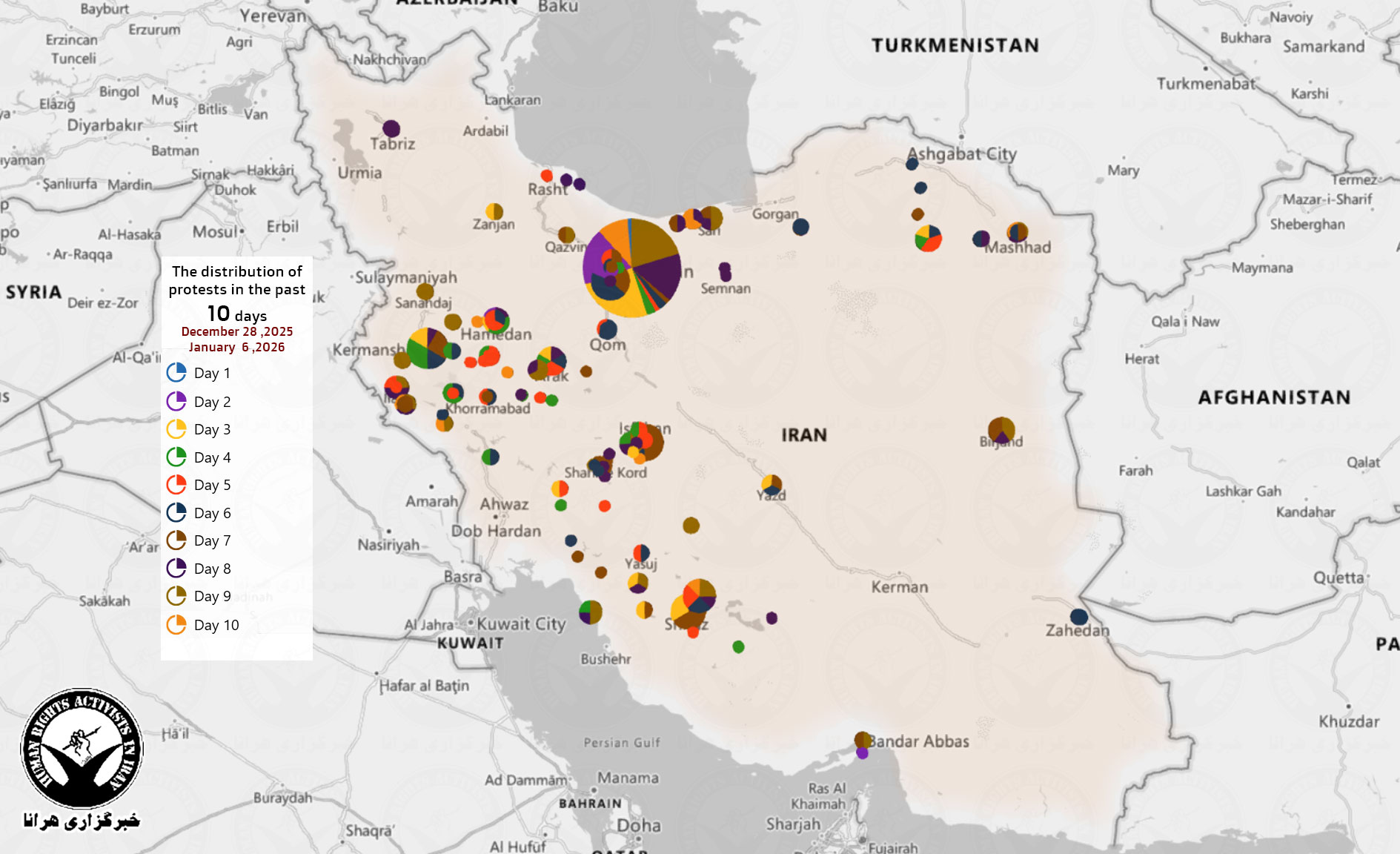
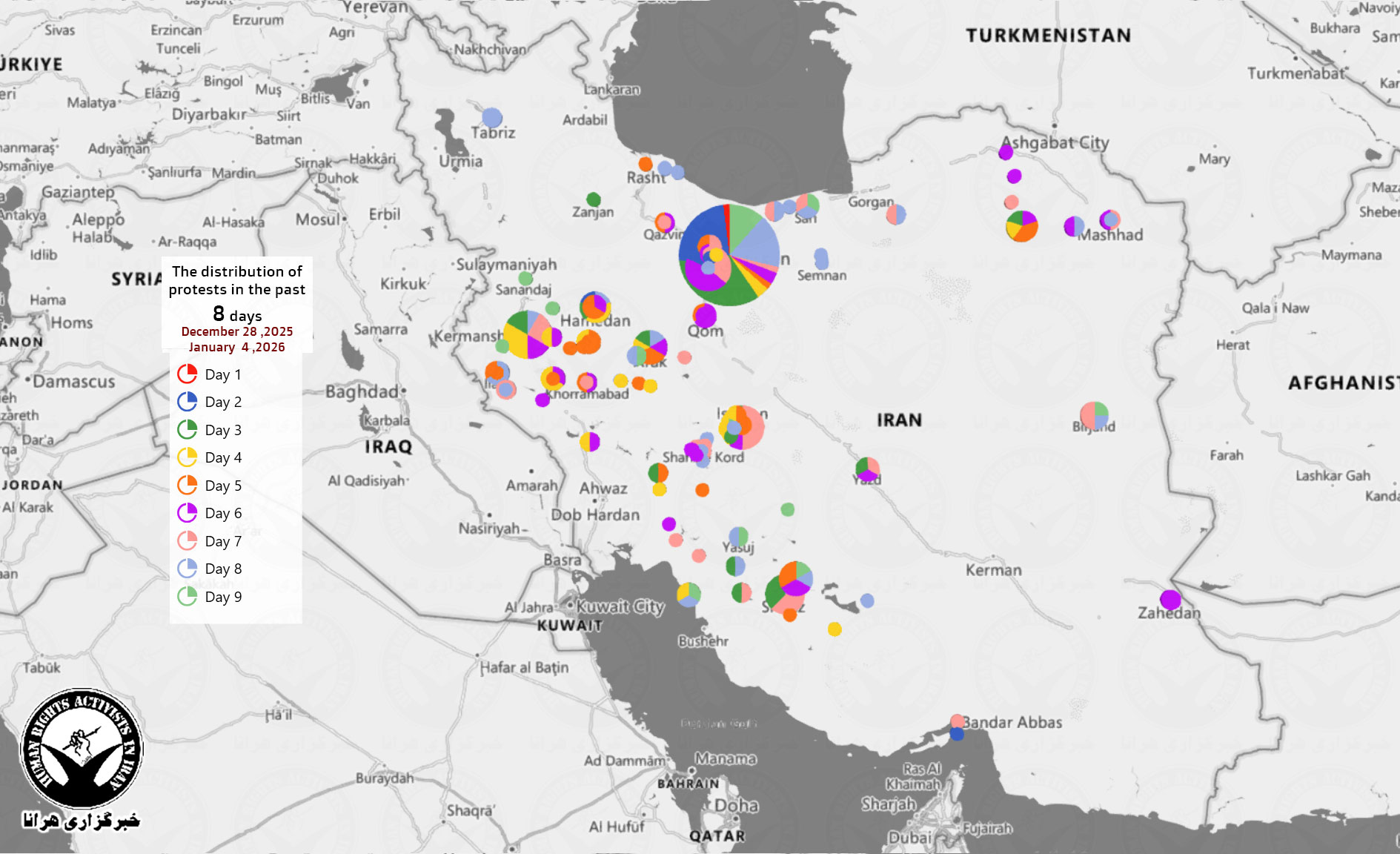
Based on reports compiled up to the thirteenth day of the protests, 512 locations nationwide across 180 cities in 31 provinces have witnessed demonstrations. Thirty-five universities have also taken part in these protests.
Fatalities and Victims of the Protests
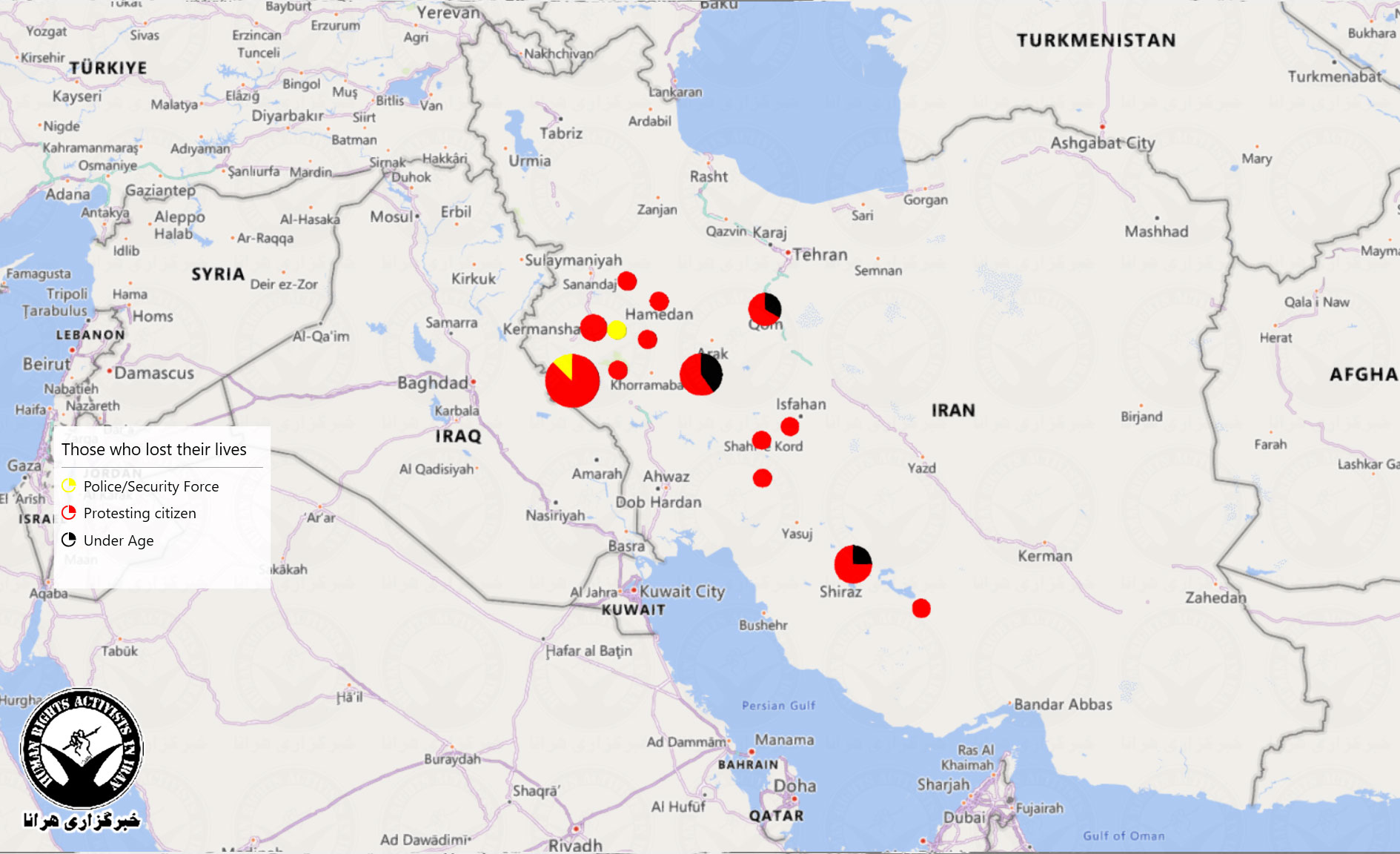
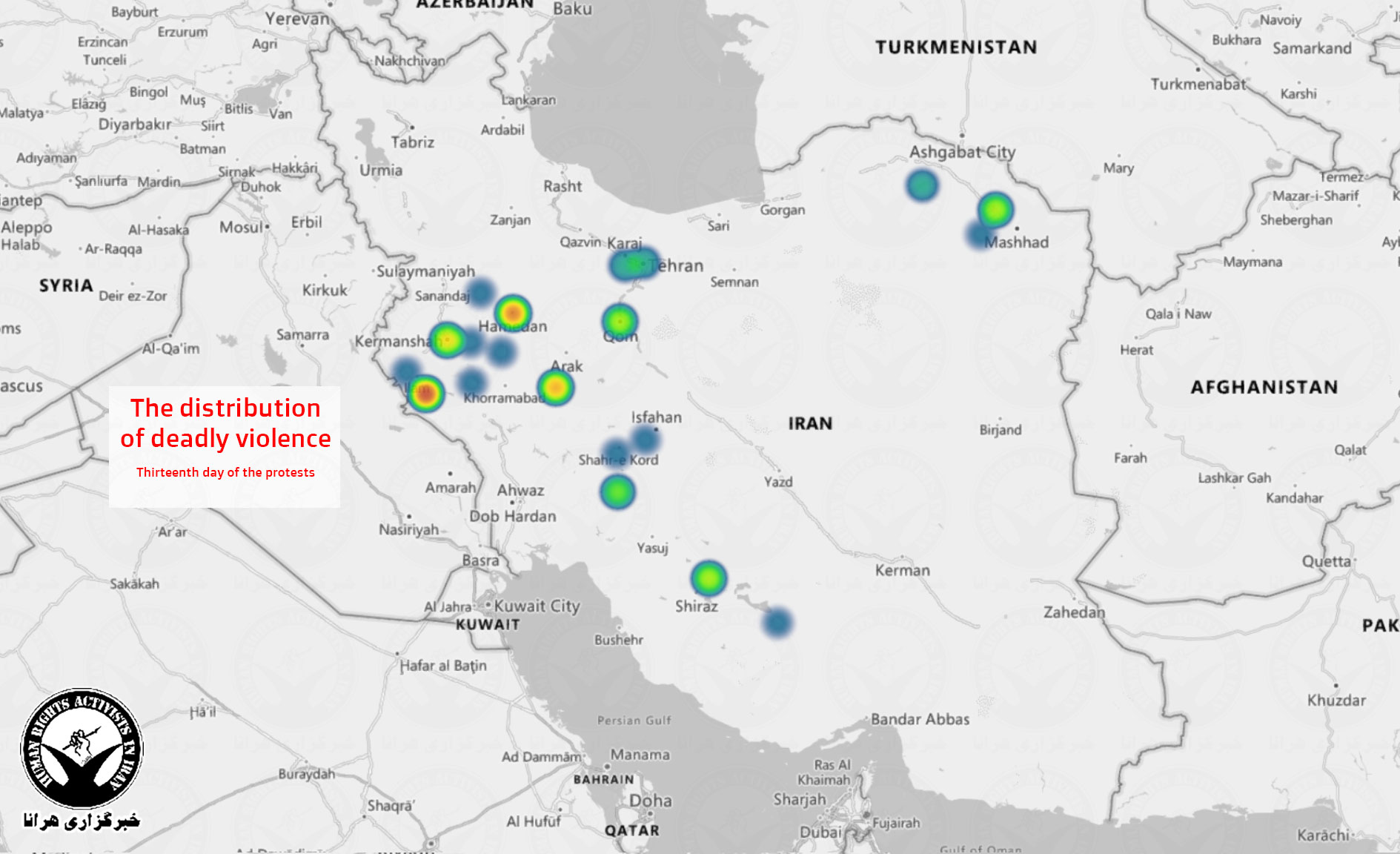
Although on the thirteenth day, due to communication shutdowns and the lack of independent access, it has not been possible to definitively establish an exact death toll, HRANA’s verified reports assess the total number of fatalities over the past 13 days as follows:
• Total deaths: 65
• Protesting citizens: 50
• Children and adolescents (under 18): 7 of the 50
• Law enforcement and security forces: 14
• Government-affiliated civilian: 1
Among the deceased, the provinces of Chaharmahal and Bakhtiari, Ilam, Kermanshah, and Fars, with a combined total of 38 fatalities, rank highest in protest-related deaths.
At the same time, the head of the judiciary in North Khorasan announced that the prosecutor of Esfarayen, along with a number of law enforcement and security forces in the county, had been killed. According to the official account, the portable cabin where they were stationed was set on fire, and “rescue operations were not permitted.”
In addition to those killed, numerous reports have emerged of citizens being injured during street clashes and security operations. However, due to restricted access to field information and ongoing communication disruptions, the exact number of injured individuals is still being compiled.
Arrests and Escalation of Security Crackdowns
Arrest Trends
According to aggregated recorded data, by the end of the thirteenth day of the protests, at least 2,311 arrests have been confirmed or reported. Of these, 624 were individual arrests and 1,687 were mass arrests, indicating the predominance of large-scale, on-the-ground detention patterns during security operations.
The temporal distribution of arrests shows a significant surge from the seventh day onward. The highest number of daily arrests occurred on the tenth day of the protests, followed by the seventh and eighth days, a pattern consistent with the intensification of security presence and coinciding with the expansion of strikes and nighttime gatherings.
Among those detained, at least 167 children, adolescents, and school students, as well as 48 university students, have been recorded, reflecting the widening scope of crackdowns across different age groups and social sectors. In addition, 50 cases of forced confessions have been reported during the protest period, assessed as part of security and media pressure tactics.
Internet shutdowns in Iran have had a serious impact on the speed of verification, information gathering, and identification of detainees. As a result, only 34 newly detained individuals were identified by HRANA today, a sharp decline compared to previous days.
Judicial and Security Threats
Alongside the rise in arrests, official judicial and security positions were articulated in more explicit and forceful language. The Tehran Public and Revolutionary Prosecutor announced that individuals accused of “destruction and arson of public and private property” would be charged with moharebeh (enmity against God) and dealt with “decisively.” In explaining this stance, he referred to incidents from the previous night in Tehran, including the burning of an ambulance, a bus, and a mosque, emphasizing a policy of “zero tolerance.”
Within the same framework, the head of the judiciary warned that punishments for those labeled as “rioters” would be imposed to the maximum extent and without leniency, a position viewed as further increasing the cost of participation in protests.
In the communications sphere, the Ministry of Communications issued a statement saying that the internet shutdown was a decision made by competent security authorities, linking it to the “prevailing conditions.” This position was announced as numerous reports simultaneously documented a widespread nationwide internet blackout.
Alongside these official stances, reports also emerged indicating police and security warnings about identifying, warning, and arresting individuals who chant slogans inside their homes, a narrative suggesting that part of the security pressure has shifted from public streets to private and non-field spaces.
Universities and the Role of Students
Based on aggregated data, 35 universities have witnessed protest activity over the past twelve days, with 47 student gatherings recorded on university campuses. The temporal distribution shows that the peak of student protests occurred on the third, tenth, and eleventh days.
However, on the thirteenth day, no new university gatherings were reported, a development that may be attributed to the intensification of security pressure and control policies in higher education institutions.
Within this context, patterns of university control through postponements, shifts to online instruction, and physical restrictions became more pronounced. A notable example is the Khwarazmi University women’s dormitory (Hesarak campus in Karaj), which, according to reports, received orders for immediate evacuation. Student accounts attribute this action to university management’s concern over the spread of protests on campus.
Forms of Protest and Slogans
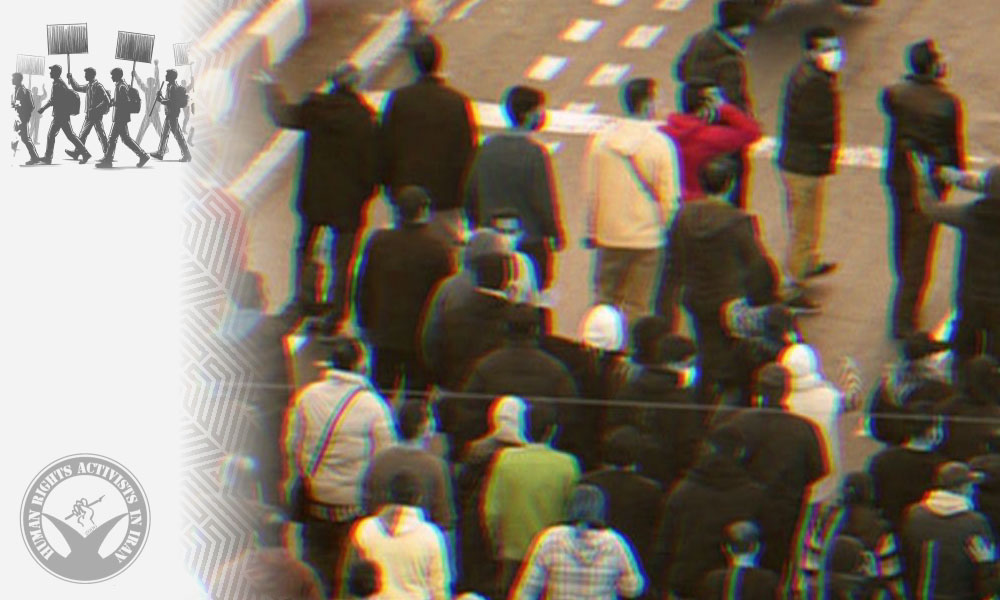
On the thirteenth day, protest tactics remained diverse and multi-layered. Street demonstrations and neighborhood-based protest presence, particularly at night, alongside strikes and market closures in several cities, constituted the most prominent forms of protest. This pattern indicates that demonstrations have not been confined to a single format and, under security pressure, have been reproduced in lower-cost and more decentralized forms.
At the field level, reports described neighborhood gatherings, continuous car horn honking, temporary road blockages, and symbolic actions.
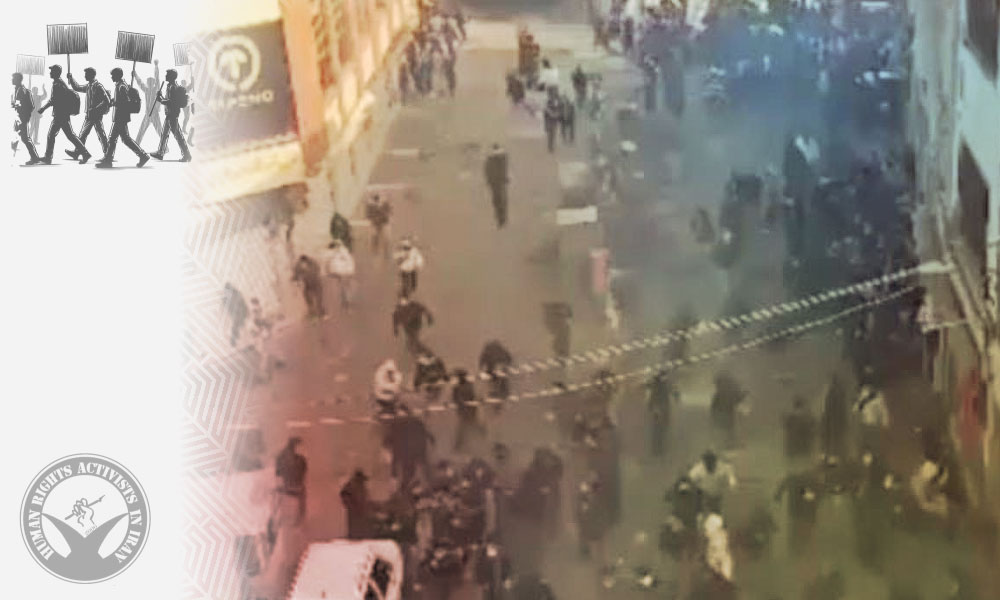
At the same time, reports of tear gas use by security forces and, in some areas, the sound of gunfire were published, indicating the continued on-the-ground pressure exerted on protest gatherings.
Summonses and Security Pressure Beyond the Streets
Alongside street-level confrontations, data and reports from the thirteenth day indicate an expansion of security pressure beyond public spaces. Open threats regarding the identification and punishment of individuals chanting slogans inside their homes, an increase in reports of the arrest of activists, particularly in sensitive areas, and judicial warnings of harsh crackdown all point to efforts to contain the protests through social, psychological, and judicial control.
In the professional and commercial sphere, reports indicate that shopkeepers were contacted and pressured to reopen their businesses. At the same time, judicial cases were initiated against certain individuals and business units on charges of directly or indirectly supporting protest calls.
Internet Disruptions and Communication Restrictions
The communications blackout was one of the central features of the thirteenth day. Internet access was widely cut off from the previous evening, and according to technical data, national connectivity dropped to around one percent of normal levels, a situation described by internet-monitoring bodies as a violation of fundamental rights and a tool for concealing violence.
NetBlocks also confirmed the situation as a widespread internet shutdown.
In response, the Ministry of Communications stated that the decision to cut internet access was security-related and promised follow-up efforts to restore services. At the same time, reports emerged of severe disruption or complete loss of mobile phone signals in cities such as Karaj, Khorramabad, Nishapur, and Bijar, further restricting field coverage and the flow of information.
Reactions
1. Domestic Reactions (Governmental)
In response to the continuation of protests and the spread of strikes and nighttime gatherings, a series of official positions were issued by government officials, security institutions, and the judiciary. A common thread among many of these statements was the securitization of the protests and an emphasis on decisive action.
Ali Khamenei, warning against what he described as “destructive acts,” stated that the Islamic Republic would “not back down” in the face of such actions and stressed the need to confront them. This position is assessed as part of an effort to draw a formal distinction between “protest” and “destruction” and to legitimize security crackdowns.
On the diplomatic front, Abbas Araghchi downplayed the likelihood of any foreign military intervention in Iran’s developments, describing it as a “failed experience.” At the same time, Iran’s Ministry of Foreign Affairs characterized the support and statements of U.S. officials and some Western countries as “interventionist,” framing the protests as Iran’s internal affairs.
In the judicial–security domain, the judiciary and law enforcement bodies once again emphasized harsh, deterrent, and uncompromising measures against protesters. These stances were accompanied by announcements of case-building against certain individuals, as well as monitoring of cyberspace and professional and economic activities.
2. Domestic Reactions (Non-Governmental, Civil, and Social)
In contrast to the official narrative, a number of religious, civil, cultural, artistic, and sports figures reacted to the suppression of protests through messages and statements.
Molavi Abdolhamid described the protests as a “popular uprising for major change,” emphasized the right to peaceful protest, and called on demonstrators to avoid destruction and violence. At the same time, he urged security forces to stand with the people and refrain from repression.
In the cultural and artistic sphere, 184 Iranian filmmakers issued a joint statement condemning the suppression of protests and describing the shooting of unarmed people as a “crime against the right to life.” The House of Cinema also stated that, in the absence of effective channels for expressing dissent, people have “no path but the streets,” and described violence against protesters as illegitimate.
Among academic and social figures, statements and commentaries were published focusing on a governance crisis, the need for dialogue with the public, and the release of detainees. Some civil activists, pointing to the arrest of children, adolescents, and students, called for an end to security crackdowns on vulnerable groups.
In the fields of sports and performing arts, figures such as Voria Ghafouri and Alireza Faghani, along with others, expressed solidarity with protesters through messages or symbolic actions. Critical positions taken by some well-known figures were also met with reactions and attacks from media outlets close to the authorities.
3. Foreign and International Reactions
At the international level, the continuation of protests and reports of repression received widespread attention. The leaders of France, Germany, and the United Kingdom issued a joint statement condemning the killing of protesters and calling for restraint, respect for freedom of expression, and the right to assembly.
The United Nations High Commissioner for Human Rights called for “independent, transparent, and impartial” investigations into the deaths and expressed concern over internet shutdowns and restrictions on access to information.
In Europe, the European Parliament president and a number of its members issued supportive messages emphasizing solidarity with protesters and the need to prevent repression. Some European officials also assessed the internet shutdown as an attempt to conceal violence.
Donald Trump also commented on several occasions about the possibility of a harsh response if protesters were killed, and claimed that some of the deaths were the result of crowd congestion.
Detainees
Individual Arrests with Confirmed Identities
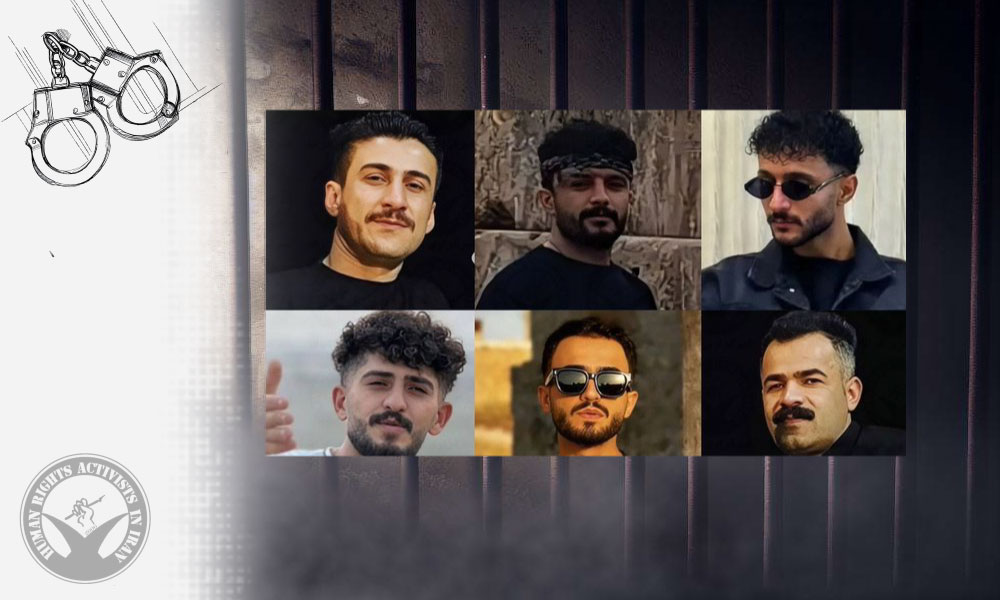
1. Salam Aref Khanlari – Place of arrest: Darreh Shahr (Ilam Province) – Place of detention: Unknown – Current status: Detained – Source: Kurdpa
2. Bardia Darvishi – Place of arrest: Gilan-e Gharb (Kermanshah Province) – Place of detention: Unknown – Current status: Detained – Source: Kurdpa
3. Behnam Bolandbakht – Place of arrest: Gilan-e Gharb (Kermanshah Province) – Place of detention: Unknown – Current status: Detained – Source: Kurdpa
4. Vahid Shadman – Place of arrest: Qasr-e Shirin (Kermanshah Province) – Place of detention: Unknown – Current status: Detained – Source: Kurdpa
5. Ali Shah Shirmohammadpour – Place of arrest: Gilan-e Gharb (Kermanshah Province) – Place of detention: Unknown – Current status: Detained – Source: Kurdpa
6. Navid Najafi – Place of arrest: Gilan-e Gharb (Kermanshah Province) – Place of detention: Unknown – Current status: Detained – Source: Kurdpa
7. Armin Pirani – Place of arrest: Abdanan (Ilam Province) – Place of detention: Unknown – Current status: Detained – Source: Kurdpa
8. Ali Ahmadi – Place of arrest: Abdanan (Ilam Province) – Place of detention: Unknown – Current status: Detained – Source: Kurdpa
9. Behnam Fathi – Place of arrest: Yasuj (Kohgiluyeh and Boyer-Ahmad Province) – Place of detention: Unknown – Current status: Detained – Source: HRANA
10. Rahmat Rashidi – Place of arrest: Abdanan (Ilam Province) – Place of detention: Unknown – Current status: Detained – Source: Kurdpa
11. Behrouz Sheikhi – Place of arrest: Abdanan (Ilam Province) – Place of detention: Unknown – Current status: Detained – Source: Kurdpa
12. Ashkan Sabzi – Place of arrest: Abdanan (Ilam Province) – Place of detention: Unknown – Current status: Detained – Source: Kurdpa
13. Arman Karami – Place of arrest: Abdanan (Ilam Province) – Place of detention: Unknown – Current status: Detained – Source: Kurdpa
14. Aref Mirzaei – Place of arrest: Abdanan (Ilam Province) – Place of detention: Unknown – Current status: Detained – Source: Kurdpa
15. Amirhossein Khan-Mohammadi – Place of arrest: Abdanan (Ilam Province) – Place of detention: Unknown – Current status: Detained – Source: Kurdpa
16. Mostafa Saffar – Place of arrest: Abdanan (Ilam Province) – Place of detention: Unknown – Current status: Detained – Source: Kurdpa
17. Saeed Abolhasani – Place of arrest: Nishapur (Razavi Khorasan Province) – Place of detention: Nishapur Prison – Current status: Detained – Source: HRANA
18. Ehsan Ahmadi – Place of arrest: Dehloran (Ilam Province) – Place of detention: Unknown – Current status: Detained – Source: Kurdpa
19. Hossein Karami – Place of arrest: Dehloran (Ilam Province) – Place of detention: Unknown – Current status: Detained – Source: Kurdpa
20. Mohammad Moradi – Place of arrest: Dehloran (Ilam Province) – Place of detention: Unknown – Current status: Detained – Source: Kurdpa
21. Ahmad Khosravi – Place of arrest: Dehloran (Ilam Province) – Place of detention: Unknown – Current status: Detained – Source: Kurdpa
22. Ahmadi Zeini – Place of arrest: Dehloran (Ilam Province) – Place of detention: Unknown – Current status: Detained – Source: Kurdpa
Mass Arrests or Arrests Without Identity Confirmation
1. Seven citizens – Place of arrest: Lorestan Province – Place of detention: Unknown – Current status: Detained – Source: State Broadcasting (IRIB)
2. Four citizens – Place of arrest: Hamedan (Hamedan Province) – Place of detention: Unknown – Current status: Detained – Source: Young Journalists Club – Notable point: Forced confessions
3. One citizen – Place of arrest: Hamedan (Hamedan Province) – Place of detention: Unknown – Current status: Detained – Source: Young Journalists Club – Notable point: Under 18 years old; forced confessions
In Conclusion
1. Protests on the thirteenth day simultaneously displayed three prominent characteristics: neighborhood-based dispersion (particularly in Tehran) and high levels of violence in certain areas (such as Fardis and Zahedan).
2. The internet shutdown, as a central tool of control and concealment, effectively disrupted verification and access to information, while at the same time limited circulation of some videos continued through alternative channels.
3. The judicial and security apparatus, by emphasizing serious charges along with arrests and identification efforts, sought to raise the cost of participation; nevertheless, signs of continued social mobilization (from the streets to the marketplaces) remained visible.
4. Alongside domestic developments, international pressure and reactions, ranging from European statements to calls for UN investigations, intensified, further highlighting Iran as a crisis of human security and governance.