Reports of the Arrest of at Least 186 Citizens During Nationwide Protests

HRANA – IRGC Intelligence in Qazvin Province announced the arrest of 166 citizens under the label of “leaders” of the protests. In Fars Province, at least 18 protesting citizens were arrested. Meanwhile, a number of protesters in Mashhad were detained on charges of killing a security force member. Several citizens were also arrested in Ilam Province, where the provincial Intelligence Organization reported the arrest of one citizen on charges of killing the police commander of Holilan County.

According to  Tasnim News Agency, a number of protesting citizens were arrested in Mashhad. The report, without specifying the identities or number of those detained, claims that these arrests were carried out on charges related to the killing of Farajollah Shoushtari during the nationwide protests in Mashhad.

Separately, the state broadcaster IRIB reported that the IRGC Intelligence in Qazvin Province had arrested 166 protesting citizens. These arrests were carried out under the designation of “agents of the main protest leaders.”

Mehr News Agency also reported the arrest of a woman in the city of Sabzevar. At the same time, a video of her forced confession was released, though it remains unclear under what conditions it was recorded.

Daneshjoo News Agency likewise aired a video reporting the arrest of a number of citizens in Fars Province. At least 18 individuals can be seen in the footage. Simultaneously, videos containing forced confessions from some of these citizens were also published.

IRIB further announced that several citizens who protested on January 8 in the cities of Sarableh, Asmanabad, Holeylan, Arkavaz-e Malekshahi, and Abdanan were arrested. The media outlet claimed that these individuals were responsible for damaging public and government property, banks, setting fire to the Friday prayer leader’s office and the main mosque of Sarableh, blocking roads, armed intimidation, and threatening shopkeepers in these cities.

In the same report, the Ilam Province Intelligence announced the arrest of one citizen on charges of killing the police commander of Holeylan County. In addition, it was claimed that several citizens in Darreh Shahr County were arrested under accusations of “links to group elements and ethnic separatists.”

None of these reports provided information regarding the identities or places of detention of the arrested citizens.

It should be noted that gatherings and strikes by shopkeepers and bazaar merchants began in Tehran on Sunday, December 28. After two days, the scope of these actions expanded beyond bazaars and commercial centers. With the participation of students, citizens, and various social groups, these protests became one of the most widespread demonstrations in recent years. For more information, readers may refer to HRANA’s detailed report on the twenty-third day of protests, published last night.

From the Streets to Universities: Iran’s Protests Enter Their Eleventh Day

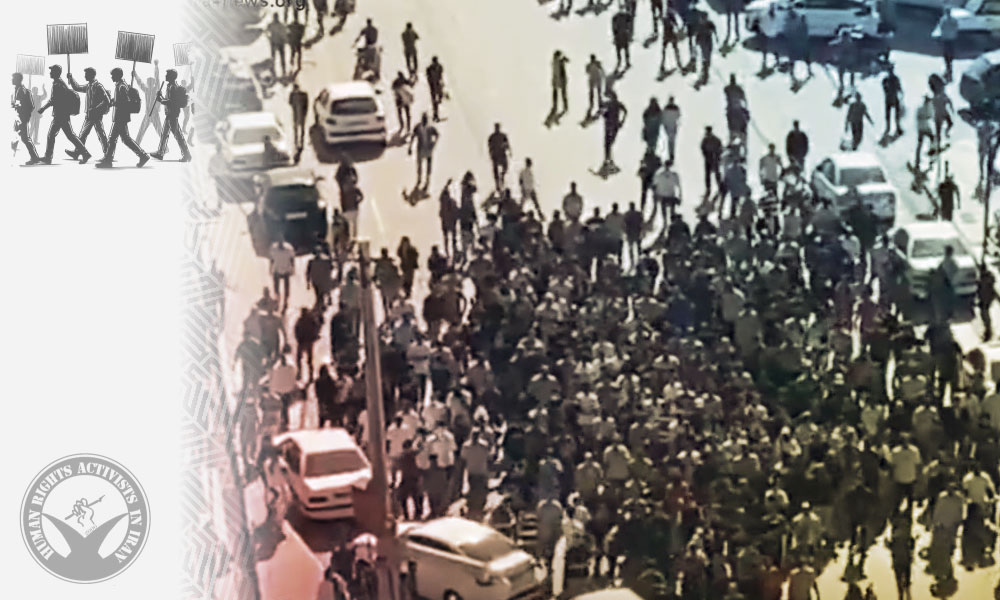
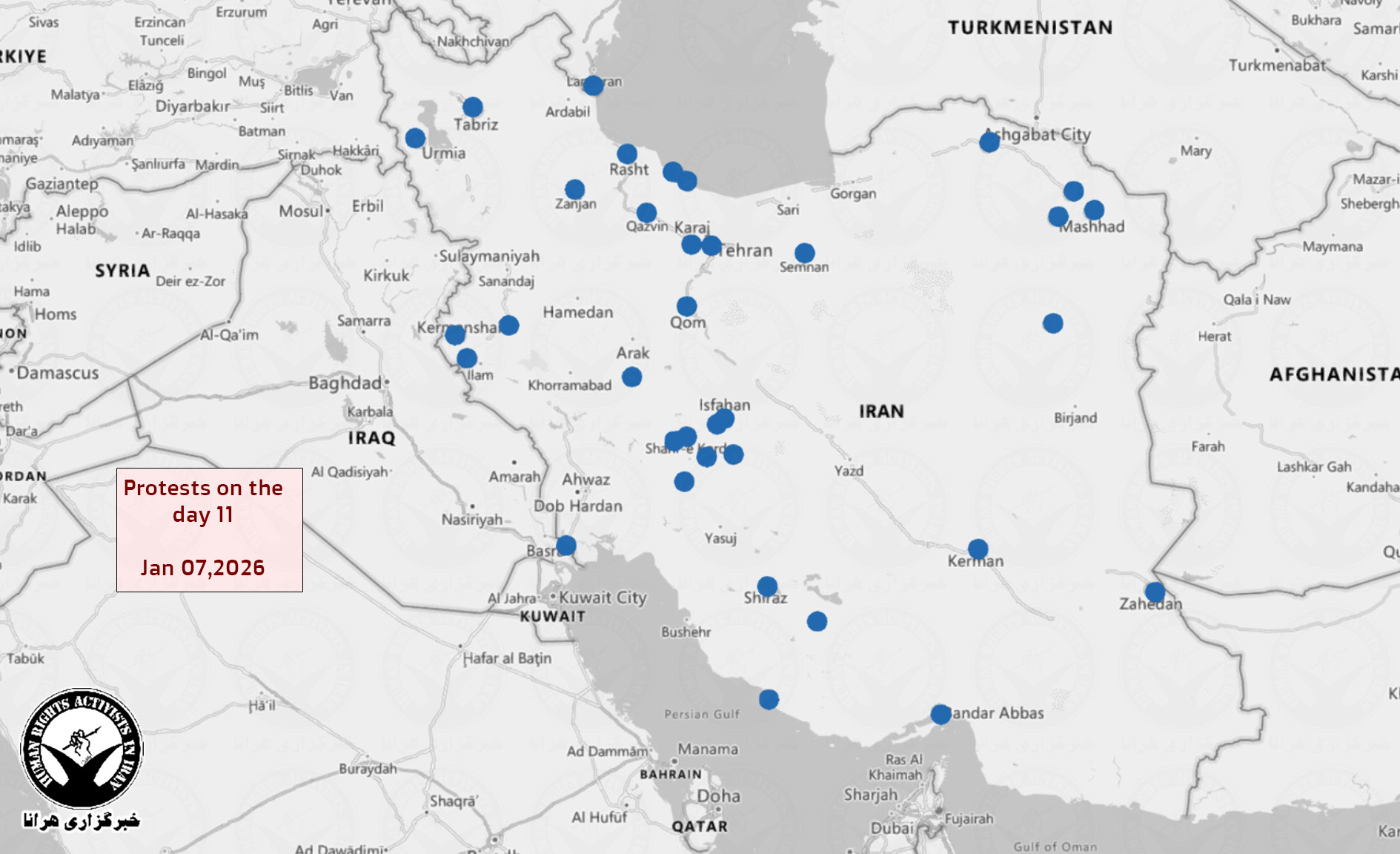
HRANA –The eleventh day of nationwide protests in Iran, on Wednesday, January 7, 2026, unfolded amid heightened security measures and ongoing arrests. Despite these pressures, demonstrations continued across multiple parts of the country. At least 37 cities witnessed protests in the form of street gatherings, protest actions, or labor strikes, spanning 24 provinces, a scale that underscores the sustained nationwide character of the unrest.

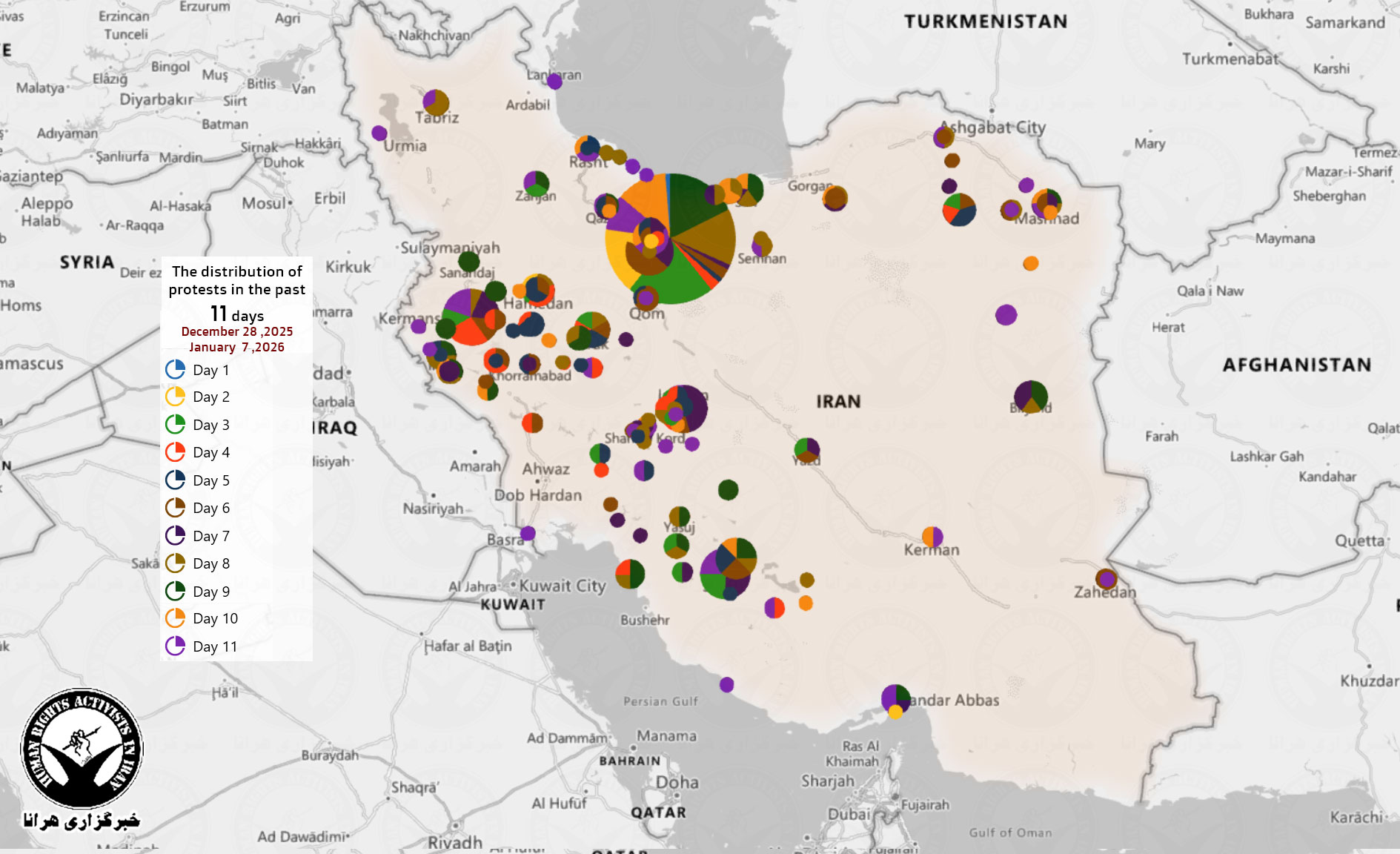
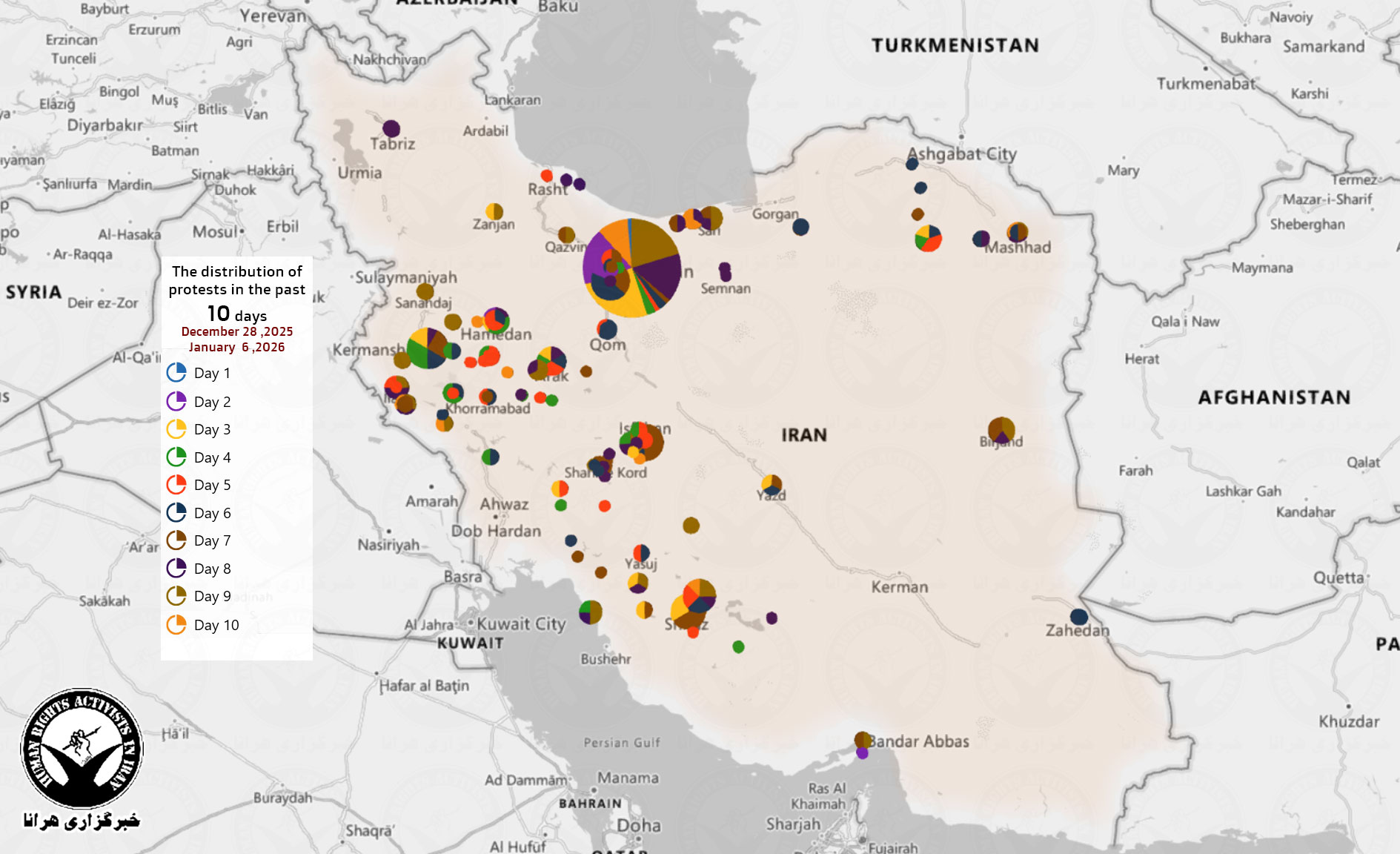
At the same time, 10 universities joined the protest movement, highlighting the continued and active role of academic institutions. With the inclusion of data from the eleventh day, a total of 348 protest sites, including 45 universities across 111 cities in 31 provinces, have experienced protests over the past eleven days.

Protests in Iran have now entered their eleventh day. The geographic scope of the recent unrest has made it one of the most widespread protest waves in recent years in terms of spatial distribution.

Background of the Protests

The protests on the eleventh day emerged against a backdrop in which the economic crisis and livelihood instability have gone beyond the stage of warning. Rapidly rising prices, the continuous devaluation of the national currency, and the inability of a large segment of society to meet basic needs have turned economic pressure into a daily reality for millions of citizens. Under such conditions, protest is no longer merely an emotional reaction to an isolated event, but rather a reflection of the long-term erosion of public trust in economic and administrative policies.

On the eleventh day, the simultaneous presence of street protests, active participation by universities, and signs of labor-related discontent demonstrated that the scope of protests has expanded beyond livelihood demands and now reflects deeper dissatisfaction with governance practices, the lack of accountability, and the closure of legal avenues for protest. The persistence of demonstrations, despite widespread arrests and security pressure, indicates that a significant portion of society now views the cost of protest as lower than the cost of silence and inaction.

nationwide protests Day 11

Geographic Scope and Focal Points of the Protests

According to recorded data, protests on the eleventh day took place in 37 cities across 24 provinces. These figures indicate an increase in the number of protesting cities compared to previous days. Provincial dispersion has remained high, reflecting the diffuse nature of the protests rather than their concentration in a few specific locations.

From a cumulative perspective, over the past eleven days, at least 111 cities in 31 provinces have witnessed protests at least once. This breadth demonstrates that the protests are not confined to specific ethnic or economic regions; rather, they have emerged across diverse urban and provincial contexts and continue in a networked and sustained manner.

Cities including Gonabad, Isfahan, Shahrza, Tehran, Shiraz, Falavarjan, Bandar Abbas, Zanjan, Kermanshah, Qazvin, Qom, Bojnord, Semnan, Nishapur, Mashhad, Kerman, Lordegan, Pordanjan, Fasa, Chaboksar, Asaluyeh, Tabriz, Rasht, Karaj, Abadan, Borujen, Urmia, Shahrekord, Gilangharb, Zahedan, Fardis, Astara, Aligudarz, Holeylan, Tonekabon, Chenaran, and Gorgan were among those where protests were reported today.

Universities and the Role of Students

On the eleventh day, 10 universities were reported as active protest sites. With these cases included, the total number of universities that have witnessed protests over the past eleven days has reached 35. The continued presence of universities in this wave of protests highlights the persistence of student discontent and the role of universities as spaces for the production and reproduction of protest.

Alongside their sectoral and educational demands, students have increasingly reacted to broader economic and political issues. This trend has strengthened the connection between campus-based and street protests, preventing the isolation of dissent within a single sphere.

Forms of Protest and Slogans

On the eleventh day of protests, methods of protest action remained diverse. Street gatherings, protest presence in urban centers, and protest activities within universities were among the main forms of expression. This diversity indicates that, despite security pressure, the protests have not been confined to a single, easily controllable pattern and continue to reproduce themselves in various forms.

The slogans and messages voiced during the gatherings continued to combine livelihood demands with structural criticism. Rising prices, declining purchasing power, and economic pressure formed the core of many slogans, alongside chants criticizing inefficiency, the lack of responsiveness to public demands, and the overall state of governance. This simultaneity suggests that, in the minds of protesters, the economic crisis and the governance crisis are understood as two facets of a single issue.

Arrests and Intensification of Security Measures

The eleventh day of protests was accompanied by the continuation and consolidation of the authorities’ security-oriented approach. According to aggregated data, a total of 2,217 people have been arrested or identified over the past eleven days. Of these, 558 were individual arrests, while 1,659 were recorded as group arrests or cases without confirmed identities, an approach that reflects security forces’ efforts to exert on-the-ground control through large-scale operations with limited transparency.

On the eleventh day alone, at least 140 people were arrested or identified. Although this figure represents a decrease compared to the tenth day, it still reflects a high level of security intervention and indicates that, despite a relative stabilization in the number of gatherings, the policy of preemptive suppression of protesters continues.

Reports indicate that some of these arrests were carried out not only at protest sites but also through summonses, on-the-ground identification, and follow-up actions, an approach aimed not merely at dispersing gatherings, but at exerting psychological pressure and long-term deterrence.

Arrests of Children, Adolescents, and Students

One of the most concerning features of the current wave of protests is the substantial number of individuals under the age of 18 among those arrested. According to recorded data, 165 detainees over the past eleven days were minors. This figure underscores both the active participation of adolescents and school students in the protests and the intensity of the security forces’ crackdown on this age group.

In addition, 46 students have been arrested during the eleven days of protests. The simultaneous arrest of students alongside the continuation of campus protests indicates that universities remain among the most sensitive centers of dissent and continue to be closely monitored and pressured by security institutions.

Alongside these cases, 40 televised confessions by detained protesters have been broadcast so far. Human rights observers view the continued airing of these confessions, typically recorded under detention and without free access to legal counsel, as a tool for instilling public fear and legitimizing the suppression of protests.

Fatalities and Victims of the Protests

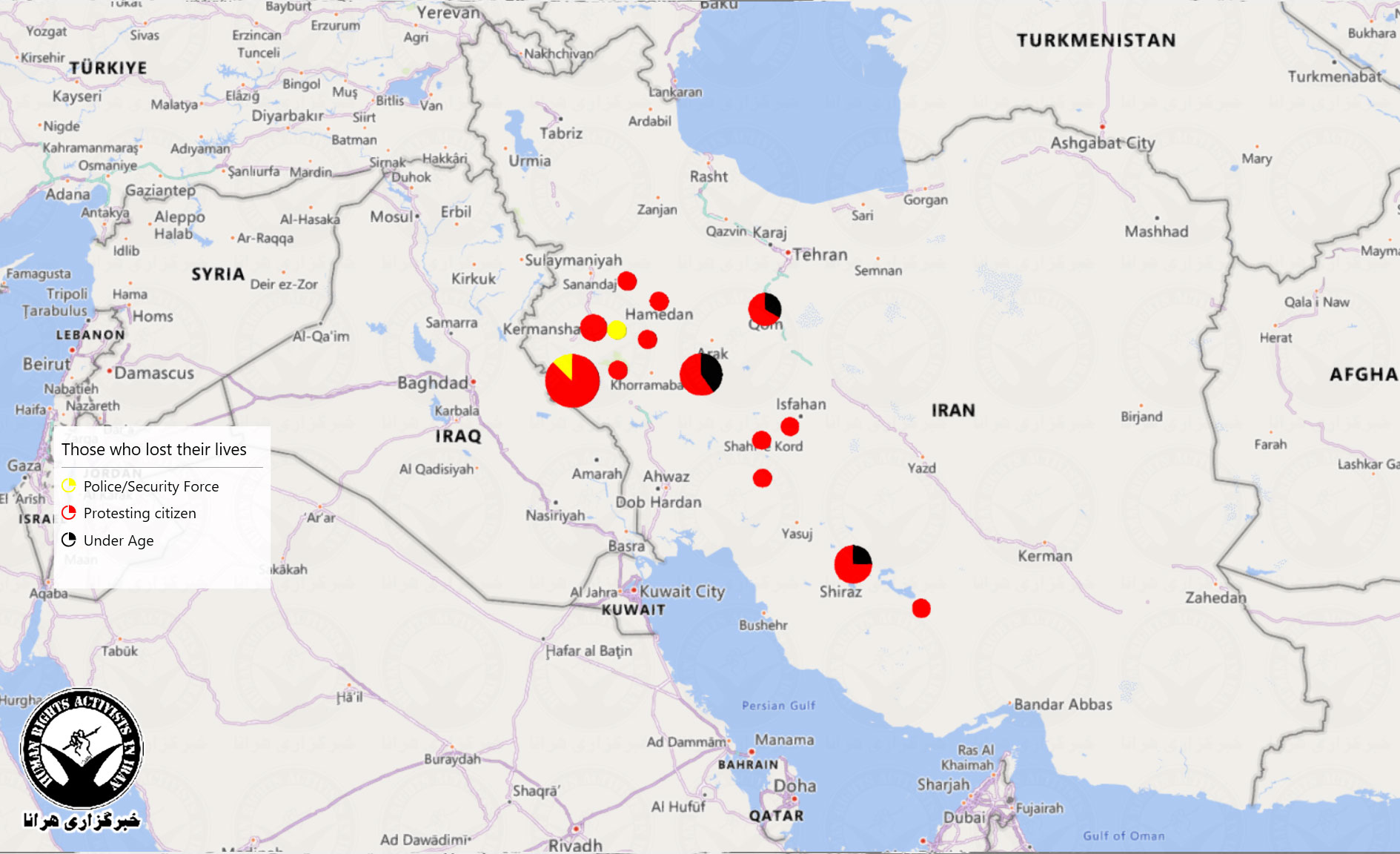
Based on available data, 38 people have lost their lives over the eleven days of protests. This figure includes:

• 29 protesting civilians
• 4 law enforcement-security personnel
• 5 protesters under the age of 18

The presence of children among those killed once again raises serious concerns about the manner in which security forces have responded to the protests and whether the principle of proportionality in the use of force has been observed.

In addition to the fatalities, numerous reports have emerged of citizens being injured during street clashes and security operations. However, due to limited access to field information, the exact number of injured individuals is still being compiled.

Summonses and Security Pressure Beyond the Streets

On the eleventh day, security pressure was not limited to the streets. Reports indicate that a number of citizens were summoned to security institutions. Among them was Keyumars Amiri Kolehjoei, known as Lak-Amir, a Lak poet and journalist from Kermanshah province, who was summoned to security bodies on that day.

Such summonses, often carried out without formally announcing charges, are considered part of a strategy of covert pressure aimed at containing influential cultural, media, and social voices. The objective of this approach is seen as limiting independent narratives of the protests and constraining the space for free reporting and expression.

Internet Disruptions and Communication Restrictions

As protests continued on the eleventh day, reports emerged of internet disruptions in several Iranian cities. These disruptions were mainly reported in the form of reduced speeds, unstable connections, and temporary interruptions in access to online services.

An examination of the pattern of these restrictions indicates that internet disruptions were implemented in a targeted and localized manner, often occurring in cities that witnessed protest gatherings or university activities. This approach has also been observed during previous waves of protests and is typically employed to limit coordination, information-sharing, and the dissemination of protest footage.

Nevertheless, the continued flow of news and the publication of reports from inside the country suggest that, despite causing disruptions, these restrictions have not been able to completely halt the circulation of information.

Reactions

Domestic Reactions (Governmental)

Following statements by Donald Trump and Benjamin Netanyahu regarding the protests in Iran, the Secretariat of the Supreme Defense Council of the Islamic Republic issued a statement describing the rhetoric and threats as “beyond mere verbal positioning” and characterizing them as part of “hostile behavior.” The statement emphasized that any aggression or continuation of hostile actions would be met with a “proportionate, decisive, and determining response,” placing responsibility for the consequences on those designing and issuing the threats. In this context, officials also sought to elevate the issue from the level of “political commentary” to that of a “security cost,” highlighting regional consequences in an effort to send a deterrent message.

At the same time, following the positions taken by Donald Trump and Benjamin Netanyahu and the release of the statement by the Supreme Defense Council Secretariat, some figures close to the official power structure adopted even harsher rhetoric. Among them:

Ali Larijani, in a message, condemned what he described as U.S. interference in an “internal matter” and issued warnings, in a threatening tone, about the consequences of adventurism.

Mohammad Bagher Ghalibaf explicitly spoke of “threatening American centers and forces” in the region and sought to convey the message that any action or escalation of intervention would be met with a “response.”

Such positions may indicate an attempt by the authorities to reframe the protests from a socio-economic crisis into a national security issue—shifting the narrative focus from “street demands” to a “confrontation with foreign intervention.”

Domestic Reactions (Civil, Labor, and Public Figures)

On the other hand, reactions were not limited to politicians and security officials. According to reports, associations in the field of visual arts, including organizations of painters, graphic designers, photographers, sculptors, and ceramic artists, issued a joint statement condemning the suppression of protests. Referring to economic and political pressures and widespread social despair, the statement emphasized that “any violence and repression against the people’s right to protest” is condemned.

Additionally, 555 teacher union activists issued a similar letter declaring their solidarity with the protesters and their demands.

The significance of these reactions on the eleventh day lies in the fact that they demonstrate how professional and cultural sectors are increasingly aligning themselves with the protest narrative.

After several days of silence, Amirhossein Ghiasi (blogger and media figure) issued a clear statement declaring that he, too, is a protester. He described his silence as the result of psychological pressure, family concerns, and an inability to express what he described as what was “in his heart.” The entry of public figures into explicit positions is considered, from a newsworthiness perspective, an important indicator for measuring the expansion of social sympathy with the protests.

Arrests

Individual Arrests with Confirmed Identities

  1. 1. Shahab Barati – Place of arrest: Mashhad (Razavi Khorasan province) – Place of detention: Unknown – Current status: Detained – Source: HRANA

  2. 2. Davoud Hosseinpour – Place of arrest: Lordegan (Chaharmahal and Bakhtiari province) – Place of detention: Unknown – Current status: Detained – Source: HRANA

  3. 3. Rouhollah Khaledi – Place of arrest: Lordegan (Chaharmahal and Bakhtiari province) – Place of detention: Unknown – Current status: Detained – Source: HRANA

  4. 4. Abolfazl Aghaei – Place of arrest: Khorramabad (Lorestan province) – Place of detention: Unknown – Current status: Detained – Source: HRANA. Notable point: Under 18 years old

  5. 5. Ara Salahi – Place of arrest: Rasht (Gilan province) – Place of detention: Unknown – Current status: Detained – Source: HRANA

  6. 6. Mikaeil Mansouri – Place of arrest: Yasuj (Kohgiluyeh and Boyer-Ahmad province) – Place of detention: Unknown – Current status: Detained – Source: HRANA

  7. 7. Sara Rahmati – Place of arrest: Yasuj – Place of detention: Unknown – Current status: Detained – Source: HRANA

  8. 8. Shayan Parmokhber – Place of arrest: Yasuj – Place of detention: Unknown – Current status: Detained – Source: HRANA

  9. 9. Elaheh Hosseinnejad – Place of arrest: Yasuj – Place of detention: Unknown – Current status: Detained – Source: HRANA

  10. 10. Omid Khodarahmi – Place of arrest: Yasuj – Place of detention: Unknown – Current status: Detained – Source: HRANA

  11. 11. Ashkan Rasouli – Place of arrest: Yasuj – Place of detention: Unknown – Current status: Detained – Source: HRANA

  12. 12. Meraj Abbasnejad – Place of arrest: Yasuj – Place of detention: Unknown – Current status: Detained – Source: HRANA

  13. 13. Ali Akbar Ahmadzadeh – Place of arrest: Yasuj – Place of detention: Unknown – Current status: Detained – Source: HRANA

  14. 14. Peyman Azarzadeh – Place of arrest: Yasuj – Place of detention: Unknown – Current status: Detained – Source: HRANA

  15. 15. Mani Armaghanizadeh – Place of arrest: Yasuj – Place of detention: Unknown – Current status: Detained – Source: HRANA

  16. 16. Hossein Haghighi – Place of arrest: Yasuj – Place of detention: Unknown – Current status: Detained – Source: HRANA

  17. 17. Moslem Parzadar – Place of arrest: Yasuj – Place of detention: Unknown – Current status: Detained – Source: HRANA

  18. 18. Ahmad Abdollahpour – Place of arrest: Yasuj – Place of detention: Unknown – Current status: Detained – Source: HRANA

  19. 19. Parsa Akbar – Place of arrest: Yasuj – Place of detention: Unknown – Current status: Detained – Source: HRANA

  20. 20. Kiarash Ansari – Place of arrest: Yasuj – Place of detention: Unknown – Current status: Detained – Source: HRANA

  21. 21. Shahla Ansarian – Place of arrest: Yasuj – Place of detention: Unknown – Current status: Detained – Source: HRANA

  22. 22. Elham Siavoshi – Place of arrest: Yasuj – Place of detention: Unknown – Current status: Detained – Source: HRANA

  23. 23. Razieh Khahesh – Place of arrest: Yasuj – Place of detention: Unknown – Current status: Detained – Source: HRANA

  24. 24. Reza Mansourian – Place of arrest: Behbahan (Khuzestan province) – Current status: Released – Source: HRANA

  25. 25. Hossein Afrasiabi – Place of arrest: Behbahan – Current status: Released – Source: HRANA

  26. 26. Ali Alinejad – Place of arrest: Behbahan – Current status: Released – Source: HRANA

  27. 27. Ahmad Akhash – Place of arrest: Behbahan – Current status: Released – Source: HRANA

  28. 28. Abbas Ahmadi – Place of arrest: Behbahan – Current status: Released – Source: HRANA

  29. 29. Abolfazl Ahmadi – Place of arrest: Behbahan – Current status: Released – Source: HRANA

  30. 30. Abolfazl Tayebi – Place of arrest: Behbahan – Current status: Released – Source: HRANA

  31. 31. Abolfazl Safari – Place of arrest: Behbahan – Current status: Released – Source: HRANA

  32. 32. Maziar Karami – Place of arrest: Behbahan – Current status: Released – Source: HRANA

  33. 33. Ali Afrasiabi – Place of arrest: Behbahan – Place of detention: Unknown – Current status: Detained – Source: HRANA

  34. 34. Parsa Ghasemi – Place of arrest: Behbahan – Place of detention: Unknown – Current status: Detained – Source: HRANA

  35. 35. Majid Zamenpisheh – Place of arrest: Behbahan – Place of detention: Unknown – Current status: Detained – Source: HRANA

  36. 36. Mohammad Shokri – Place of arrest: Behbahan – Place of detention: Unknown – Current status: Detained – Source: HRANA

  37. 37. Unidentified individual – Place of arrest: Baharestan (Tehran province) – Place of detention: Unknown – Current status: Detained – Source: Iran International

  1. 38. Hamid Rahmati – Place of arrest: Tehran – Place of detention: Randan, Shahrza – Current status: Detained – Source: Coordination Council of Iranian Teachers’ Trade Associations. Notable point: Teacher

  1. 39. Abolfazl Rahimi-Shad – Place of arrest: Tehran – Place of detention: Unknown – Current status: Detained – Source: Coordination Council of Iranian Teachers’ Trade Associations. Notable point: Teacher

  1. 40. Milad Kakavand – Place of arrest: Tehran – Place of detention: Unknown – Current status: Detained – Source: Amir Kabir Newsletter. Notable point: Student

  1. 41. Javad Pashaei – Place of arrest: Unknown – Place of detention: Unknown – Current status: Detained – Source: Kurdpa

  2. 42. Reza Nazarali – Place of arrest: Unknown – Place of detention: Unknown – Current status: Detained – Source: Kurdpa

  3. 43. Unidentified individual – Place of arrest: Najafabad (Isfahan province) – Place of detention: Unknown – Current status: Detained – Source: Fars News Agency. Notable point: Forced confessions broadcast

  1. 44. Raham Darvishi – Place of arrest: Aligudarz (Lorestan province) – Place of detention: Unknown – Current status: Detained – Source: Coordination Council of Iranian Teachers’ Trade Associations. Notable point: Under 18

  1. 45. Benyamin Mousavi – Place of arrest: Izeh (Khuzestan province) – Place of detention: Unknown – Current status: Detained – Source: Coordination Council of Iranian Teachers’ Trade Associations. Notable point: Under 18

  1. 46. Mojtaba Jouyi – Place of arrest: Shushtar – Place of detention: Unknown – Current status: Detained – Source: Coordination Council of Iranian Teachers’ Trade Associations. Notable point: Under 18

  1. 47. Mahan Soleimani – Place of arrest: Shushtar – Place of detention: Unknown – Current status: Detained – Source: Coordination Council of Iranian Teachers’ Trade Associations. Notable point: Under 18

  1. 48. Mohammad Mehdi Yeganeh – Place of arrest: Tehran – Place of detention: Transferred to Qezel Hesar Prison, Karaj – Current status: Detained – Source: Coordination Council of Iranian Teachers’ Trade Associations. Notable point: Under 18

  1. 49. Amirsam Houshyar – Place of arrest: Tehran – Place of detention: Unknown – Current status: Detained – Source: Coordination Council of Iranian Teachers’ Trade Associations

  2. 50. Sonia Zolfaghari – Place of arrest: Bojnord (North Khorasan province) – Place of detention: Unknown – Current status: Detained – Source: Coordination Council of Iranian Teachers’ Trade Associations

  3. 51. Ebrahim Baba-Ahmadi – Place of arrest: Shushtar – Place of detention: Unknown – Current status: Detained – Source: Coordination Council of Iranian Teachers’ Trade Associations

  4. 52. Foad Nikpey – Place of arrest: Marivan (Kurdistan province) – Place of detention: Unknown – Current status: Detained – Source: Coordination Council of Iranian Teachers’ Trade Associations. Notable point: Under 18

  1. 53. Saman Nikpendar – Place of arrest: Sabzevar (Razavi Khorasan province) – Place of detention: Unknown – Current status: Detained – Source: Coordination Council of Iranian Teachers’ Trade Associations. Notable point: Under 18

  1. 54. Raman Eghbali – Place of arrest: Sanandaj (Kurdistan province) – Place of detention: Unknown – Current status: Detained – Source: Coordination Council of Iranian Teachers’ Trade Associations. Notable point: Under 18

  1. 55. Alireza Besatzadeh – Place of arrest: Sarpol-e Zahab (Kermanshah province) – Place of detention: Unknown – Current status: Detained – Source: Kolbar News

  2. 56. Amirreza Soleimani – Place of arrest: Tehran – Place of detention: Unknown – Current status: Detained – Source: Kolbar News. Notable point: Under 18

Group Arrests or Arrests Without Identity Confirmation

  1. 1. 60 citizens – Place of arrest: Varamin (Tehran province) – Place of detention: Unknown – Current status: Detained

  2. 2. Four citizens – Place of arrest: Galikesh (Golestan province) – Place of detention: Unknown – Current status: Detained

  3. 3. Ten citizens – Place of arrest: Unknown – Place of detention: Unknown – Current status: Released

  4. 4. Three citizens – Province of arrest: Fars – Place of detention: Unknown – Current status: Released. Notable point: Under 18 years of age

  5. 5. Two citizens – Place of arrest: Baharestan (Tehran province) – Place of detention: Unknown – Current status: Detained. Notable point: Forced confessions broadcast

Conclusion

The eleventh day of nationwide protests can be described as a day marked by the continuation of demonstrations alongside the consolidation of repression. Although the number of protesting cities has declined compared to some peak days, the wide provincial dispersion, the continued presence of universities, the high number of arrests, and the ongoing security summonses indicate that the protests have entered a phase that is attritional yet sustained.

The combination of economic crisis, livelihood pressure, widespread security crackdowns, and communication restrictions does not point to an imminent de-escalation of the protests. In this context, the unrest is continuing not in an explosive manner, but as a prolonged and multilayered condition—one whose consequences will be felt beyond the streets, across social, cultural, and political spheres.

Detailed Report on the Tenth Day of Protests: 36 Dead in 285 Demonstrations

HRANA – Today marked the tenth consecutive day of protests and strikes by citizens across various cities in Iran. Reports indicate that violence by law enforcement and security forces has extended to medical centers as well, with some facilities subjected to intervention and attack. Over the past days, at least 285 locations in 92 cities across 27 provinces have witnessed protest gatherings. During these events, at least 2,076 citizens have been arrested, and at least 36 people have lost their lives, including 34 protesters and two members of security and law enforcement forces.

Protests that initially began with strikes and labor-related gatherings have entered a new phase on their tenth day. Alongside the continuation of some labor actions, reports point to the emergence of street demonstrations, the expansion of strikes by shopkeepers, and student protests at a number of universities. At the same time, there are reports that violence by law enforcement and security forces has extended to medical facilities, including attacks on hospitals.

Background of the Protests

The new wave of protests has emerged at a time when economic pressure on broad segments of society has reached a critical point, and clear signs of disruption to citizens’ daily livelihoods are evident. The continuous rise in exchange rates, chronic market instability, and the steady decline in purchasing power have darkened and destabilized the economic outlook for households and business owners alike, turning financial insecurity into a widespread experience.

In the days leading up to the start of these protests, reports indicated that currency rates had surpassed unprecedented levels, coinciding with a downturn in the capital market and an intensification of capital outflows. Analysts have interpreted this trend as a shift of liquidity toward safer markets such as gold and foreign currency, as well as a sign of declining public confidence in economic policies. The social consequences of this situation have included widespread closures or partial shutdowns of businesses, increasing difficulty for small enterprises to continue operating, and ultimately the spread of protests and strikes in various cities. These demonstrations are seen less as reactions to a single, temporary trigger and more as the result of the long-term accumulation of economic pressures and the ongoing erosion of hope for improvements in economic and social conditions.

Geography of the Protests

Based on updated and consolidated data, over the past 10 days at least 285 locations across Iran have witnessed protests, street gatherings, or labor strikes. These protest activities have been reported in 27 provinces nationwide, and at the same time, 22 universities have seen protest actions by students.

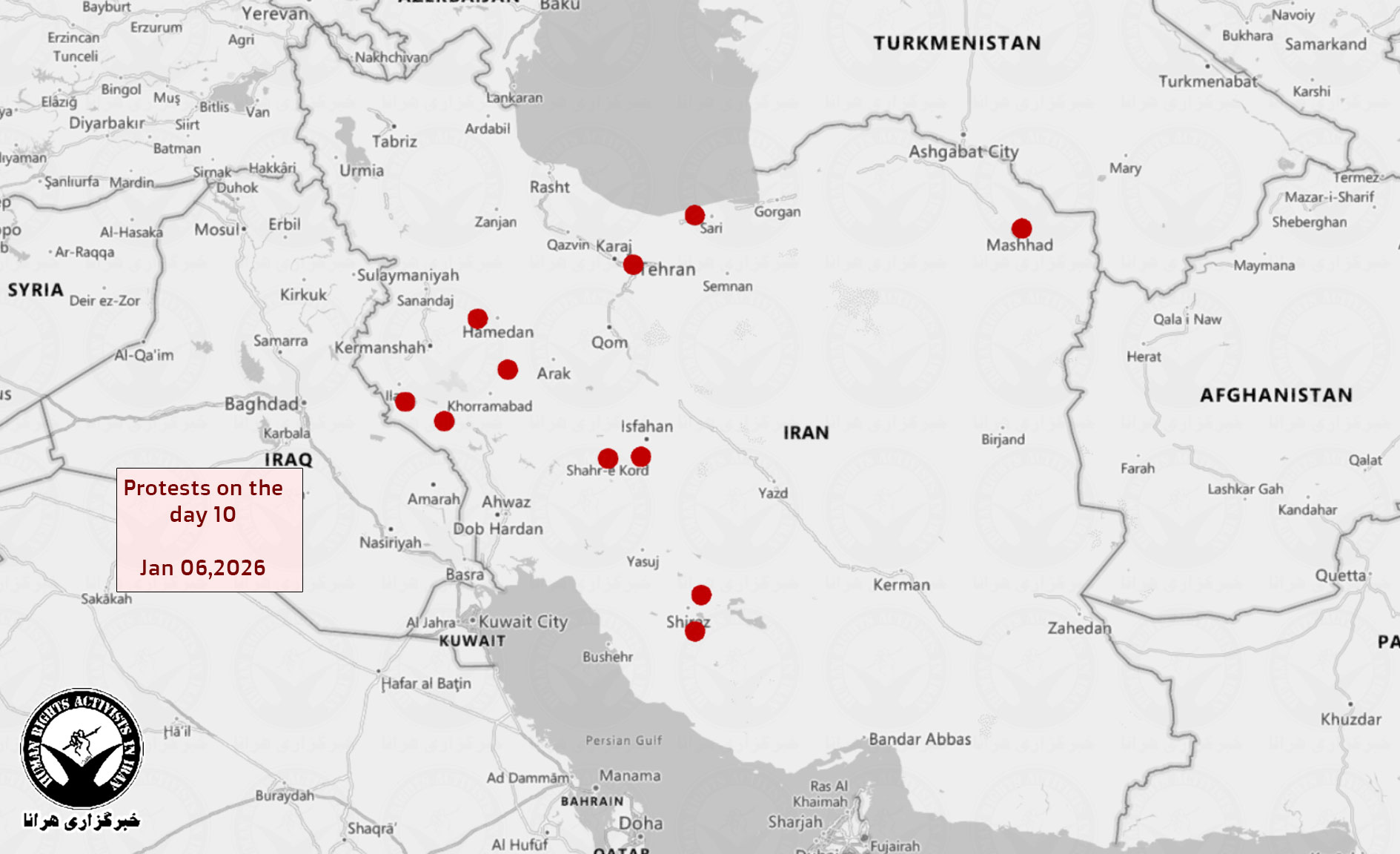
On the tenth day of the protests, demonstrations were held in the cities of Mashhad, Qazvin, Abdanan, Tehran, Shiraz, Bandar Abbas, Zanjan, Ilam, Malekshahi, Shahrekord, Yazdanshahr, Kavar, Asadabad, Babol, Marvdasht, and Borujerd.

One of the most significant protest focal points today in Iran was the demonstrations by bazaar merchants. Today, strikes took place in Tehran’s Grand Bazaar, particularly concentrated in the main corridors, including the gold and currency market, the fabric market, and parts of the footwear and home appliances sections. A considerable number of business units were either fully or partially closed. Reports indicate that this strike emerged spontaneously, without any formal call, and that the main grievances of merchants were sharp currency fluctuations, the surge in gold prices, market stagnation, and the severe decline in purchasing power.

Following the closure of shops, the presence of security and law enforcement forces increased at the entrances to the bazaar and at intersections leading to it, and in some areas the formation of gatherings was prevented. Nevertheless, the strike caused a noticeable disruption to the bazaar’s daily activities and a reduction in customer traffic, and is being assessed as one of the most significant manifestations of the link between street protests and occupational discontent in Tehran.

Forms of Protest and Slogans

A review of verified reports indicates that the protests on the tenth day, similar to previous days, encompassed a wide range of demands. The content of slogans chanted during the gatherings was not limited solely to livelihood and economic issues, but also reflected criticism of governance structures, opposition to restrictions imposed on individual and social freedoms, and demands for justice.

Within the framework of its human rights mandate, HRANA focuses its reporting on slogans and demands that are directly related to violations of, or calls for, human rights, fundamental freedoms, and citizens’ civil rights. The persistence of these demands across various parts of the country points to the depth of public dissatisfaction and the overlap of economic, social, and political grievances within the context of the ongoing protests.

Conduct of Law Enforcement and Security Forces and Details of Violence

On the tenth day of the nationwide protests, reports received by HRANA indicate the continuation of a heavy security atmosphere in various cities across the country. These reports suggest that law enforcement and security forces have continued to use various repressive measures aimed at preventing the formation or expansion of protest gatherings.

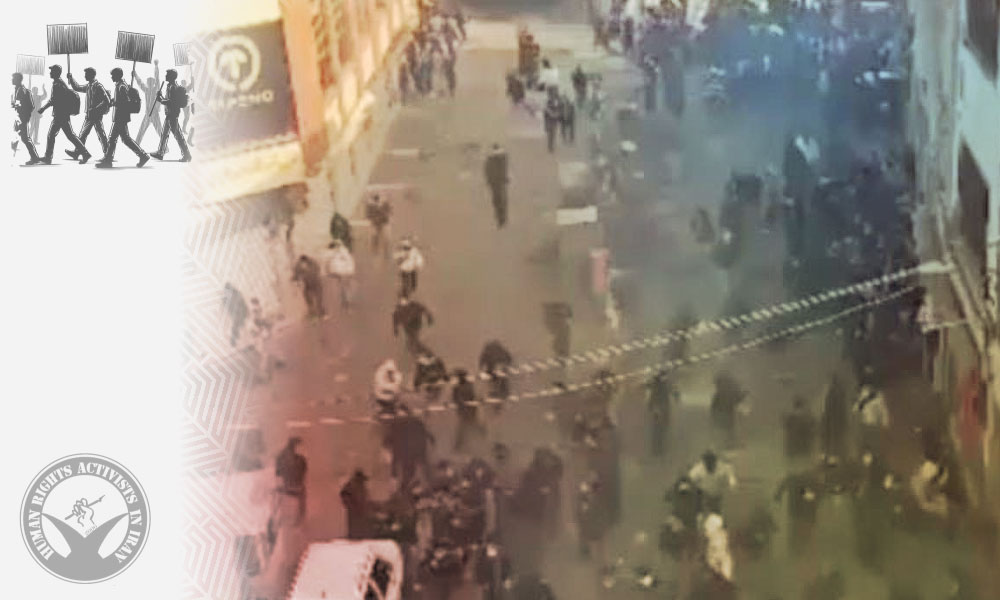
Documented instances of the suppression of protests over the past day include the use of pellet guns, deployment of tear gas, and direct attacks on demonstrators.

At the same time, official accounts presented by some local authorities regarding the deaths do not fully align with eyewitness testimonies and unofficial reports. For this reason, details surrounding how these incidents occurred remain under review and subject to further verification.

Deaths and Injuries

According to HRANA’s updated data, at least 36 people have been confirmed killed during the past ten days of protests. Among them were four individuals under the age of 18, as well as two members of security and law enforcement forces. In addition, dozens of cases of injuries among protesting citizens have been recorded so far. According to reports, these injuries were mostly caused by pellet and plastic bullets.

Over the past 24 hours, HRANA has confirmed the identities of Mohammadreza Karami, (Lieutenant) Ehsan Aghajani, and Ali Golfroosh as individuals killed during the protests.

On the same date, Sadegh Parvizadeh, a wildlife photographer and videographer, announced in a video posted on his Instagram page that he had been struck in the face and eye by pellets during the protests. In part of the video, while showing samples of the pellets fired, he stated: “The person who shot me was a teenager under the age of 20. What occupies my mind is that killing a human being was really like hunting prey or a game to him.”

Tasnim News Agency, which is close to security institutions, reported that based on presented statistics, from the beginning of the protests up to last night, around 568 law enforcement personnel and 66 Basij forces were injured. The outlet further claimed that among them, two were injured by live ammunition, 152 by shotgun pellets, and 11 by knife attacks.

Security Forces’ Raids on Medical Centers: Attacks on Imam Khomeini Hospital in Ilam and Sina Hospital in Tehran

Amid developments in the nationwide protests in Iran, reports indicate that security forces have attacked and entered at least two medical centers in the cities of Ilam and Tehran, incidents that have sparked widespread domestic reactions and heightened concerns over violations of the security of medical facilities and patients’ rights.

Imam Khomeini Hospital, Ilam: Tear Gas in a Treatment Facility

According to published videos and reports, on Saturday evening, January 3, security forces surrounded Imam Khomeini Hospital in Ilam and attempted to arrest a number of protesters injured in Malekshahi who had been transferred there for treatment.

Reports indicate that patients’ families and some medical staff opposed the entry of security forces, leading to verbal and physical altercations. Subsequently, images were released showing tear gas being fired inside the hospital grounds and buildings, an action that created emergency conditions in treatment wards and caused alarm among patients and staff. Eyewitnesses stated that several patients experienced breathing difficulties following the dispersal of tear gas.

In response, the Ministry of Health issued a statement announcing that, by order of the Minister of Health, the matter was being examined “urgently,” emphasizing the need to safeguard the security of medical centers, patients, and healthcare workers. Additionally, by order of Masoud Pezeshkian, the Minister of Interior was tasked with following up on the incident and submitting a report. Meanwhile, Fars News Agency, which is close to the Islamic Revolutionary Guard Corps, confirmed the presence of security forces at the hospital but claimed that some protesters had used the medical facility “to hide.”

Sina Hospital, Tehran: Arrests of the Injured and a Security Atmosphere

Parallel to the events in Ilam, reports published today, Tuesday, January 6, from Tehran indicate that security forces also entered Sina Hospital. According to these reports, a number of protesters injured during demonstrations and transferred to the hospital for treatment were arrested by security forces inside or around the hospital.

Eyewitnesses told media outlets that the presence of security forces on hospital grounds created an atmosphere of fear and disrupted the treatment process, with some families reportedly avoiding medical centers out of fear of arrest.

As of the time of this report, officials have not provided a clear explanation regarding the details of the operation at Sina Hospital.

Arrests

Over the ten days of protests, at least 2,076 protesting citizens have been arrested; however, the actual number of detainees is estimated to be significantly higher.

Of these, 878 individuals were either arrested on the tenth day of protests or had been detained earlier but were confirmed by HRANA today. This includes the transfer of approximately 200 detained women to Kachooie Prison in Karaj and 500 detained men to the Central Prison of Karaj.

Other detained protesters whose identities have been individually confirmed on this day are listed in an appendix at the end of this report.

So far, at least 15 videos of forced confessions by detainees have been broadcast by official media outlets or those close to security institutions, videos for which it remains unclear under what conditions individuals were compelled to confess against themselves.

International Reactions

As nationwide protests continue in Iran and security crackdowns intensify, international reactions and statements have also persisted.

UN Secretary-General António Guterres expressed concern over recent developments in Iran, stating that he was “deeply saddened” by the killing and injury of protesters and stressing the need to prevent further loss of life. He called on Iranian authorities to respect the rights to freedom of expression, assembly, and peaceful protest, and to allow people to express their grievances peacefully.

The Persian-language account of the U.S. State Department on X, referring to yesterday’s raid by security forces on Imam Khomeini Hospital in Ilam, described the action as a “clear crime against humanity” and wrote that hospitals are not battlefields. The statement added that the actions of the Islamic Republic constitute a gross violation of international law and demonstrate a complete disregard for human life.

Amnesty International, condemning the attack by security forces on a hospital in Ilam that was being used to treat or shelter injured protesters, described the incident as a clear violation of international law. The organization emphasized that the attack once again shows how far Iranian authorities are willing to go to suppress protests and silence dissent.

Reaction of Iranian Government Officials

In response to U.S. warnings, Iran’s Ministry of Foreign Affairs described these positions as “psychological warfare” and sought to frame them as part of a media and external pressure campaign.

The most significant focal point of domestic reactions on the tenth day was the release of a video showing security forces raiding Imam Khomeini Hospital in Ilam, an incident highlighted as a sensitive turning point in media coverage. According to accounts, protesters injured in Malekshahi had been transferred to the hospital, after which the facility was surrounded. Security forces attempted to enter and arrest some of the injured but faced resistance from families and medical staff. Subsequently, images emerged showing tear gas being fired inside the hospital building.

In response, the Ministry of Health issued a statement announcing that the matter was under serious review “by explicit order of the Minister of Health” and would be pursued “within the framework of the law,” emphasizing the security of medical centers, patients’ rights, and support for healthcare workers.

At the same time, Masoud Pezeshkian ordered an investigation into the incident, and according to BBC reports, Eskandar Momeni (Minister of Interior) assigned a delegation to follow up and submit a report.

On the political and economic front, Masoud Pezeshkian, speaking at an official ceremony in an unusually candid tone, placed responsibility for the current situation on the governing structure, stating that “the parliament and the government together have brought the country to this point,” and emphasizing that “we are all to blame.” This stance was reflected in coverage of the tenth day as a sign of social pressure and a crisis of governance.

In contrast, media outlets close to the Islamic Revolutionary Guard Corps, including Fars News Agency (as reported by the BBC), confirmed the presence of security forces at the hospital but claimed that protesters had used the hospital as a “stronghold”, a narrative aimed at justifying and reframing the security forces’ actions.

Meanwhile, the public and revolutionary prosecutor of Shahrod stated that protesters’ voices should be heard, but warned that those who engage in what he described as “rioting” would face the law.

Domestic Reactions (Civil Society, Labor Groups, and Public Figures)

Alongside official reactions, part of the tenth day’s responses included expressions of solidarity from artists, as well as supportive actions abroad.

The Teachers’ Trade Association of Aligudarz issued a statement in support of the recent protests, declaring that the expansion of poverty, corruption, discrimination, special privileges, unemployment, and runaway inflation has pushed society to a point of despair and anger. The statement noted that the loss of hope for the future has turned employment, marriage, and housing into unattainable dreams for young people, creating a generation with nothing left to lose. According to the association, despite all the risks, protesters have courageously put their lives and health on the line to voice their demands in the streets.

Continuing reactions from sports and cultural figures, Mohammad Khakpour, former captain of Iran’s national football team, criticized labeling protesters as “rioters,” writing that people crushed by inflation, unemployment, and insecurity cannot be silenced with a label. Ali Ghamsari, a musician and composer, described the protests as stemming from poverty and hardship, emphasizing that they are rooted in concern for the country and a sense of social responsibility. Alireza Haghighi, former national team goalkeeper, also shared a message stating that protesting is not a crime—the real crime is not listening to the people’s voices.

Ali Daei, a legendary Iranian footballer, criticized the economic situation, saying that the sharp rise in the dollar exchange rate shows officials have become disconnected from the people’s suffering, and stressed that nothing can replace the people of Iran. Pantea Bahram, a theater and film actress, also expressed solidarity with protesting bazaar merchants and announced that she was joining the strikes. Alireza Ghorbani, a traditional music singer, citing the country’s current conditions and the hardships imposed on the people, announced the postponement of his “Iranam” concert in Tabriz and other upcoming performances, stating that holding concerts at this time does not align with the public mood.

Individually Identified Arrests on the Tenth Day

  1. 1. Amin Yousefi – City of arrest: Ilam – Place of detention: Unknown – Current status: Detained – Source: Kurdpa

  2. 2. Amirhossein Ta’mirkari – City of arrest: Ilam – Place of detention: Unknown – Current status: Detained – Source: Kurdpa

  3. 3. Reza Dousti-Nejad – City of arrest: Ilam – Place of detention: Unknown – Current status: Detained – Source: Kurdpa – Notable detail: 17-year-old minor

  4. 4. Artin Sohrabi – City of arrest: Ilam – Place of detention: Unknown – Current status: Detained – Source: Kurdpa – Notable detail: 17-year-old minor

  5. 5. Amir Ali Abdian – City of arrest: Ilam – Place of detention: Unknown – Current status: Detained – Source: Kurdpa – Notable detail: 16-year-old minor

  6. 6. Firooz Faraji – City of arrest: Ilam – Place of detention: Unknown – Current status: Detained – Source: Kurdpa

  7. 7. Mohammad Sadra Mansouri – City of arrest: Ilam – Place of detention: Unknown – Current status: Detained – Source: Kurdpa

  8. 8. Alireza Paryab – City of arrest: Dehloran – Place of detention: Unknown – Current status: Detained – Source: Kurdpa

  9. 9. Mohammad Amin Mahmoudian – City of arrest: Sarableh – Place of detention: Unknown – Current status: Detained – Source: Kurdpa

  10. 10. Mohammad Amin Mahmoudian – City of arrest: Sarableh – Place of detention: Unknown – Current status: Detained – Source: Kurdpa

  11. 11. Mohammadhossein Moradi – City of arrest: Sarableh – Place of detention: Unknown – Current status: Detained – Source: Kurdpa

  12. 12. Ahmadreza Mohammadian – City of arrest: Karzan – Place of detention: Unknown – Current status: Detained – Source: Kurdpa

  13. 13. Arman Dadfar – City of arrest: Badreh – Place of detention: Unknown – Current status: Detained – Source: Kurdpa

  14. 14. Milad Seyed Moradi – City of arrest: Dehloran – Place of detention: Unknown – Current status: Detained – Source: Kurdpa

  15. 15. Misagh Seyed Moradi – City of arrest: Dehloran – Place of detention: Unknown – Current status: Detained – Source: Kurdpa

  16. 16. Mehdi Hatami – City of arrest: Yasuj – Place of detention: Unknown – Current status: Detained – Source: HRANA

  17. 17. Shahin Yousefi – City of arrest: Yasuj – Place of detention: Unknown – Current status: Detained – Source: HRANA

  18. 18. Ali Ahmadi – City of arrest: Yasuj – Place of detention: Unknown – Current status: Detained – Source: HRANA

  19. 19. Hossein Ahmadi – City of arrest: Yasuj – Place of detention: Unknown – Current status: Detained – Source: HRANA

  20. 20. Afshin Najafi – City of arrest: Yasuj – Place of detention: Unknown – Current status: Detained – Source: HRANA

  21. 21. Ramin Mohammadi – City of arrest: Yasuj – Place of detention: Unknown – Current status: Detained – Source: HRANA

  22. 22. Mohammadreza Heidari – City of arrest: Yasuj – Place of detention: Unknown – Current status: Detained – Source: HRANA – Notable detail: 17-year-old minor

  23. 23. Saha Ilbeigi – City of arrest: Tehran – Place of detention: Unknown – Current status: Detained – Source: Amirkabir Newsletter – Notable detail: Student

  24. 24. Sheida Namjoo – City of arrest: Birjand – Place of detention: The Ministry of Intelligence’s detention facility – Current status: Detained – Source: Amirkabir Newsletter – Notable detail: Student

  25. 25. Zeynab Ivani – City of arrest: Birjand – Place of detention: The Ministry of Intelligence’s detention facility – Current status: Detained – Source: Amirkabir Newsletter – Notable detail: Student

  26. 26. Faizeh Shamaili – City of arrest: Sonqor – Place of detention: Unknown – Current status: Detained – Source: Kurdpa

  27. 27. Javad Estavari – City of arrest: Darreh Shahr – Place of detention: Unknown – Current status: Detained – Source: Kurdpa

  28. 28. Ehsan Vineh – City of arrest: Kermanshah – Place of detention: Unknown – Current status: Detained – Source: HRANA

  29. 29. Abolfazl Dorqaidi – City of arrest: Yasuj – Place of detention: Unknown – Current status: Detained – Source: HRANA

  30. 30. Abolfazl Khoshnood – City of arrest: Yasuj – Place of detention: Unknown – Current status: Detained – Source: HRANA

  31. 31. Abolfazl Rahimi – City of arrest: Yasuj – Place of detention: Unknown – Current status: Detained – Source: HRANA

  32. 32. Abolfazl Sharifi – City of arrest: Yasuj – Place of detention: Unknown – Current status: Detained – Source: HRANA

  33. 33. Abolfazl Oshal – City of arrest: Yasuj – Place of detention: Unknown – Current status: Detained – Source: HRANA

  34. 34. Ahmadreza Khaleghipour – City of arrest: Yasuj – Place of detention: Unknown – Current status: Detained – Source: HRANA

  35. 35. Amin Ezzati – City of arrest: Yasuj – Place of detention: Unknown – Current status: Detained – Source: HRANA

  36. 36. Amir Mohammad Bakhtiari – City of arrest: Yasuj – Place of detention: Unknown – Current status: Detained – Source: HRANA

  37. 37. Amirhossein Rahi – City of arrest: Yasuj – Place of detention: Unknown – Current status: Detained – Source: HRANA

  38. 38. Amirhossein Karimi-Pour – City of arrest: Yasuj – Place of detention: Unknown – Current status: Detained – Source: HRANA

  39. 39. Omid Mohammadpour – City of arrest: Yasuj – Place of detention: Unknown – Current status: Detained – Source: HRANA

  40. 40. Omid Mohammadpour – City of arrest: Yasuj – Place of detention: Unknown – Current status: Detained – Source: HRANA

  41. 41. Arya Samsami – City of arrest: Yasuj – Place of detention: Unknown – Current status: Detained – Source: HRANA

  42. 42. Anahita Hekmatinia – City of arrest: Yasuj – Place of detention: Unknown – Current status: Detained – Source: HRANA

  43. 43. Ainaz Parvaneh – City of arrest: Yasuj – Place of detention: Unknown – Current status: Detained – Source: HRANA

  44. 44. Behnam Armoon – City of arrest: Yasuj – Place of detention: Unknown – Current status: Detained – Source: HRANA

  45. 45. Benyamin Arshadi – City of arrest: Yasuj – Place of detention: Unknown – Current status: Detained – Source: HRANA

  46. 46. Parisa Mousavi – City of arrest: Yasuj – Place of detention: Unknown – Current status: Detained – Source: HRANA

  47. 47. Parichehr Ansari – City of arrest: Yasuj – Place of detention: Unknown – Current status: Detained – Source: HRANA

  48. 48. Hamid Jahanbazian – City of arrest: Yasuj – Place of detention: Unknown – Current status: Detained – Source: HRANA

  49. 49. Hadis Sheybaz – City of arrest: Yasuj – Place of detention: Unknown – Current status: Detained – Source: HRANA

  50. 50. Hossein Aghajani – City of arrest: Yasuj – Place of detention: Unknown – Current status: Detained – Source: HRANA

  51. 51. Hossein Haghigh-Mofrad – City of arrest: Yasuj – Place of detention: Unknown – Current status: Detained – Source: HRANA

  52. 52. Hossein Hosseini – City of arrest: Yasuj – Place of detention: Unknown – Current status: Detained – Source: HRANA

  53. 53. Hossein Khajehyar – City of arrest: Yasuj – Place of detention: Unknown – Current status: Detained – Source: HRANA

  54. 54. Hossein Sousanzadeh – City of arrest: Yasuj – Place of detention: Unknown – Current status: Detained – Source: HRANA

  55. 55. Davoud Zarghami – City of arrest: Yasuj – Place of detention: Unknown – Current status: Detained – Source: HRANA

  56. 56. Diana Moradian – City of arrest: Yasuj – Place of detention: Unknown – Current status: Detained – Source: HRANA

  57. 57. Reza Farhadi Sisakht – City of arrest: Yasuj – Place of detention: Unknown – Current status: Detained – Source: HRANA

  58. 58. Reza Nourian – City of arrest: Yasuj – Place of detention: Unknown – Current status: Detained – Source: HRANA

  59. 59. Reyhaneh Pourkaram – City of arrest: Yasuj – Place of detention: Unknown – Current status: Detained – Source: HRANA

  60. 60. Saman Akbari – City of arrest: Yasuj – Place of detention: Unknown – Current status: Detained – Source: HRANA

  61. 61. Sanaz Davoudi – City of arrest: Yasuj – Place of detention: Unknown – Current status: Detained – Source: HRANA

  62. 62. Setayesh Ansari – City of arrest: Yasuj – Place of detention: Unknown – Current status: Detained – Source: HRANA

  63. 63. Soroush Amini – City of arrest: Yasuj – Place of detention: Unknown – Current status: Detained – Source: HRANA

  64. 64. Samira Karimi-Pour – City of arrest: Yasuj – Place of detention: Unknown – Current status: Detained – Source: HRANA

  65. 65. Sima Sajjadi – City of arrest: Yasuj – Place of detention: Unknown – Current status: Detained – Source: HRANA

  66. 66. Shayan Mohedian – City of arrest: Yasuj – Place of detention: Unknown – Current status: Detained – Source: HRANA

  67. 67. Shahab Asadi – City of arrest: Yasuj – Place of detention: Unknown – Current status: Detained – Source: HRANA

  68. 68. Shahab Parand – City of arrest: Yasuj – Place of detention: Unknown – Current status: Detained – Source: HRANA

  69. 69. Shahram Omrani – City of arrest: Yasuj – Place of detention: Unknown – Current status: Detained – Source: HRANA

  70. 70. Shahreh Nigh-Eghbal – City of arrest: Yasuj – Place of detention: Unknown – Current status: Detained – Source: HRANA

  71. 71. Shima Khorshidian – City of arrest: Yasuj – Place of detention: Unknown – Current status: Detained – Source: HRANA

  72. 72. Sheghayegh Zahedi – City of arrest: Yasuj – Place of detention: Unknown – Current status: Detained – Source: HRANA

  73. 73. Taha Kazemi – City of arrest: Yasuj – Place of detention: Unknown – Current status: Detained – Source: HRANA

  74. 74. Abbas Varestegi – City of arrest: Yasuj – Place of detention: Unknown – Current status: Detained – Source: HRANA

  75. 75. Erfan Bazdan – City of arrest: Yasuj – Place of detention: Unknown – Current status: Detained – Source: HRANA

  76. 76. Ghorfan Rahman-Pour – City of arrest: Yasuj – Place of detention: Unknown – Current status: Detained – Source: HRANA

  77. 77. Ghazal Hamzeh Amaleh – City of arrest: Yasuj – Place of detention: Unknown – Current status: Detained – Source: HRANA

  78. 78. Fatemeh Mousa-Pour – City of arrest: Yasuj – Place of detention: Unknown – Current status: Detained – Source: HRANA

  79. 79. Farzad Foroughi – City of arrest: Yasuj – Place of detention: Unknown – Current status: Detained – Source: HRANA

  80. 80. Farnoush Azar – City of arrest: Yasuj – Place of detention: Unknown – Current status: Detained – Source: HRANA

  81. 81. Farid Alizadeh – City of arrest: Yasuj – Place of detention: Unknown – Current status: Detained – Source: HRANA

  82. 82. Farid Hatami-Pour – City of arrest: Yasuj – Place of detention: Unknown – Current status: Detained – Source: HRANA

  83. 83. Mahan Mahmoudi – City of arrest: Yasuj – Place of detention: Unknown – Current status: Detained – Source: HRANA

  84. 84. Mohammad Abdollah-Pour – City of arrest: Yasuj – Place of detention: Unknown – Current status: Detained – Source: HRANA

  85. 85. Mohammad Ravansalar – City of arrest: Yasuj – Place of detention: Unknown – Current status: Detained – Source: HRANA

  86. 86. Mohammad Mehdi Alipour – City of arrest: Yasuj – Place of detention: Unknown – Current status: Detained – Source: HRANA

  87. 87. Mohammad Hormoz-Pour – City of arrest: Yasuj – Place of detention: Unknown – Current status: Detained – Source: HRANA

  88. 88. Mehrdad Shaban-Nejad – City of arrest: Yasuj – Place of detention: Unknown – Current status: Detained – Source: HRANA

  89. 89. Mahshid Mousa-Pour – City of arrest: Yasuj – Place of detention: Unknown – Current status: Detained – Source: HRANA

  90. 90. Mohaddeseh Mohammadi – City of arrest: Yasuj – Place of detention: Unknown – Current status: Detained – Source: HRANA

  91. 91. Mojgan Forouzan – City of arrest: Yasuj – Place of detention: Unknown – Current status: Detained – Source: HRANA

  92. 92. Milad Karimi – City of arrest: Yasuj – Place of detention: Unknown – Current status: Detained – Source: HRANA

  93. 93. Neda Ahmadi – City of arrest: Yasuj – Place of detention: Unknown – Current status: Detained – Source: HRANA

  94. 94. Yasin Mohammadi – City of arrest: Yasuj – Place of detention: Unknown – Current status: Detained – Source: HRANA

  95. 95. Yalda Pezhvani – City of arrest: Yasuj – Place of detention: Unknown – Current status: Detained – Source: HRANA

  96. 96. Zahra Darfarin – City of arrest: Yasuj – Place of detention: Unknown – Current status: Detained – Source: HRANA

  97. 97. Zohreh Dejman – City of arrest: Yasuj – Place of detention: Unknown – Current status: Detained – Source: HRANA

  98. 98. Alireza Sadeghi – City of arrest: Yasuj – Place of detention: Unknown – Current status: Detained – Source: HRANA

  99. 99. Ali-Asghar Farhadi – City of arrest: Yasuj – Place of detention: Unknown – Current status: Detained – Source: HRANA

  100. 100. Emad Dashtban – City of arrest: Yasuj – Place of detention: Unknown – Current status: Detained – Source: HRANA

  101. 101. Javad Javadpour – City of arrest: Yasuj – Place of detention: Unknown – Current status: Detained – Source: HRANA

  102. 102. Saeid Deil – City of arrest: Yasuj – Place of detention: Unknown – Current status: Detained – Source: HRANA

  103. 103. Sina Dana – City of arrest: Yasuj – Place of detention: Unknown – Current status: Detained – Source: HRANA

  104. 104. Abolfazl Khodadi – City of arrest: Yasuj – Place of detention: Unknown – Current status: Detained – Source: HRANA

  105. 105. Saber Vafaei – City of arrest: Yasuj – Place of detention: Unknown – Current status: Detained – Source: HRANA

  106. 106. Kiarash Afshanandeh – City of arrest: Yasuj – Place of detention: Unknown – Current status: Detained – Source: HRANA

  107. 107. Hamid Dadras – City of arrest: Yasuj – Place of detention: Unknown – Current status: Detained – Source: HRANA

  108. 108. Mehrdad Kamayi – City of arrest: Dehdasht – Place of detention: Unknown – Current status: Detained – Source: HRANA

  109. 109. Sadegh Bazkar – City of arrest: Dehdasht – Place of detention: Unknown – Current status: Detained – Source: HRANA

  110. 110. Mohammad Miri – City of arrest: Gachsaran – Place of detention: Unknown – Current status: Detained – Source: HRANA

  111. 111. Qasem Mahmoudi – City of arrest: Gachsaran – Place of detention: Unknown – Current status: Detained – Source: HRANA

  112. 112. Nazgol Mahmoudi – City of arrest: Gachsaran – Place of detention: Unknown – Current status: Detained – Source: HRANA

  113. 113. Mehraneh Mousavi-Pour – City of arrest: Gachsaran – Place of detention: Unknown – Current status: Detained – Source: HRANA

  114. 114. Kianoush Noshadi – City of arrest: Gachsaran – Place of detention: Unknown – Current status: Detained – Source: HRANA

  115. 115. Maryam Nezha Sobhani – City of arrest: Yazdanshahr – Place of detention: Unknown – Current status: Detained – Source: HRANA – Notable detail: Minor (under 18)

  116. 116. Sogand Soleimani – City of arrest: Yazdanshahr – Place of detention: Unknown – Current status: Detained – Source: HRANA – Notable detail: Minor (under 18)

  117. 117. Negar Ghorbani – City of arrest: Yazdanshahr – Place of detention: Unknown – Current status: Detained – Source: HRANA – Notable detail: Minor (under 18)

  118. 118. Javid Mour – City of arrest: Yazdanshahr – Place of detention: Unknown – Current status: Detained – Source: HRANA – Notable detail: Minor (under 18)

  119. 119. Saeid Soleimani – City of arrest: Yazdanshahr – Place of detention: Unknown – Current status: Detained – Source: HRANA – Notable detail: Minor (under 18)

  120. 120. Pejman Khajouei-Nia – City of arrest: Yazdanshahr – Place of detention: Unknown – Current status: Detained – Source: HRANA – Notable detail: Minor (under 18)

  121. 121. Seyed Kazem Hosseini – City of arrest: Yazdanshahr – Place of detention: Unknown – Current status: Detained – Source: HRANA – Notable detail: Minor (under 18)

  122. 122. Mehri Alghasemi – City of arrest: Yazdanshahr – Place of detention: Unknown – Current status: Detained – Source: HRANA – Notable detail: Minor (under 18)

  123. 123. Amir Mohammad Mansouri – City of arrest: Yazdanshahr – Place of detention: Unknown – Current status: Detained – Source: HRANA – Notable detail: Minor (under 18)

  124. 124. Ali-Asghar Tabouhi – City of arrest: Yazdanshahr – Place of detention: Unknown – Current status: Detained – Source: HRANA – Notable detail: Minor (under 18)

  125. 125. Arsalan Bakhtiarvand – City of arrest: Yazdanshahr – Place of detention: Unknown – Current status: Detained – Source: HRANA – Notable detail: Minor (under 18)

  126. 126. Alireza Mari – City of arrest: Yazdanshahr – Place of detention: Unknown – Current status: Detained – Source: HRANA – Notable detail: Minor (under 18)

  127. 127. Zabihollah Limoochi – City of arrest: Yazdanshahr – Place of detention: Unknown – Current status: Detained – Source: HRANA – Notable detail: Minor (under 18)

  128. 128. Abolfazl Rahimi – City of arrest: Yazdanshahr – Place of detention: Unknown – Current status: Detained – Source: HRANA – Notable detail: Minor (under 18)

  129. 129. Amirhossein Sani – City of arrest: Yazdanshahr – Place of detention: Unknown – Current status: Detained – Source: HRANA – Notable detail: Minor (under 18)

  130. 130. Elaheh Moghaddasi – City of arrest: Yazdanshahr – Place of detention: Unknown – Current status: Detained – Source: HRANA – Notable detail: Minor (under 18)

  131. 131. Amir Abbas Homayouni – City of arrest: Yazdanshahr – Place of detention: Unknown – Current status: Detained – Source: HRANA – Notable detail: Minor (under 18)

  132. 132. Narges Abdollahi – City of arrest: Yazdanshahr – Place of detention: Unknown – Current status: Detained – Source: HRANA – Notable detail: Minor (under 18)

  133. 133. Younes Mari – City of arrest: Yazdanshahr – Place of detention: Unknown – Current status: Detained – Source: HRANA – Notable detail: Minor (under 18)

  134. 134. Mohammad Dousti – City of arrest: Yazdanshahr – Place of detention: Unknown – Current status: Detained – Source: HRANA – Notable detail: Minor (under 18)

  135. 135. Mohammad Javad Dousti – City of arrest: Yazdanshahr – Place of detention: Unknown – Current status: Detained – Source: HRANA – Notable detail: Minor (under 18)

  136. 136. Khadijeh Beigi – City of arrest: Yazdanshahr – Place of detention: Unknown – Current status: Detained – Source: HRANA – Notable detail: Minor (under 18)

  137. 137. Hamidreza Saadati – City of arrest: Mashhad – Place of detention: Unknown – Current status: Detained – Source: HRANA

  138. 138. Morteza Kamel – City of arrest: Mashhad – Place of detention: Unknown – Current status: Detained – Source: HRANA

  139. 139. Mojtaba Fekri – City of arrest: Mashhad – Place of detention: Unknown – Current status: Detained – Source: HRANA

  140. 140. Ehsan Seyfouri – City of arrest: Sonqor – Place of detention: Unknown – Current status: Detained – Source: Kurdpa

  141. 141. Amir Farhadi – City of arrest: Sonqor – Place of detention: Unknown – Current status: Detained – Source: Kurdpa

  142. 142. Mehdi Bagheri – City of arrest: Sonqor – Place of detention: Unknown – Current status: Detained – Source: Kurdpa

  143. 143. Bahar Rafiei – City of arrest: Sonqor – Place of detention: Unknown – Current status: Detained – Source: Kurdpa

  144. 144. Asal Begvand – City of arrest: Sonqor – Place of detention: Unknown – Current status: Detained – Source: Kurdpa

  145. 145. Yasin Hashemian – City of arrest: Sonqor – Place of detention: Unknown – Current status: Detained – Source: Kurdpa

  146. 146. Alireza Abdi – City of arrest: Sonqor – Place of detention: Unknown – Current status: Detained – Source: Kurdpa

  147. 147. Sahar Rezadoust – City of arrest: Zanjan – Place of detention: Unknown – Current status: Detained – Source: Amirkabir Newsletter

  148. 148. Dina Salari – City of arrest: Sonqor – Place of detention: Unknown – Current status: Detained – Source: Kurdpa

  149. 149. Homayoun Eftekhariannia – City of arrest: Tehran – Place of detention: Unknown – Current status: Detained – Source: HRANA

  150. 150. Mohammad Salehi – City of arrest: Hamedan – Place of detention: Unknown – Current status: Detained – Source: HRANA – Notable detail: Student

  151. 151. Raheleh Zardkouhi – City of arrest: Mashhad – Place of detention: Unknown – Current status: Detained – Source: HRANA

  152. 152. Hashem Amini – City of arrest: Mashhad – Place of detention: Unknown – Current status: Detained – Source: HRANA


Collective or Unidentified Arrests on the Tenth Day: Based on Media Reports or HRANA Field Investigations

  1. 1. According to domestic media reports, at least eight citizens were arrested individually or in groups in the cities of Zarqan (Fars Province), Shahrud (Semnan Province), Bushehr, Bojnurd, Dezful, and Baharestan in Tehran Province.

  2. 2. The arrest of 200 women and their transfer to Kachooie Prison in Karaj.

  3. 3. The arrest of 500 individuals and their transfer to the Central Prison of Karaj.

  4. 4. The arrest of 10 individuals in Mazandaran Province.

  5. 5. The arrest of one individual in Tonekabon.

In Conclusion

The ongoing protests, which initially began in Tehran’s Grand Bazaar, have entered their tenth day marked by geographical expansion, increased public participation, and an intensified presence of security forces. The combination of livelihood-related and political demands, the rising number of arrests, and authorities’ efforts to simultaneously contain the crisis through economic and security measures indicate the high level of sensitivity within the ruling establishment regarding the continuation of these protests.

HRANA continues to collect, verify, and complete information related to these protests and will publish supplementary reports should the gatherings persist or expand.

Detailed Report on the Eighth Day of Protests; 222 Locations Across the Country Witness Demonstrations

HRANA- Protests and strikes in various cities across Iran entered their eighth day. An assessment of updated and verified data indicates that despite intensified security measures, increased deployment of law enforcement and security forces, and the continuation of on-the-ground crackdowns in some areas, the geographical spread of the protests has been maintained, and various forms of protest actions continue in different parts of the country. Over the past eight days, at least 222 locations in 78 cities across 26 provinces have witnessed protests. During these events, at least 990 citizens have been arrested, and at least 19 protesters have lost their lives.

Protests that initially began with strikes and labor and trade gatherings have continued into the eighth consecutive day, taking the form of street demonstrations, limited sectoral actions, and student protests at some universities.

Background of the Protests

The protests emerged in a context where economic pressures on broad segments of society have reached a critical stage, and clear signs of disruption in the cycle of daily livelihoods are visible. Repeated surges in exchange rates, prolonged market instability, and the continuous decline in purchasing power have darkened and rendered unpredictable the economic outlook for households and trade activists alike, turning financial insecurity into a widespread experience.

In the days leading up to the start of the protests, reports indicated that exchange rates had crossed new thresholds, alongside a downturn in the capital market and capital outflows. Analysts have interpreted this trend as a shift of liquidity toward safer markets such as gold and foreign currency, and a decline in public trust in economic policies. At the grassroots level, the consequences have included the closure or partial shutdown of trade units, increasing difficulty in sustaining small businesses, and the spread of protest and strike waves in various cities, protests rooted not in a single short-term factor, but in the long-term accumulation of livelihood pressures and the erosion of hope for improved conditions.

Protests Day 8

Geography of the Protests

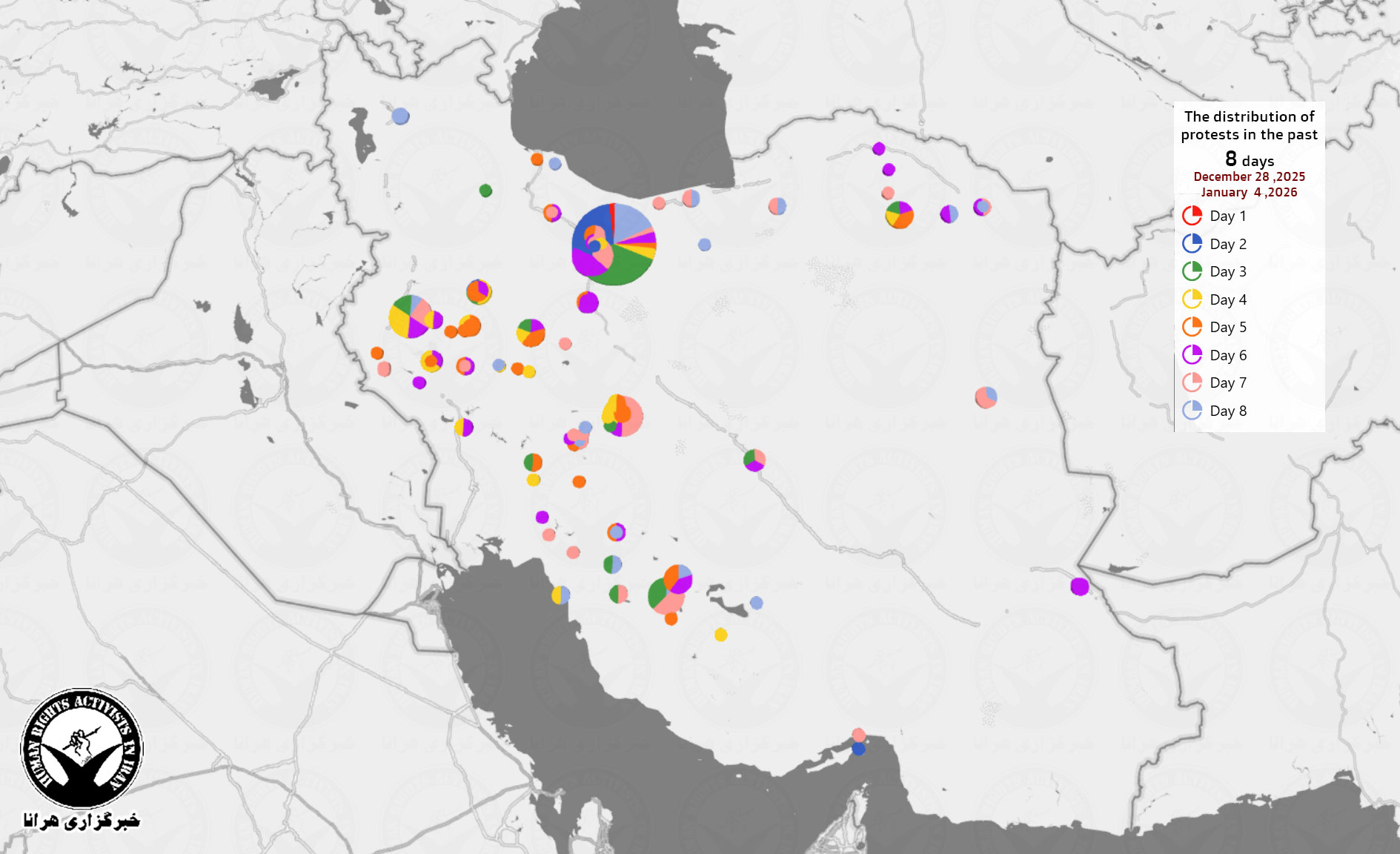
According to updated and aggregated information, over the past eight days at least 222 locations across Iran have witnessed protests, street demonstrations, or labor and trade strikes. These protests have been reported in a total of 26 provinces, and during this period, 17 universities have also seen student protest activities.

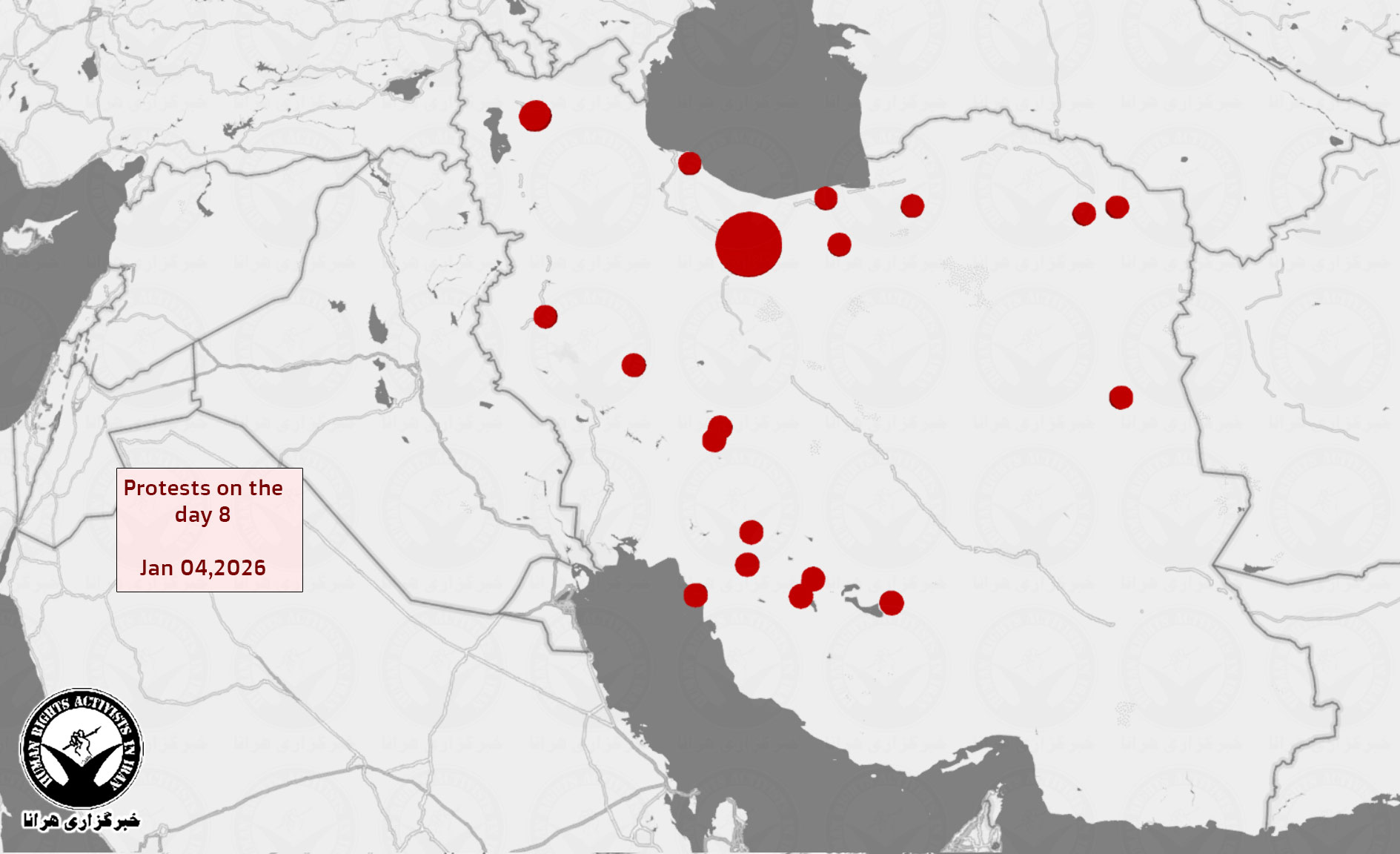
Over the past 24 hours alone, at least 20 cities, including Shiraz, Zarqan, Qazvin, Joveyn, Yazd, Bandar Abbas, Birjand, Behbahan, Karaj, Sureshjan, Sari, Tehran, Gachsaran, Mahallat, Khorramabad, Shahroud, Likak, Hafshejan, Dorud, Marvdasht, Tabriz, Kermanshah, Saman, Yasuj, Nurabad-e Mamasani, Mashhad, Mehdi Shahr (Sangsar), Lahijan, Mashkan, Rudsar, Neyshabur, and Bushehr, have experienced street protests, protest gatherings, labor strikes, student demonstrations, as well as the imposition of heightened security atmospheres in some areas.

An examination of the geographical distribution of the protests shows that these activities have not been limited to major metropolitan centers, but have also encompassed smaller cities and various regions across the country, indicating the horizontal spread of the protests and the participation of diverse social groups in this wave of dissent.

Protests map- Only Day 8

Forms of Protest and Slogans

A review of verified videos and reports shows that the eighth day of protests, similar to previous days, lacked a single unifying محور and encompassed a wide range of demands. Slogans chanted at gatherings ranged from livelihood and economic grievances to criticism of governance practices, restrictions on individual and social freedoms, and calls for justice.

Within the framework of its human rights mandate, HRANA focuses its reporting on slogans and demands that are directly related to violations of, or calls for, human rights, fundamental freedoms, and civil rights. The persistence of these demands across different parts of the country reflects the depth of public discontent and the overlap of economic, social, and political grievances within the current protest movement.

Conduct of Law Enforcement-Security Forces and Details of Violence

On the eighth day of nationwide protests, reports and published videos continued to point to a prevailing security atmosphere and the use of repressive measures by law enforcement and security forces to prevent the formation or spread of protest gatherings. Images released from various cities show violent crackdown, gunfire, the use of tear gas, and the arrest of protesters.

Meanwhile, state broadcaster IRIB aired a video of a forced confession by a citizen accused of setting fire to one of the agents—footage whose recording conditions remain unclear.

In addition, official accounts provided by local authorities regarding some of the fatalities have been met with skepticism by eyewitnesses and contradicted by unofficial reports. Details surrounding these deaths remain under review and subject to further verification.

Fatalities and Injuries

According to updated information from HRANA, the deaths of at least 20 people during the eight days of protests have been confirmed. One of the deceased was affiliated with law enforcement-security forces. At least 51 cases of citizen injuries have also been recorded so far, most of them resulting from pellet and plastic bullets.

Supplementing reports from previous days, new field investigations by this human rights organization confirm the deaths of Reza Azimzadeh, Mehdi Emami-Pour, Latif Karimi, Soroush Soleimani, Rasoul Kadiourian, Reza Kadiourian, Hossein Rabiei, and Amir Mohammad Kouhkan.

HRANA has also received concerning reports of the beating of Nasser Rezaei Ahangarany, a lawyer, by security forces on Saturday evening, January 3, during protests in Khorramabad.

Separately, Kurdpa News Agency, which covers developments in Kurdish regions, reported that at least 30 people were injured during protests in Malekshahi the previous day.

Arrests

Over the past eight days of protests, at least 990 protesting citizens have been arrested, although the actual number of detainees is estimated to be significantly higher.

Individual arrests with confirmed identities on the eighth day:

  1. 1. Full name: Salman Mardani
    Place of arrest: Dehloran
    Date of arrest: January 3, 2026
    Current status: Detained

  2. 2. Full name: Pouria Aliyari, student
    Place of arrest: Esfarayen
    Date of arrest: January 3, 2026
    Current status: Detained

  3. 3. Full name: Parsa Loghmani, student
    Place of arrest: Babol
    Date of arrest: January 3, 2026
    Current status: Released

  4. 4. Full name: Erfan Dehghani Iraj
    Place of arrest: Tehran
    Date of arrest: January 3, 2026
    Current status: Released

  5. 5. Full name: Asghar Shakeri
    Place of arrest: Mashhad
    Date of arrest: December 31, 2025
    Current status: Detained

  6. 6. Full name: Fariba Hosseini
    Place of arrest: Shiraz
    Date of arrest: January 3, 2026
    Current status: Detained

  7. 7. Full name: Javad Soltani Kalateh
    Place of arrest: Sabzevar
    Date of arrest: January 2, 2026
    Current status: Detained

  8. 8. Full name: Abolfazl Imani, 17-year-old minor
    Place of arrest: Sabzevar
    Date of arrest: January 2, 2026
    Current status: Detained

  9. 9. Full name: Saeed Shiei, 17-year-old minor
    Place of arrest: Sabzevar
    Date of arrest: January 2, 2026
    Current status: Detained

  10. 10. Full name: Jalal Lotfi
    Place of arrest: Sabzevar
    Date of arrest: January 3, 2026
    Current status: Detained

  11. 11. Full name: Ali Amanabadi
    Place of arrest: Neyshabur
    Date of arrest: January 3, 2026
    Current status: Detained

  12. 12. Full name: Zahra Izadi Nia
    Place of arrest: Yasuj
    Date of arrest: January 2, 2026
    Current status: Detained

  13. 13. Full name: Hasti Ghorbani, 16-year-old minor
    Place of arrest: Mashhad
    Date of arrest: Unknown
    Current status: Detained

  14. 14. Full name: Alireza Yazdani
    Place of arrest: Tehran
    Date of arrest: January 2, 2026
    Current status: Detained

  15. 15. Full name: Mahan Mohammadi
    Place of arrest: Tehran
    Date of arrest: January 2, 2026
    Current status: Detained

  16. 16. Full name: Sajad Ravad
    Place of arrest: Behbahan
    Date of arrest: January 4, 2026
    Current status: Detained

  17. 17. Full name: Shahrokh Shojaei
    Place of arrest: Behbahan
    Date of arrest: January 3, 2026
    Current status: Detained

  18. 18. Full name: Abolfazl Tayebi
    Place of arrest: Behbahan
    Date of arrest: January 1, 2026
    Current status: Detained

  19. 19. Full name: Sina Dehdashti, 16-year-old minor
    Place of arrest: Behbahan
    Date of arrest: January 1, 2026
    Current status: Detained

  20. 20. Full name: Artin Estadayan, 16-year-old minor
    Place of arrest: Behbahan
    Date of arrest: January 1, 2026
    Current status: Released after submission of a salary slip

  21. 21. Full name: Saber Vafaian-Nejad, 15-year-old minor
    Place of arrest: Behbahan
    Date of arrest: January 1, 2026
    Current status: Detained

  22. 22. Full name: Maryam Zarei
    Place of arrest: Yazd
    Date of arrest: Recent days
    Current status: Detained

  23. 23. Full name: Sara Nosrati, 17-year-old minor
    Place of arrest: Yazd
    Date of arrest: Recent days
    Current status: Detained

  24. 24. Full name: Reyhaneh Zarei
    Place of arrest: Yazd
    Date of arrest: Recent days
    Current status: Detained

  25. 25. Full name: Farzaneh Golestani
    Place of arrest: Yazd
    Date of arrest: Recent days
    Current status: Detained

  26. 26. Full name: Ahmadreza Khosravi, minor
    Place of arrest: Shushtar
    Date of arrest: January 3, 2026
    Current status: Detained

  27. 27. Full name: Emad Ghorbani, minor
    Place of arrest: Shushtar
    Date of arrest: January 3, 2026
    Current status: Detained

  28. 28. Full name: Sajad Khorshidi
    Place of arrest: Ilam
    Date of arrest: January 3, 2026
    Current status: Detained

  29. 29. Full name: Abolfazl Saki
    Place of arrest: Ilam
    Date of arrest: January 3, 2026
    Current status: Detained

  30. 30. Full name: Alireza Momeni
    Place of arrest: Ilam
    Date of arrest: January 3, 2026
    Current status: Detained

  31. 31. Full name: Alireza Momeni, student
    Place of arrest: Ilam
    Date of arrest: January 4, 2026
    Current status: Detained

  32. 32. Full name: Faizeh Rashidi
    Place of arrest: Badreh
    Date of arrest: January 3, 2026
    Current status: Detained

  33. 33. Full name: Siroos Azarmehr
    Place of arrest: Isfahan
    Date of arrest: Recent days
    Current status: Detained

  34. 34. Full name: Saman Shahamat
    Place of arrest: Isfahan
    Date of arrest: Recent days
    Current status: Detained

  35. 35. Full name: Payam Aminzadeh
    Place of arrest: Isfahan
    Date of arrest: Recent days
    Current status: Detained

  36. 36. Full name: Siroos Javidy
    Place of arrest: Isfahan
    Date of arrest: Recent days
    Current status: Detained

  37. 37. Full name: Fatemeh Zarei
    Place of arrest: Mashhad
    Date of arrest: January 2, 2026
    Current status: Detained

  38. 38. Full name: Elaheh Khazaei
    Place of arrest: Shahriar
    Date of arrest: Recent days
    Current status: Detained

  39. 39. Full name: Setayesh Khazaei
    Place of arrest: Shahriar
    Date of arrest: Recent days
    Current status: Detained

  40. 40. Full name: Nazanin Khazaei
    Place of arrest: Shahriar
    Date of arrest: Recent days
    Current status: Detained

  41. 41. Full name: Mehdi Hasanpour
    Place of arrest: Neqab
    Date of arrest: January 4, 2026
    Current status: Detained

  42. 42. Full name: Negar (Aram) Iranmanesh
    Place of arrest: Yasuj
    Date of arrest: January 4, 2026
    Current status: Detained

  43. 43. Full name: Pouya Naderi
    Place of arrest: Abdanan
    Date of arrest: January 3, 2026
    Current status: Detained

  44. 44. Full name: Abdollah Ahmadi
    Place of arrest: Abdanan
    Date of arrest: January 4, 2026
    Current status: Detained

  45. 45. Full name: Mehdi Sheikhi
    Place of arrest: Abdanan
    Date of arrest: January 4, 2026
    Current status: Detained

  46. 46. Full name: Amir Eisa Zadeh
    Place of arrest: Darreh Shahr
    Date of arrest: January 3, 2026
    Current status: Detained

  47. 47. Full name: Mohammad Bashir Hashemian
    Place of arrest: Darreh Shahr
    Date of arrest: January 3, 2026
    Current status: Detained

  48. 48. Full name: Mehdi Hashemian
    Place of arrest: Darreh Shahr
    Date of arrest: January 3, 2026
    Current status: Detained

  49. 49. Full name: Ahmad Hasanvand Amouzadeh
    Place of arrest: Darreh Shahr
    Date of arrest: January 3, 2026
    Current status: Detained

  50. 50. Full name: Bahador Amouzadeh
    Place of arrest: Darreh Shahr
    Date of arrest: January 3, 2026
    Current status: Detained

  51. 51. Full name: Ahmad Haqnazari
    Place of arrest: Sarableh
    Date of arrest: January 2, 2026
    Current status: Detained

  52. 52. Full name: Reza Bagheri Nejad
    Place of arrest: Sarableh
    Date of arrest: January 2, 2026
    Current status: Detained

  53. 53. Full name: Shahin Qasr Beigi
    Place of arrest: Sarableh
    Date of arrest: January 4, 2026
    Current status: Detained

  54. 54. Full name: Salal Sadeghi
    Place of arrest: Shabab
    Date of arrest: January 3, 2026
    Current status: Detained

  55. 55. Full name: Iraj Rostami Mehr
    Place of arrest: Shabab
    Date of arrest: January 3, 2026
    Current status: Detained

  56. 56. Full name: Samyar Motallebi, student
    Place of arrest: Tehran
    Date of arrest: Recent days
    Current status: Detained

  57. 57. Full name: Ramin Pourasal, student
    Place of arrest: Tehran
    Date of arrest: Recent days
    Current status: Detained

  58. 58. Full name: Ehsan Masoudi, student
    Place of arrest: Tehran
    Date of arrest: Recent days
    Current status: Detained

  59. 59. Full name: Meysam Behzadi
    Place of arrest: Kermanshah
    Date of arrest: January 3, 2026
    Current status: Detained

  60. 60. Full name: Ehsan Hayati
    Place of arrest: Kermanshah
    Date of arrest: January 1, 2026
    Current status: Detained

  61. 61. Full name: Mohammad Ziyadi
    Place of arrest: Kermanshah
    Date of arrest: January 3, 2026
    Current status: Detained

  62. 62. Full name: Rahim Mohammadvali
    Place of arrest: Hersin
    Date of arrest: January 2, 2026
    Current status: Detained

  63. 63. Full name: Ali Cheraghi
    Place of arrest: Hersin
    Date of arrest: January 2, 2026
    Current status: Detained

  64. 64. Full name: Milad Alibeygi
    Place of arrest: Hersin
    Date of arrest: January 2, 2026
    Current status: Detained

  65. 65. Full name: Saeed Darvishi
    Place of arrest: Eslamabad-e Gharb
    Date of arrest: January 3, 2026
    Current status: Detained

  66. 66. Full name: Yousef Salkhordeh
    Place of arrest: Gilan-e Gharb
    Date of arrest: January 3, 2026
    Current status: Detained

  67. 67. Full name: Delaram Kazemi
    Place of arrest: Gilan-e Gharb
    Date of arrest: January 2, 2026
    Current status: Released

Group Arrests or Arrests Without Confirmed Identities (Eighth Day)

  • Arrest of several individuals in Yazd, detained for activity on social media

  • Arrest of one individual in Marlik, Malard,  presented as a “leader of the protests”

  • Arrest of one individual in Shiraz’s Maali Abad neighborhood, detained after being beaten by security forces

  • Arrest of four citizens in Qazvin,  described as “instigators of the protests”

  • Arrest of several protesters in Zanjan, labeled as “agents of unrest”

  • Arrest of 71 individuals, including one woman, in Yazd over recent days

  • Arrest of 30 individuals on the previous night in Jafarabad neighborhood, Kermanshah

  • Arrest of 150 individuals in Isfahan and their transfer to the city’s prison

  • Arrest of 24 individuals in Shiraz and their transfer to Adelabad Prison

  • Arrest of three individuals in Shiraz and Tehran

  • Arrest of one individual in Rezvanshahr

  • Arrest of 30 individuals in Behbahan


International Reactions

The escalation of violence and repression in Iran has also sparked international concern. In a statement quoted from its spokesperson, the European Union’s External Action Service expressed concern over violence against Iranian protesters and called on Iran’s security forces to exercise restraint in dealing with participants in peaceful demonstrations. The statement described the protests as “reflecting the demands of many Iranians” and emphasized that developments across Iran are being closely monitored. It further stated: “We are concerned by reports of deaths and injuries and call on Iranian security forces to show maximum restraint in responding to peaceful protests. Authorities have acknowledged socio-economic challenges, and addressing these challenges must take place through inclusive dialogue, not violence.”

A diplomatic source at France’s Ministry of Foreign Affairs, expressing regret over the killing of protesters, called for full transparency and for Iran to respect its international commitments.

Amnesty International Australia called for an immediate halt to violence, the release of political prisoners, an end to executions, and a stop to the use of lethal weapons against protesters.

The Association of Families of Flight PS752 Victims, in a statement published on Friday, January 3, declared solidarity with protesters in Iran and called for an immediate end to the violent suppression of protests, accountability regarding those killed, injured, and detained, and respect for the right to protest and freedom of expression.

Domestic (Governmental) Reactions

Today, the commander of Iran’s national police (FARAJA) announced that what he described as “targeted arrests of leaders” had begun over the past two nights. Ahmadreza Radan claimed that those arrested were accused of inciting citizens and receiving foreign currency in exchange for their actions.

Meanwhile, official media and channels affiliated with security institutions continue to describe protests in various cities as “riots,” accusing protesters of ties to foreign actors and opposition groups. This narrative, presented without clear evidence, seeks to deny the livelihood-based and protest-driven nature of citizens’ demands and attribute the protests to external interference.

Mohammad Ja’far Montazeri, head of Iran’s Supreme Court, said the recent protests were unrelated to the will of the people and dismissed threats by U.S. President Donald Trump regarding support for the Iranian people as ineffective. Alaeddin Boroujerdi, a member of parliament’s National Security Commission, warned the United States that any action would result in its regional interests being targeted. Qassem Ravanbakhsh, a member of parliament from Qom, described Trump’s support for protesters as foreign interference and rejected it. In contrast, Ahmad Naderi, a member of parliament’s presidium, assessed the protests as stemming from runaway inflation and economic mismanagement by the government. At the same time, the police commander of Yazd Province reported the identification and arrest of administrators of several social media pages linked to the protests.

The Iran Reform Front reacted to the recent protests, stating that the government’s approach of avoiding violence and listening to protesters’ voices is a positive—though insufficient—step toward rebuilding public trust. It emphasized that the protests in Iran have entirely domestic roots and can only be pursued through peaceful means.

Ali Rabiei, the president’s social affairs aide, said in response to the protests: “Iran today stands at one of the most complex junctures in its history, a moment shaped not only by external pressures, but by the accumulation of economic imbalances, erosion of social capital, and policy mistakes over past decades.”

Finally, the Workers’ House of Iran, in a statement reacting to the protests, declared that the people of Iran have the right to protest their livelihood and economic conditions, and that this right is legitimate, legal, and social. It added that workers across the country have repeatedly raised their demands in professional and peaceful ways.

Domestic Reactions (Civil Society, Trade Groups, and Public Figures)

The Kermanshah Bar Association, in a statement responding to the popular protests, described the purpose of governments and political, administrative, and military institutions as “serving the interests of the people” in areas such as the economy, security, healthcare, and education. It emphasized that despite nearly five decades since the revolution, the Islamic Republic has failed to achieve a large portion of these objectives. The statement said that Iran has, over these years, become a “poor and isolated” country, and that the “widespread poverty and misery of the people,” alongside the “expansion of corruption,” are clear signs of the inefficiency of the governing system. The Hersin Teachers’ Association also issued a statement supporting the protests, declaring that under current conditions, no option remains other than street protests.

Separately, the Hersin Teachers’ Association reiterated its support for the protests, stating that there is no alternative but to take to the streets.

Labor organizations, retirees’ groups, and social associations, in a joint reaction to the protests, said in a statement that runaway inflation has broken the backs of the majority of the population. Wages and salaries that fall below the poverty line and the cost-of-living basket, privatization, repression, imprisonment, executions, and war-driven policies have pushed people’s lives to the brink of collapse. Society has reached a boiling point, and nationwide protests are a direct reflection of this critical situation.

The Islam Abad-e Gharb Teachers’ Association, expressing support for the protests, stated that given the livelihood problems facing working and retired teachers and various segments of society under the current dire economic conditions, it fully supports the rightful protests of different social groups across the country and will stand alongside them.

A number of male and female athletes, including members of national teams and club teams, also voiced their support for the popular protests through public messages.

Conclusion

The ongoing protests, which began at Tehran’s bazaar, have entered their eighth day marked by geographical expansion, increased public participation, and an intensified presence of security forces. The combination of livelihood and political demands, rising arrests, and authorities’ attempts to simultaneously manage the crisis through economic and security measures highlight the state’s heightened sensitivity to the continuation of these protests.

HRANA continues to collect, verify, and complete information related to these protests and will publish follow-up reports should the demonstrations continue or expand.

Detailed Report on the Sixth Day of Protests: Violence by Security Forces and an Increase in the Arrest of Protesters

Protests and strikes by shopkeepers and citizens in various cities across Iran entered their sixth day today. Over the past six days, at least 113 locations across the country, in 46 cities spanning 22 provinces, have witnessed protests. During these protests, dozens of people were arrested and at least eight protesters lost their lives.

HRANA – Protests and strikes by shopkeepers and citizens in various cities across Iran entered their sixth day today. Over the past six days, at least 113 locations across the country, in 46 cities spanning 22 provinces, have witnessed protests. During these protests, dozens of people were arrested and at least eight protesters lost their lives.

The widespread protests that began on Monday, December 29, with gatherings and strikes by bazaar merchants in Tehran continued today, Friday, January 2, for a sixth consecutive day. The protests have been accompanied in some cities by an intensified security presence, violence, and arrests of citizens. Demonstrations persisted in cities including Neyshabur, Sabzevar, Esfarayen, Mashhad, Hamedan, Fardis, Gohardasht, Khorramabad, Qazvin, Tehran, Fuladshahr, Zahedan, Marvdasht, Parand, Hafshejan, Joneqan, Yasuj, and Qom. Reports were also published today indicating the use of violence by security and law enforcement forces. As protests continued, the scope of arrests expanded, with reports collected of dozens of protesting citizens being detained.

Background to the Protests

The new wave of protests has emerged amid unprecedented economic pressure on various segments of society, alongside simultaneous signs of structural erosion in the country’s livelihood system. The rapid rise in foreign currency prices, chronic market instability, and the continued devaluation of the national currency have made the economic outlook extremely uncertain for citizens and trade activists.

In the days leading up to the protests, the exchange rate surpassed 140,000 tomans, while the capital market experienced a significant outflow of capital and declines in indices. According to analysts, these developments reflect a large-scale shift of capital toward lower-risk assets such as foreign currency and gold, and signal declining public confidence in economic policies. The direct consequences have included the closure or partial shutdown of trade units, the inability of small businesses to continue operating, and the expansion of protests and strikes in cities across the country.

Geography of the Protests

Based on collected information, gatherings and protests on the sixth day were reported in 17 cities across 13 provinces. Protests continued in cities including Sabzevar, Esfarayen, Neyshabur, Mashhad, Hafshejan, Joneqan, Hamedan, Fardis, Tehran, Parand, Gohardasht, Zahedan, Marvdasht, Fooladshahr, Yasuj, Qazvin, and Qom.

In Zahedan, protesting citizens took to the streets after Friday prayers and chanted protest slogans. These gatherings mainly took place on University Street and Khayyam Street.

Marvdasht also witnessed protest gatherings today. In the morning, during the burial ceremony of one of those killed in the protests, citizens chanted protest slogans, and several hours later, protest gatherings formed on Enghelab Street in the city.

Meanwhile, a video from the burial ceremony of Dariush Ansari Bakhtiarvand in Fuladshahr has been published, showing a large turnout of citizens. This protesting citizen was shot by law enforcement–security forces on Wednesday evening, December 31, after participating in popular protests, and lost his life.

According to verified reports up to the time of publication, a total of 113 protests have been recorded over the past six days in 46 cities across 22 provinces. Fifteen student gatherings at 13 universities are also included in this figure.
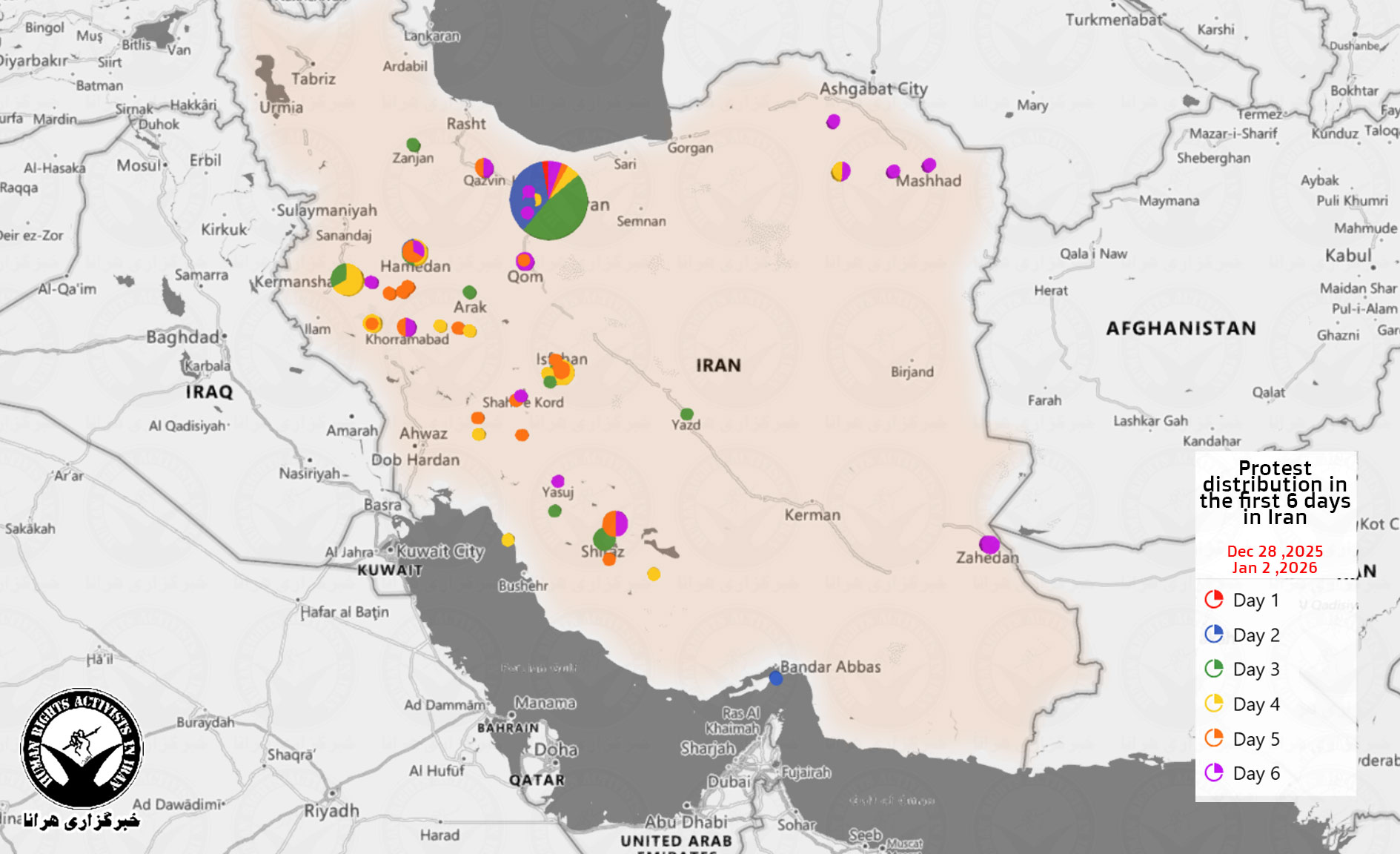
Protest distribution day 6

Methods of Protest and Slogans

Based on reviews of videos and verified reports, the slogans chanted were largely centered on livelihood, economic, and political demands rooted in citizens’ fundamental rights. These slogans included criticism of the power structure, objections to restrictions on individual and social freedoms, demands for justice, and opposition to the prevailing economic and living conditions.

At the same time, in some gatherings, slogans with more diverse themes were also heard, reflecting the heterogeneous range of views and tendencies among protesters. Within the framework of its human rights mission, HRANA focuses its reporting on slogans and demands that are directly related to violations of, or demands for, human rights, fundamental freedoms, and civil rights.

On the sixth day of protests, scenes of dissent extended to cemeteries, where citizens chanted protest slogans during the burial ceremonies of two individuals killed in the protests. In the streets as well, protesting citizens held gatherings while chanting slogans.

The persistence and repetition of these slogans across different cities indicate an overlap between labor, livelihood, and political demands within the context of the ongoing protests, and reflect the depth of accumulated grievances in Iranian society.

Conduct of Law Enforcement-Security Forces and Details of Violence

On the sixth day of widespread protests across various Iranian cities, reports and videos indicated the continued securitized atmosphere and the use of repressive measures by law enforcement and security forces to prevent the formation and spread of protest gatherings. In one such case, a video from the city of Qom showed agents using tear gas to disperse citizens. Hours later, another video from the same city was published in which a citizen is seen holding a cartridge casing attributed to a pellet gun used by anti-riot forces, stating that it belonged to pellet “No. 5.”

In Tehran, a video from protests in the Narmak neighborhood shows anti-riot forces using violence in an attempt to arrest a female protester. Field reports also indicate that today, Friday, security forces used violence to arrest a number of protesters during demonstrations in Zahedan.

Continuing acts of violence included the killing of Khodadad Shirvani, a resident of Marvdasht, who was shot by security forces yesterday after participating in popular protests and lost his life. His burial ceremony was held today, Friday, with a large turnout of citizens, during which attendees chanted protest slogans.

At the same time, a protest gathering in Yasuj was also met with suppression by law enforcement and security forces. According to a video published by BBC Persian, agents used tear gas to disperse protesters, and the sound of gunfire can also be heard in the footage. Reports have also emerged of the use of tear gas during nighttime protests in Fardis and Khorramabad.

In the cities of Hafshejan and Joneqan, protest gatherings were likewise accompanied by the presence of law enforcement forces. Mehr News Agency reported that “law enforcement officers, by being present at the scene, took action to manage the gathering.”

Additionally, a video published from protests in Kuhdasht, dating back to Wednesday, December 31, shows a protesting citizen who was seriously injured in the right leg, with those present attempting to stop the bleeding.

It has also been reported that during the nighttime protests on January 1 in Marvdasht, Fars Province, a passing vehicle was targeted by gunfire from security forces. According to the published video, a Pride car entering a main boulevard from a side street, an area filled with anti-riot forces and vehicles, was shot at close range and without prior warning by one of the agents. After the shooting, another agent intervened and instructed the driver to leave the area.

Finally, channels close to security institutions reported today the death of a Basij member during the recent protests in the city of Harsin. The individual was identified as Ali Azizi.

Arrests and Security Pressures

Today, HRANA received reports regarding the transfer of 15 detained women to Evin Prison. These women, who were arrested during the recent protests, are reportedly mostly injured and were therefore transferred to the prison infirmary upon arrival. Their identities are still under investigation.

According to additional information received, Fardin Moslemi and Mahan Khoobani, both 16 years old, were arrested by security forces in the cities of Gachsaran and Yasuj and transferred to an unknown location. Fardin Moslemi was arrested in the early hours of today, Friday, January 2, by IRGC Intelligence forces in Gachsaran, while Mahan Khoobani was arrested yesterday in Yasuj.

HRANA has also learned that Misagh Kooch Peydeh and Amir Nodehi, residents of Tehran, as well as Salman Ghodrati, a resident of Bojnord, have been arrested. According to this report, Messrs. Nodehi and Ghodrati were arrested yesterday, Thursday, by security forces.

Meanwhile, the Public and Revolutionary Prosecutor of Izeh announced the arrest of a number of citizens during last night’s protests in the city. Published reports also indicate that today, Friday, security agents arrested at least five individuals during protests by citizens in Zahedan.

In addition, reports have been received of the arrest of at least 16 citizens in the cities of Tehran, Kermanshah, and Ilam. The identities of these individuals have been reported as: Iman Ali-Moradi, Ali Najafi, Mohammad Hasanvand, Bijan Karimian, Mohammad Javad Zarei, Akbar Darvishi, Aref Darvishi, Mohammad Havasi, Sepehr Salehi, Amir Raoufi, Ehsan Maleki, Milad Kiadi, Farzad Shokri, Abolfazl Shadfar, Moein Maleki, and Yazdan Bakhti. These arrests took place on December 31 and January 1.

The chief justices of Lorestan and Isfahan provinces also announced that a number of protesting citizens were arrested in recent days in the counties of Azna, Delfan, and Isfahan.

In the same context, a channel close to security institutions published two separate videos of forced confessions by a detained citizen in Amol. In these videos, whose recording conditions are unclear, a young man with a fully visible face expresses remorse for publishing calls for protests. The same channel also released a video of the arrest of a citizen on January 2 in Khorramabad, claiming that weapons and ammunition were discovered in his possession. According to the report, this arrest was carried out by agents of the Abolfazl Corps of the IRGC in Lorestan Province.

State broadcaster IRIB also released videos containing forced confessions of several citizens, announcing their arrest during protests in Kermanshah. At least four citizens can be seen in these videos. Mehr News Agency likewise published a video of a forced confession by a citizen arrested yesterday on Motahhari Street in Khorramabad; the circumstances under which these videos were recorded remain unknown.

Subsequently, the Public and Revolutionary Prosecutor of Izeh once again announced the arrest of a number of citizens during last night’s protests in the city.

Meanwhile, Tasnim News Agency reported that several protesters were arrested during demonstrations in Qazvin on charges described as belonging to “saboteur elements.” According to the agency, one individual allegedly involved in publishing protest calls online was also arrested.

HRANA has also learned that on December 31 and January 1, a number of citizens in Gorgan were arrested for publishing calls for protests.

The Public and Revolutionary Prosecutor of Hamedan also announced today the arrest of several citizens during protests in the city, without providing details regarding their identities or the exact timing of their arrests.

Ashraf Montazeri, daughter of Ayatollah Montazeri, stated that her daughter and grandchild were arrested during street protests and released after one day on bail.

Fars News Agency also reported the arrest of a citizen in Isfahan, claiming that he “intended to join the gathering with a handgun and carry out anti-security and sabotage actions.” According to the outlet, the arrest took place on Thursday, January 1.

Additionally, media outlets close to security institutions, without naming individuals, reported the arrest of three citizens, including a teenager, in the cities of Isfahan, Khorramabad, and Amol during the ongoing protests.

In the final hours of today, the Public Relations Office of the Rouhollah Corps of the IRGC in Markazi Province announced the arrest of the administrators of two Telegram channels in the cities of Saveh and Arak, claiming that these channels played a role in the “management and direction of protesters.”

Meanwhile, Amirkabir Newsletter reported that Amirhossein Keshavarz, a student activist, was arrested by security forces. According to the report, agents went to his residence today, arrested him, and transferred him to an unknown location.

Reactions

As nationwide protests entered their sixth day, officials of the Islamic Republic and media outlets affiliated with official and security institutions, alongside continued on-the-ground repression, have sought to reinforce a dominant narrative centered on “foreign interference” and “national security,” while sidelining protesters’ demands.

At the political level, Abbas Araghchi, Iran’s foreign minister, reacting to support expressed by Donald Trump for protesters, described the stance as “irresponsible and dangerous,” claiming that such statements target Iran’s sovereignty and that the Islamic Republic’s armed forces are “ready to respond.” At the same time, Mohammad Bagher Ghalibaf, the Speaker of Parliament, and Alireza Salimi, a member of the parliamentary presidium, issued threatening warnings that any “foreign interference” would be met with a “regret-inducing” response.

In this context, Iran’s Supreme National Security Council sent a letter to domestic media outlets, urging them to condemn Trump’s support for protesters and, by drawing a “clear line with the enemy,” refrain from what it described as “raw, emotional, or tension-inducing dissemination.” The council also praised media outlets that it said had “contributed to stability,” reflecting intensified control and guidance of the media narrative on the sixth day of protests.

In the judicial and security sphere, officials such as Saeed Shahvarai, Chief Justice of Lorestan Province, announced the arrest of protesters in cities including Azna and Delfan, without providing transparent details regarding charges or judicial procedures. At the same time, some pro-government religious figures, including Hossein Nouri Hamedani, while implicitly acknowledging economic pressures, sought to reduce the roots of the crisis to “mismanagement” and avoided linking the protests to the political structure.

At the international level, Volker Türk, the United Nations High Commissioner for Human Rights, expressed concern over developments in Iran, stating that reports of violence against protesters are being followed “closely,” and called on Iranian authorities to respect citizens’ fundamental rights, including freedom of expression, peaceful assembly, and association. This position was expressed amid numerous reports of shootings, arrests, and an intense security atmosphere across various Iranian cities.

State-affiliated media, in their coverage of the sixth day, focused on emphasizing external threats, warning the United States and Israel, and promoting the narrative that protests are being directed by “hostile groups”—a narrative that does not align with field evidence or the breadth of protesters’ demands.

Conclusion

The ongoing protests, which began in Tehran’s Grand Bazaar, entered their sixth day with expanded geographic scope, increased public participation, and an intensified presence of security forces. The combination of livelihood and political demands, the rise in arrests, and officials’ efforts to simultaneously contain the crisis through economic and security measures reflect the authorities’ high sensitivity to the continuation of these protests.

HRANA continues to collect, verify, and complete information related to these protests and will publish supplementary reports should the gatherings persist or expand.

Subscribe to Our Newsletter

Now is definitely not the time to stop reading!

At Least 17 Prisoners Executed in Iranian Prisons Over Two Days

HRANA – Over the past two days, HRANA has reported the execution of 17 prisoners in various prisons across Iran. This report provides details of these executions:

Saturday, December 20:

On this day, HRANA reported the executions of the following individuals:

Yashar Tehrani Moghadam, on a charge of murder, at Karaj Central Prison
Kian Papi, on a charge of murder, at Aligudarz Prison
Behzad Hosseini Rad, on a charge of murder, at Kermanshah Prison
Yarhossein Hassanvand, on a charge of murder, at Khorramabad Prison
Mohammad Javad Kalani, on a charge of murder, at Nahavand Prison
Hessam Nouzari, on a charge of murder, at Ardabil Prison
Moslem Salimi, on drug-related charges, at Hamedan Prison
One prisoner of unknown identity, on a charge of murder, at Dezful Prison

Sunday, December 21:

Fariborz Ghasemi, on a charge of murder, at Yasuj Prison
Reza Dastar, on drug-related charges, at Bandar Abbas Prison
Kazem Sourian, on a charge of murder, at Qom Prison
Vahid Pazouki, on drug-related charges, at Semnan Prison
Ali Mohammad Koushki, on a charge of murder, at Borujerd Prison
Amir Mohammad Jadidi, on a charge of murder, at Qazvin Prison
Fardin Khani, on a charge of murder, at Arak Prison

The death sentences of two other prisoners were also carried out on murder charges at Tabriz Prison. The identity of one of them has been confirmed by HRANA as Ebrahim Mashayekhi.

As of the time of this report, the executions of these prisoners have not been officially announced by prison authorities or relevant institutions.

From the beginning of this year until the end of November, 2025, the Iranian regime has executed 1,594 people, marking an unprecedented increase compared to previous years.

29 Prisoners Executed in Multiple Prisons Across Iran

HRANA – In recent days, the death sentences of dozens of other prisoners have been carried out in various prisons across Iran on charges of murder and drug-related offenses. This report details these executions:

Monday, December 8:

Esfandiar Razaqi, on a charge of murder, in Esfarayen Prison
Sattar Zahedifar, on drug-related charges, in Gonabad Prison

The Iran Human Rights Organization also reported the execution of four prisoners on drug-related charges in Dastgerd Prison in Isfahan. In addition to the execution of Mohammadbaqer Souri, which HRANA had previously reported, three other prisoners—identified as Shahram Mirzadeh, Fardin Rezaei (37 years old), and Habib Faridi (approximately 30 years old)—were hanged in this prison.

Tuesday, December 9:

Mojtaba Dabir, on a charge of murder, in Nowshahr Prison, Mazandaran Province
Majid Nazaran, on a charge of murder, in Quchan Prison, Razavi Khorasan Province
Diako Farouqi, on a charge of murder, in Sanandaj Prison, Kurdistan Province

Saturday, December 13:

Gholam Saljouqi, on drug-related charges, in Hamedan Prison, Hamedan Province
Farshid Sagvand, on a charge of murder, in Aligudarz Prison, Lorestan Province
Kaka Morad Jafari, on a charge of murder, in Khorramabad Prison, Lorestan Province
Two prisoners on charges of murder in Kermanshah Prison; HRANA has confirmed the identity of one of them as Aziz Ali Moradi
Hassan Torki, on a charge of murder, in Yasuj Prison
Golmohammadi (first name unknown), on a charge of murder, in Nahavand Prison
Hamzeh Sarlak, on a charge of murder, in Dezful Prison, Khuzestan Province

Sunday, December 14:

Sadegh Abdi, on a charge of murder, in Qazvin Prison
Abolfazl Dana, on a charge of murder, in Ardabil Prison
Ali Eitivand, Kiumars Bahrami, Ehsan Yari, and Mohammad Karimi, on drug-related charges, in the Central Prison of Karaj, Alborz Province
Sultan Morad Aslanpour, on drug-related charges, in Tabriz Prison
Yaser Saki Zadeh, on drug-related charges, in Qom Prison
Mohammad Amin Bakhtiari, on drug-related charges, in Semnan Prison
Mohammad Dinari, on drug-related charges, in Arak Prison, Markazi Province
Farhad Abdouli, on a charge of murder, in Dezful Prison

Additionally, a prisoner with an unknown identity was executed on a charge of murder in Borujerd Prison

As of the time of this report, the executions of these prisoners have not been officially announced by prison authorities or the relevant institutions.

Twenty Prisoners Executed in Multiple Iranian Prisons

HRANA – In recent days, HRANA has reported the execution of dozens of prisoners across various prisons in Iran. This report provides details on 20 of those executions.

Sunday, November 30
On this day, HRANA reported the execution of a prisoner named Sepehr Goodarzi in Borujerd Prison. According to information received by HRANA, Mr. Goodarzi had previously been arrested on a murder charge, and the Criminal Court later issued his death sentence.

Monday, December 1
According to HRANA, a prisoner named Hossein Zamani was executed in Dorud Prison on a murder charge, and Ebrahim Tabrizi was executed in Mahabad Prison, also on a murder charge.

Tuesday, December 2
According to HRANA, five prisoners were executed in Dastgerd Prison in Isfahan on drug-related charges. HRANA has confirmed the identity of one of them: Shahab Mokhtari.
Also on this day, a prisoner identified only by the partial name (first name unknown) Pour-heidari was executed in Qazvin Prison on drug-related charges.
HRANA also reported the executions of Mohammad Jafar Alinia on a murder charge in Behbahan Prison and Ebrahim Kalagar on a murder charge in Nowshahr Prison.

Wednesday, December 3
In Gonabad Prison, the death sentence of a prisoner named Safa Jozipour, convicted on drug-related charges, was carried out.
In Sabzevar Prison, another prisoner, Pirvali Shabani, was executed on drug-related charges.
In Gorgan Prison, Ali Kalhor was executed on a murder charge.
In Lakan Prison in Rasht, Mehdi Javanmardi, 38, was executed on a murder charge.

Three prisoners were also hanged in Ghezel Hesar Prison in Karaj; HRANA has confirmed the identity of one of them as Amir Emami.

Additionally, two prisoners, including a woman, were executed in Vakilabad Prison in Mashhad. These prisoners had previously been sentenced to death on drug-related charges. HRANA has confirmed the identity of the male prisoner as Hesam Nowruzi.

From the beginning of this year until the end of November, 2025, the Iranian regime has executed 1,594 people, marking an unprecedented increase compared to previous years.

12 Prisoners Executed Across Multiple Prisons on Murder and Drug-Related Charges

HRANA – In recent days, dozens of prisoners across various prisons in Iran have been executed on charges related to murder and drug offenses. This report covers the execution of 12 prisoners.

Sunday, November 23 :
HRANA reported the execution of Ja’far Shokri on a murder charge in Birjand Prison.

According to Iran Human Rights Organization, a 36-year-old prisoner was executed in Maragheh Prison on a murder charge stemming from a conflict. The report did not provide further details, including the prisoner’s identity.

Tuesday, November 25:
According to HRANA, a prisoner named Noushad Amiri was executed in Qazvin Prison on charges related to drug offenses.

Wednesday, November 26:
According to HRANA, a prisoner named Hormoz Nejati was hanged in Esfarayen Prison. He had previously been arrested on charges related to drug offenses and later sentenced to death by the Revolutionary Court.

On the same day, Hyrkani News reported the execution of two prisoners, Ali Saye-afkan from Rasht and Mehrdad Pourhossein, in Lakan Prison in Rasht. Both had previously been arrested on drug-related charges and later sentenced to death by judicial authorities.

Finally, Haal Vsh reported the execution of six prisoners in Adelabad Prison in Shiraz. The identity of one of them, Hamid Yousef-Zahi, age 38, has been confirmed. He was executed on drug-related charges.

At the time this report was prepared, the executions of these prisoners had not been announced by prison officials or relevant authorities.

Execution of 24 Prisoners in Various Prisons Across Iran in Recent Days

HRANA – Amid an unprecedented surge in executions in recent months, HRANA and Iran Human Rights have reported the execution of dozens of prisoners in multiple prisons across Iran in recent days.

According to HRANA, on Sunday, November 9, a prisoner named Allahkaram Nazari was executed on murder charges in Dezful Prison. On the same day, Dariush Amini in Ilam Prison and Seyed Mohammad Haeri in Saveh Prison were also executed on murder charges.
Iran Human Rights additionally reported that Hassan Hajizadeh, 30, from Semnan, was executed in Semnan Prison. Hajizadeh had been arrested a year earlier on charges of possessing three kilograms of narcotics and later sentenced to death by the Revolutionary Court.

On Monday, November 10, HRANA reported the execution of Shahab Nazemi in Bojnourd Prison and two prisoners in Qazvin Prison, one of whom has been identified only as Shahriar, all on drug-related charges. On the same day, a prisoner identified as Ghasemi (first name unknown) was executed in Damghan Prison, Behzad Zeidi in Zanjan Prison, Noushad Mousavi on murder charges in Chabahar Prison, and Milad Nemati on murder charges in Jiroft Prison.
Iran Human Rights also reported the execution of Abdolrahman Mehrbani, 57, in Gorgan Prison, on murder charges. Mehrbani had been arrested about six years ago for murder during a dispute over farmland and was later sentenced to death.

On Tuesday, November 11, Shahin Saleh was executed in Birjand Prison on murder charges, Khodayar Joghtai in Sabzevar Prison (charges unknown), Omid Beqlani in Sepidar Prison, Ahvaz, on murder charges, Mostafa Al-Khamis on murder charges in Bushehr Prison, Kaka Morad Panahi on drug-related charges in Kashmar Prison, and Arash Karimi on drug-related charges in Ardabil Prison.
Iran Human Rights also reported that Vahid Fazeli, 42, was executed in Lakan Prison, Rasht, on murder charges.

On Wednesday, November 12, HRANA reported the execution of Mehdi Moridi in Aligudarz Prison and Nezam Saeedi in Kerman Prison, both on murder charges.
Iran Human Rights also confirmed the execution of Saeed Mokhtari, 35, from Jahrom, and Shahrokh Mostafavi, 40, a father of one from Karaj, in Dastgerd Prison, Isfahan, both on drug-related charges.

Finally, on Thursday, a prisoner named Ali Safa Niazi was executed in Shahrekord Prison on murder charges.

As of the time of this report, the executions of these prisoners have not yet been announced by prison officials or judicial authorities.