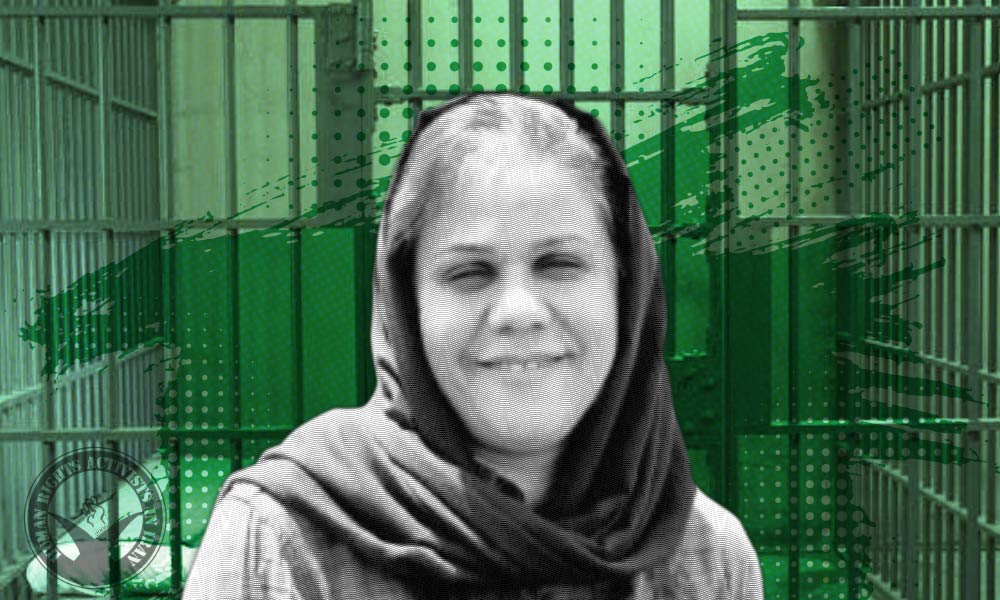
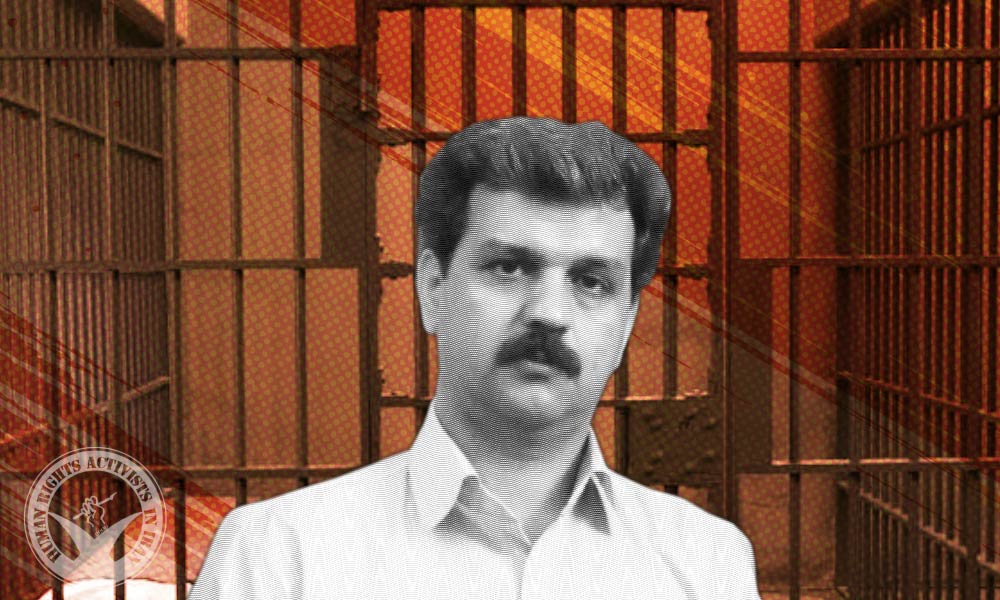
On Tuesday, November 16, prisoner of conscience Soheil Arabi was released from Rajai Shahr Prison after completing his sentence and sent to Borazjan to await the court decision about his two-year exile sentence.
According to HRANA, the news agency of Human Rights Activists, Soheil Arabi was sent to Borazjan City accompanied by a police guard. It is yet to be decided whether he should stay in exile in Borazjan, and if so, how long. Because Arabi’s prison term was longer than the sentence required, either the difference will be subtracted from the current exile period, or the charge will be dropped altogether.
Arabi has been imprisoned since November 7, 2013, and never been granted leave. On January 21, 2020, he was relocated from Evin Prison to the Greater Tehran Prison.
While serving out the seven and a half year sentence, Soheil Arabi was convicted on charges from two new cases. In the first case, the Revolutionary Court of Tehran sentenced him to five years imprisonment on the charge of “blasphemy, propaganda against the regime and an offensive statement against the Supreme Leader”. For the second case, he was sentenced to two years imprisonment, two years of exile in Borazjan City, and paying a fine of 4 million tomans on a charge of “spreading lies in the purpose to disturb public opinion and propaganda against the regime”, and one year and eight months on the charge of “the destruction of public property”.
On September 18, 2020, Arabi was punitively relocated from the Greater Tehran Prison to Rajai Shahr Prison in Karaj. On October 20, 2020, after being held for 33 days in a solitary confinement cell, in a phone call to his family, he informed them about his relocation to the detention center at the disposal of IRGC, known as Ward 2 A of Evin Prison. On November 8, 2020, he was sent back to a solitary confinement cell in Rajai Shahr Prison. After 9 days, he was sent to the public ward of this prison.
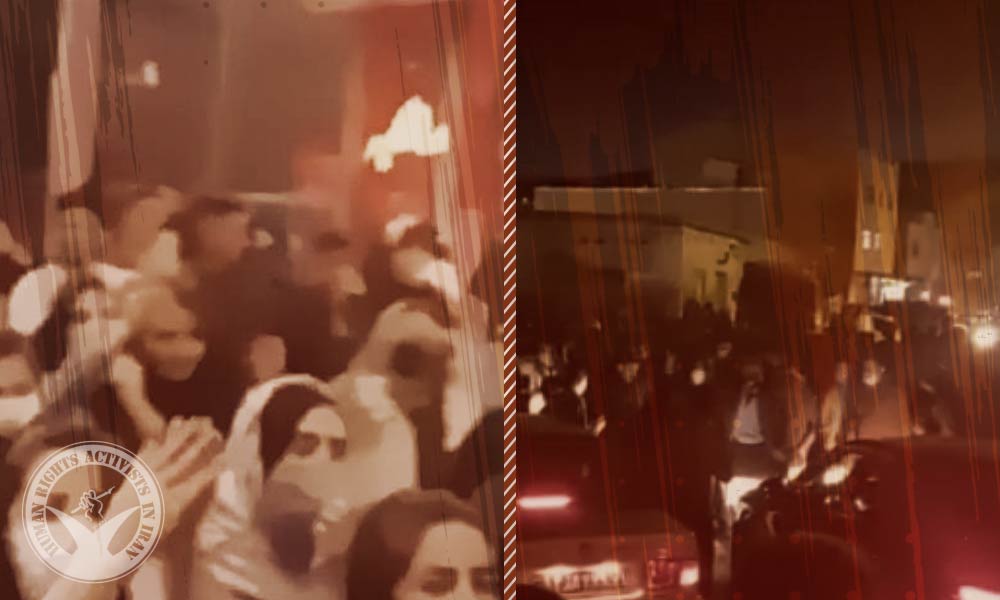
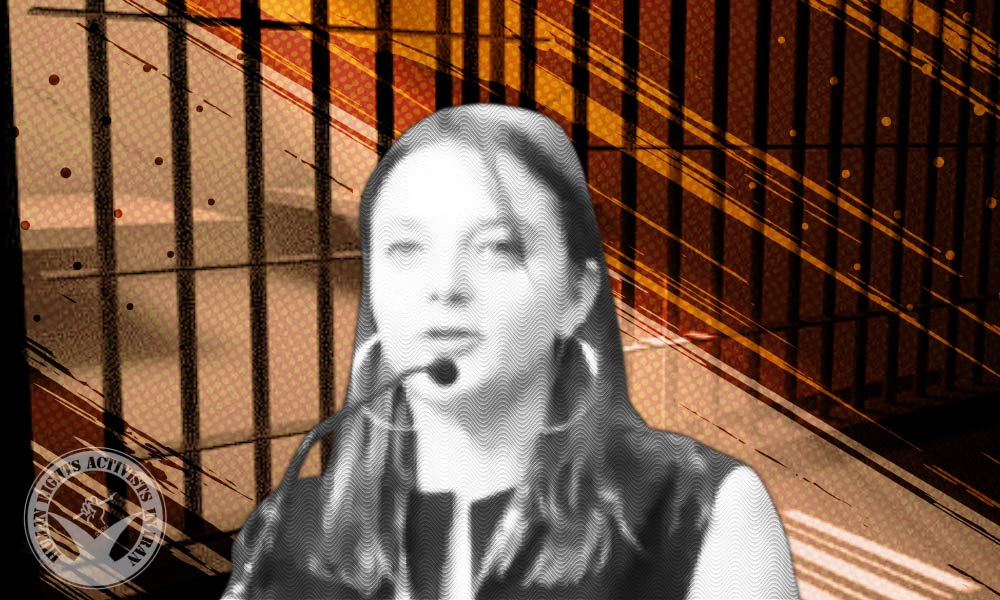
Prominent civil activist and spokesperson of the Defenders of Human Rights Center Narges Mohammadi was arrested earlier this Tuesday during a ceremony honoring Ebrahim Ketabdar, who was killed by security forces in Karaj during the November 2019 protests.
According to HRANA, the news agency of Human Rights Activists, a gathering of the victim’s family and some civil activists at Ebrahim Ketabdar’s burial place in Karaj city turned violent after the interference of security agents, and Mohammadi was subsequently arrested.
This year, Branch 1177 of the Criminal Court in the Ghods Judicial Complex in Tehran sentenced Narges Mohammadi to 30 months in prison and 80 lashes, as well as fines. She had been charged with “propaganda against the regime through the issuance of a statement against the death penalty”, “sit-down strike at prison office”, “property destruction by breaking glass” and “libel and assault”.
According to a report published by HRANA, in an open statement, Narges Mohammadi stated of these charges that she will not, “under any circumstances”, attend any court hearing, and will refuse to accept any verdict from the judiciary courts.
From May 5, 2015, until October of last year, Narges Mohammadi was imprisoned.
In December 2019, Mohammadi and seven other political prisoners in the women’s ward of Evin Prison announced in a letter that they would go on a sit-down strike in support of bereaved families who lost loved ones in November 2019 national protests. Evin Prison officials threatened to deport her and others who participated in the strike to prisons known for their harsher conditions. Subsequently, she was punitively transferred from Evin Prison to Zanjan Prison in December 2019.
Based on Article 134 of the Islamic Penal Code and the charges against her, a severest punishment of 10 years was enforceable, but after five years and six months in prison, Narges Mohammadi was finally released from Zanjan Prison. Mohammadi has since been denied a passport and barred from leaving the country to visit her husband and children even though her previous conviction did not mention a supplementary ban on international travel.
As the anniversary of the nationwide November 2019 protests approaches, security forces have begun to put pressure on victims’ families to deter them from holding ceremonies in remembrance of their killed loved ones.
According to HRANA, the news agency of Human Rights Activists, Farzaneh Ansarifar, the sister of one of the victims, was arrested for a short time to force her to cancel one such ceremony. According to an informed source, she was told that the authorities from Ahvaz had asked for her imprisonment due to inviting people for gathering via Instagram Stories.
In another attempt to deter gathering at the cemetery, the public relations of the Municipality of Behbahan city and the Islamic Council of this city announced that the roads led to the cemetery have been blocked due to the construction. In Behbahan city, the internet connection was intentionally disrupted, and Behbahan citizens Mohsen Ghanavati, Amin Moradi, and Payam Jeyhooni were reportedly arrested by security forces.
During the protests of November 2019 in Behbahan City, security forces used live ammunition against protestors which led to the death of several protestors including Mehrdad Dashinia, Mahmood Dashtinia, Farzad Ansarifar, Mohammad-Hossein Ghanavati and Mohammad Hashamdar.
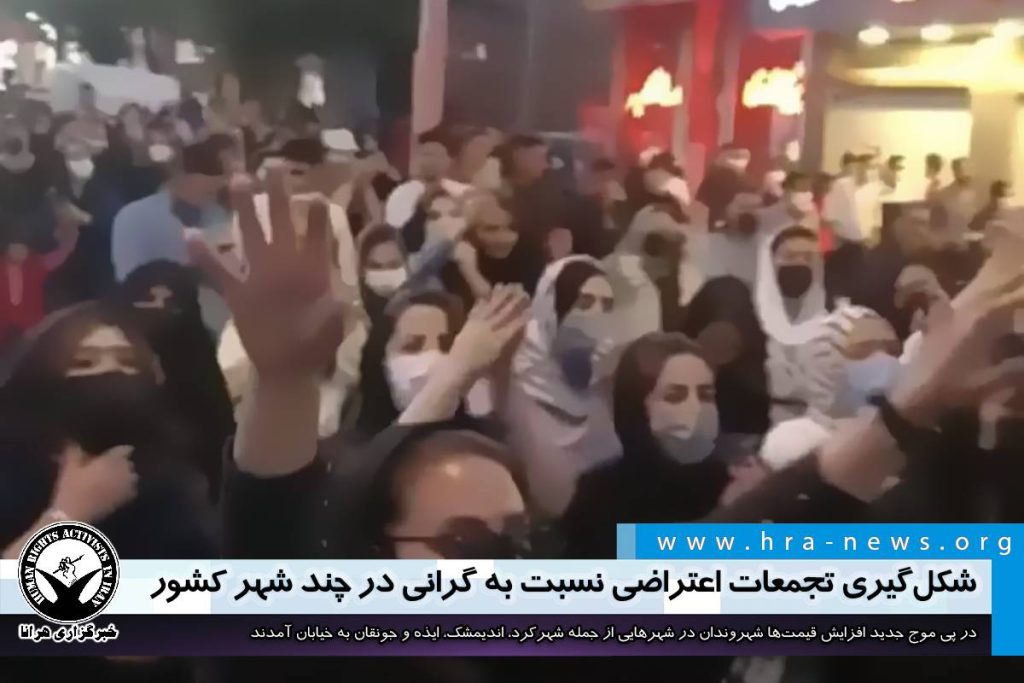
In November of 2019, an unprecedented increase in fuel prices sparked a wave of protests in dozens of cities across the country. The spokesperson of the Parliamentary National Security and Foreign Policy Commission Seyed Hossein Taghavi announced that 7000 people were arrested during these protests. According to reports of human rights organizations, hundreds were killed by the regime forces.
Recently, Branch 111 of Tabriz Criminal Court confirmed sentences of prison time, fines, and flogging for Azerbaijani Turk activists Amir Sattari and Yousef Salahshouri.
According to HRANA, the news agency of Human Rights Activists, Amir Sattari was sentenced to 91 days in prison, of which the detention period will be subtracted, and a fine of 40 million rials after being charged of “inciting violence via cyberspace”. 50 days of this prison term have been suspended for two years.
Salahshouri received a fine of 51 million rials on a charge of “inciting violence”, and sentenced to 37 lashes on a charge of “disturbing public order”.
On July 25, Yousef Salahshouri was arrested by intelligence agents and transferred to the detention center of the Ministry of Intelligence in Tabriz. On August 11, in a phone call, Salahshouri informed his family that he had been transferred to Tabriz Prison. He was released on bail on August 14. Then on October 3, the Revolutionary Court of Tabriz held the first court session.
Sattari was arrested on July 22 by security forces and transferred to Tabriz Prison. He was released from Tabriz prison on August 15.
On July 24, a number of citizens in Tabriz marched and protested in support of the protest of Khuzestan against water shortages and mismanagement of the government. During the protests, a number of these citizens were arrested.
Recently, journalist Gholam-Hossein (Sina) Ghalandari was sentenced to 27 months in prison and a two year ban from journalistic work after publicizing the “honor killing” of 14-year-old Mobina Souri.
Grounded on Article 134 of the Islamic Penal Code, from this sentence, a severest punishment of 13 months and 16 days is enforceable.
According to HRANA, the news agency of Human Rights Activists, Branch 102 of the Criminal Court of Kuhdasht City sentenced Sina Ghalandari, in absentia, to 13 months and 16 days on a charge of “spreading lies”. Moreover, he was sentenced to 13 months and 16 days and a two year ban from working as a journalist on a charge of “invasion of privacy by publishing private images”.
Sina Ghalandari reported on the murder of Mobina Souri, a 14-year-old girl who was murdered by her husband after being suspected of having an affair. Mobina was a victim of a child marriage and was married to the young cleric in her village who ultimately killed her. The other suspects were released after the husband confessed.
In September, Ghalandari was arrested by the order of the District Prosecutor following complaints from Mobina’s family. He was released on September 18, 2021, after spending 11 days in detention.
“I published the news and three hours later, Rokna published incorrect news about that,” commented Ghalandari about his arrest. “Thereafter, FATA Police raided my relatives’ house while I was staying there as a guest. They treated me and my relatives badly. The prosecutor rebuked me and told me that I should not have published the news. He asked his assistant to punish me severely so that I never publish such news anymore.”
Sina Ghalandar is a resident of Kuhdasht and runs a Telegram channel named “Lorestan Telegram Radio”.
Behbahan citizens Mohsen Ghanavati, Amin Moradi, and Payam Jeyhooni were arrested by security forces.
According to HRANA, the news agency of Human Rights Activists, the first arrestee was transferred to Behbahan Prison and two others to a detention center at the disposal of the Intelligence Ministry in Ahvaz. During the arrest, security forces confiscated Mohsen Ghanavati’s cell phone, as well as his wife’s.
Mohsen Ghanavati is the brother of Mohammad-Hossein Ghanavati, who was killed in Behbahan City by regime forces during the nationwide protests of November 2019. On November 10, 2021, he was summoned to Branch 3 of the Public and Revolutionary Court in Behbahan to be indicted for charges of “offensive statements against the supreme leader of Iran and revolutionary institutions like IRGC”, “news coverage of the protests and unrest in July 2020” via his Instagram page, and “advocating anti-regime groups and calling people to assembly and protest”.
Regarding these arrests, an informed source told HRANA, “To honor the second anniversary of the victims of the 2019 protests, some citizens decided to gather at victims’ burial place. To deter this gathering, security forces either called or summoned several people and warned them about attending the gathering and threatened them not to reveal it to media.”
In August 2020, Payam Jeyhooni, 33 years old, was arrested during the protest in Behbahan City against “the poor economic conditions” and “death sentences against those who were arrested during the protest of November 2019”. After spending a while in detention, he was released on a bail of 200 million tomans.
During the protest of November 2019 in Behbahan city, security forces used live ammunition against protestors which led to the death of several protestors including Mehrdad Dashinia, Mahmood Dashtinia, Farzad Ansarifar, Mohammad-Hossein Ghanavati and Mohammad Hashamdar.
Civil activist and retired educator Nosrat Beheshti, a resident of Mashhad, was sentenced to 5 years imprisonment by the Mashhad Revolutionary Court.
According to HRANA, the news agency of Human Rights Activists, she has been in detention since August 4 of this year.
Branch 4 of the Mashhad Revolutionary Court, headed by Judge Mansouri, sentenced Nosrat Beheshti to five years in prison on charges such as “propaganda against the regime” and “acting against national security.”
On October 24, Ms. Beheshti who suffers from kidney pain, went on hunger strike in protest against prison officials’ refusal to dispatch her to a hospital outside the prison. Four days later, after being dispatched to a hospital, she ended her hunger strike.
Beheshti was arrested once previously, on December 24, 2019, by intelligence agents at her house in Mashhad.
On Saturday, November 13, three inmates previously sentenced to death on drug-related crimes were executed in Zahedan Central Prison.
According to HRANA, the news agency of Human Rights Activists, quoting The Baloch Activists Campaign, last Saturday morning, Mahboob Rakhshani and two brothers, Saadallah Kharkuhi and Obeidallah Kharkuhi were executed in Zahedan Central Prison.
The most recent report of the Statistics and Publication Center of the Human Rights Activists in Iran (HRA) states that between October 8 of 2020 and October 9 of 2021, at least 266 citizens, three of whom were juvenile offenders, were executed and 90 citizens were sentenced to death.
As the report points out, Iran’s judicial authorities do not publicly announce over 82% of executions. These unreported executions are known as “secret executions” by human rights organizations.
Official sources and news outlets inside Iran have not reported on these executions as of this writing.
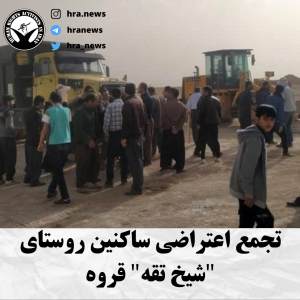
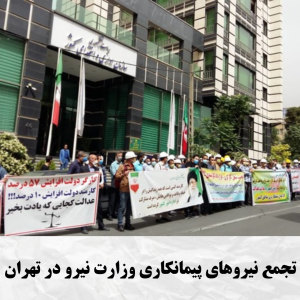
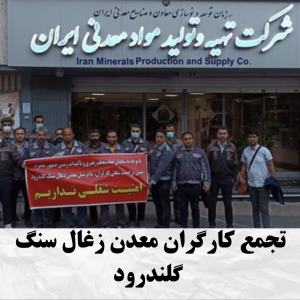
According to HRANA, the news agency of Human Rights Activists, a number of protests took place this week in Iran, many of which were continuations of ongoing movements. Read our recap below for details, photos, and videos from the demonstrations.
Saturday, November 6
Several workers working on the Shafa Rud dam assembled at their workplace to protest against job uncertainty and a months-long delay in payment. As one of these workers stated, they have not received wages in six months. About 900 workers who are working on this dam have been suspended from work due to the company’s financial problems.
A group of personnel of the Islamic Azad University in Mahshahr City protested their wages by spreading empty tablecloths as a sign of their hard livelihood conditions. One stated that they have long been denied payment under the pretext of a funding shortage.
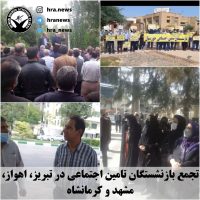
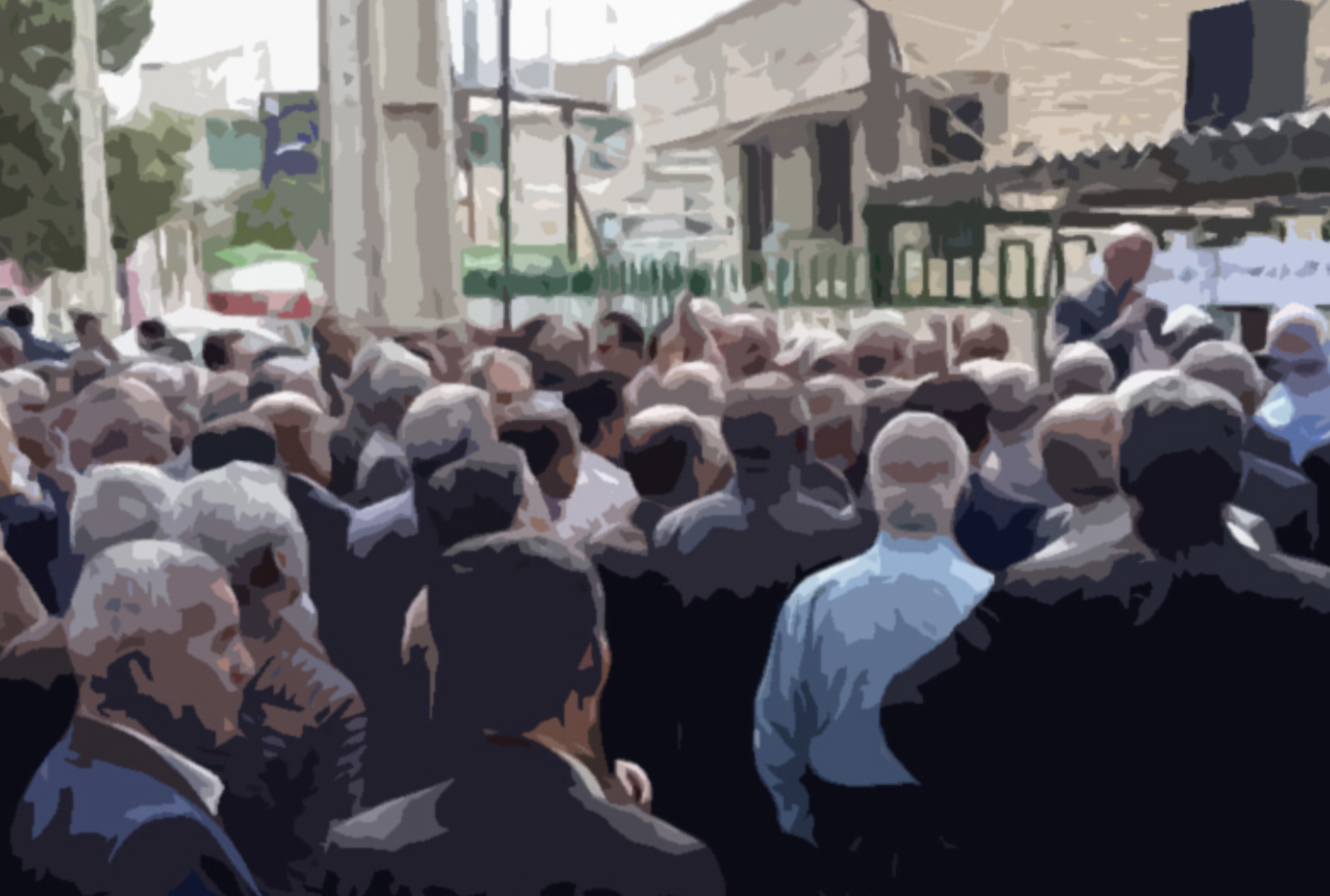
A group of retirees of Haft-Tappeh Complex protested in front of the Ministry of Cooperatives, Labor and Social Welfare Office in Shush city. They stated that their pension income has not been fully paid in accordance with Social Security Act.
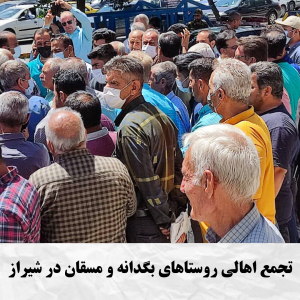
A number of farmers in Bavi County assembled in front of the building of the company Karun-e-Bozorg, an operation and maintenance of Irrigation and Drainage Networks, to ask for their water portion for wheat cultivation. They also protested against the cut in the water supply for their gardens.
A group of workers of Kerman Coal Mining Company went on strike and assembled at their workplace to protest against assigning the stock management to the company Dalahu Tejarat. They will oppose any changes in stock management until they have taken formal employment with the company.
The workers of Iran-Khodro in Tabriz went on strike at work to demand delayed payments and benefits.
Sunday, November 7
A number of retirees and pensioners of the Khuzestan Social Security Organization protested in front of the building of the organization in Ahvaz city. They asked for levelling up pensions to stand above the poverty line, closing the disparity in pension incomes, enforcing article 96 of the Social Security Act, solving issues regarding supplementary insurance, paying end-of-year bonuses and factoring in employment history in hazardous jobs for calculating pension income.
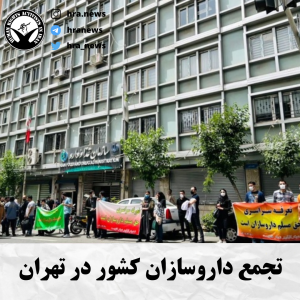
A group of designers and supervising engineers assembled in front of the Iran Ministry of Roads & Urban Development to protest the enactment of new regulations and procedures which, as the protestors claim, would be devastating for companies in this sector.
Retirees and pensioners of Fulad Steel Company assembled in front of the company’s pension fund departments in Isfahan and Ahvaz. They asked that their pensions be raised above the poverty line, closing the disparity in pension incomes and addressing supplementary insurance issues.
A group of personnel of the Social Security Organization assembled in front of the parliament in Tehran. They demanded implementation of the Hard and Hazardous Jobs Act, which requires that military service periods and job hardship records be taken into account when raising wages.
A number of victims of the financial fraud of the cryptocurrency exchange “Cryptoland” assembled in front of the Judiciary Building and demanded their lost money.
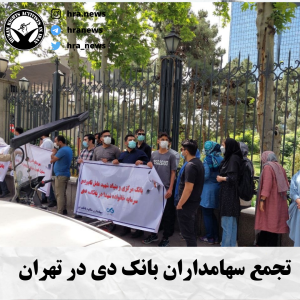
A number of depositors who has lost their investment through Caspian institution assembled and protested in front of the building of the Central Bank in Tehran.
Monday, November 8
A number of retirees of Haft-Tappeh Company who went into a pension in 2020 assembled in front of the Ministry of Cooperatives, Labor and Social welfare office in Shush city. They claimed that their pension income has been accounted for less than what the social security act requires.
In Tehran, a group of citizens who had pre-ordered cars from Ramak Khodro Company assembled in front of the Tehran Courthouse to ask for a demand accountability from the company, which has failed to deliver their cars after four years.
Dozens of citizens from Lorestan County in Fars province traveled to Tehran and assembled in front of the building of the Iran Ministry of Roads & Urban Development. They asked for maintenance of the unsafe and poor conditions of the road connecting Jahrom to Bandar-e Abbas. This road is still not two-lane, which has caused many fatal car accidents in recent weeks.
In Isfahan, a group of farmers assembled in front of the headquarter of the Islamic Republic of Iran Broadcasting. Moreover, several other farmers marched in the streets of this city. They protested against not receiving their water portion for the fall wheat crop planting.
In Tabriz, the workers of SEMET Company assembled in protest in front of the company manager’s office.
In Kerman, a number of workers of Kerman coal company assembled in front of the office of the Ministry of Cooperatives, Labour, and Social Welfare to protest against the privatization of the company.
Tuesday, November 9
Dozens of retired teachers and educators who have been on pension since 2020 assembled in front of the building of the Planning and Budget Organization in Tehran. They demanded payment of their pension bonuses. The protest turned violent by police interference.
A group of livestock farmers in the Toroq area in Mashhad assembled to protest against the demolition of several animal farms.
For the second consecutive day, in Isfahan, farmers assembled in front of the building of the Regional Water Company and marched in the streets.
Wednesday, November 10
For the third consecutive day, in Isfahan, a number of farmers assembled in the dried up stretches of the river Zayandeh-rud to ask for their water portion. In response, the member parliament Abas Moghtadai promised that to address their issue, along with other Isfahan members of parliament, he would have a meeting with the president.
A number of landowners in Astalak Pardis protested in front of the building of the Tehran Ministry of Roads & Urban Development. They claimed that their lands have been confiscated by the company Omran-Pardis.
In Khorasan province, a group of Iran-Khodro workers went on a strike to protest against forced overwork and ask for raising wages.
For the second consecutive day, to ask for addressing their work issues, a group of preschool educators assembled and spent the night in front of the building governorate building.
Thursday, November 11
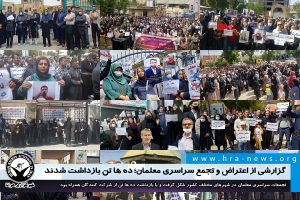
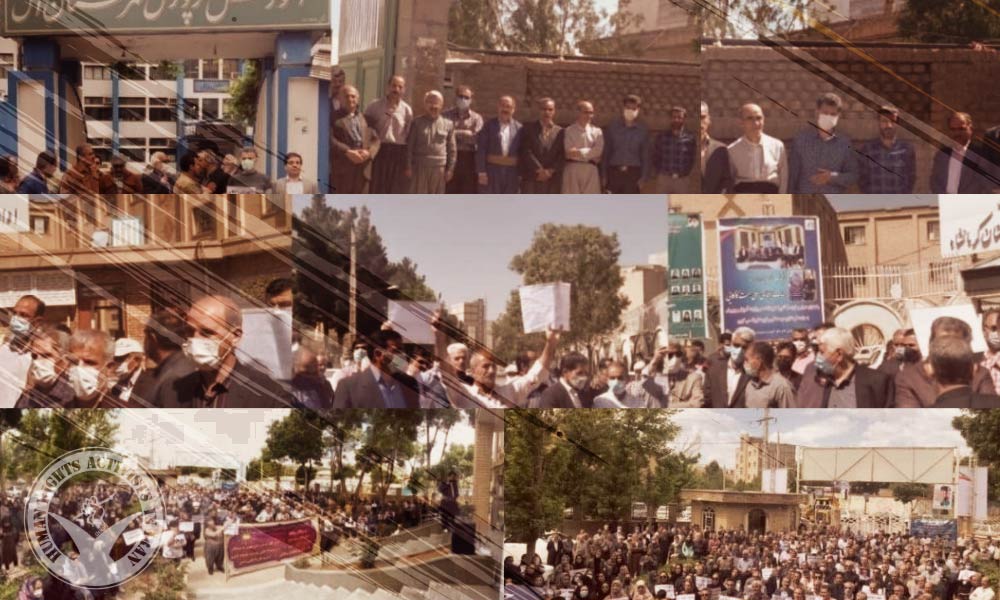
In response to the call of the Coordinating Council of Iranian teacher Unions, both retired and working teachers in 67 cities across the country assembled and protested. As their most important demand, they asked for the implementation of the Ranking Income Bill, whereby the salaries of teachers should be raised to at least 80% of university board members’ salaries.
On the same day of nationwide teachers’ protest, in Isfahan, the school concierges and service workers assembled in the front of the building of the Department of Education to ask for their demands.
For the third consecutive day, in Isfahan, the farmers assembled in the dried up stretches of the river Zayandeh-rud.
NOVEMBER 15, 2019: A sudden and substantial hike in the cost of fuel sparks unrest across Iran. Individuals across the country pour into the streets in what soon becomes mass protests covering a reported 104 cities across Iran.
As the anniversary of the November protests approaches, HRA has spoken with Iranians calling for concrete action against those responsible for violent crackdowns against protesters including arbitrary and incommunicado detention, illegal use of force, and torture among other serious violations. For nearly two years, perpetrators have, for the most part, enjoyed widespread impunity. Domestically, some have even seemingly been rewarded. Indeed, individuals such as now-President Ebrahim Raisi, a known and serious violator, have risen to top positions of power.
Soheila, a 45-year-old mother whose son was shot in the November 2019 protests, highlights the shortcomings of the judiciary in Iran, telling HRA, “I hope that accountability will mean that next time, my child, instead of taking to the streets, can work through established pathways to hold corrupt people accountable for their actions.”
November 2019 saw the deaths of several hundred Iranians (227 were verified by HRA) in what is arguably a state-sanctioned arbitrary deprivation of life. In addition over 7,100 were arbitrarily detained, some remain detained today. Although the violations noted above have been extensively documented, little has been done to hold perpetrators accountable.
Figure 1: reported November 2019 protest points -black denotes locations where the killing of protester(s) were reported (Human Rights Activists in Iran)
Elika, 25, told HRA, “Without accountability for violations that occurred in November 2019, the cycle of repression and violence will not end. Those that intend to perpetrate future abuse [on us] need to see accountability. Maybe then they will take a moment to think before pulling the trigger.” In a recent post in the Atlantic Council IranSource blog, Skylar Thompson, HRA Senior Advocacy Coordinator, stated similarly, “Without concrete action to fight the plague of impunity that covers Iran, these violent events will only continue to occur and the Iranian people will continue to suffer.”
Iran has proven unwilling to investigate and prosecute those responsible through domestic judicial frameworks. This unwillingness is paired with the fact that Iran’s judiciary is in no way impartial and is in fact led by the very perpetrators responsible for the noted violations. Unfortunately, violations of fair trial standards have become status quo.
When asked what accountability looks like to him, Hafez, 22, told HRA, “They should handcuff the perpetrators. […]. They should be prosecuted in a public court and imprisoned.” He continued, “Once handcuffed, perpetrators should have to look the victim’s mother in the face to calm her heart.” Nazanin, 32, told HRA that accountability, in her view “is [the Islamic Republic] honestly and openly admitting wrongdoing.”
HRA has identified 54 individual and seven institutional violators connected to the November 2019 protests. It Is noteworthy that a number of those violators have also been complicit in numerous additional acts of repression against protesters including in 1988, 2020 (protests over the shooting down of Ukrainian airliner), 2021 (protests over resource mis-management in Khuzestan), and many instances in between. This repeated action is a direct consequence of the lack of accountability.
The following section lists notable individuals responsible for repeated serious and widespread rights violations. Extensive and credible documentation is readily available. HRA calls on the international community to hear the pleas of Iranians like Hafez, Nazanin, and Elika and utilize available documentation to take concrete action against those responsible.
*For a more in-depth look at the listed violators visit www.spreadingjustice.org or select a name and be directed to a violator profile that includes several data points including an overview of violations, employment history, as well as additional evidentiary documentation.
Government
Mojtaba Raei Special Governor, Najafabad City of Isfahan Province Deputy Governor of Isfahan
Seyed-Ahmad Zargar Judge of the Islamic Revolutionary Tribunal of Tehran
Iman Afshari Judge, Head of Branch 26 of the Revolutionary Court of Tehran
Mohammad Mahdi Mahmoodi Deputy Chief Justice of the General and Revolutionary Courts of Shiraz Head of the 2nd Criminal Court Judge of Branch 101 of the 2nd Criminal Court of Shiraz