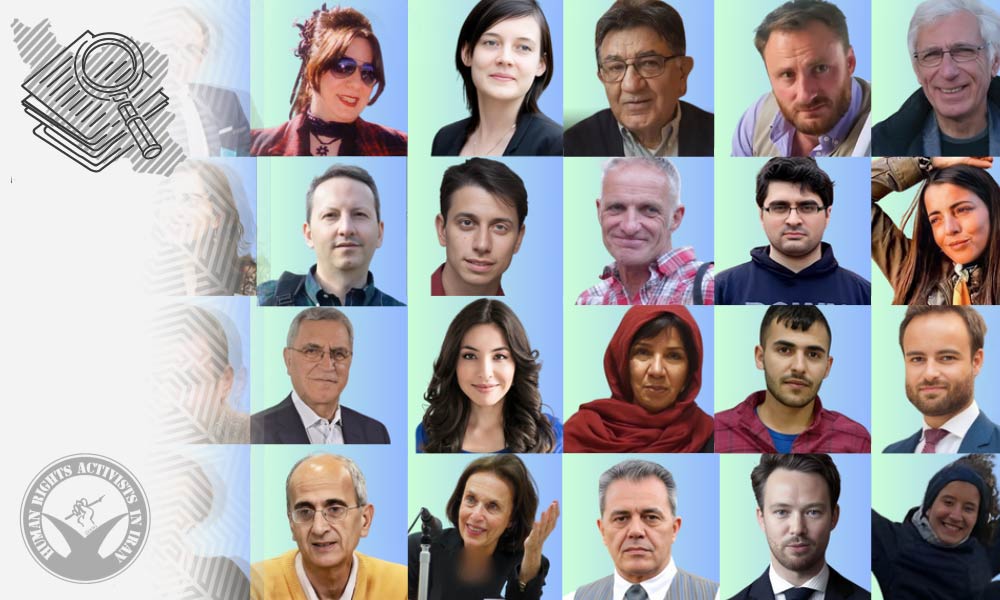
Human Rights Activists in Iran have documented the arrest of 101 individuals with foreign or dual citizenship by Iranian security agencies since 2003. This analysis reveals significant flaws in the judicial system, highlighted by routine arbitrary detentions and the absence of fair legal processes.
Iran’s regime has consistently targeted dual and foreign nationals for political leverage, often accusing them of espionage or threatening national security, typically without credible evidence. HRANA has noted numerous instances of unfair trials, where proceedings occur in languages the accused do not understand, the denial of private legal representation, disproportionate sentencing, prolonged solitary confinement, and coercive interrogations leading to forced and sometimes televised confessions.
The UN Working Group on Arbitrary Detention has recognized that some detainees are specifically targeted due to their nationality or social status. Despite statements from the Ministry of Foreign Affairs in November 2021 promising safety for dual nationals visiting Iran, the continued detentions and the regime’s refusal to release current detainees convey a starkly opposite and discouraging reality. This inconsistency perpetuates fear and insecurity among Iranians holding dual citizenship.
There is a pressing need for sustained international pressure to secure the release of all detained dual and foreign nationals. The listed individuals, predominantly detained by the IRGC intelligence since 2003, include Americans, British, and Canadians, with some unfortunately never returning home, facing execution or death in custody. Meanwhile, others still await critical interventions.
Noteworthy Points:
The actual number of detentions may exceed what has been reported.
The number of detained dual citizens significantly surpasses that of foreign nationals, indicating a profound mistrust in Iran’s assurances to dual citizens contemplating a return to their homeland.
1. Saeed Abedini
Date of Arrest: October 2012 (Mehr 1391)
Date of Release: Late January 2016 (Dey 1394)
Citizenship: Iranian – American
Charges: Forming house churches to disrupt national security and colluding to commit a crime
Sentence: 8 years in prison
2. Vahik Abrahamian
Date of Arrest: February 20, 2010 (Esfand 1388)
Date of Release: February 2011 (Esfand 1389)
Citizenship: Iranian – Dutch
Charges: Promoting Christianity
Sentence: Imprisoned for one year in Evin Prison and eventually released and returned to the Netherlands.
3. Afarin Neysari
Date of Arrest: July 20, 2016 (Tir 1395)
Date of Release: Late July 2018 (Tir 1397)
Citizenship: Iranian – American
Charges: Espionage
Sentence: 16 years in prison / Released on bail of 40 billion tomans
4. Karan Vafadari
Date of Arrest: July 20, 2016 (Tir 1395)
Date of Release: Late July 2018 (Tir 1397)
Citizenship: Iranian – American
Charges: Espionage
Sentence: 27 years in prison / Released on bail of 40 billion tomans
5. Nazanin Zaghari-Ratcliffe
Date of Arrest: March 2016 (Farvardin 1395)
Date of Release: Mid-March 2021 (Esfand 1399) for the first case, March 25, 2022 (Esfand 25, 1400) for the second case
Citizenship: Iranian – British
Charges: First case: Assembly and collusion against national security / Second case: Propaganda activities against the regime
Sentence: First case: 5 years in prison, Second case: 1 year in prison and 1-year travel ban
6. Afshin Shafiee
Date of Arrest: December 17, 2012 (Azar 26, 1391)
Date of Release: January 2013 (Dey 1391)
Citizenship: Iranian – Norwegian
Charges: –
Sentence: Released on bail and left Iran.
7. Jason Rezaian
Date of Arrest: July 22, 2014 (Tir 31, 1393)
Date of Release: January 2016 (Dey 1394)
Citizenship: Iranian – American
Charges: Espionage and actions against national security
Sentence: Exchanged with several Iranian-American prisoners in the US.
8. Amir Mirza Hekmati
Date of Arrest: December 7, 2011 (Azar 16, 1390)
Date of Release: January 2016 (Dey 1394)
Citizenship: Iranian – American
Charges: Espionage
Sentence: Initially sentenced to death, later commuted to ten years in prison / Exchanged with several Iranian-American prisoners in the US.
9. Nossratollah (Farzad) Khosravi-Roodsari
Date of Arrest: 2014 (1393)
Date of Release: January 2016 (Dey 1394)
Citizenship: Iranian – American
Charges: –
Sentence: Exchanged with several Iranian-American prisoners in the US.
10. Sonia Boubnovaich
Date of Arrest: December 13, 2015 (Azar 22, 1394)
Date of Release: January 2016 (Dey 1394)
Citizenship: Croatian – Swedish resident of Iran
Charges: –
Sentence: Released on bail.
11. Reza Islami
Date of Arrest: May 10, 2020 (Ordibehesht 21, 1399)
Date of Release: Temporarily released on March 20, 2022 (Esfand 29, 1400) and later conditionally freed after serving one-third of his sentence, confirmed by the Tehran Appeals Court.
Citizenship: Iranian – Canadian
Charges: Collaboration with hostile foreign governments (USA) against the Islamic Republic through participation in rule of law training courses in the Czech Republic
Sentence: Seven years in prison, barred from teaching, and a travel ban
12. Homa Hoodfar
Date of Arrest: June 6, 2016 (Khordad 17, 1395)
Date of Release: October 2016 (Mehr 1395)
Citizenship: Iranian – Canadian
Charges: –
Sentence: –
13. Xiyue Wang
Date of Arrest: Summer 2016 (1395)
Date of Release: November 2019 (Aban 1398)
Citizenship: Chinese – American
Charges: Espionage
Sentence: 10 years in prison / Exchanged with an Iranian-American prisoner in the US.
14. (First Name Unknown) Tavakoli
Date of Arrest: –
Date of Release: –
Citizenship: Dual nationality but details unknown
Charges: Espionage
Sentence: 8 years and 6 months in prison
15. Hassan Rostamgari Majd*
Date of Arrest: October 27, 2014 (Aban 5, 1393)
Date of Release: Still imprisoned in Urmia Prison
Citizenship: Turkish
Charges: First case: Actions against national security through collaboration with opposition groups / Second case: Insulting religious sanctities and propaganda against the regime / Third case: Rioting in prison and fighting with officers / Fourth case: Escape during prison leave from his 2010 conviction
Sentence: First case: 15 years in prison and revocation of Iranian citizenship / Second case: 2 years in prison / Third case: 1 year in prison / Fourth case: 4 months in prison
16. Reza (Robin) Shahini
Date of Arrest: July 15, 2016 (Tir 25, 1395)
Date of Release: March 2017 (Farvardin 1396)
Citizenship: Iranian – American
Charges: “Collaboration with Voice of America as part of the hostile US government and participation in related programs, propaganda against the Islamic Republic of Iran, and in favor of opposition groups and organizations, membership in opposition groups including monarchists, inciting and provoking people to disrupt national security, and insulting Imam Khomeini and Ayatollah Khamenei
Sentence: 18 years in prison, with only the “most severe punishment” of 9 years enforceable under Article 134 / Released on bail of 200 million tomans
17. Nahid Taghavi*
Date of Arrest: October 16, 2020 (Mehr 25, 1399)
Date of Release: Still imprisoned in Evin Prison
Citizenship: Iranian – German
Charges: Participation in managing an illegal group and propaganda against the regime
Sentence: 10 years and 8 months in prison
18. Benjamin Brière
Date of Arrest: June 2020 (Khordad 1399)
Date of Release: May 2023 (Ordibehesht 1402)
Citizenship: French
Charges: Propaganda against the regime and espionage
Sentence: 8 years and 8 months in prison / Released through “engagement between Iran and France.”
19. Jamshid Sharmahd*
Date of Arrest: August 2020 (Mordad 1399)
Date of Release: Still imprisoned in an undisclosed location
Citizenship: Iranian – German
Charges: Corruption on earth through leadership of an opposition group, planning and leading the bombing of the Hosseiniyeh in Shiraz
Sentence: Death penalty confirmed by the Supreme Court
20. Kameel Ahmadi
Date of Arrest: August 11, 2019 (Mordad 20, 1398)
Date of Release: November 18, 2019 (Aban 27, 1398)
Citizenship: Iranian – British
Charges: “Illegally acquiring property through collaboration and implementing projects for overthrowing institutions.”
Sentence: 9 years in prison and a fine of 600,000 euros
21. Emad Shargi
Date of Arrest: Autumn 2020 (1399)
Date of Release: September 2023 (Shahrivar 1402)
Citizenship: Iranian – American
Charges: Espionage and gathering military information
Sentence: 10 years in prison / Released in a prisoner exchange between Iran and the US.
22. Bahareh Amid (Emad Shargi’s wife)
Date of Arrest: March 2018 (Farvardin 1397)
Date of Release: The same year (probably short-term)
Citizenship: Iranian – American
Charges: –
Sentence: –
23. Fariba Adelkhah
Date of Arrest: June 6, 2019 (Khordad 17, 1398)
Date of Release: March 12, 2023 (Esfand 22, 1401)
Citizenship: Iranian – French
Charges: Propaganda against the regime and assembly and collusion against national security
Sentence: 6 years in prison / Released under a general amnesty directive from Evin Prison
24. Siamak Namazi
Date of Arrest: October 2015 (Mehr 1394)
Date of Release: September 2023 (Shahrivar 1402)
Citizenship: Iranian – American
Charges: Collaboration with the hostile US government
Sentence: 10 years in prison / Released in a prisoner exchange between Iran and the US.
25. Baquer Namazi
Date of Arrest: February 2016 (Esfand 1394)
Date of Release: Early 2019 (1398) due to medical treatment
Citizenship: Iranian – American
Charges: Collaboration with the hostile US government
Sentence: 10 years in prison
26. Maymand Hosseini-Chavoushi
Date of Arrest: November 2018 (Aban 1397)
Date of Release: Early February 2019 (Bahman 1397)
Citizenship: Iranian – Australian
Charges: Collaboration with foreign governments and assembly and collusion against national security through research on population control
Sentence: 5 years
27. Ahmadreza Djalali*
Date of Arrest: May 2016 (Ordibehesht 1395)
Date of Release: Still imprisoned in Evin Prison
Citizenship: Iranian – Swedish
Charges: Espionage
Sentence: Death penalty confirmed by the Supreme Court
28. Nizar Zakka
Date of Arrest: 2015 (1394)
Date of Release: June 11, 2019 (Khordad 21, 1398)
Citizenship: Lebanese – American
Charges: Espionage and collaboration with a hostile government
Sentence: 10 years in prison and a fine of $4.2 million
29. Anousheh Ashouri
Date of Arrest: 2017 (1396)
Date of Release: March 16, 2022 (Esfand 25, 1400)
Citizenship: Iranian – British
Charges: Espionage for Israel and illegal acquisition of funds
Sentence: 12 years in prison and a fine of €33,000
30. Hamid Ghassemi-Shall
Date of Arrest: 2008 (1387)
Date of Release: October 2013 (Mehr 1392)
Citizenship: Iranian – Canadian
Charges: Initially espionage, later revised to assembly and collusion against national security
Sentence: Initially sentenced to death, later reduced to 5 years in prison
31. Roya Saberi Nejad-Nobakht
Date of Arrest: September 28, 2013 (Mehr 6, 1392)
Date of Release: –
Citizenship: Iranian – British
Charges: Insulting religious sanctities and insulting the heads of the three branches of government
Sentence: 4 years in prison
32. Kylie Moore-Gilbert
Date of Arrest: Autumn 2018 (1397)
Date of Release: November 25, 2020 (Azar 5, 1399)
Citizenship: Australian
Charges: Endangering Iran’s national security
Sentence: 10 years in prison
33. Masoud Karami
Date of Arrest: February 14, 2012 (Bahman 25, 1390)
Date of Release: –
Citizenship: Iranian – Norwegian
Charges: –
Sentence: –
34. Abbas Edalat
Date of Arrest: April 14, 2018 (Farvardin 26, 1397)
Date of Release: January 2019 (Dey 1397)
Citizenship: Iranian – British
Charges: –
Sentence: –
35. Morad Tahbaz
Date of Arrest: January 24, 2018 (Bahman 4, 1396)
Date of Release: September 2023 (Shahrivar 1402)
Citizenship: Iranian – American
Charges: Espionage
Sentence: 10 years in prison / Released in a prisoner exchange between Iran and the US.
36. Kavous Seyed-Emami
Date of Arrest: February 2018 (Bahman 1396)
Date of Release: Died in prison
Citizenship: Iranian – Canadian
Charges: Espionage
Sentence: –
37. Abdolrasoul Dorri Esfahani
Date of Arrest: August 2016 (Mordad 1395)
Date of Release: –
Citizenship: Iranian – Canadian
Charges: Espionage – collaboration with British intelligence service
Sentence: 5 years in prison
38. Haleh Esfandiari
Date of Arrest: May 8, 2007 (Ordibehesht 18, 1386)
Date of Release: August 21, 2007 (Mordad 30, 1386)
Citizenship: Iranian – American
Charges: Actions against national security and soft overthrow
Sentence: Released on bail
39. Akbar Lakestani
Date of Arrest: September 28, 2019 (Mehr 6, 1398)
Date of Release: November 13, 2019 (Aban 22, 1398)
Citizenship: Iranian – American
Charges: Propaganda against the regime
Sentence: Released on bail and left the country
40. Sarah Shourd
Date of Arrest: July 30, 2009 (Mordad 8, 1388)
Date of Release: September 14, 2010 (Shahrivar 23, 1389)
Citizenship: American
Charges: Illegal entry into Iran and espionage
Sentence: Released on bail and left the country
41. Josh Fattal
Date of Arrest: September 14, 2010 (Shahrivar 23, 1389)
Date of Release: December 27, 2011 (Dey 6, 1390)
Citizenship: American
Charges: Illegal entry into Iran and espionage
Sentence: 8 years in prison
42. Shane Bauer
Date of Arrest: September 14, 2010 (Shahrivar 23, 1389)
Date of Release: December 27, 2011 (Dey 6, 1390)
Citizenship: American
Charges: Illegal entry into Iran and espionage
Sentence: 8 years in prison
43. Michael White
Date of Arrest: July 1, 2018 (Tir 10, 1397)
Date of Release: June 4, 2020 (Khordad 15, 1399)
Citizenship: American
Charges: Insulting the Supreme Leader and publishing a private photo
Sentence: 10 years in prison
44. Maziar Bahari
Date of Arrest: June 1, 2009 (Khordad 11, 1388)
Date of Release: October 13, 2009 (Mehr 21, 1388)
Citizenship: Iranian – Canadian
Charges: Assembly and collusion with the intent to commit crimes against national security, collecting and keeping confidential and classified documents, propaganda against the Islamic Republic of Iran, insulting the Supreme Leader, insulting the President, and disrupting public order
Sentence: 13 years and 6 months in prison and 74 lashes
45. Roxana Saberi
Date of Arrest: February 1, 2009 (Bahman 12, 1387)
Date of Release: May 11, 2009 (Ordibehesht 21, 1388)
Citizenship: American
Charges: Espionage and collecting documents against the Islamic Republic
Sentence: 2 years suspended prison sentence
46. Zahra Kazemi
Date of Arrest: June 24, 2003 (Tir 3, 1382)
Date of Release: Died during detention
Citizenship: Iranian – Canadian
Charges: Photographing prohibited areas
Sentence: –
47. Matthew Trevithick
Date of Arrest: December 8, 2015 (Azar 17, 1394)
Date of Release: January 2016 (Dey 1394)
Citizenship: American
Charges: Espionage
Sentence: –
48. Robert Levinson
Date of Arrest: February 2007 (Esfand 1385)
Date of Release: Disappeared
Citizenship: Iranian – American
Charges: –
Sentence: –
49. Hossein Derakhshan
Date of Arrest: November 1, 2008 (Aban 11, 1387)
Date of Release: November 19, 2013 (Aban 28, 1392)
Citizenship: Iranian – Canadian
Charges: Collaboration with hostile governments, propaganda against the Islamic regime, propaganda in favor of anti-regime groups, insulting religious sanctities, running and managing immoral and obscene websites
Sentence: 19 years and 6 months in prison and 5 years barred from membership in parties and media activities
50. Aras Amiri
Date of Arrest: March 2018 (Esfand 1396)
Date of Release: July 2021 (Tir 1400)
Citizenship: Iranian – British
Charges: Espionage
Sentence: 10 years in prison
51-58.Seven Slovakian Citizens (Identities Unknown) – Date of Arrest: July 2013 (Tir 1392) – Date of Release: September 2013 (Shahrivar 1392) – Citizenship: Slovakian – Charges: Espionage – Sentence: –
59. Clotilde Reiss
Date of Arrest: 2009 (1388)
Date of Release: August 2009 (Mordad 1388) on bail
Citizenship: French
Charges: Espionage
Sentence: 5 years in prison, reduced to a fine upon her departure from Iran on May 16, 2016 (Ordibehesht 27, 1395)
60. Stéphanie Larbieux
Date of Arrest: November 6, 2005 (Aban 15, 1384)
Date of Release: January 2007 (Dey 1385)
Citizenship: French
Charges: –
Sentence: –
61. Donald Klein
Date of Arrest: November 6, 2005 (Aban 15, 1384)
Date of Release: January 2007 (Dey 1385)
Citizenship: German
Charges: –
Sentence: –
62. Nelly Erin-Cambron
Date of Arrest: October 21, 2018 (Mehr 29, 1397)
Date of Release: February 24, 2019 (Esfand 5, 1397)
Citizenship: French
Charges: Signing an illegal mining contract
Sentence: –
63. Kian Tajbakhsh
Date of Arrest: July 2009 (Tir 1388)
Date of Release: March 12, 2010 (Esfand 22, 1388)
Citizenship: Iranian – American
Charges: –
Sentence: 5 years in prison
64. Habib Chaab (Habib Asyoud)
Date of Arrest: November 2021 (Aban 1400)
Date of Release: Executed
Citizenship: Iranian – Swedish
Charges: Corruption on earth through leading a group named Harakat al-Nidal
65. Rouhollah Zam
Date of Arrest: October 2019 (Mehr 1398)
Date of Release: Executed
Citizenship: Iranian – French
Charges: “Corruption on earth, forming and managing ‘Amadnews’ and ‘Voice of the People’ channels to disrupt national security, espionage for the Israeli intelligence service through the intelligence service of a regional country, espionage for the French intelligence service, collaboration with the hostile US government against the Islamic Republic of Iran, assembly and collusion to commit crimes against internal and external national security, engaging in propaganda activities against the regime, membership and management of the ‘Saham News’ website to disrupt national security, inciting and provoking people to war and killing to disrupt national security, collecting classified information with the intent to provide it to others to disrupt national security, spreading falsehoods, inciting military personnel and individuals serving in the armed forces to rebellion, escape, surrender or failing to carry out their military duties, insulting religious sanctities, insulting the founder of the Islamic Republic and the leadership, insulting officials and agents, illicitly obtaining property, and complaints from some legal and natural persons.”
Sentence: Death
66. Mostafa Azizi
Date of Arrest: February 1, 2015 (Bahman 12, 1393)
Date of Release: Late April 2016 (Farvardin 1395)
Citizenship: Iranian-Canadian
Charges: “Assembly and collusion against national security,” “propaganda against the regime,” and “insulting the leadership”
Sentence: 3 years in prison and a fine
67. Saeed Malekpour
Date of Arrest: October 2008 (Mehr 1387)
Date of Release: Released before completing his sentence by leaving on bail
Citizenship: Iranian-Canadian
Charges: Cybercrimes (pornography)
Sentence: Life imprisonment
68. Kamran Ghaderi
Date of Arrest: January 2016 (Dey 1394)
Date of Release: June 2023 (Khordad 1402) / Released during a prisoner exchange with Assadollah Assadi
Citizenship: Iranian-Austrian
Charges: Espionage
Sentence: 10 years in prison
69. Yulia Yuzik
Date of Arrest: October 3, 2019 (Mehr 11, 1398)
Date of Release: October 10, 2019 (Mehr 18, 1398)
Citizenship: Russian
Charges: Espionage for Israel
Sentence: Released after one week and left Iran
70. Mehran Raoof*
Date of Arrest: October 2020 (Mehr 1399)
Date of Release: Still imprisoned in Evin Prison
Citizenship: Iranian-British
Charges: Participation in managing an illegal group and propaganda against the regime
Sentence: 10 years and 8 months in prison
71. Saeed Azizi*
Date of Arrest: November 12, 2023 (Aban 21, 1402)
Date of Release: –
Citizenship: Iranian-Swedish
Charges: Assembly and collusion to commit a crime
Sentence: 5 years in prison
72. Shahram Namavar*
Date of Arrest: August 2023 (Mordad 1402)
Date of Release: Still imprisoned in Evin Prison
Citizenship: Iranian-British
Charges: –
Sentence: –
73. Identity Unknown*
Date of Arrest: September 16, 2023 (Shahrivar 25, 1402)
Date of Release: –
Citizenship: –
Charges: Attempting to organize riots and sabotage
Sentence: –
74. Monireh Terez Basir
Date of Arrest: November 2022 (Aban 1401)
Date of Release: September 18, 2023 (Shahrivar 27, 1402) / Left Iran during a prisoner exchange
Citizenship: Iranian-American
Charges: Close cooperation with a European intelligence service
Sentence: –
75. Bernard Phelan
Date of Arrest: October 3, 2023 (Mehr 11, 1402)
Date of Release: May 2021 (Ordibehesht 1401)
Citizenship: French-Irish
Charges: Providing information to another country
Sentence: 6 years and 6 months in prison
76. Massoud Mosahib
Date of Arrest: January 2019 (Dey 1397)
Date of Release: June 2023 (Khordad 1402)
Citizenship: Iranian-Austrian
Charges: Collaboration with Israel and the German intelligence service
Sentence: 10 years in prison / Released during a prisoner exchange with Assadollah Assadi
77. Identity Unknown*
Date of Arrest: Late May 2024 (Ordibehesht 1403)
Date of Release: –
Citizenship: European
Charges: Organizing Satanic rituals, drinking alcohol, wearing specific Satanic symbols on clothing, head, face, and hair
Sentence: –
78. Identity Unknown*
Date of Arrest: Late May 2024 (Ordibehesht 1403)
Date of Release: –
Citizenship: European
Charges: Organizing Satanic rituals, drinking alcohol, wearing specific Satanic symbols on clothing, head, face, and hair
Sentence: –
79. Identity Unknown*
Date of Arrest: Late May 2024 (Ordibehesht 1403)
Date of Release: –
Citizenship: European
Charges: Organizing Satanic rituals, drinking alcohol, wearing specific Satanic symbols on clothing, head, face, and hair
Sentence: –
80. Farhad Mohammad Shamami*
Date of Arrest: October 2022 (Mehr 1401)
Date of Release: Still imprisoned in Urmia Prison
Citizenship: Iraqi
Charges: Membership in one of the opposition parties
Sentence: 7 years in prison
81. Johan Flodorus*
Date of Arrest: May 6, 2022 (Ordibehesht 16, 1401)
Date of Release: –
Citizenship: Swedish
Charges: Corruption on earth through actions against national security and territorial integrity of the Islamic Republic, collaborating with the Israeli occupying regime, assembly and collusion to commit a crime against national security
Sentence: –
82. Santiago Sanchez
Date of Arrest: October 2023 (Mehr 1402)
Date of Release: December 30, 2023 (Dey 10, 1402)
Citizenship: Spanish
Charges: Arrested during nationwide protests in 2021
Sentence: –
83. Identity Unknown*
Date of Arrest: December 2023 (Azar 1402)
Date of Release: –
Citizenship: –
Charges: Espionage
Sentence: –
84. Hatem Ozdemir*
Date of Arrest: June 2019 (Khordad 1398)
Date of Release: Still imprisoned in Urmia Prison
Citizenship: Turkish
Charges: Moharebeh (waging war against God)
Sentence: Death
85. Farid Safari*
Date of Arrest: April 2023 (Farvardin 1402)
Date of Release: –
Citizenship: Azerbaijani
Charges: Espionage
Sentence: 2 years in prison
86. Valida Yusifova
Date of Arrest: December 2021 (Dey 1400)
Date of Release: August 2023 (Mordad 1402)
Citizenship: Azerbaijani
Charges: Espionage
Sentence: –
87. Olivier Vandecasteele*
Date of Arrest: July 2022 (Tir 1401)
Date of Release: –
Citizenship: Belgian
Charges: Espionage against the Islamic Republic of Iran for a foreign intelligence service, collaboration with the hostile US government, money laundering of $500,000, professional currency smuggling of $500,000, and 74 lashes
Sentence: 40 years in prison and 74 lashes
88. Identity Unknown*
Date of Arrest: March 2023 (Esfand 1401)
Date of Release: –
Citizenship: Afghan
Charges: Espionage
Sentence: –
89. Ana Baneer
Date of Arrest: November 2022 (Aban 1401)
Date of Release: February 25, 2023 (Esfand 6, 1401)
Citizenship: Spanish
Charges: –
Sentence: –
90. Identity Unknown*
Date of Arrest: October 2022 (Mehr 1401)
Date of Release: –
Citizenship: Austrian
Charges: Espionage
Sentence: 7 years and 6 months in prison
91. Louis Arnaud*
Date of Arrest: September 28, 2022 (Mehr 6, 1401)
Date of Release: Still imprisoned in Evin Prison
Citizenship: French
Charges: –
Sentence: 5 years in prison
92. Identity Unknown*
Date of Arrest: December 2022 (Dey 1401)
Date of Release: –
Citizenship: German
Charges: Photographing the Omidieh oil facilities
Sentence: –
93. Alicia Piperno
Date of Arrest: Early October 2022 (Mehr 1401)
Date of Release: November 2022 (Aban 1401)
Citizenship: German
Charges: –
Sentence: –
94. Shaker Baghi*
Date of Arrest: February 2008 (Esfand 1386)
Date of Release: Still imprisoned in Kashmar Prison
Citizenship: Turkish
Charges: Membership in one of the opposition parties
Sentence: 30 years in prison and exile to Kashmar Prison
95. Identity Unknown
Date of Arrest: –
Date of Release: June 2023 (Khordad 1402)
Citizenship: Danish
Charges: –
Sentence: –
96. Identity Unknown*
Date of Arrest: Early August 2022 (Mordad 1401)
Date of Release: –
Citizenship: Swedish
Charges: Espionage
Sentence: –
97. Senor Tamara*
Date of Arrest: Autumn 2020 (1399)
Date of Release: July 21, 2022 (Tir 30, 1401), released under a general amnesty directive
Citizenship: Turkish
Charges: Membership in one of the opposition parties
Sentence: 10 years and 1 day in prison
98. Cécile Kohler*
Date of Arrest: Spring 2022 (1401)
Date of Release: –
Citizenship: French
Charges: Organizing “riots and disorder” related to teachers’ union gatherings
Sentence: –
99. Jacques Paris*
Date of Arrest: Spring 2022 (1401)
Date of Release: –
Citizenship: French
Charges: Organizing “riots and disorder” related to teachers’ union gatherings
Sentence: –
100. Mohammad Birdal*
Date of Arrest: August 21, 2021 (Mordad 30, 1400)
Date of Release: Still imprisoned in Urmia Prison
Citizenship: Turkish
Charges: Membership in one of the opposition groups
Sentence: –
101. Shahab Dalili*
Date of Arrest: 2016 (1395)
Date of Release: Still imprisoned in Urmia Prison
Citizenship: Iranian-American
Charges: Collaboration with a hostile government
Sentence: 10 years in prison
102. Sereen Curtis (Badiei)*
Date of Arrest: March 26, 2023
Date of Release: –
Citizenship: Iranian-New Zealand with U.S. residency
Charges: Blasphemy
Sentence: –
103. Nasrin Roshan*
Date of Arrest: November 16, 2023
Date of Release: Incarcerated in Evin Prison
Citizenship: Iranian-British
Charges: Assembly and collusion against national security, propaganda against the regime
Sentence: Three years in prison
Only individuals marked with an asterisk * are still imprisoned or under restrictions in Iran.
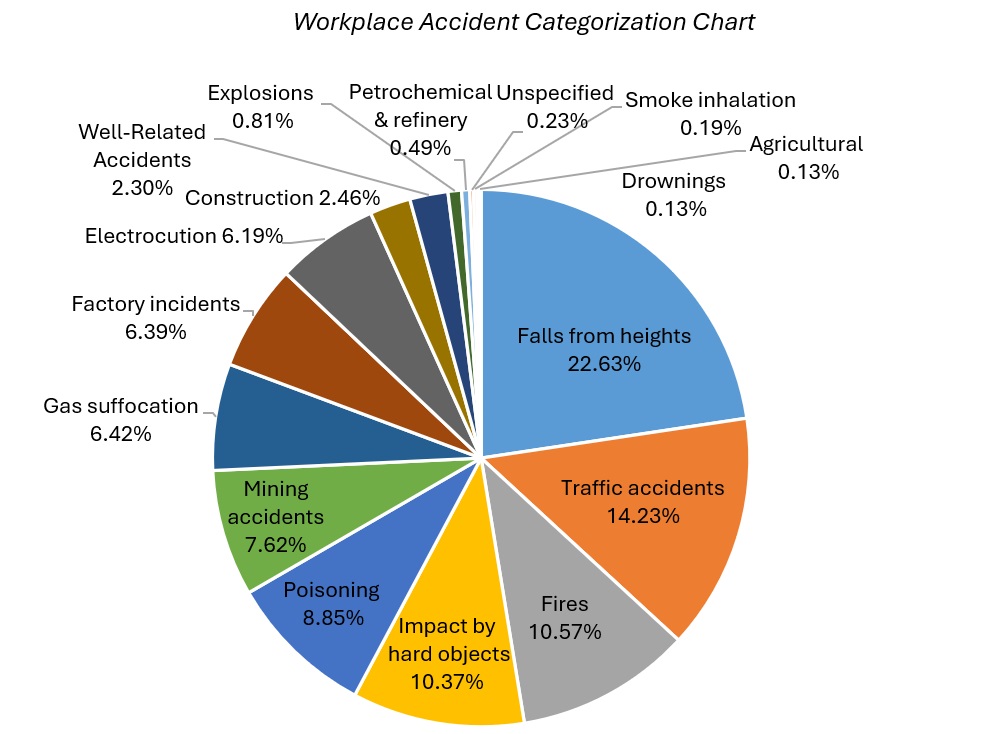
In observance of the World Day for Safety and Health at Work, Human Rights Activists in Iran have released their annual statistical report on work accidents in Iran from May 4, 2023, to April 26, 2024. The report reveals that at least 1,680 workers died and 8,199 were injured due to unsafe working environments or conditions during this period.
The International Labour Organization (ILO) established April 28 as World Day for Safety and Health at Work in 2003 to raise awareness about occupational safety and health. The day aims to emphasize the prevention of workplace accidents and diseases, promoting the importance of improving workplace safety to reduce work-related deaths. In this regard, governments are required to develop a systematic policy and program for the inspection and enforcement of safety and health laws and policies. It is also worth mentioning that since 1996, this day has been observed globally by trade unions as a day to honor workers who have been killed or injured.
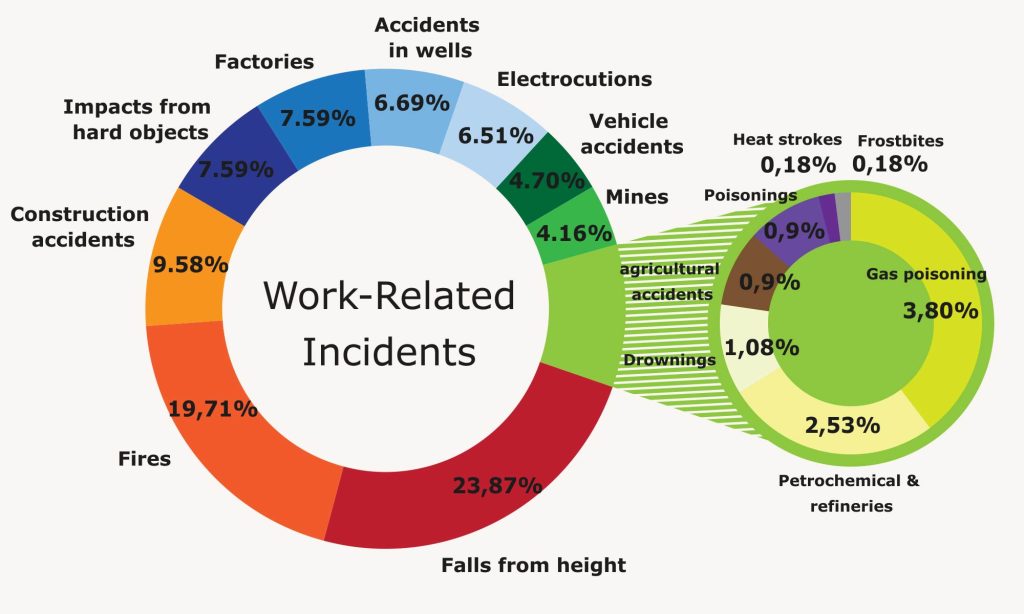
Iran ranks 102nd globally in terms of observing work safety issues, which is a significantly low ranking. According to the report, work accidents caused by a lack of safety in the workplace resulted in 1,680 deaths and 8,199 injuries over the past year. These incidents were reported by media outlets and organizations monitoring the situation.
The report provides a breakdown of the types of accidents:
. 23.87% were due to falls from height . 19.71% were caused by fires . 9.58% were related to construction accidents . 7.59% involved impacts from hard objects . 7.59% occurred in factories . 6.69% were linked to well accidents . 6.51% involved electrocutions . 4.70% were related to vehicle accidents . 4.16% occurred in mines . 3.80% were due to gas poisoning . 2.53% happened in petrochemical plants and refineries . 1.08% were due to drownings . 0.90% were related to agricultural accidents . 0.90% were caused by poisonings . 0.18% were due to heat strokes . 0.18% were caused by frostbites
The findings underscore the need for stricter safety measures and regulations to protect workers across various sectors in Iran.
HRANA News Agency – In February 1979, Ayatollah Khomeini, traveling in a blue Blazer to Behesht Zahra in Tehran, delivered his famous speech. In his speech, he made numerous promises regarding the economy, justice, and political freedoms. Forty-five years after the 1979 Revolution and that famous speech, and the promises therein, the realization of fundamental political freedoms and social justice in Iran, are still far from reality. The proof lies in the numerous death sentences and numerous international condemnations regarding the situation of human rights within the country.
This report, published on the anniversary of the 1979 Revolution, presents a comprehensive list of political and security prisoners sentenced to death, their latest status a symbol of the empty promises made that day.
The execution crisis in Iran goes far beyond the population of political prisoners. HRANA recently published a report on a decade of executions in Iran (from 2013 to 2023), presenting statistics on the execution of 4,829 citizens over a decade. However, political and security prisoners, as symbols of dissatisfaction and protest, are followed with more sensitivity by public opinion despite constituting a small percentage of this number.
HRANA, has prepared a list of political and security prisoners sentenced to death in Iran on the occasion of the anniversary of the 1979 Revolution, as a symbol of the revolution’s empty promises of establishing a justice-based system and improving human rights conditions.
According to the latest reviews by HRANA, there are currently at least 35 prisoners with political or security charges in various parts of the country sentenced to death.
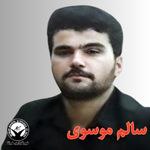
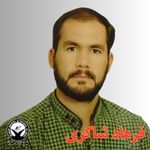
This report introduces and reviews the latest status of Abbas (Mojahed) KoorKoori, Reza Rassayi, Anvar Khezri, Kamran Sheikhe, Khosro Besharat, Farshid Hassan Zehi, Mansour Dehmardeh, Jamshid Sharmahd, Mohammad Zeynoddini, Adham Naroui, Mohammad Javad Vafaie Thani, Abbas Deris, Ahmadreza Jalali, Yousef Ahmadi, Mansour Rasouli, Naib Askari, Mehran Bahramian, Fazl Bahramian, Ali Majdam, Mohammadreza Moghadam, Moein Khanfari, Habib Deris, Adnan Ghabishawi, Salem Mousavi, Farhad Shakeri, Eisa EidMohammadi, Abdolrahman Gorgij, Abdolhakim Azim Gorgij, Taj Mohammad Khormali, Malek Ali Fadaei Nasab, Amir Rahim Pour, Malek Davarshan and Ali Obeidavi.
These death row inmates, charged with political and security offenses, are imprisoned in Shiban Ahvaz, Diesel Abad Kermanshah, Ghezel Hesar Karaj, Zahedan, Vakil Abad Mashhad, Mahshahr, Evin, Sanandaj, Urmia, and Dastgerd Isfahan prisons.
Branch 28 of the Tehran Revolutionary Court, presided over by Judge Mohammad Moghiseh, Branch 4 of the Mashhad Revolutionary Court, presided over by Judge Ahmadian Salami, and the Ahvaz Revolutionary Court, with the issuance of death sentences for a total of 16 defendants in four separate cases, have played the most significant role in issuing death sentences for political and security defendants.
Charges leading to the issuance of death sentences for these individuals include Moharebeh (waging war against God), Ifsad fil-Arz (corruption on Earth), Baghy (rebellion), and espionage.
In the following list, names and key details about the latest status of the 35 prisoners sentenced to death on political and security charges are provided:
1- Abbas (Mojahed) KoorKoori Prison Location: Shiban Prison, Ahvaz Prominent Charges: Moharebeh (waging war against God) through bearing arms, Ifsad fil-Arz (corruption on Earth) through shooting with a military weapon, causing significant bodily harm resulting in the death of seven people, and forming a rebel group Issuing Court: Branch 1 of the Revolutionary Court in Ahvaz Latest Case Status: The death sentence confirmed by the Supreme Court and the case referred to the execution branch of the court in Izeh
⬆️ The Judiciary Media Center claims that Abbas (Mojahed) KoorKoori, a prisoner incarcerated in Shiban Prison, Ahvaz, is accused of murdering Kian Pirfalak, a child who died during the nationwide protests in 2021. Despite these claims, Pirfalak’s family, including Zeynab Molaee Rad, the child’s mother, has repeatedly denied this accusation, stating that their child was killed due to gunfire by forces affiliated with the government.
2- Reza Rassayi Prison Location: Diesel Abad Prison, Kermanshah Prominent Charges: Direct involvement in the premeditated murder of Nader Birami, the head of the IRGC intelligence in Sahneh city Issuing Court: Branch 2 of the Criminal Court of Kermanshah Latest Case Status: The death sentence confirmed by the Supreme Court, the request for a retrial rejected by the Supreme Court, and the case referred to the execution branch of the criminal court in Kermanshah
⬆️ Reza Rassayi, a 35-year-old adherent of the Yarsan faith, was arrested by the intelligence officers in Shahr-e Rey, Tehran, on November 24, 2022, and then transferred to Diesel Abad Prison in Kermanshah. His arrest followed the death of Nader Birami, the head of the IRGC intelligence in Sahneh city, during a commemoration ceremony for the 21st death anniversary of Seyed Khalil Alinejad, one of the former leaders of the Yarsan community.
3- Anvar Khezri Prison Location: Ghezel Hesar Prison, Karaj Prominent Charges: Moharebeh through membership in one of the “Salafi groups” and participation in the assassination of a cleric close to the government named “Abdolrahim Tina” Issuing Court: Branch 28 of the Tehran Revolutionary Court presided over by Judge Mohammad Moghiseh Latest Case Status: The death sentence confirmed by the Supreme Court
4- Kamran Sheikhe Prison Location: Ghezel Hesar Prison, Karaj Prominent Charges: Moharebeh through membership in one of the “Salafi groups” and participation in the assassination of a cleric close to the government named “Abdolrahim Tina” Issuing Court: Branch 28 of the Tehran Revolutionary Court presided over by Judge Mohammad Moghiseh Latest Case Status: The death sentence confirmed by the Supreme Court
5- Khosro Besharat Prison Location: Ghezel Hesar Prison, Karaj Prominent Charges: Moharebeh through membership in one of the “Salafi groups” and participation in the assassination of a cleric close to the government named “Abdolrahim Tina” Issuing Court: Branch 28 of the Tehran Revolutionary Court presided over by Judge Mohammad Moghiseh Latest Case Status: The death sentence confirmed by the Supreme Court
⬆️ Anvar Khezri, Kamran Sheikhe, and Khosro Besharat, three Sunni Muslim prisoners incarcerated in Ghezel Hesar Prison, Karaj, were arrested in 2009 along with Qasem Abesteh, Ayoub Karimi, Davoud Abdollahi, and Farhad Salimi in a joint case for the suspected murder of Mamousta “Abdolrahim Tina” in October 2008, who had been killed by unidentified individuals.
Branch 28 of the Tehran Revolutionary Court, presided over by Judge Mohammad Moghiseh, sentenced these individuals to death in March 2016. After the sentence was overturned by the Supreme Court for further review, it was referred back to Branch 15 of the Tehran Revolutionary Court. Ultimately, Judge Abolqasem Salavati reissued the death sentences for these individuals.
Eventually, Branch 41 of the Supreme Court confirmed these sentences in February 2020. Among them, the execution sentences of Qasem Abesteh, Ayoub Karimi, Davoud Abdollahi, and Farhad Salimi were carried out in Ghezel Hesar Prison, Karaj, on November 5, November 29, December 3, 2022, and January 24, 2023, respectively. Now, the other three defendants in the case are on death row in Ghezel Hesar Prison, Karaj.
6- Farshid Hassan Zehi Prison Location: Ward 9, Zahedan Prison Prominent Charges: Shooting at a vehicle near the Cheshmeh Ziarat village checkpoint in Zahedan, murdering the soldier Behzad Barahoui, and injuring First Lieutenant Mehdi Hashem Zehi, a law enforcement officer Issuing Court: Branch 1 of the Criminal Court of Zahedan Latest Case Status: Issuance of the death sentence and referral of the case to Branch 32 of the Supreme Court
⬆️ Farshid Hassan Zehi, 26 years old and son of Hanif, was arrested by security forces in the village of Cheshmeh Ziarat, Zahedan, on November 24, 2022, on charges of “shooting at a vehicle near the Cheshmeh Ziarat village checkpoint.” He is currently detained in Ward 9 of Zahedan Prison. The court session that led to his death sentence was held online without the presence of his defense lawyer.
7- Mansour Dehmardeh Prison Location: Ward 9, Zahedan Prison Prominent Charges: Corruption on Earth (Ifsad fil-Arz) Issuing Court: Branch 2 of the Criminal Court of Shahid Nouri in Zahedan Latest Case Status: Issuance of the death sentence
⬆️ Mansour Dehmardeh, born in 2000, son of Amanullah, with physical disabilities and unmarried, was arrested during the nationwide protests in Zahedan on October 3, 2021, and transferred to the city’s prison. In December of the previous year, he was initially sentenced to death by Branch 2 of the Criminal Court of Shahid Nouri in Zahedan on charges of “Corruption on Earth.” Despite his poor physical condition, he has been denied appropriate medical care in Zahedan Prison.
8- Jamshid Sharmahd Prison Location: Unknown Prominent Charges: Corruption on Earth (Ifsad fil-Arz) through leading an opposition group, planning and directing a bombing in Shiraz’s Hosseiniyeh Issuing Court: Branch 15 of the Tehran Revolutionary Court Latest Case Status: The death sentence confirmed by the Supreme Court
⬆️ The Ministry of Intelligence announced in August 2020 the arrest of Jamshid Sharmahd, an Iranian-German dual citizen born in 1955. The court sessions reviewing Mr. Sharmahd’s charges, held from February 7, 2022, to August 23, 2022, by Branch 15 of the Tehran Revolutionary Court presided by Judge Abolqasem Salavati, ultimately led to his death sentence in early March 2022 for “Corruption on Earth through planning and directing terrorist acts.” Masoud Setayeshi, the judiciary spokesperson, announced the confirmation of his death sentence by the Supreme Court on April 26, 2023. Ghazaleh Sharmahd, his daughter, previously stated that the family’s chosen lawyer was not allowed access to his case file, and her father has been forced to sign documents while being held in solitary confinement.
9- Mohammad Zeynoddini Prison Location: Ward 9, Zahedan Prison Prominent Charges: Moharebeh (waging war against God) through armed action related to the killing of three security forces Issuing Court: Branch 1 of the Criminal Court of Zahedan Latest Case Status: The death sentence confirmed by the Supreme Court
10- Adham Naroui Prison Location: Ward 9, Zahedan Prison Prominent Charges: Moharebeh (waging war against God) through armed action related to the killing of three security forces Issuing Court: Branch 1 of the Criminal Court of Zahedan Latest Case Status: The death sentence confirmed by the Supreme Court
⬆️Mohammad Zeynoddini and Adham Naroui were arrested by security forces in Lashar, a city in Sib and Suran County, in October 2020 and May 2021, respectively. Their case was later referred from Branch 6 of the Zahedan Prosecutor’s Office to Branch 1 of the Criminal Court of the province concerning the killing of three security forces. Eventually, these political prisoners were sentenced to death by Branch 1 of the Criminal Court of Zahedan in late 2022 for “Moharebeh through armed action.” This sentence was confirmed by the Supreme Court on November 20, 2023.
11- Mohammad Javad Vafaie Thani Prison Location: Vakilabad Prison, Mashhad Prominent Charges: Corruption on Earth (Ifsad fil-Arz) through arson and deliberate destruction of specific places Issuing Court: Branch 2 of the Revolutionary Court of Mashhad Latest Case Status: The case is currently being reviewed by Branch 9 of the Supreme Court
⬆️Seyed Mohammad Javad Vafaie Thani, a 28-year-old boxing coach, was arrested by security forces in Mashhad in March 2020 and transferred to Vakilabad Prison in Mashhad. This political prisoner was sentenced to death in December 2021 by Branch 4 of the Revolutionary Court of Mashhad for charges of “Corruption on Earth through arson and deliberate destruction of specific places, including the government’s Tazirat organization building.” The sentence was later overturned by one of the branches of the Supreme Court, and the case was referred to a parallel branch. Eventually, in early August 2023, after a retrial, Mr. Vafaie Thani was sentenced to death by Branch 2 of the Revolutionary Court of Mashhad. Babak Pak Nia, the defense lawyer for this political prisoner, recently stated: “The case of Mohammad Javad Vafaie Thani is being reviewed by Branch 9 of the Supreme Court, and as of the latest follow-up, no decision has been made regarding the annulment or confirmation of the initial verdict.”
12- Abbas Deris Prison Location: Mahshahr Prison Prominent Charges: Moharebeh (waging war against God) Issuing Court: Branch 1 of the Revolutionary Court of Mahshahr Latest Case Status: The death sentence confirmed by the Supreme Court and the request for retrial rejected by this judicial authority
⬆️Abbas Deris was arrested along with his brother Mohsen on December 8, 2019, by the intelligence agents of Abu al-Fadl al-Abbas headquarters. Mr. Deris was sentenced to death by Branch 1 of the Revolutionary Court of Mahshahr in late October 2021 for the charge of Moharebeh. This verdict was confirmed by Branch 39 of the Supreme Court in mid-July 2023. After filing a request for retrial in Branch 9 of the Supreme Court in August, an order was issued to halt the execution. Ultimately, the request for a retrial for Abbas Deris’s case was rejected by the Supreme Court in February 2024. Fereshteh Tabanian, a judiciary lawyer, stated: “We requested the application of Article 477, which is under review.” In another part of his case, Abbas Deris was sentenced by Branch 3 of the Criminal Court of Khuzestan Province for charges of premeditated murder and possession of a weapon to fourteen years in prison. Born in 1973 and a father of three, Deris, while admitting to participating in the protest gatherings on November 17, 2019, in Chamran town, has denied any involvement in burning tires and blocking roads in Chamran town.
13- Ahmadreza Jalali Prison Location: Evin Prison Prominent Charges: Espionage Issuing Court: Unknown Latest Case Status: The death sentence confirmed by the Supreme Court
⬆️Ahmadreza Jalali, a university professor and a political prisoner with dual nationality, was arrested by security forces during a trip to Iran after being invited by Tehran University in May 2016. He was eventually sentenced to death by a court for charges of espionage. This sentence was confirmed by the Supreme Court in December 2017. Zabihollah Khodaeian, the former judiciary spokesperson, announced in a press conference on May 10, 2021, that the death sentence for Ahmadreza Jalali, a dual-nationality prisoner, is final. The Iranian government has a documented history of using the charge of espionage as a tool against political opponents. Under no circumstances does espionage amount to the most serious crime as required under international law and as such it must never amount to the death penalty– any deprivation of life resulting from such charges is a grave violation of human rights.
14- Yousef Ahmadi Prison Location: Sanandaj Prison Prominent Charges: Rebellion (Baghy) Issuing Court: Branch 1 of the Revolutionary Court of Sanandaj Latest Case Status: The death sentence confirmed by the Supreme Court
⬆️Yousef Ahmadi, along with Mohammad Karimi, Basat Karimi, and Mohammad Faizi, was arrested in a joint case in early May 2020 on suspicion of “cooperation with one of the opposition Kurdish parties” by security forces. Branch 1 of the Revolutionary Court of Sanandaj, presided over by Judge Saeedi, sentenced Yousef Ahmadi in September 2023 for the charge of rebellion to death, and Mohammad Karimi, Basat Karimi, and Mohammad Faizi were respectively sentenced to twenty-five years, twenty years, and twenty years in prison for complicity in rebellion. The death sentence for Yousef Ahmadi was confirmed by Branch 39 of the Supreme Court in February 2024.
15- Mansour Rasouli Prison Location: Urmia Prison Prominent Charges: Espionage Issuing Court: Revolutionary Court Latest Case Status: The death sentence confirmed by the Supreme Court
⬆️Mansour Rasouli, along with Aran Omari, Rahman Parhazeh, Vafa Henareh, and Nasim Namazi, and five other defendants were arrested by security forces in November 2021. Ultimately, Mr. Rasouli, Omari, Parhazeh, Henareh, and Namazi were sentenced to death by the Revolutionary Court for charges of Moharebeh (waging war against God) and Corruption on Earth (Ifsad fil-Arz) through cooperation with Israeli intelligence to disrupt the country’s security. The other five defendants of this case, namely Kamran Henareh, Fakhroddin Dodkanlu Milan, Ashkan Osman Nejad, Hassan Omarpour, and Amir Moshtagh Gangchin, were each sentenced by the Revolutionary Court to ten years in prison and are currently serving their sentences in the political ward of Urmia Prison. Among the five prisoners sentenced to death, the sentences of Aran Omari, Rahman Parhazeh, Vafa Henareh, and Nasim Namazi were executed in Urmia Prison on December 29, 2022. Mansour Rasouli, one of the defendants in this case, returned to the general ward of the prison following a halt in the execution, which is said to be due to legal developments in his case. The Iranian government has a documented history of using the charge of espionage as a tool against political opponents. Under no circumstances does espionage amount to the most serious crime as required under international law and as such it must never amount to the death penalty– any deprivation of life resulting from such charges is a grave violation of human rights.
16- Naib Askari Prison Location: Urmia Prison Prominent Charges: Rebellion (Baghy) Issuing Court: Branch 2 of the Revolutionary Court of Urmia Latest Case Status: Re-issuance of the death sentence
⬆️Naib Askari was arrested by intelligence agents of the IRGC in Urmia on March 27, 2021. Mr. Askari was initially sentenced to death in absentia by Branch 2 of the Revolutionary Court of Urmia on April 15, 2023, for the charge of Moharebeh. After accepting his request for an appeal, the same branch, after several court sessions, changed his charge from Moharebeh to Baghy and re-sentenced him to death in late October 2023. Notably, the court sessions for Mr. Askari were held without the presence of his defense lawyer. His affiliation with one of the opposition Kurdish parties has been cited as a basis for his charges in this case.
17- Mehran Bahramian Prison Location: Dastgerd Prison, Isfahan Prominent Charges: Murder of a Special Unit officer Issuing Court: Branch 22 of the Criminal Court of Isfahan Latest Case Status: Issuance of the death sentence
18- Fazl Bahramian Prison Location: Dastgerd Prison, Isfahan Prominent Charges: Murder of a Special Unit officer Issuing Court: Branch 22 of the Criminal Court of Isfahan Latest Case Status: Issuance of the death sentence
⬆️Fazl Bahramian, Mehran Bahramian, Dariush Saedi, and Younes Bahramian were arrested on January 1, 2023, after participating in the fortieth-day memorial service for several victims of the protests, including Ali Abbasi, Morad Bahramian, Muslim Houshangi, and someone with the surname Asafi, under a joint case and were later transferred to Dastgerd Prison in Isfahan. Eventually, Fazl Bahramian and Mehran Bahramian were sentenced to death by Branch 22 of the Criminal Court of Isfahan, presided over by Judge Hemati, for the charge of “murdering Mohsen Rezaei, a Special Unit officer.” Dariush Saedi and Younes Bahramian, other defendants in this case, were each sentenced to sixteen years in prison for complicity in the murder of the said officer. The cases of these defendants are currently under review in the Supreme Court.
19- Ali Majdam Prison Location: Shiban Prison, Ahvaz Prominent Charges: Leadership and membership in a rebel group Issuing Court: Revolutionary Court of Ahvaz Latest Case Status: The death sentence is currently under review by the Supreme Court
20- Mohammadreza Moghadam Prison Location: Shiban Prison, Ahvaz Prominent Charges: Leadership and membership in a rebel group Issuing Court: Revolutionary Court of Ahvaz Latest Case Status: The death sentence is currently under review by the Supreme Court
21- Moein Khanfari Prison Location: Shiban Prison, Ahvaz Prominent Charges: Membership in a rebel group Issuing Court: Revolutionary Court of Ahvaz Latest Case Status: The death sentence is currently under review by the Supreme Court
22- Habib Deris Prison Location: Shiban Prison, Ahvaz Prominent Charges: Membership in a rebel group Issuing Court: Revolutionary Court of Ahvaz Latest Case Status: The death sentence is currently under review by the Supreme Court
23- Adnan Ghabishawi Prison Location: Shiban Prison, Ahvaz Prominent Charges: Membership in a rebel group Issuing Court: Revolutionary Court of Ahvaz Latest Case Status: The death sentence is currently under review by the Supreme Court
24- Salem Mousavi Prison Location: Shiban Prison, Ahvaz Prominent Charges: Membership in a rebel group Issuing Court: Revolutionary Court of Ahvaz Latest Case Status: The death sentence is currently under review by the Supreme Court
⬆️Ali Majdam, Mohammadreza Moghadam, Moein Khanfari, Habib Deris, Adnan Ghabishawi, and Salem Mousavi, six security defendants, were arrested by security forces in Khuzestan in mid-February 2019. Eventually, in March 2023, Ali Majdam and Mohammadreza Moghadam were sentenced to death for leadership and membership in the “military branch of the Arab Struggle Movement for the Liberation of Ahwaz” for armed confrontation against the foundation of the Islamic Republic of Iran. Moein Khanfari, Habib Deris, Adnan Ghabishawi, and Salem Mousavi were sentenced to death for membership in the mentioned group, also for armed confrontation against the foundation of the Islamic Republic of Iran, by the Revolutionary Court of Ahvaz, and the verdicts were confirmed by the Supreme Court.
25- Farhad Shakeri Prison Location: Vakilabad Prison, Mashhad Prominent Charges: Rebellion (Baghy) through membership in a Salafi group Issuing Court: Branch 4 of the Revolutionary Court of Mashhad Latest Case Status: The death sentence is currently under review by the Supreme Court
26- Eisa EidMohammadi Prison Location: Vakilabad Prison, Mashhad Prominent Charges: Rebellion (Baghy) through membership in a Salafi group Issuing Court: Branch 4 of the Revolutionary Court of Mashhad Latest Case Status: The death sentence is currently under review by the Supreme Court
27- Abdolrahman Gorgij Prison Location: Vakilabad Prison, Mashhad Prominent Charges: Rebellion (Baghy) through membership in a Salafi group Issuing Court: Branch 4 of the Revolutionary Court of Mashhad Latest Case Status: The death sentence is currently under review by the Supreme Court
28- Abdolhakim Azim Gorgij Prison Location: Vakilabad Prison, Mashhad Prominent Charges: Rebellion (Baghy) through membership in a Salafi group Issuing Court: Branch 4 of the Revolutionary Court of Mashhad Latest Case Status: The death sentence is currently under review by the Supreme Court
29- Taj Mohammad Khormali Prison Location: Vakilabad Prison, Mashhad Prominent Charges: Rebellion (Baghy) through membership in a Salafi group Issuing Court: Branch 4 of the Revolutionary Court of Mashhad Latest Case Status: The death sentence is currently under review by the Supreme Court
30- Malek Ali Fadaei Nasab Prison Location: Vakilabad Prison, Mashhad Prominent Charges: Rebellion (Baghy) through membership in a Salafi group Issuing Court: Branch 4 of the Revolutionary Court of Mashhad Latest Case Status: The death sentence is currently under review by the Supreme Court
⬆️Malek Ali Fadaei Nasab (a Shia citizen), Eisa EidMohammadi, Farhad Shakeri, Abdolhakim Azim Gorgij, Abdolrahman Gorgij, Abdolbaset Orsan, Mohammadreza Sheikh Ahmad, Morteza Fekoori, Hamid Rastbala, Kabir Saadat Jahani, Mohammad Ali Arayesh, and Taj Mohammad Khormali (Sunni citizens) were arrested in a joint case by the Intelligence Agency in 2015 and transferred to Vakilabad Prison, Mashhad, a year later. Eventually, in 2019, Branch 1 of the Revolutionary Court of Mashhad, presided over by Judge Mahmoud Davoudabadi, sentenced Hamid Rastbala, Farhad Shakeri, Kabir Saadat Jahani, Mohammad Ali Arayesh, Eisa EidMohammadi, Hakim Azim Gorgij, Abdolrahman Gorgij, Taj Mohammad Khormali, and Malek Ali Fadaei Nasab to death for charges of “Rebellion (Baghy) through membership in the Salafi group Al-Furqan Party and membership in the National Solidarity Front of Iran’s Sunnis.” Mohammadreza Sheikh Ahmad, Abdolbaset Orsan, and Morteza Fekoori were sentenced to 15 years in prison each for “Rebellion (Baghy) through membership in the Takfiri and Salafi group ISIS.” The execution sentences for Hamid Rastbala, Kabir Saadat Jahani, and Mohammad Ali Arayesh were carried out in Vakilabad Prison, Mashhad, in 2020. Later, the death sentences of the other six prisoners were overturned by Branch 41 of the Supreme Court, presided over by Judge Ali Razini, and the case was referred back for retrial. In early August 2023, Branch 4 of the Revolutionary Court of Mashhad, presided over by Judge Ahmad Salami, after a retrial, sentenced these prisoners to death again. The case of these prisoners detained in Ward 6.1 of Vakilabad Prison, Mashhad, is currently under review by Branch 39 of the Supreme Court.
31- Amir Rahim Pour Prison Location: Evin Prison Prominent Charges: Cooperation with a hostile government (USA) Issuing Court: Unknown Latest Case Status: The death sentence confirmed by the Supreme Court
⬆️Gholamhossein Esmaili, the former judiciary spokesperson, announced on February 4, 2020, the confirmation of the death sentence for Amir Rahim Pour, a master’s graduate in electrical engineering, for “cooperation with a hostile government, the USA” by the Supreme Court. Esmaili claimed that “this individual, while in contact with the spy agency, had received substantial sums of money as remuneration and attempted to provide a part of the Islamic Republic of Iran’s nuclear information to the American service.” It’s important to note that although combating espionage is not considered a violation of human rights, the Iranian government’s history of using this charge as a tool against political opponents and the issuance of death sentences, especially with unclear trial details and proceedings, are always viewed with skepticism.
32 – Malek Davarshan (Seyed Malek Mousavi) Prison Location: Shiban Prison, Ahvaz Prominent Charges: Rebellion (Baghy) through setting fire to a Basij base Issuing Court: Branch 2 of the Revolutionary Court of Dezful Latest Case Status: Issuance of the death sentence
⬆️Malek Davarshan (Seyed Malek Mousavi) was arrested in May 2021 along with a friend named Abbas Khazraji by security forces. After interrogations, Branch 2 of the Revolutionary Court of Dezful sentenced Mr. Davarshan to death for the charge of “Rebellion” and Mr. Khazraji to ten years in prison for “participation in disturbing public order.” The “attack and setting fire to the Basij Resistance Post of Shavur” was cited as one of the charges against Mr. Davarshan.
33- Ali Obeidavi Prison Location: Mahshahr Prison Prominent Charges: Attack on a Basij base Issuing Court: Revolutionary Court of Mahshahr Latest Case Status: Issuance of the death sentence
⬆️Ali Obeidavi was arrested in 2019 along with his brother, Hossein Obeidavi, by security forces with the charge of “attack on a Basij base.” After four years, the Revolutionary Court of Mahshahr sentenced Ali Obeidavi to death and his brother to thirteen years in prison.
34- Shahab Nadali Jozani Prison Location: Evin Prison Prominent Charges: Rebellion (Baghy) through membership in opposition group Issuing Court: Tehran Revolutionary Court Latest Case Status: Issuance of the death sentence
⬆️Shahab Nadali Jozani was arrested by the agents of the Intelligence Department in Hamedan on June 7, 2023. He was sentenced by Branch 26 of the Tehran Revolutionary Court, presided over by Judge Iman Afshari, to death for the charge of “rebellion through membership in opposition groups of the country (Mojahedin-e Khalq Organization)” and to five years of imprisonment for “assembly and collusion with the intent to commit a crime against the security of the country,” taking into account the time already served in detention.
35- Mohammad Khazrnejad Prison Location: Urmia Prison Prominent Charges: Corruption on Earth Issuing Court: Branch 3 of the Urmia Revolutionary Court Latest Case Status: Issuance of the death sentence
⬆️Mohammad Khazrnejad was arrested by security forces in Bukan on November 19, 2022, and subsequently transferred to Urmia Prison. He has recently been sentenced by Branch 3 of the Urmia Revolutionary Court, presided over by Judge Reza Najafzadeh, to execution and 16 years in prison for charges of corruption on Earth, acting against national security by damaging the country’s integrity or independence, and propaganda against the regime.
It is important to emphasize that the execution crisis in Iran extends far beyond the population of political prisoners. Spreading Justice (HRA’s database of human rights violators) recently published a report based on data from its statistics unit covering a decade of executions in Iran (from 2013 to 2023), documenting the execution of 4,829 citizens over this period. For more details on this report, please refer to the provided link.
*Update: This report was first published on February 9, 2024, listing the identities of 33 political-security prisoners sentenced to death. Following the issuance of the death penalty for Shahab Nadali Jozani and Mohammad Khazrnejad on February 10, their identities were added to the report as the thirty-fourth and thirty-fifth persons.
For more information please contact Skylar Thompson, Director of Global Advocacy and Accountability at Human Rights Activists in Iran (HRA) skylar[at]hramail.com
HRANA – In a comprehensive report spanning from January 1, 2023, to December 20, 2023, HRA has meticulously gathered, examined, and compiled 9,656 reports on the human rights situation. Set to be released in both summary and detailed formats, complete with charts and graphs, the report will provide in-depth analysis of the human rights landscape, including the imposing of over 33,335 months of imprisonment sentences for critics, the sentencing of citizens to 6,551 lashes despite international condemnation, and the execution of at least 746 individuals. This significant document serves as a detailed overview of the human rights conditions in Iran, backed by extensive statistical data.
Human Rights Activists in Iran (HRA), through the dedicated efforts of its Department of Statistics and Publications, publishes its annual Gregorian calendar-based analytical and statistical report on the human rights situation in Iran for the one-year period (January 1, 2023, to December 20, 2023). This report is the culmination of the organization’s daily endeavors in recent years, forming part of a daily statistical project that began in 2009. It provides an analytical-statistical overview of human rights in Iran.
This annual report on human rights violations in Iran represents a synthesis of 9,656 human rights reports, gathered from 111 legal and news sources within the past calendar year. HRANA (Human Rights Activists News Agency) contributed 40% of the reports utilized in this publication, with 22% originating from official or government-affiliated Iranian sources, and the remaining 38% from other news or human rights sources.
In this 77-page report, various aspects such as women’s rights, workers’ rights, children’s rights, prisoners’ rights, etc., are briefly examined and statistically analyzed, accompanied by relevant charts for enhanced reader comprehension. According to this report, the focus of human rights monitoring in Iran, in comparison between the capital and other areas, remains unequal. This long-standing inequality shows that in the last year, reporting from non-central areas has decreased by 27% compared to the capital. This situation continues to indicate the lack of adequate monitoring of other areas of the country relative to the center by civil society.
Although this report predominantly reflects the extensive efforts of courageous human rights defenders in Iran, who bear significant costs in pursuit of their humanitarian ideals, it inevitably has limitations. These include restrictions on the activities of human rights organizations by the Iranian government and governmental impediments to the free flow of information. Consequently, while this report strives for accuracy, it cannot be considered entirely error-free or a complete reflection of the human rights situation in Iran. Nevertheless, it stands as one of the most precise, comprehensive, and well-documented reports on human rights violations in Iran, offering valuable insights for organizations and defenders of human rights to better understand the human rights situation in Iran, its challenges, and potential opportunities.
Full report is available for download in PDF format. Click here
To observe the extent of reporting by human rights organizations and media from different provinces of the country, which directly correlates with the capabilities of civil society, refer to the map below.
The highest number of reports were published in August, while the lowest number of reports published occurred in December.
40% of reports analyzed came from sources gathered and reported by Human Rights Activists News Agency (HRANA), while 22% came from official Iranian government sources or sources close to the government. 38% of reports came from other human rights news agencies.
In 2023, there were at least 2,021 instances of protest gatherings organized by citizen groups across all 31 provinces due to unmet demands and claims. Of these, 1,266 were union gatherings, 320 were workers’ rallies, 117 times involved citizens primarily known as market or stock market losers, 246 were related to the realm of thought and expression, 44 were student union gatherings, 8 were in the women’s sector, 11 were religious minority gatherings, and 9 were environmental gatherings. In addition to these gatherings, there were also 111 labor strikes, 32 union strikes, and 2 non-union strikes.
As indicated in the distribution map, there exists a major discrepancy between the capital Tehran, and other parts of the country in terms of the number of published reports. This is while the census of 2021 reported a population of 9,039,000 in Tehran, compared to a population of 75,016,000 in the rest of the country.
Statistics indicate that the focus or ability to report of the human rights reporters has been 20% in Tehran and 80% in the other parts of the country.
Categories of human rights violations based on the number of reports in 2023
To study categories of human rights violations in Iran, it is important to initially compare the categories based on the number of reports made in each category in the past year.
ETHNIC RIGHTS
In the category of ethnic and nation rights in 2023, a total of 329 reports were recorded by the Department of Statistics and Publications of the Human Rights Activists in Iran (HRA). According to these reports, 324 citizens were documented as being arrested, with 156 of these arrests occurring without a judicial warrant. Although the charges against 316 of the arrested individuals remain unclear, signs and past actions of the security institutions in the referred areas suggest that these arrests fall under the classification of ethnic rights violations. Furthermore, 19 individuals were sentenced to a total of 984 months of imprisonment, comprising 468 months of actual imprisonment and 516 months of suspended imprisonment. Additionally, 4 individuals were fined fifty-five million Iranian Rials. Also, 61 people were summoned to security-judicial institutions. Moreover, one individual was sentenced to 32 months of exile.
Apart from these, there were 16 court trials and 14 interrogations in security-judicial institutions, 10 instances of travel bans, 17 cases of assault, 20 house searches, 9 instances of civil registry offices opposing the naming and identity registration of children, and 6 instances of imprisonment sentences being carried out.
In the area of national minorities, the arrest of citizens increased by 44%, sentences of imprisonment based on the number of people tried by the judiciary rose by 58%, and the issuance of prison sentences compared to 2022 increased by 31%.
The monthly comparison of violations of ethnic-national rights, shows that the highest number of violations reports in this category were published in August, with the most significant decline in the number of reports observed in December.
TOLERANCE AND RELIGIOUS RIGHTS
In this category, in the past year, 211 reports were registered by the Department of Statistics of the Human Rights Activists in Iran (HRA). According to these reports, 142 citizens were arrested, of which 15 arrests were made without a judicial warrant. Additionally, there were 57 summons to security and judicial institutions, and 1 case of educational deprivation. Also, there were 94 instances of house raids, 27 cases of economic activity obstruction, 2 instances of prevention of body burial, 17 cases of imprisonment execution, 23 travel bans, 5 instances of assault, 1 case of prevention of religious practices, 11 gatherings, 1 prevention of gathering, 72 trials, and 6 interrogations in security-judicial institutions recorded.
Notably, 115 individuals from religious minorities were sentenced by judicial institutions to a total of 5,113 months of imprisonment. This includes 5,059 months of actual imprisonment and 54 months of suspended imprisonment, with 1,837 months of these sentences being issued by appellate courts. Furthermore, 38 individuals were fined one billion and nine hundred and seven million Iranian Rials, and 17 individuals were deprived of social rights. A total of 50 lashes were executed on 1 individual. In addition, 1 person was sentenced to 24 months of exile.
In the realm of religious minorities, the arrest of citizens increased by 1.4%, and the issuance of prison sentences by the judiciary rose by 45%, with an overall 48% increase in prison sentences compared to the previous year.
The highest number of violations have been reported in November, while the lowest occurred in December.
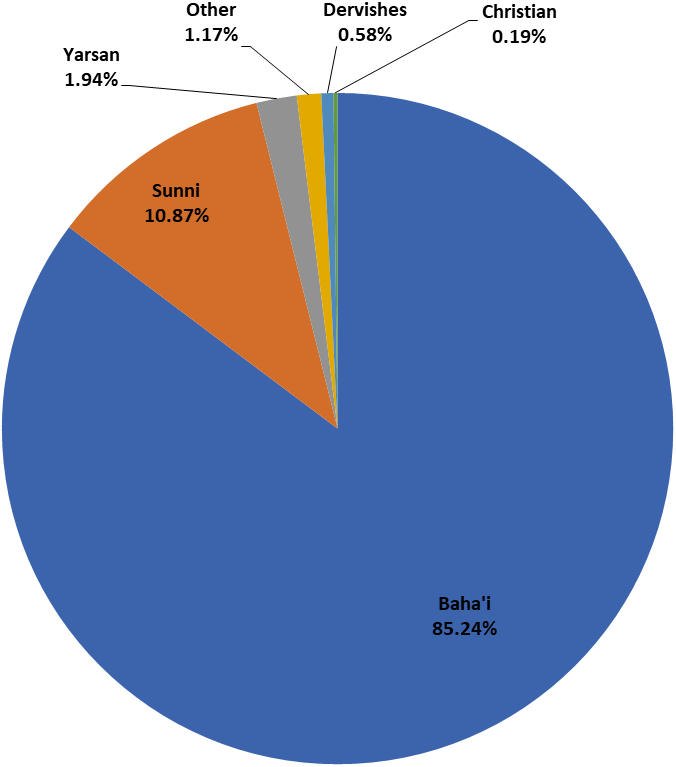
In the category, 85.24% of human rights reports regarding violations against religious minorities related to violations against Baha’is, 10.87% to Sunnis, 1.94% to Yarsans, 1.17% to “Others”, 0.58% to Dervishes and 0.19% to Christians. Note that reports labeled as “Other” are those that did not belong to a specific group of religious minorities.
FREEDOM OF THOUGHT AND EXPRESSION
In the category of freedom of thought and expression in 2023, a total of 2,380 reports were registered by the Department of Statistics. Based on the analysis of these reports, 3,130 individuals were arrested, with at least 116 of these arrests made without a judicial warrant. There were 881 summons to judiciary and security authorities, 3 instances of publication bans, and 9 publications being declared criminal. Additionally, reports of trials of a total of 42 individuals in judicial institutions were published. Also, there were 116 instances of interrogations in security institutions, 79 travel bans, 87 imprisonment sentence executions, 85 house searches, 18 cases of communication disruption, 95 citizen beatings, 22 forced retirements, 58 dismissals and layoffs, 300 sealings of organizations and offices, 4 instances of speech or event disruptions, 1 execution of a whipping sentence, 246 gatherings, and 29 instances of gathering prevention in the area of thought and expression.
In 2023, for this domain, at least 25,124 months of prison sentences were issued for 556 individuals by judicial bodies. This includes 23,720 months of actual imprisonment and 1,404 months of suspended imprisonment. It is noteworthy that 3,190 months of these sentences were issued by appellate courts and 288 months by the Supreme Court. Moreover, 72 individuals were fined nine billion four hundred and fifty-four million Iranian Rials, 58 individuals received 3,381 lashes, 36 individuals were sentenced to 2,112 months of exile, and 48 individuals were deprived of social rights. Additionally, a total of 80 lashes were executed on 1 individual.
In the realm of thought and expression, reports of citizen arrests increased by 86%, and issuance of prison sentences by the judiciary increased by 68% compared to the previous year. However, there was a 21% decrease in the number of people tried.
TRADE UNIONS AND ASSOCIATIONS
In 2023, a total of 1,700 reports were registered by the Department of Statistics and Publications concerning the rights of trade unions and associations. From these reports, 31 trade union activists were arrested, including 1 arrest made without a judicial warrant. Additionally, there were 56 summons to judiciary-security institutions, 3,056 cases of closures of facilities, 28 trials in judicial institutions, 122 dismissals and layoffs, 124 forced retirements, at least 85 months of deferred wages, 12 travel bans, 1 suicide, 4 house searches, and 12 instances of imprisonment.
Furthermore, 53 individuals were sentenced to 1,230 months of imprisonment, including 1,212 months of actual imprisonment and 18 months of suspended imprisonment. Additionally, 562 months of these sentences were issued by appellate courts. Two individuals were sentenced to 24 months of exile, 74 lashes, and 13 individuals were deprived of social rights. Fines amounted to one billion, one hundred and twenty-seven million, seven hundred thousand Iranian Rials for 13 people, and 72 lashes for 1 person.
In 2023, there were at least 1,266 trade union protests, 4 instances of protest suppression, and 32 union strikes. These protests primarily related to wage demands, poor economic conditions, and ineffective management of government institutions. Reports in this domain showed an 89% decrease in arrests and a 112% increase in sentences issued by the judiciary compared to the previous year, with a 30% increase in prison sentences.
The highest number of rights violations in this area occurred in November, while the lowest was in January.
ACADEMIA/ RIGHT TO EDUCATION
In 2023, the Department of Statistics and Publications of Human Rights Activists in Iran registered 416 reports related to academic rights violations. This total includes 14 instances of prevention of higher education. Additionally, at least 217 individuals were sentenced to 290 terms of suspension from studies. There were 13 summons to security-judicial institutions, 3,067 summons to university disciplinary committees, 11 expulsions from universities, 2 expulsions from dormitories, 10 student exiles, 23 interrogations in security-judicial institutions, and 44 student gatherings.
Regarding student rights, there were 3 cases of physical punishment and over 6,000 cases of poisoning. Last year, at least 929,798 students were unable to continue their education. Of these, 175,114 cases were in primary education, including 78,912 girls and 96,202 boys. In lower secondary education, 197,690 cases of dropout were recorded, encompassing 99,723 girls and 98,271 boys. Additionally, in upper secondary education, 556,994 cases of dropout existed, including 261,893 girls and 295,101 boys.
The monthly comparison of violations of basic rights in academic environments shows indicates that the highest number of rights violations in this area occurred in March, while the lowest number of reports was observed in December.
RIGHT TO LIFE (DEATH PENALTY)
In 2023, the Department of Statistics and Publication of Human Rights Activists in Iran registered 640 reports concerning the right to life. This encompassed the sentencing of 155 individuals to death, including 4 sentenced to public execution, and the execution of 746 individuals. Out of these, 6 were carried out in public. Among the executed individuals whose genders were identified, 597 were male and 20 were female. Additionally, 2 juvenile offenders, defined as individuals under the age of 18 at the time of their alleged crimes, were also executed.
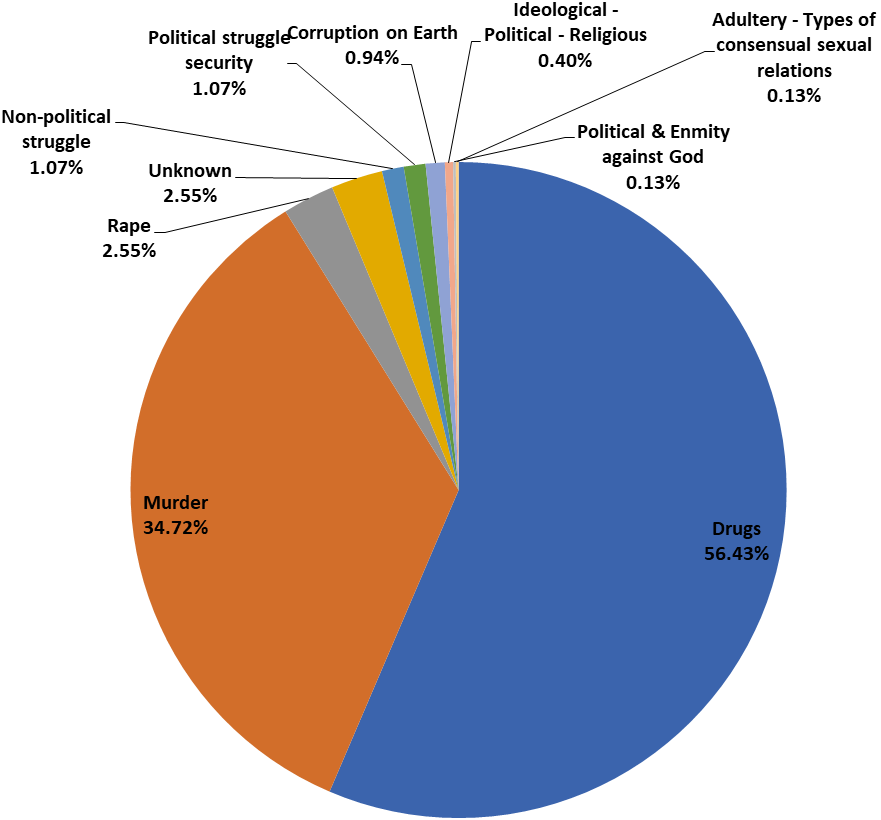
According to these reports, 56.43% of the executions were related to drug-related charges. Furthermore, 34.72% of the executions were for murder charges, 2.55% for sexual crimes, and 2.55% were executed with unknown charges. Additionally, 1.07% were executed on charges of Moharebeh (non-political), another 1.07% on charges of Moharebeh-Baghi (political-security), 0.94% for Corruption on Earth, 0.40% for ideological-political-religious reasons, 0.13% for security-related offenses (espionage, terrorism, bombing), and 0.13% for adultery and types of consensual sexual relations.
The execution of death sentences across Iran’s provinces in 2023, Alborz province with 19.97% of all the cases that is due to its two populated and important prisons., followed by Kerman ranking with 9.25% of all the death sentences issued,
Ghezel Hesar prison and Zahedan Prison held the highest number of death sentences.
Of those executed in 2023, 3% were female, and 80% were male, while the gender of the other 17% is unknown.
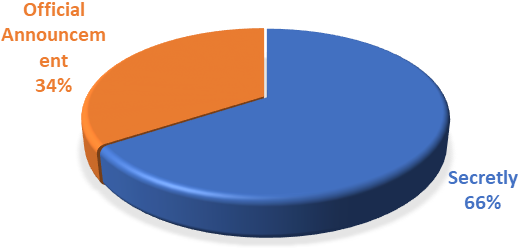
These executions are reported by independent sources and human rights associations, indicating that 66% of executions are carried out in secret or without any public notice.
Executions carried out in 2022 compared to 2021 increased by 88%. The number of death sentences issued increased by 8%.
CULTURAL RIGHTS
In 2023, the Department of Statistics and Publication of Human Rights Activists in Iran recorded 17 reports related to violations of cultural rights. These reports included the arrest of 15 individuals and 10 cases of employment prohibition. Additionally, there was 1 instance of preventing the execution of a program or speech and 1 case of a judicial sentence being carried out. Moreover, 4 individuals were sentenced to 24 months of suspended imprisonment, with 12 months of these sentences issued by appellate courts.
In the realm of cultural rights, there was a 114% increase in citizen arrests compared to the previous year. The monthly comparison of cultural rights violations shows that the highest number of violation reports in this category occurred in August and September. The lowest number of reports was observed in January, March, November, and December.
WORKERS’ RIGHTS
The Department of Statistics of Human Rights Activists in Iran registered 1056 reports of violations of workers’ rights in 2022. This included 53 arrests. 36 workers activists or workers were sentenced to 117 months
In 2023, a total of 1,085 reports were collected in the field of workers’ rights, according to statistical analyses by the Department of Statistics of Human Rights Activists in Iran. Based on these reports, a total of 64 individuals were arrested, with at least one case of arrest without a judicial warrant recorded. Additionally, 29 labor activists or defenders of workers’ rights were sentenced to 654 months of imprisonment, which includes 568 months of actual imprisonment and 86 months of suspended imprisonment. Notably, 356 months of these sentences were issued by appellate courts. Moreover, 17 individuals were sentenced to a total of 1,258 lashes and fined forty-two million five hundred thousand Iranian Rials. Two individuals were also sentenced to 48 months of exile.
Furthermore, there were 19 summonses to judicial and security authorities, along with 43 court trials and 12 interrogations in security-judicial institutions, 4 worker suicides, 5 instances of assault, 2 travel bans, 1 house search, and 4 imprisonment executions.
In the fiscal year 2023, reports of delayed or unpaid wages to workers amounted to at least 943 months, 2,891 layoffs or dismissals, 3,409 instances of unemployment, 119 months of lack of work-related insurance for 1,764,016 workers, 5 factory closures, and 2,621 workers left in limbo regarding their employment status. Additionally, at least 1,252 individuals were killed in work-related accidents, and 4,018 cases of physical injuries to workers on the job were reported. Iran ranks 102nd globally in terms of workplace safety standards, which is considered a very low ranking.
The monthly comparison of violations of workers’ rights, shows that the highest number of rights violations reports in this domain were published in November, with the most significant decrease in reports occurring in March.
According to the reports gathered by the Department of Statistics of Human Rights Activists in Iran, in 2023, 22.08% of work-related accidents were due to falls from heights, 21.67% were fire incidents, 11.04% were construction accidents, 8.13% were caused by hard object impacts, 7.50% occurred in factories, 7.08% were drilling (well) accidents, 6.25% were due to electrocution, 4.38% were traffic accidents, 4.17% happened in mines, 2.92% were gas poisonings, 2.50% occurred in petrochemical and refinery industries, 0.63% were agricultural accidents, 0.63% were poisonings, 0.63% were drownings, 0.21% were heat strokes, and 0.21% were avalanche falls.
In 2023, there were at least 320 worker protests, 1 instance of suppression of assembly, and 111 worker strikes. Most of these protests were related to wage demands. The reports indicate a 20% increase in the arrest of workers and a 19% decrease in the issuance of judicial sentences based on the number of people tried, compared to the previous year. Additionally, the issuance of prison sentences increased by 458% compared to the previous year.
CHILDREN’S RIGHTS
In 2023, the Department of Statistics gathered 245 reports related to children’s rights violations. Due to the silence of families and governmental institutions, accurate statistics on child abuse cases are not available. However, at least 32 cases of rape and sexual abuse of children, 45 child murders, 6 cases of honor killings, 48 child suicides, and 35,000 instances of child labor were reported. In 2020, there were 56,343 registered marriages of individuals under 18 years old, which decreased significantly to 50,127 in 2021, indicating an 11% decrease in total child and adolescent marriages. The total number of divorces in this age group was 1,646 in 2020, increasing to 1,663 in 2021, reflecting about a 1% increase in child and adolescent divorces in Iran. Additionally, over 929,798 children were deprived of education in this year, an increase from 911,272 in the previous year. Many students in the country have been denied education due to lack of access to virtual learning facilities, early marriages, poverty, cultural issues, population dispersion, etc.
It’s noteworthy that this year, the Welfare Organization or relevant statistical authorities have not published data on child abuse. As mentioned in the execution section of this report, at least 2 juvenile offenders were executed in Iran last year. Precise statistics on the arrest of children are not available, but according to accessible reports, at least 130 individuals under 18 years old were detained by security institutions.
The monthly comparison of violations of children’s rights shows the highest number of violation reports in January and the lowest in December.
WOMEN’S RIGHTS
In 2023, a total of 363 reports were collected in the category of women’s rights, as per the Department of Statistics of Human Rights Activists in Iran. These reports included at least 26 cases of rape and sexual assault, 82 instances of women’s murders, 28 cases of honor killings including 4 men, 1 case of self-immolation, 6 suicides, 7 acid attacks, 24 summonses to judicial and security institutions, 3,176 instances of improper hijab, 3 travel bans, 8 court trials, 1 house search, 8 gatherings related to women’s rights, and 9 instances of discrimination in social settings.
According to the report, 44 women were arrested for activities related to women’s rights. Additionally, at least 20 activists were sentenced to a total of 182 months of imprisonment and fined seventeen million six hundred thousand Iranian Rials. This includes 152 months of actual imprisonment and 30 months of suspended imprisonment, with 64 months of these sentences issued by appellate courts. Furthermore, 2 individuals were sentenced to 222 lashes.
The monthly comparison of violations of women’s rights, shows that the highest number of rights violation reports in this domain were published in April, with the most significant decrease in reports observed in December.
PRISONERS’ RIGHTS
In 2023, a total of 1,386 reports of violations of prisoners’ rights were registered. These included 27 cases of physical assault on prisoners, 1,390 instances of denial or neglect of medical care, 342 illegal transfers to solitary confinement, 114 attempted hunger strikes, 415 cases of forced transfer or exile of prisoners, 4,140 instances of threats and pressure on prisoners, 66 cases of denying prisoner visitation rights, 34 cases of psychological and physical torture, 7 deaths due to illness, 12 suicides, 1 case of self-immolation, 4 murders of prisoners, 208 instances of lack of access to legal counsel, 4,197 reports of prisoners being kept in unsuitable conditions, 80 cases of forced confession, 290 instances of non-segregation of crimes, 78 denials of medical leave, and 101 denials of the right to contact.
Additionally, in the realm of detainee rights, 438 cases of uncertainty and 1,286 cases of indefinite detention were reported. Furthermore, a sentence of 40 lashes was executed on 1 individual in prison.
The monthly comparison of violations of prisoners’ rights shows indicates that the highest number of reports occurred in January, while the lowest number of reports was observed in March.
SECURITY FORCES’ VIOLENCE AND CITIZENS’ SAFETY
Death of civilians
In 2023, there were a total of 402 incidents involving civilians being shot by military forces. Out of these incidents, 120 civilians lost their lives, including 20 Kolbars (border carriers), 37 fuel carriers, and 63 other civilians. Additionally, 282 people were injured due to indiscriminate military fire, which comprised 228 Kolbars, 31 ordinary civilians, and 23 fuel carriers.
Furthermore, 9 Kolbars were affected by environmental factors such as extreme cold and falls from heights, resulting in 3 injuries and 6 deaths. Also, 11 fuel carriers were involved in accidents following pursuits by military forces, leading to 7 deaths and 4 injuries
Victims of landmines and explosions
The landmines left from the war threaten the lives of civilians living in border cities each year. The Iranian government continues to manufacture and plant anti-personnel mines against international agreements, arguing that the use of these type of landmines is the only effective way to keep its vast borders safe.
Based on reports, at least 4 civilians in the past year have lost their lives to landmines in border areas, while 9 other civilians have been injured.
Floggings
The International Covenant on Civil and Political Rights (ICCPR) strictly prohibits inhuman or degrading punishments like flogging. However, in 2023, flogging sentences were executed for at least 6 accused, amounting to a total of 330 lashes. This includes 2 cases where the accused, previously sentenced to 160 lashes, were publicly flogged. Additionally, at least 125 individuals were sentenced to a total of 6,551 lashes by the Iranian judiciary.
Intervention in personal affairs of civilians
In 2023, at least 558 civilians were arrested for organizing or participating in private gatherings and parties.
Financial Loser Protests
In 2023, groups of citizens organized protests on at least 117 occasions. These individuals, primarily victims of financial and investment frauds, held protests in 31 provinces due to unmet demands and claims. The provinces of Tehran, Qazvin, and Hormozgan saw the highest number of these protests.
The monthly comparison of reports related to violence from security forces and citizens’ safety shows indicates that the highest number of reports occurred in November, while the lowest number was in March.
JUDICIAL SENTENCES IN VARIOUS CATEGORIES
In the past year, the Iranian judiciary, encompassing both primary and appellate courts, issued a total of 33,335 months of imprisonment. The breakdown of these sentences across various categories is as follows: 984 months for ethnic minorities, 5,113 months for religious minorities, 25,124 months for freedom of expression, 1,230 months for trade unions, 654 months for workers, 182 months for women’s rights, 24 months for children’s rights, and 24 months for cultural rights. (It is important to note that these statistics only include sentences where specific details or information about the verdicts were made public.)
Additionally, these citizens were collectively fined eleven billion six hundred and three million and eight hundred thousand Iranian Rials and sentenced to a total of 6,551 lashes.
The monthly comparison of these convictions shows indicates that the highest number of reports was published in January, while the lowest number was observed in April.
ARRESTS
In the past year, security forces in Iran arrested 4,472 citizens due to their engagement in civil, ideological, or political activities. The breakdown of these arrests across various categories is as follows: 31 arrests in trade unions, 324 in ethnic minorities, 142 in religious minorities, 3,130 in freedom of expression, 130 in children’s rights, 34 in environmental rights, 15 in cultural rights, and 64 in labor rights.
Additionally, 44 women were subjected to legal prosecution due to their activities and the promotion of their lifestyle choices. Furthermore, 558 citizens were arrested for organizing or participating in private gatherings.
The monthly comparison of these arrests shows indicates that the highest number of reports occurred in January, while the lowest number was in December.
In 2023, there was an overall decrease of 86% in the number of arrests related to civil activities compared to the previous year. However, the pattern varied significantly across different categories:
🔘 Ethnic Minorities: Arrests increased by 44%.
🔘 Cultural Sector: Arrests increased by 114%.
🔘 Religious Minorities: Arrests increased by 1.4%.
🔘 Trade Unions: Arrests decreased by 89%.
🔘 Women’s Rights: Arrests decreased by 86%.
🔘 Lifestyle-related Arrests: A significant increase of 771%.
🔘 Environmental Rights: Arrests increased by 47%.
🔘 Children’s Rights: Arrests decreased by 22%.
🔘 Workers’ Rights: Arrests increased by 20.04%.
🔘 Freedom of Expression: Arrests decreased by 86%.
ENVIRONMENTAL RIGHTS
In 2023, 340 reports were gathered related to environmental rights, leading to the arrest of 34 activists in this field. Out of these arrests, 3 were made without judicial warrants. Additionally, there was 1 summons to security institutions, 52 instances of failure to protect natural resources, at least 284 reports of various types of environmental pollution including air, surface water, and groundwater pollution, 21 cases of improper exploitation of natural resources, 813 instances of animal abuse, and 9 protests recorded.
It is also noteworthy that in the past year, 53 officers from the Natural Resources Protection Unit were involved in accidents. This includes 1 park ranger’s death, injuries to 21 environmental wardens, 1 park ranger, and 30 forest rangers.
In the environmental sector, there was a 47% increase in the arrest of citizens compared to the previous year.
Based on the number of reports per month, the highest number of reports in the environmental sector occurred in December, and the lowest in May
SEXUAL AND GENDER MINORITIES
Prior to 2021, reports concerning the rights of sexual and gender minorities in Iran were processed under other categories in the annual reports of Human Rights Activists in Iran. The primary reason for this was the limited number of reports available in this area, which did not facilitate detailed analysis.
Creating an independent category, despite the small number of reports, signifies an effort to enhance the monitoring of the status of these community members. The rights of sexual and gender minorities in the country are systematically violated in various ways. Criminalization of same-sex relationships and non-recognition of transgender individuals’ gender identity prior to gender reassignment surgery are two examples. These violations occur irrespective of the blatant spreading of hatred against members of this community.
Cultural taboos, legal barriers, and the weakness of civil institutions in monitoring and reporting violations against them have become serious problems. The government’s policy towards sexual minorities in Iran has blurred the line between being a sexual minority and moral corruption, exacerbating the vulnerability and oppressive atmosphere for these individuals. In some instances, security and law enforcement agencies themselves admit to detaining and harassing members of this community. For example, in July of this year, an incident involving a person advocating for moral policing on the dress code of several transgender citizens in the Afsariyeh neighborhood of Tehran led to a confrontation and the arrest of 5 transgender individuals. Security-affiliated media published a video of the “forced confessions” of these five individuals. Contrary to popular belief, transgender citizens face legal issues in addition to cultural ones when changing their identification documents or obtaining exemption from mandatory military service. This situation arises from the pathologization of transgender identity in the laws of the National Conscription Organization, at a time when the World Health Organization, in its latest 2019 guidelines (ICD-11), classified transgender status under sexual health conditions, moving away from its previous classification as a disorder.
HUMAN RIGHTS VIOLATORS
In a detailed and alarming report prepared by the Spreading Justice and the Human Rights Activists Statistics Center in Iran, a widespread pattern of human rights violations in Iran has been documented over a one-year period (from January 1, 2023, to December 20, 2023). The data, carefully categorized, emphasize the severity and extent of these violations across various sectors of the government.
From the perspective of their position in the power structure and the direct chain of command, the reports are divided among three main actors based on the available information: the Judiciary, the Executive, and the Leadership Authority.
Out of a total of 4399 reported cases gathered, there were identifiable officials or entities involved in the human rights violations related to the report. Among these reports, the Judiciary leads with 2654 cases, followed by the Executive with 1317 cases, and the Leadership with 428 cases.
For a better understanding, refer to the adjacent pie chart, which represents the distribution of human rights violations based on the number of reports in the last year.
HUMAN RIGHTS VIOLATING ENTITIES
In the collected reports that contained information about human rights violators, 668 legal entities (institutions) from various branches of the government were identified. The following list names the top ten institutions with the most human rights violation reports in the past year:
Furthermore, 241 individuals (natural persons) have demonstrated behavior considered as direct human rights violations.
The top ten individuals, all affiliated with the Judiciary, who had the most human rights violation cases based on individual performance are as follows:
1
Iman Afshari– Position: Judge -Institution: Revolutionary Court – Affiliation: Judiciary – Place of Activity: Tehran – Number of Reported Cases: 142 cases
2
Abolghasem Salavati– Position: Judge -Institution: Revolutionary Court – Affiliation: Judiciary – Place of Activity: Tehran – Number of Reported Cases: 80 cases
3
Mohammadreza Amouzad– Position: Judge -Institution: Revolutionary Court – Affiliation: Judiciary – Place of Activity: Tehran – Number of Reported Cases: 56 cases
4
Mohammad Moghiseh– Position: Judge -Institution: Revolutionary Court – Affiliation: Judiciary – Place of Activity: Tehran – Number of Reported Cases: 49 cases
5
Seyed Ali Mozloom– Position: Judge -Institution: Revolutionary Court – Affiliation: Judiciary – Place of Activity: Tehran – Number of Reported Cases: 43 cases
6
Amin Vaziri– Position: Deputy Prosecutor -Institution: Security Court – Affiliation: Judiciary – Place of Activity: Tehran – Number of Reported Cases: 31 cases
7
Seyed Ahmad Zargar– Position: Judge -Institution: Revolutionary Court – Affiliation: Judiciary – Place of Activity: Tehran – Number of Reported Cases: 27 cases
8
Hossein Saeedi– Position: Judge -Institution: Revolutionary Court – Affiliation: Judiciary – Place of Activity: Sanandaj – Number of Reported Cases: 28 cases
9
Seyed Mahmoud Sadati– Position: Judge -Institution: Revolutionary Court – Affiliation: Judiciary – Place of Activity: Shiraz – Number of Reported Cases: 20 cases
10
Ali Sheikhloo– Position: Judge -Institution: Revolutionary Court – Affiliation: Judiciary – Place of Activity: Urmia – Number of Reported Cases: 18 cases
The legal and human rights implications of the documented cases indicate a systematic pattern of human rights violations at different levels of the Iranian government. The high number of cases attributed to judicial authorities, especially in revolutionary courts, raises serious concerns about justice and impartiality in the judicial process. Extensive intervention by intelligence and security organizations, including the Ministry of Intelligence and IRGC Intelligence Organization, reflects a coordinated approach to suppress opposition and control the population.
Prison management, especially in prominent centers like Evin and Rajai Shahr, shows disregard for the rights and welfare of prisoners. Individual accountability of high-ranking judicial officials like Iman Afshari questions the role of specific actors in perpetuating these violations.
For a better understanding of the published reports on human rights violations, refer to the following chart which categorizes them according to their affiliation in the division of powers.
This is the brief version and the full report is available for download in PDF format.

_________________________
For more information please contact Skylar Thompson, Director of Global Advocacy and Accountability at Human Rights Activists in Iran (HRA) skylar[at]hramail.com
Human Rights Activists News Agency (HRANA)- On the World Day against the Death Penalty, the Center of Statistics of Human Rights Activists in Iran (HRA) has published its annual report in an effort to sensitize the public about the death penalty situation in Iran, particularly thousands of death-row convicts awaiting their looming executions.

HRA’s Statistics Center relies on the work of HRANA reporters, as well as a network of independent and verifiable sources. It also incorporates the judicial authorities’ announcements or confirmations of prisoner executions on media, and as such, is exposed to a margin of error representing efforts by the Iranian authorities to omit, conceal, or restrict the collection of such data.
Click on the picture to download the report in PDF format
Between October 10, 2022, and October 8, 2023, at least 659 convicts were executed by hanging in Iran, rising to 24% compared to the same period last year. Of these executions, Seven were carried out in public. Many of the defendants were denied a fair trial and due process.
HRANA obtained 580 reports regarding executions and the death penalty in Iran during this period. The identified executed individuals, include 17 women and 1 juvenile offender under the age of 18 at the time of the alleged crime. Compared to the last period, the execution of female offenders has decreased 15%.
According to the reports obtained by HRANA, over this period, Iranian authorities sentenced at least 164 defendants to the death penalty, including at least 5 women, and 2 public executions. Issuing death sentences rose by 84% compared to the last year.
As the chart below shows a breakdown of executions by capital offense: 56.60% for drug and narcotic offenses, 35.05% for murder, 2.58% for rape, 2.28% for unknown reasons, 1.21% for political or security-related offenses, 0.61% for “Corruption on Earth”, 0.61% for spying, terror, and bombing, 0.46% for “Corruption on Earth” (non-political), 0.46% for ideological, political, or religious reasons, 0.15% for Adultery – Types of consensual sexual relations
The pie chart below displays execution numbers by the province in which they took place. According to this chart, the Alborz (where three overcrowded prisons are located) had the highest number of executions at 15.33%. Sistan and Baluchestan and Kerman Provinces come second and third, with 11.53% and 8.65%, respectively.
The chart below depicts the distribution of execution information sources. The chart indicates that 63% of HRANA-confirmed executions were not announced by official Iranian sources. Undisclosed executions are referred to as “secret” executions.
The chart down shows the execution numbers by gender.
The chart below displays execution numbers by the prison where the executions were carried out. The Zahedan Prison And Adel Abad of Shiraz officials have carried out the highest number.
The chart below displays the percentage of executions carried out in public Vs the number of executions that were carried out in prison. According to statistics, 1.06% of the executions in Iran were carried out in public.
This leaflet contains the Annual Analytical and Statistical Report on Human Rights in Iran for the year 2022. The report, prepared by the Department of Statistics and Publications of Human Rights Activists in Iran (HRA), is the result of daily effort on the part of the organization and its members, and as part of a daily statistic and census project that started in 2009 by this organization.
This annual report on human rights violations in Iran is the result of collection, analyzation, and documentation of 13342 reports concerning human rights, gathered from 267 news sources during 2022 [January 1st to December 20th]. 55% of reports analyzed came from sources gathered and reported by Human Rights Activists News Agency (HRANA), while 13% came from official Iranian government sources or sources close to the government. 32% of reports came from other human rights news agencies.
This is the brief version and the full report is available for download in PDF format. Click here
The following 62-pages include statistical overviews and related charts regarding women’s rights, children’s rights, prisoners’ rights, etc. Despite a 128% increase in reports of human rights violations from provinces other than Tehran when compared to last year’s Annual Report, yet data from this year still indicates that smaller cities lack adequate reporting and monitoring of human rights.
This report is the result of the work of courageous human rights activists in Iran who pay a very high cost for striving to enact their humanitarian beliefs. However, for obvious reasons (i.e. existing governmental limitations, bans on the free exchange of information and government interference with the existence of human rights organizations in the country), this report by no means is free of errors and cannot solely reflect the actual status of human rights in Iran. Having said that, it should be emphasized that this report is considered one of the most accurate, comprehensive, and authentic reports on human rights conditions in Iran. It serves as an informative resource for human rights activists and organizations working on Iran who seek to better understand the challenges and opportunities that they may face.
The following map illustrates the number of reports per province made by human rights organizations and news agencies. This is a direct reflection of each province’s civil rights capacities in 2022.
The highest number of reports were published in November, while the lowest number of reports published occurred in April.
55% of reports analyzed came from sources gathered and reported by Human Rights Activists News Agency (HRANA), while 13% came from official Iranian government sources or sources close to the government. 32% of reports came from other human rights news agencies.
In 2022, at least 3046 protests were held across 31 provinces. Of these, 1,289 were union rallies, 266 were workers’ rallies, 149 were rallies related to economic hardship, 1297 were rallies against the suppression of freedom of expression, and were 26 union student demands rallies, 1 gathering in the field of children and 18 gatherings in the field of the environment. In addition to the rallies, there were also 94 labor strikes and 225 union strikes, and 344 non-union strikes as well.
As indicated in the distribution map, there exists a major discrepancy between the capital Tehran, and other parts of the country in terms of the number of published reports. This is while the census of 2021 reported a population of 9,039,000 in Tehran, compared to a population of 75,016,000 in the rest of the country.
Statistics indicate that, the focus or ability to report of the human rights reporters has been 20% in the Tehran and 80% in the other parts of the country.
Categories of human rights violations based on the number of reports in 2022
To study categories of human rights violations in Iran, it is important to initially compare the categories based on the number of reports made in each category in the past year.
ETHNIC RIGHTS
In the field of ethnic and national rights, a total of 205 reports was registered by the Department of Statistics and Publication of Human Rights Activists in Iran (HRA) in 2022. According to these reports, at least 225 people were arrested, 73 of whom were arrested without a legal arrest warrant. It should be noted that, even though the charges against 164 of these detainees remain unknown yet based on other indications and precedent cases they have been considered in this category.
A total of 12 people were sentenced to 751 months in prison, which breaks down to 726 months of imprisonment and 25 months of suspended imprisonment. A total of 68 individuals were summoned by the security and judicial institutions. In addition, 3 people were fined two hundred and seventy million Rials.
In addition, the following reports have been registered; Trial of 8 people in security-judicial institutions, 1 case of travel ban outside the country, 16 cases of beatings, 33 cases of house searches, and 2 cases of carrying out imprisonment sentences.
Compared to the previous year there has been a 49% decrease in the arrest of ethnic minorities and an 80% decrease in prison sentences.
The highest number of violations occurred in the month of July while the lowest occurred in the month of November
RELIGIOUS RIGHTS
In this category, 199 reports have been registered by the Department of Statistics in 2022. These reports include 140 arrests, 102 summons by judicial and security institutions, 64 cases of deprivation from education, and 94 cases of police home raids.
More so, there has been 2 cases of demolition of religious sites, 39 cases of imprisonment, 51 issuances of travel bans (which violate of freedom of movement,) and 11 cases of individuals brought to trial for their religious beliefs.
79 members of religious minorities were sentenced by judicial institutions to a total of 3432 months of imprisonment (1921 months of imprisonment and 11 months of suspended inprisonment) and 888 months of exile. In addition, 23 people were fined three billion five hundred and ninety million Rials, 1 person was sentenced to 74 lashes, and 10 people were deprived of social rights.
The number of citizens arrested in the category of religious minorities has Increase by 145% in 2022 compared to 2021, and the prison sentences issued by the judiciary have Decrease by 2%
The highest number of violations have been reported in August, while the lowest occurred in March.
From the total human rights reports regarding the violation of religious minorities rights, 64.63% belonged to the violation of the rights of Baha’is, while 20.84% of the reports indicated violation of the rights of Christians, 8.84% Yarsanis, 4.63% Sunnis, and 0.63% “Others”, 0.42% Dervishes. Note that reports labeled as “Other” are those that did not belong to a specific group of religious minorities.
FREEDOM OF EXPRESSION
6311 reports of violations against freedom of thought and expression have been registered by the Department of Statistics in 2022. These violations included 22655 individuals arrested, 331 summons to judiciary and security authorities, 2 reports of publications banned, and 12 convictions for publications.
In this category, reports of the 201 trials were published including; 31 travel bans issued, 65 carrying out prison sentences, 34 house searches, 94 internet disruption, 140 beatings, 1297 assembly, 344 strikes.
In 2022, 711 arrestees were sentenced to at least a total of 14,896 months of imprisonment. This breaks down to 9720 months in prison and 376 months of suspended prison terms. It should be noted that 1815 months of this amount have been issued by the Court of Appeal.
Also, 62 people were sentenced to five billion and five hundred and ninety million Rials in fines, 35 people were sentenced to 1,824 lashes and 37 were deprived of social rights. Additionally, 2 people received a total of 99 lashes. Compared to 2021, reports regarding violations of freedom of expression have increased by 2000%, sentences issued by the judiciary have increased by 230% based on the number of people tried, and prison sentences increased by 46%.
TRADE UNIONS AND ASSOCIATIONS
2071 reports were registered by the Department of Statistics and Publications related to the rights of trade unions and other associations, that includes arrest of 309 members of trade unions, 123 summons to judicial and security institutions, trials for 37 individuals were held, 10030 individuals were fired or suspended, at least 124 months of wages were deferred, 3 cases of suicide, and 3834 facilities were shutdown.
Also, 25 people were sentenced to 940 months of imprisonment, of which 696 months are imprisonment and 244 months of suspended imprisonment. In addition, 252 months of this amount have been issued by the Court of Appeal. Additionally, A fine of 40 million Rials and 74 lashes has been issued for 1 person.
In 2022, at least 1289 protests and 225 union strikes were held. There were 43 reported instances of prevention of protest gatherings. Most of these protests were related to salary/wage demands from corporations, bad economic conditions, and lack of proper management of corporations.
In reports related to trade unions and associations compared to the previous year, there has been a 1000% Increase in the number of arrests, an 1150% Increase in sentences issued compared, and a 1300% increase in imprisonment sentences.
The highest number of violations occurred in the month of January while the lowest is in September.
ACADEMIA/ RIGHT TO EDUCATION
The Department of Statistics and Publication of Human Rights Activists in Iran registered 126 reports related to violations of academic rights in 2022. Accordingly, 10 students were arrested, and as mentioned in the religious rights section of this report, 64 students were prevented from continuing their education because of their religion. More so, there has been 5 other cases of hindering of education, and one person was sentenced to 12 months of imprisonment and 74 lashes.
In the category of academia and the right to education, there has been a 233% increase in the number of arrests and a 85% decrease in the issuance of prison sentences compared to the previous year.
For the school students there has been, 61 cases of preventing education, 6 cases of physical punishment, 7 cases of rape and sexual abuse, 2 cases of suicide, and 65 cases of poisoning. In addition, in the last year, at least 780,000 students dropped out of school.
The highest number of violations occurred in the month of August while the lowest instance is observed in the month of February.
RIGHT TO LIFE (DEATH PENALTY)
The Department of Statistics and Publication of Human Rights Activists in Iran registered 457 reports related to the death penalty in 2022. This included 92 death sentences, including the conviction of 6 people to public execution and 565 execution sentences were carried out, 2 of which have been carried out in public. Based on the announced identifications of some of the executed individuals, 501 were male and 11 were female. In addition, 5 juvenile offenders were executed in 2022, meaning they were under the age of 18 at the time they committed the crime.
According to these reports, 48.67% of the executions were based on murder charges, while 42.83% were related to drug-related charges, 2.65% were for sexual offenses, and 2.48% of the charges are unknown, 1.77% were executed on charges of Moharebeh (non-political), 1.06% on security charges (espionage, terror, or bombing), 0.53% on charges of Moharebeh or Baghi (political-security) in Iran.
The highest number of violations occurred in July while the lowest number occurred in April.
The following pie chart illustrates the number of death sentences issued and carried out across the country in 2022. The majority of death sentences were based on murder charges (48.67%), followed by drug charges (42.83%).
The execution of death sentences across Iran’s provinces in 2022, Sistan and Baluchestan province with 18.58% has the highest number of executions, followed by Alborz province which has two of the most populated prisons in Iran with 16.11% of the executions.
Rajai Shahr and Zahedan Prisons carried out the most death sentences.
Of those executed in 2022, 2% were female, and 89% were male, while the gender of the other 9% is unknown.
These executions are reported by independent sources and human rights organizations, indicating that 65% of executions are carried out in secret or without any public notice.
Executions carried out in 2022 compared to 2021 increased by 88%. The number of death sentences issued increased by 8%.
CULTURAL RIGHTS
The Department of Statistics and Publication of Human Rights Activists in Iran registered 17 reports related to violations of cultural rights in 2022. This included reports of 7 arrests, 27 individuals summoned to judicial and security organizations, 4 trials held, 1 house search, 4 cases of obstruction and interference with publications, 1 case of stopping an event and speech, 2 cases of confiscation of property and belongings.
In this category, arrests have increased by 16% compared to the previous year.
In a monthly comparison, the highest number of violations were reported in May, while the highest increase of number of reports were in January, February, September, October, November, and December.
The number of violations of cultural rights in 2022 compared to 2021.
WORKERS’ RIGHTS
The Department of Statistics of Human Rights Activists in Iran registered 1056 reports of violations of workers’ rights in 2022. This included 53 arrests. 36 workers activists or workers were sentenced to 117 months in prison, 510 lashes and 51,000,000 tomans in fines, and 31 people were summoned to judicial and security organizations.
Additionally, 14 cases of trials by judicial authorities, 10 cases of suicide, 5 cases of self-immolation, 1 cases of beatings, 12 cases of house searches, and 5 cases of carrying out imprisonment sentences, have been reported.
During 2022, a total of 1048 months of overdue payment of salaries to workers was reported, 8353 workers were laid off or fired, 9038 people reported unemployment, 1720742 lacked work insurance, 9168 workers were waiting for work-related decisions, and 14 factories were shut down.
In addition, 354 people have lost their lives in work-related accidents, and 1497 workers have been injured while at work. On a global scale amongst other counties, Iran ranks 102nd in work safety.
In a monthly comparison of workers’ rights violations in 2022, the highest number of violations happened January and the lowest in November.
Based on collected reports work accidents in the past year have been 17% due to fires, 16% in constructions, 11% in factories, 10% workers falling from heights, 10% accidents, 9% hard object hitting the victim, 8% falling during excavation and in wells, 5% electrocutions, 5% chocking, 4% in mines, 2% in farming, 1% in petrochemical and refineries, 1% heat strokes, 1% frostbites.
In 2022, there were at least 266 worker protests, with 2 reported of preventing the protests, and 96 workers strike took place. The majority of these protests were regarding wages.
Based on these reports, the arrest of workers has decreased by 17% compared to 2021. However, the issuance of prison sentences has increased by 300% compared to the previous year.
CHILDREN’S RIGHTS
A total of 434 reports of violations of children’s rights in 2022 were registered by the Department of Statistics of Human Rights Activists in Iran. However, it should be mentioned because of secrecy regarding these incidents, leading to underreporting, there is no accurate statistic in this field. Reports included at least 21564 cases of child abuse, 23 cases of rape and sexual abuse, 41 murders of children, 5 self-immolation, 54 cases of child suicide, 1 case of honor killing, and 43268 cases of child laborer.
In addition, there were more than 200,000 instances of child marriage and 5 million students are deprived of primary education. Many students in Iran have been deprived of education due to lack of access to e-learning facilities, as well as child marriages, poverty, cultural issues.
As mentioned in the section on the death penalty, at least 5 juvenile offenders have been executed in 2022.
There are no reliable statistics regarding the arrest of minors during the nation-wide protests, however from arrestees whose identities have been confirmed at least 167 were children.
In the monthly comparison in this category, the highest number of violations were reported in November and the lowest number in February.
WOMEN’S RIGHTS
The Department of Statistics of Human Rights Activists in Iran registered 124 reports of violations of women’s rights in 2022, including; 64 cases of domestic violence, 14 cases of rape and sexual harassment, 32 case of murder, 26 cases of honor killing (including murder of 4 men), 4 self-immolations, 5 cases of acid attacks, 5 cases of suicide, and 1708 cases where women’s rights activists were summoned to judicial and security organizations, 1701 Hijab related cases, 4 cases of imprisonment sentences being carried out and 62 cases of discrimination in social environments.
Based on this report, 322 women have been detained for reasons related to women’s rights. At least 3 women’s rights activists were sentenced to 64 months in prison and a fine of eighty million rials
Based on the number of reports per month, the highest number of reports were in July and the lowest in December.
The number of violations of human rights in the category of women’s rights in 2022 compared to 2021.
PRISONERS’ RIGHTS
The Department of Statistics of Human Rights Activists in Iran registered 1127 reports of violations of prisoner’s rights in 2022 including; 133 physical assault of prisoners, 4322 of deprivation of medical care, 204 of illegal transfer to solitary confinement, 102 of attempted hunger strikes, 166 of forced transportation or exile, 4983 of threats against prisoners, 46 of banning prisoners from having visitors, 652 of psychological and physical torture, 20 prisoners died due to illness, 2 arrestees were killed by prison authorities, and 14 prisoners committed suicide.
There were also 206 cases where prisoners lacked lawyers, 5977 reports of prisoners being held in unsuitable circumstances, 391 cases of forced confessions, 3523 cases of non-segregation of prisoners based on crimes, 2805 cases of denial of sick leave, and 362 cases of denial of having contact with outside the prison.
In this category, there have also been 405 cases of prisoners kept in an unsure state regarding their sentence and 954 cases of lack of adequate information on the prisoner.
The highest number of reports of violations of prisoner’s rights occurred in December and the lowest in March.
SECURITY FORCES’ VIOLENCE AND CITIZENS’ SAFETY
Death of civilians
This section is dedicated to the killing or injury of civilians by police or military institutions. In 2022, a total of 845 people were shot by military forces. At least 571 of the victims lost their life. This includes 22 Kolbar, 9 fuel carriers, and 540 civilians. 274 people were injured by military forces open fire, including 134 Kolbar, 128 civilians, and 12 fuel carriers.
Additionally, 39 Kolbars were affected by climate and geographic factors such as freezing and falling from heights, 34 of whom were injured, and 5 were killed.
Victims of landmines and explosions
The landmines left from the war threaten the lives of civilians living in border cities each year. The Iranian government continues to manufacture and plant anti-personnel mines against international agreements, arguing that the use of these type of landmines is the only effective way to keep its vast borders safe.
Based on reports, at least 5 civilians in the past year have lost their lives to landmines in border areas, while 32 other civilians have been injured.
Floggings
The International Covenant on Civil and Political Rights (ICCPR) has explicitly banned the use of inhuman or degrading punishments such as flogging. However, based on the reports gathered in 2022, flogging sentences were carried out for at least 9 accused, who were sentenced to a total of 317 floggings.
It should be noted that the judiciary issued at least a total of 12512 flogging sentences in the past year.
Intervention in personal affairs of civilians
In 2022, at least 64 civilians were arrested for attending or hosting personal gatherings and parties.
Victims of credit-financial and investment institutions
In 2022, at least 149 groups of civilians –mostly consisting of those who have lost money due to poor economic conditions, or those whose rights have been violated– have organized protests. These protests took place in 24 provinces. The provinces with the most protests were Tehran, Eastern Azerbaijan, Khuzestan, and Khorasan Razavi.
The highest number of reports related to violence from security forces and citizens’ safety occurred in September and the lowest was in December.
The number of Military violence in 2022 in comparison with 2021
SENTENCES
The judiciary of the Iranian government, including both in initial trial and appeal, issued 17872 months of imprisonment in 2022. These reports included 751 months of imprisonment for ethnic minorities, 3432 months of imprisonment for religious minorities, 14896 months of imprisonment related to freedom of expression, 940 months of imprisonment related to union activity, 117 months of imprisonment for workers, 64 months of imprisonment in women’ rights category, 12 months of imprisonment for students, and 2460 months in prison for Environmental activists were sentenced. Also, these citizens were sentenced to one billion and eleven million Toman in fines and 12512 lashes.
These statistics only include the court sentences that indicated detailed information or characteristics of the verdicts.
The highest number of reports was in December and the lowest in July.
In 2022, the number of convictions of citizens and activists increase by 37%. However, the convictions in the following categories decreased: Religious Minorities by 2%, Ethnic Minorities by 80%, Women’s Rights by 25% and Students by 85%.
The following categories saw an increase in convictions: Freedom of Expression by 230%, Unions by 1150% and, Workers by 300%.
ARRESTS
In 2022, security forces arrested 23977 individuals due to political or civil rights-related activities.
The statistical analysis exhibited 309 cases of arrest in the trade union category, 225 arrests in the category of ethnic minorities, 140 arrests in the category of religious minorities, 22655 arrests in the category of freedom of expression, 167 arrests related to children’s rights, 10 arrests of university students, 7 arrests in the field of cultural rights, 53 arrests in the category of workers’ rights, and 23 arrests in the field of Environment.
324 women were prosecuted for their activities, including the promotion of their desired lifestyle. Also, 64 citizens have been arrested for organizing or participating in a private party.
Based on the number of reports per month, the highest number of reports in this category fell in October and the lowest in March.
In 2022, the number of arrests increased by 1330% in total. Broken into categories, the number of arrests decreased in the Ethnic Minority category by 49%, in Cultural rights increased by 16%, Religious minorities increased by 145%, Unions increased by 1000%, Students increased by 233%, Workers’ Rights decreased by 17%, and Freedom of Expression increased by 2000%.
SEXUAL AND GENDER MINORITIES
The rights of sexual and gender minorities have been analyzed in this Annual Report of Human Rights Activists in Iran as a subset of other categories. The main reason for this is that the small handful of reports in this regard do not allow analysis.
Creating an independent categorization, even with a small number of reports, is in fact an attempt to increase surveillance of this group.
The rights of sexual and gender minorities in the country are systematically violated in various ways. The criminalization of homosexuality and the non-recognition of transgender identity before gender reassignment procedures are two of many systematic violations that are codified into domestic law.
There are many obstacles in reporting on this topic, including open hatred against members of the community, cultural taboos, legal barriers, and the weakness of Iranian civil rights organizations in monitoring and reporting violations. The government’s policy in dealing with sexual minority issues in Iran exacerbates the vulnerability of these groups.
Among the few reports published in this area, we can mention 2 cases of assaults and 1 case of suicide, that have directly been linked to the sexual orientation of the victim.
In some cases, security and law enforcement agencies acknowledge the detention and harassment of members of this community. For example, in June of this year, Reza Molouki, head of the FATA police in the east of Tehran Province announced the identification and arrest of a citizen on charges of “corruption on earth”, calling his relationship with a homosexual illegitimate.
Trans citizens face legal problems in addition to cultural issues in the process of changing their identity documents or seeking exemption from conscription. In one report, a citizen living in Tehran, after obtaining a military exemption due to their gender identity, lost their employment and was unable to renew their license as an expert of the Food and Drug Administration.
In 2019, the World Health Organization updated its guidelines on disorders related to sexuality and gender identity in the ICD-11. In doing so, transgender identity was no longer recognized as a “disorder” by the WHO.
This is the brief version and the full report is available for downloadin PDF format.
_________________________
For further inquiries please contact Skylar Thompson, Senior Advocacy Coordinator Human Rights Activists in Iran (HRA) at [email protected]
HRANA – Mahsa Amini, a 22-year-old young woman, was arrested by the morality police for the crime of improper hijab. Her arrest and death in detention fueled nationwide protests in Iran. Protesters came to the streets with the central slogan “Women, Life, Freedom” in protest against the performance, laws, and structure of the regime. The following 486-page report is dedicated to the statistical review, analysis, and summary of the first eighty-two days of the ongoing protests (September 17 to December 7, 2022). In this report, in addition to the geographic analysis and the presentation of maps and charts, the identity of 481 deceased, including 68 children and teenagers, an estimated of 18,242 arrested along with the identity of 3,670 arrested citizens, 605 students and 61 journalists or activists in the field of information is compiled. In addition, the report includes a complete collection of 1988 verified video reports by date and topic. The report examines protests across 1115 documented gatherings in all 31 provinces of the country, including 160 cities and 143 universities.
Summary
Mahsa (Zhina) Amini, a young 22-year-old woman from Saqqez, Kurdistan was visiting Tehran, when she was taken into custody on Tuesday, September 13, 2022, by the Morality Police officers at the Haqqani metro station in Tehran. The reason for her arrest: not properly observing the strict Islamic dress code. Mahsa/Zhina was taken to the infamous detention center of Moral Security Police known as Vozara.
Shortly after Mahsa’s arrest, she went into a coma with level three concussion, and her partially alive body was transferred to the intensive care unit of Kasra Hospital. Given the track record of the police and Guidance Patrols in mistreating the arrestees and similar previous incidents, with the believe that Mahsa was beaten during the arrest people were outraged.
Download full report in PDF format
Unpersuasive explanations given by the Central Command of the Islamic Republic Police Force (FARAJA) in defense of its actions regarding the death of Mahsa, the past performance of the police force, along with widespread dissatisfaction with the existence of a body called the Moral Security Police, fueled widespread protests in Iran.
The widespread protests sparked at the time Mahsa Amini was announced dead in front of Kasra Hospital on Argentina Street in Tehran, and then quickly spread to the streets despite the intimidating presence of Iran’s security forces. The protests intensified after Mahsa’s burial in a Saqqez cemetery. To the extent that after eighty-two days of nationwide protests between September 17, 2022, to December 7, 2022, they have spread to Iran’s all 31 provinces, 160 cities, and 143 major universities.
The protests did not stay limited to Mahsa’s death, it rather, quickly targeted the Iranian government’s political and ideological foundations. These protests were violently quashed by the anti-riot police and Iran’s militia force (Basij). teargas, pellets, and live ammunition were used in the repression of protestors. This widespread crackdown has led to the death of dozens of people and the wounding of hundreds of protestors.
Despite sever communication restrictions imposed by the Islamic Republic, this report attempts to give a clearer picture of the first 82 days of the protests between September 17, to December 7, 2022. It’s worth mentioning at the time of this report the protests are still ongoing in various forms.
Human Rights Activists News Agency (HRANA)- On the World Day against the Death Penalty, the Center of Statistics of Human Rights Activists in Iran (HRA) has published its annual report in an effort to sensitize the public about the death penalty situation in Iran, particularly thousands of death-row convicts awaiting their looming executions.
HRA’s Statistics Center relies on the work of HRANA reporters, as well as a network of independent and verifiable sources. It also incorporates the judicial authorities’ announcements or confirmations of prisoner executions on media, and as such, is exposed to a margin of error representing efforts by the Iranian authorities to omit, conceal, or restrict the collection of such data.
Between October 10, 2021, and October 7, 2022, at least 528 convicts were executed by hanging in Iran, rising to 98% compared to the same period last year. Of these executions, one was carried out in public. Many of the defendants were denied a fair trial and due process.
Click here to download report in PDF format
HRANA obtained 439 reports regarding executions and death penalty in Iran during this period. The identified executed individuals, include 20 women and 6 juvenile offenders under the age of 18 at the time of alleged crime. Compared to the last period, the execution of female offenders has raised 55%.
According to the reports obtained by HRANA, over this period, Iranian authorities sentenced at least 89 defendants to death penalty, including at least 5 women, and 7 public executions. Issuing death sentence decreased by 1% compared to the last year.
As the chart below shows a breakdown of executions by capital offense: 50.38% were charged with murder, 41.29% with drug and narcotic offenses, 3.03% with rape, 1.70% with non-political armed robbery/offenses classified as “corruption on earth,” and 0.38% with political or security-related offenses. Moreover, 0.38% were convicted of security charges (spying, terror, and bombing), 0.38% were convicted of armed robbery, and 2.46% of charges are unknown.
The pie chart below displays execution numbers by the province in which they took place. According to this chart, the Sistan and Baluchestan Province had the highest number of executions at 16%. Alborz (where three overcrowded prisons are located) and Fars Provinces come second and third, with 16.48% and 11.93%, respectively.
The chart below depicts the distribution of executions’ information sources. The chart indicates that 70% of HRANA-confirmed executions were not announced by the official Iranian sources. Undisclosed executions are referred to as “secret” executions.
The chart above shows the execution numbers by gender.
The pie chart below displays execution numbers by the prison where the executions were carried out. The Rajai-Shahr Prison officials have carried out the highest number of executions with 14.42%. Zahedan Prison ranks second with 12,33% executions.
The chart below displays percentage of executions carried out in public Vs. the number of executions that were carried out in prison. According to statistics, 0.19% of the executions in Iran were carried out in public.
This leaflet contains the Annual Analytical and Statistical Report on Human Rights in Iran for the year 2021. The report, prepared by the Department of Statistics and Publications of Human Rights Activists in Iran (HRA), is the result of daily effort on the part of the organization and its members, and as part of a daily statistic and census project that was started by this organization in 2009.
This annual report on human rights violations in Iran collects, analyzes, and documents 5683 reports concerning human rights, gathered from various news sources during 2021 [January 1st to December 20th]. 38% of reports analyzed came from sources gathered and reported by Human Rights Activists News Agency (HRANA), while 38% came from official Iranian government sources or sources close to the government. 24% of reports came from other human rights news agencies.
This is the brief version and the full report is available for download in PDF format. Click here
The following 53-pages include statistical overviews and related charts regarding women’s rights, children’s rights, prisoners’ rights, etc. Despite the 1.5% increase in reports of human rights violations in provinces other than Tehran from last year’s Annual Report, data from this year indicates that smaller cities lack adequate reporting and monitoring of human rights.
This report is the result the work of courageous human rights activists in Iran who pay a very high cost for as they strive to enact their humanitarian beliefs. However, for obvious reasons (i.e. existing governmental limitations, bans on the free exchange of information and government interference with the existence of human rights organizations in the country), this report by no means is free of errors and cannot solely reflect the actual status of human rights in Iran. Having said that, it should be emphasized that this report is considered one of the most accurate, comprehensive, and authentic reports on human rights conditions in Iran. It serves as a very informative resource for human rights activists and organizations working on Iran who seek to better understand the challenges and opportunities that they may face.
MONITORING
The following map illustrates the number of reports per province made by human rights organizations and news agencies. This is a direct reflection of each province’s current capacity for civil rights (2021).
The highest number of reports were published in December, while the lowest number of reports published occurred in April.
38% of reports analyzed came from sources gathered and reported by Human Rights Activists News Agency (HRANA), while 38% came from official Iranian government sources or sources close to the government. 24% of reports came from other human rights news agencies.
In 2021, at least 2,300 protest rallies were held across 24 provinces. Of these, 1,261 were union rallies, 618 were workers’ rallies, 301 were rallies related to economic hardship, 77 were rallies against the suppression of freedom of expression, and 43 were student rallies. In addition to the rallies, there were also 339 labor strikes and 192 union strikes.
As indicated in the distribution map, there exists a major discrepancy between the capital Tehran, and other parts of the country in terms of the number of published reports. This is while the census of 2016 reported a population of 13,267,637 in Tehran, compared to a population of 66,658,633 in the rest of the country.
ETHNIC MINORITIES
In the field of violations of rights for national and ethnic minorities, a total of 390 reports were registered by the Department of Statistics and Publication of Human Rights Activists in Iran (HRA) in 2021. According to these reports, at least 445 people were arrested. It should be noted that the charges against 409 of these detainees remain unknown.
A total of 61 people were sentenced to 1348 months in prison, which breaks down to 1171 months of imprisonment and 177 months of suspended imprisonment. A total of 103 individuals were summoned by the security and judicial institutions.
Compared to the previous year there has been a 55% increase in the arrest of ethnic minorities and a 21% decrease in prison sentences.
As the following bar graph illustrates, the highest number of violations occurred in the month of January while the lowest occurred in the month of December.
RELIGIOUS MINORITIES
In this category, 144 reports have been registered by the Department of Statistics in 2021. These reports include 57 arrests, 11 cases where religious minorities were prevented from economic activities, 39 summons by judicial and security institutions, 24 cases of deprivation from education, and 60 cases of police home raids.
Judicial authorities have registered 2 cases of desecration, 4 cases of imprisonment, 5 issuances of travel bans (which violate of freedom of movement,) and 6 cases of individuals brought to trial on the basis of religious belief.
81 members of religious minorities were sentenced by judicial institutions to a total of 4174 months of imprisonment. In addition, 4 people were fined one hundred and eighty million tomans (42840 USD), 1 person was sentenced to 74 lashes, and 10 people were deprived of social rights.
The number of citizens arrested in the category of religious minorities has decreased by 25% in 2021 compared to 2020, and the prison sentences issued by the judiciary have decreased by 17%
The highest number of violations have been reported in April, while the lowest occurred in December.
71.77% of human rights reports regarding violations against religious minorities related to violations against Baha’is, 14.29% to Christians, 7.48% to Sunnis 2.04% to Yarsans 1.02% to Dervishes, 0.34% to Jews, and 3.06% to “Others”. Note that reports labeled as “Other” are those that did not belong to a specific group of religious minorities.
FREEDOM OF EXPRESSION
674 reports of violations against freedom of thought and expression have been registered by the Department of Statistics this year. These violations included 1043 individual arrests, 256 summons to judiciary and security authorities, 2 reports of publications banned, and 21 convictions for publications.
111 cases were tried by judicial authorities. 17 cases involved the issuance of travel bans, 64 involved execution of prison sentences, 34 involved house searches, 17 involved internet disruption, 2 involved telecommunication disruptions, 39 involved beatings, 44 involved harassment in the form of threats and intimidation, 77 involved assembly, and 26 involved preventing assembly.
In 2021, 215 arrestees were sentenced to a total of 10140 months of imprisonment. This breaks down to 9541 months in prison and 599 months of suspended prison terms.
Additionally, 24 people were fined a total of 603,575,000 tomans (143,650.85 USD), 16 people were sentenced to a total 998 lashes, and there were 22 cases of deprivation from civil rights.
Compared to 2020, reports regarding violations of freedom of expression have increased by 12%, sentences issued by the judiciary have decreased by 48% based on the number of people tried, and prison sentences decreased by 54%.
Below are charts highlighting violations of the right to freedom of expression.
TRADE UNIONS AND ASSOCIATIONS
1173 reports were registered by the Department of Statistics and Publications related to the rights of trade unions and other associations. 26 members of trade unions were arrested, and 2 individuals were sentenced to a total of 67 months in prison. There were 8 summons to judicial and security institutions, and 23 cases where facilities were closed.
Also reported were instances where 3 people were fined a total 23,500,000 tomans (5593 USD), 3 people received a total of 74 lashes, as well as 2 cases of suicide, 4 cases of houses searched and 5 cases of harassment in the form of beatings. 4 cases were tried by judicial authorities, 405 cases were dismissed, with 147 months of deferral.
In 2021, at least 1261 protests and 192 union strikes were held. There were 4 reported instances of suppression of assembly. Most of these protests were related to salary/wage demands from corporations, bad economic conditions, and lack of proper management of corporations.
It should be noted that due to the compulsory military service for men in Iran and its classification as a job in the annual budget of the country, this group was also examined. In the past year, at least 4 soldiers committed suicide. Various reasons for this are cited, including conscription itself, the high pressure military environment, forced labor, and denial of human dignity.
In reports related to trade unions and associations there has been a 44% decrease in the number of arrests and an 87% decrease in sentences issued compared to the previous year.
ACADEMIA/ RIGHT TO EDUCATION
The Department of Statistics and Publication of Human Rights Activists in Iran registered 56 reports related to violations of academic rights in 2021. 3 students were arrested, and as, as mentioned in the religious rights section of this report, 24 students were prevented from continuing their education because of their religion.
In the category of academia and the right to education, there has been a 50% decrease in the number of arrests. Per our reports, 7 students were sentenced to 160 months in prison and 74 lashes.
Monthly comparisons of the violation of academic rights based on the number of reports, as the following graph illustrates, reveals the highest number of violations occurred in the month of September while the lowest instance is observed in the month of March.
RIGHT TO LIFE (DEATH PENALTY)
288 reports related to the death penalty were have been registered by the Department of Statistics and Publication of Human Rights Activists Association in Iran in 2021. This included 85 death sentences and 299 executions. Based on the announced identifications of some of the individuals executed, 259 were male and 15 were female.
In addition, 4 juvenile offenders were executed in 2021, meaning they were under the age of 18 at the time they committed the crime.
According to these reports, 51% of the executions were based on murder charges, while 40% were related to drug-related charges. 4% of individuals executed were charged with “waging war against God” and 3% were charged with rape. For 2% of executions the charges were unknown.
Of those executed in 2021, 5% were female, and 87% were male, while the gender of the other 8% is unknown.
Executions carried out in 2021 compared to 2020 increased by 26%. The number of death sentences issued decreased by 10%.
CULTURAL RIGHTS
23 reports were registered by the Department of Statistics and Publication of Human Rights Activists Association in Iran related to violations of cultural rights in 2021. This included reports of 6 arrests, as well as the report that 2 individuals were sentenced to 84 months of imprisonment. 7 individuals were summoned to judicial and security organizations. 1 license was revoked and 1 person was banned from working.There were also 4 trials by judicial authorities, 1 house search, 4 cases of obstruction and interference with publications, and 1 case of the destruction of a historical site.
In this category, arrests have decreased by 77% compared to the previous year.
In a monthly comparison, the highest number of violations were reported in May, while the lowest were reported in April, October, and December.
WORKERS’ RIGHTS
The Department of Statistics of Human Rights Activists Association in Iran registered 1474 reports of violations of workers’ rights in 2021. This included 64 arrests. 9 workers activists or workers were sentenced to 276 months in prison, 124 lashes and 23,000,000 tomans (5474 USD) in fines. 42 people were summoned to judicial and security organizations.
The Department also registered 7 cases of trials by judicial authorities, 10 cases of suicide, 7 cases of self-immolation, 9 cases of beatings, 3 cases of house searches, 2 cases of curfew imposition, and 2 cases of imprisonment.
During 2021, a total of 1247 months of overdue payment of salaries to workers was reported. 2073 workers were laid off or fired, 3332 people reported unemployment, 6404884 lacked work insurance, 5434 workers were waiting for work-related decisions. There were also a reported 68 factory closures.
In addition, 616 people have lost their lives in work-related accidents, and 5584 workers have been injured while at work. On a global scale amongst other counties, Iran ranks 102nd in work safety.
In a monthly comparison of workers’ rights violations in 2021, the highest number of violations happened May, with the lowest in December.
In 2021, there were at least 618 worker protests, with 9 reported instances of suppression in this regard, and 339 workers strike took place. The majority of these protests were regarding wages. Based on these reports the arrest of workers has increased by 53% compared to 2020.
CHILDREN’S RIGHTS
A total of 186 reports of violations of children’s rights in 2021 were registered by the Department of Statistics. However, it should be mentioned because of secrecy regarding these incidents, leading to underreporting, there is no accurate statistic in this field. Reports included at least 2117 cases of child abuse, 15 cases of rape and sexual abuse of children, 11 murders of children, 1 self-immolation, 54 cases of child suicide, 1 case of honor killing, 2 cases of acid attacks, 29 cases of sale and trafficking of children and 1448 cases of child abuse in economic activity. In addition, there were more than 9000 instances of child marriage.
3 million students are deprived of the right to education.
Many students in Iran have been denied access to education due to lack of access to e-learning facilities, as well as child marriages, poverty, cultural issues.
As mentioned in the section on the death penalty, at least 4 minors were executed for various offenses during 2021.
During the nation-wide protests, 25 children were arrested.
In monthly comparison in this category, the highest number of violations were reported in January and the lowest number in August.
WOMEN’S RIGHTS
The Department of Statistics Registered 90 reports of violations of women’s rights in 2021. At least 43 women reported physical and sexual abuse. There were also 24 cases of honor-killings, 8 self-immolations, 3 cases of acid attacks, and 4 cases where women’s rights activists were summoned to judicial and security organizations. In addition, there were 20,187 cases of domestic abuse against women and 13 murders.
Based on this report, 7 women have been detained for reasons related to women’s rights. At least 4 women’s rights activists were sentenced to 282 months in prison.
As the following bar graph illustrates, based on the number of reports per month, the highest number of reports were in November and the lowest in April and May.
PRISONERS’ RIGHTS
575 reports of violations of prisoner’s rights were registered in 2021. 26 of these reports were of physical assault of prisoners, 232 of deprivation of medical care, 136 of illegal transfer to solitary confinement, 131 of attempted hunger strikes, 77 of forced transportation or exile, 246 of threats against prisoners, 26 of banning prisoners from having visitors, 23 of torture, 20 of deaths by diseases. 5 arrestees were killed by prison authorities and 5 prisoners committed suicide. There were also 68 cases where prisoners lacked lawyers, 495 reports of prisoners being held in unsuitable circumstances, and 1 case of self-immolation.
In this category, there have also been 272 cases of prisoners kept in an unsure state regarding their sentence and 172 cases of keeping prisoner in conditions of indecision.
As the following bar graph illustrates, the highest number of reports of violations of prisoner’s rights occurred in June and September and lowest in November.
SECURITY FORCES’ VIOLENCE AND CITIZENS’ SAFETY
Death of civilians
This section is dedicated to the killing or injury of civilians by police or military institutions. In 2021, a total of 242 people were shot by military forces. 94 of the victims lost their life. This includes 23 kolbar, 31 fuel carriers and 40 civilians. 148 people were injured by military fire, including 81 kolbar, 51 civilians, and 16 fuel carriers.
Additionally, 28 kolbar were affected by climate and geographic factors such as freezing and falling from heights. 16 of these kolbar were injured and 12 were killed.
Victims of landmines and explosions
The landmines left from the war threaten the lives of civilians living in border cities each year. The Iranian government continues to manufacture and plant anti-personnel mines against international agreements, arguing that the use of these type of landmines is the only effective way to keep its vast borders safe.
Based on reports, at least 15 civilians in the past year have lost their lives to landmines in border areas, while 30 other civilians have been injured.
Floggings
The International Covenant on Civil and Political Rights (ICCPR) has explicitly banned the use of inhuman or degrading punishments such as flogging. However, based on the reports gathered in 2021, flogging sentences were carried out for at least 3 accused. These accused were sentenced to a total of 214 floggings.
It should be noted that the judiciary issued a total of 6982 flogging sentences in the past year.
Intervention in personal affairs of civilians
In 2021, at least 68 civilians were arrested for attending or hosting personal gatherings and parties. This number is based on 5 official reports in the country.
In 2021, at least 301 groups of civilians –mostly consisting of those who have lost money due to poor economic conditions, or those whose rights have been violated– have organized protests. These protests took place in 24 provinces. The provinces with the most protests were Tehran, Eastern Azerbaijan, Khuzestan, and Khorasan Razavi.
As the following bar graph illustrates, the highest number of reports related to violence from security forces and citizens’ safety occurred in January and the lowest in August.
SENTENCES
The judiciary of the Iranian government, including both in initial trial and appeal, issued 16531 months of imprisonment in 2021. These reports included 1348 months of imprisonment for ethnic minorities, 4174 months of imprisonment for religious minorities, 10140 months of imprisonment related to freedom of expression, 67 months of imprisonment related to union activity, 276 months of imprisonment for workers, 84 months of imprisonment related to cultural rights, 282 months of imprisonment in women’ rights category, and 160 months of imprisonment for students.
These statistics only include the court sentences that indicated detailed information or characteristics of the verdicts.
As the following bar graph illustrates, the highest number of reports was in January and the lowest in September.
Courts sentenced defendants to a total of 787,875,000 tomans (187,514.25 USD) in fines and 2900 lashes in 2021.
In 2021, the number of convictions of citizens and activists decreased by 44%. Moreover, the convictions in the following categories decreased: Religious Minorities by 4%, Ethnic Minorities by 25%, Freedom of Expression by 54%, Unions by 87%, and Cultural Rights by 67%. The following categories saw an increase in convictions: Workers by 50%, Women’s Rights by 56%, and Students by 62%.
ARRESTS
In 2021, security forces arrested 1676 individuals due to political or civil rights-related activities.
The statistical analysis exhibited 26 case of arrest in the trade union category, 445 arrests in the category of ethnic minorities, 57 arrests in the category of religious minorities, 1043 arrests in the category of freedom of expression, 25 arrests related to children’s rights, 3 arrests of students related to the right to education, 6 arrests in the field of cultural rights, and 64 arrests in the category of workers’ rights.
6 women were prosecuted for their activities, including the promotion of their desired lifestyle. 5 of these women were arrested for modeling, and 1 for activism in this area.
As the following bar graph illustrates, based on the number of reports per month, the highest number of reports in this category fell in November and the lowest in December.
In 2021, the number of arrests increased by 14% in total. Broken into categories, the number of arrests increased in the Ethnic Minority category by 55%, Culture decreased by 77%, Religious minorities decreased by 25%, Unions decreased by 44%, Students decreased by 50%, Workers’ Rights increased by 53%, and Freedom of Expression increased by 12%.
SEXUAL AND GENDER MINORITIES
The rights of sexual and gender minorities have previously been analyzed in the Annual Report of Human Rights Activists in Iran as a subset of other categories. The main reason for this was that the small handful of reports in the area did not allow analysis.
Creating an independent categorization, even with a small number of reports, is in fact an attempt to increase surveillance of this group.
The rights of sexual and gender minorities in the country are systematically violated in various ways. The criminalization of homosexuality and the non-recognition of transgender identity before gender reassignment procedures are two of many systematic violations that can seen codified into domestic law.
There are many obstacles in reporting on this topic, including open hatred against members of the community, cultural taboos, legal barriers, and the weakness of Iranian civil rights organizations in monitoring and reporting violations. The government’s policy in dealing with sexual minority issues in Iran exacerbates the vulnerability of these groups.
Of the few reports published in this area, it should be noted that HRANA reported 15 prisoners with uncertain judicial status accused of having homosexual relationships in Wards 2 and 10 of Rajai Shahr Prison in Karaj.
The detention of these citizens was directly related to having a homosexual relationship.
In some cases, security and law enforcement agencies acknowledge the detention and harassment of members of this community. For example, in June of this year, Reza Molouki, head of the FATA police in the east of Tehran Province announced the identification and arrest of a citizen on charges of “corruption on earth”, calling his relationship with a homosexual illegitimate.
Trans citizens face legal problems in addition to cultural issues in the process of changing their identity documents or seeking exemption from conscription. In another report, a citizen living in Tehran, after obtaining a military exemption due to his gender identity, lost his employment and was unable to renew his license as an expert of the Food and Drug Administration.
In 2019, the World Health Organization updated its guidelines on disorders related to sexuality and gender identity in the ICD-11. In doing so, transgender identity was no longer recognized as a “disorder” by the WHO.
This is the brief version and the full report is available for download in PDF format.
_________________________
For further inquiries please contact Skylar Thompson, Senior Advocacy Coordinator Human Rights Activists in Iran (HRA) at [email protected]
On the World Day Against the Death Penalty, the Center of Statistics of Human Rights Activists in Iran (HRAI) has published its annual report , in efforts to sensitize the public about the situation of the death penalty in Iran.
HRANA’s Statistics Center relies on the work of HRANA reporters, as well as a network of independent and verifiable sources. It also incorporates disclosures to the media by judicial authorities announcing or confirming prisoner executions, and as such is exposed to a margin of error representing efforts by the Iranian authorities to omit, conceal, or restrict the collection of such data.
Between October 8, 2020, and October 9, 2021, executions and the death penalty have been the focus of 253 HRANA reports. Over this time period, the Iranian authorities issued the death penalty sentence to 90 individuals and have already carried out 266 executions.
Women account for only 9 of the 266 HRANA-confirmed execution victims this year. In addition, 3 juvenile offenders, under the age of 18 when they allegedly committed the crime they were charged with, were executed.
The report includes a breakdown of executions by capital offense: 55.8% were charged with murder, 33.5% were charged with drug and narcotic offenses, 3.4% were charged with Rape, 4.8% were charged with armed robbery/offenses classified as “corruption on earth”, 1.5% were charged with political or security-related offenses, and 0.74% had unknown charges.
The chart below displays execution numbers by the province in which they took place. According to this chart, Khorasan Razavi had the highest number of executions at 17.7%. Alborz and Sistan and Baluchestan came in second and third, with 13.2% and 9.4% respectively.
The chart below depicts the distribution of executions’ information sources. The chart indicates that 82% of HRANA-confirmed executions were not announced by the official Iranian sources. Undisclosed executions are referred to as “secret” executions.