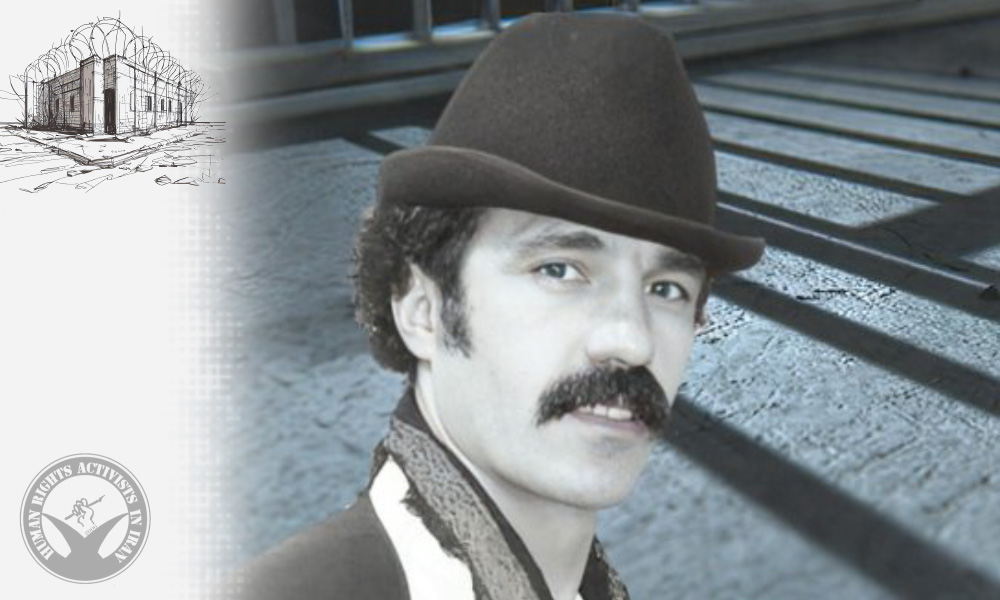
Omid Izadi Sadeghabadi Arrested and Transferred to Prison to Serve Sentence

Omid Izadi Sadegh Abadi, a citizen with disabilities, has been arrested and transferred to Shahrekord Prison to serve his prison sentence. This is despite the fact that he suffers from multiple physical health issues.

Based on information received by HRANA, this citizen had gone to court on August 26 to pay his fine, but was arrested and transferred to Ward 4 of Shahrekord Prison to serve his sentence.

A source close to the family confirmed the news and explained Mr. Izadi’s health condition: “He suffers from an illness similar to MS (Multiple Sclerosis), which has affected his nervous system, mobility, and speech. He cannot walk independently and has difficulty speaking.”

The source added that the prison sentence and fine were recently upheld by the Court of Appeals of Chaharmahal and Bakhtiari Province.

In April of this year, Omid Izadi Sadeghabadi was sentenced by Branch 101 of the Second Criminal Court of Saman County to four years of imprisonment and a fine for charges of “propaganda against the Islamic Republic (media activities supporting the Zionist regime)” and “spreading false information with the intent to disturb public opinion.”

Omid Izadi Sadeghabadi, aged around 36, resides in Saman County.

Mazaher Heydari Continues Hunger Strike in Shahr-e Kord Prison

Mazaher Heydari, a Gonabadi Dervish currently imprisoned in Shahr-e Kord, has been on a hunger strike for over 12 days and has been denied the right to make phone calls to his family.

A source close to Heydari’s family confirmed to HRANA, “Mr. Heydari began his hunger strike on Saturday, August 10, in protest against the 40-month prison sentence issued against him. Since then, the authorities have deprived him of phone calls to his family, and in protest, he has sewn his lips shut.”

In June of this year, Heydari was arrested by security forces in Shahr-e Kord and later transferred to the city’s prison. That same month, he was sentenced in absentia by Branch 1 of the Revolutionary Court of Shahr-e Kord, presided over by Judge Balanian, to a total of 40 months in prison on charges of “disturbing public opinion,” “propaganda against the regime,” and “assembly and collusion against national security.” Under Article 134 of the Islamic Penal Code, the most severe sentence, 32 months in prison, will be enforced.

Mazaher Heydari has previously faced legal actions due to his activities.

The Gonabadi Dervishes (Darvishes) are members of a Sufi Muslim community in Iran, known for their spiritual practices and emphasis on mysticism. Despite their peaceful beliefs, the Gonabadi Dervishes have faced increasing persecution by the Iranian regime, which views their independence and religious practices as a threat to the state’s control over religious expression. Over the years, many members of this community have been subjected to arrests, imprisonment, and harassment, with their leaders often targeted by the authorities.

Iran Protests: Student Mohammad Masoud Eskandari Sentenced to 18 Months in Prison

Mohammad Masoud Eskandari, a student at the University of Shahrekord, was sentenced to 18 months imprisonment, two years of suspended imprisonment and paying a fine. Eskandari was arrested during nationwide protests.

According to HRANA, the news agency of Human Rights Activists, quoting the Iranian Students’ Union, student Mohammad Masoud Eskandari was sentenced to 18 months in prison.

Eskandari received this verdict for “blasphemy, insulting the current and former Supreme Leader of Iran, and propaganda against the regime.
Eskandari is a Ph.D. student at the University of Shahrekord in Microbial biotechnology. On November 14, 2022, security forces arrested him at protests and released him on bail after five days of detention.

Nationwide Protests in Iran Continue on Day Sixteen

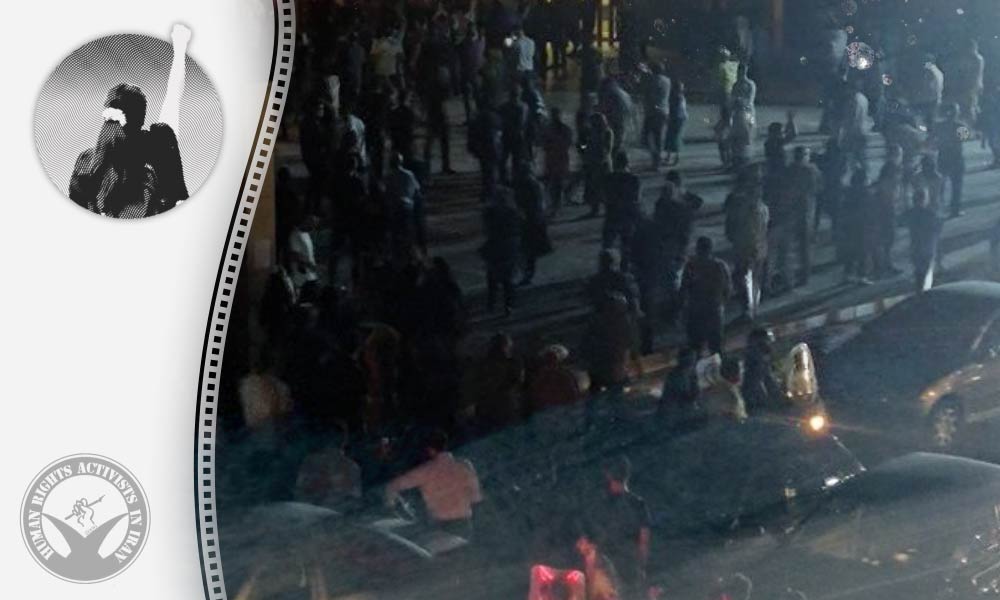
On October 1, 2022, despite the heavy presence of riot police and plainclothes security agents, Iranian people held demonstrations in many cities including Mashhad, Rasht, Dehgolan, Isfahan, Shiraz, Tehran, Shahrekord, Shahin Shahr, Arak, Bukan, Babol, Karaj. Moreover, on at least 27 universities campus, the students held protests. These protests continued in Tehran, Isfahan, Bushehr and at least 25 universities on the following day, October 2.

The map below shows the geographical distribution of protests across Iran during the last 48 hours.

In most cases, peaceful student protests turned violent by the police as dozens of students were arrested by the security forces. On the University of Isfahan campus, the security agents or the police fired tear gas at the crowd of protesting students.

Last night, the police and security forces surrounded the Sharif University of Technology, chasing and arresting violently the students who left the campus. The police fired tear gas and pellet guns, leading to several students’ injuries. 

According to Iran’s Student Union, several protesting students were trapped in a university building by university security agents and then arrested by the police.

The students chanted slogans such as “Death to the dictator”, “don’t call it protests, it is now a revolution”, and “jailed students should be freed.” They also chanted slogans against the Supreme Leader, Khamenei.

On October 2, in Isfahan and Piranshahr, traders and shopkeepers joined the general strike and closed their shops.

Meanwhile, in recent days, the record-breaking hashtag Mahsa Amini (مهسا_امینی#) reached over 200 million times on Twitter.

Like the previous days, most parts of the country, especially Kurdistan, faced internet and mobile phone disruptions and outages.

Last Friday, September 30, in Zahedan, in Sistan and Baluchistan province, the security forces opened fire at the crowd of protestors coming from the Friday prayer. According to Iranian Sunni cleric Molavi Abdul Hamid, at least 40 people were killed in this incident.

The number of people arrested is increasing day on day. HRANA identified 31 arrests alone for yesterday.

Kurdistan police chief claimed that more than 150 people arrested during the “unrest” have been released.

It is estimated that 30 to 40 students at the Sharif University of Technology were arrested.

Anti-riot police and security forces use live ammunition against the protestors. HRANA has identified 150 death tolls, of which some have been verified by HRANA after fact-checking.

Below is the compilation of the videos from the protests in the past 24 hours.

HRANA’s Daily Review of Protests in Iran

On Tuesday, August 16, 2022, at least five protests took place in Iran.

In Shahrekord, about 500 people rallied in front of the Governor-General’s Office in protest against several-day long water outages. Video published by official media shows the heavy presence of the police and security forces among the crowd.

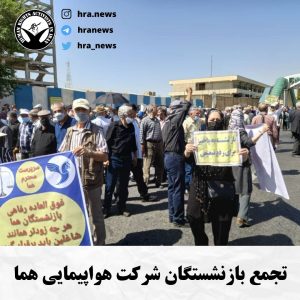
The retirees of the Homa Airline gathered in front of the company premises to protest against the merger of the company fund and the Civil Servants Pension Organization. Reportedly, the police and security forces blocked the streets led to the location of the protest and arrested several retirees who were going to join the protest.

A number of applicants for the nationwide university entrance exam gathered before the National Organization of Educational Testing to protest against the recently announced modifications in application and exams.

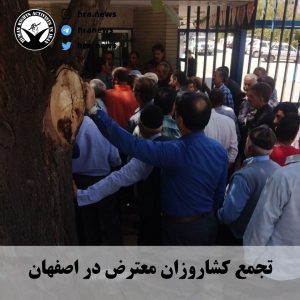
A number of farmers in Isfahan Province gathered before the Water and Waste Water Organization to demand their water portions.

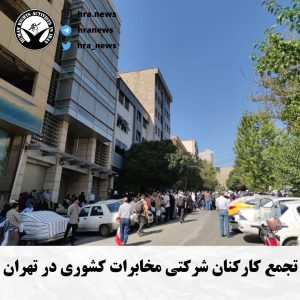
The telecommunication staff from different cities came to Tehran and gathered before the Mobin Trust Consortium building. They asked for the official contracts for all employees who have been recruited by contractors.


Subscribe to Our Newsletter

Now is definitely not the time to stop reading!

HRANA’s Daily Review of Protests in Iran

On Sunday, July 31, at least 16 protests took place in Iran.

In Tehran, Kermanshah, Shahrekord, Karaj, Tabriz, Urmia, Isfahan, Ahvaz, Bojnurd, and Sanandaj, the pensioners of the state-owned Iran Telecommunication Company held protests against the non-payment and reduction of their benefits. In Tehran, the police dispersed the protest gathering and several pensioners were arrested.


The pensioners of the Social Security Organization continued their protests in front of this organization in Rasht and Kermanshah.

In Ahvaz, the pensioners held a protest together with Ahvaz National Steel Industrial Group workers and the nurses of a hospital in front of the Ahvaz Governor-General Building.


The workers of the detergent manufacturing company Darugar continued their protests in front of the factory entrance to ask for five-month delayed wages and insurance payments.


HRANA’s Daily Review of Protests in Iran

On Sunday, July 24, at least five protests took place in Iran.

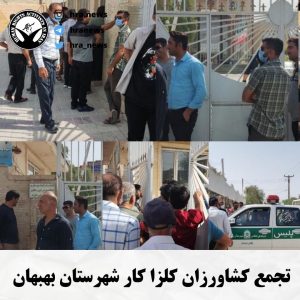
A group of farmers who are cultivating rapeseed gathered in front of the Governor’s Office in Behbahan to demand the rest of the payment for their sold rapeseed crops to the government.

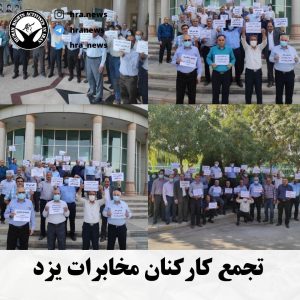
A group of the Yazd Telecommunication Company’s staff gathered in front of the company’s central building. According to these protestors, four months after the new year, their salary and benefits have not yet been increased.

A group of students of the Sharif University of Technology protested against the food subsidy cuts for summer terms.

In Kermanshah, the pensioners of the Social Security Organization protested against an insufficient increase in pensions.

A number of residents of a district in Shahrekord, Chaharmahal and Bakhtiari Province, gathered in front of the Governor-general’s office to protest against the farmland allocation.

Report on Current Nationwide Protests: Hundreds Arrested; Dozens Killed and Injured

During the last two weeks, triggered by food price hikes, nationwide protests erupted in more than 31 cities across 10 provinces. HRANA, the news agency of Human Rights Activists, has recorded 53 demonstrations so far. 

According to HRANA, on Friday, May 6, 2022, following the government’s decision to cut subsidies on essential food items such as dairy products, flour, cooking oil, chicken, and eggs leading to soaring prices, the call for rallying against soaring prices went viral on social media. In the following days, several protests broke out in Khuzestan Province and soon swept through numerous cities across the country.

Prior to these protests, a series of protests and gatherings of teachers, labor workers and the retirees who had lost their pensions due to the government’s risky financial decisions had been sweeping across the country leading to dozens being arrested.

The new rounds of protests sparked initially in Susangerd City and other neighboring cities in Khuzestan Province. In the following days, at least 30 Arab-speaking citizens were arrested by security forces.

Soon after, the protests spread to other cities and provinces. The videos received from citizen journalists indicate that the protestors chanted slogans against inflation as well as the Iranian regime leaders, including President Ebrahim Raeisi and Supreme Leader Seyyed Ali Khamenei.

The map below shows the locations where the protests were.
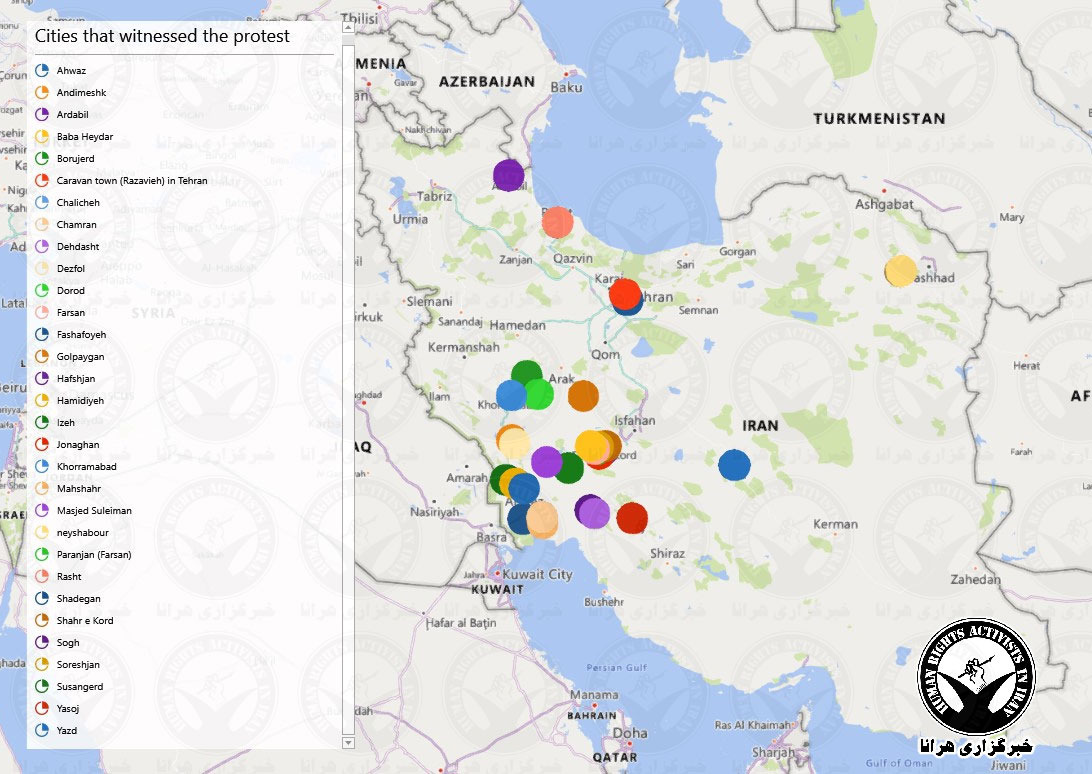
As the map shows, the protests took place in the following cities: Izeh, Susangerd, Hamidieh, Ahvaz, Mahshahr, Masjed Soleiman, Shadegan, Jarahi Town Mahshahr, Dorud, Andimeshk, Dezful, Shahrekord, Junaqan, Fashafouyeh, Yasuj, Ardabil, Farsan, Khorramabad, Dehdasht, Borujerd, Suq, Yazd, Golpayegan, Cholicheh, Rasht, Neyshabur, Surshjan, Hafshejan, Babaheydar, Karevan Town and Pordanjan.

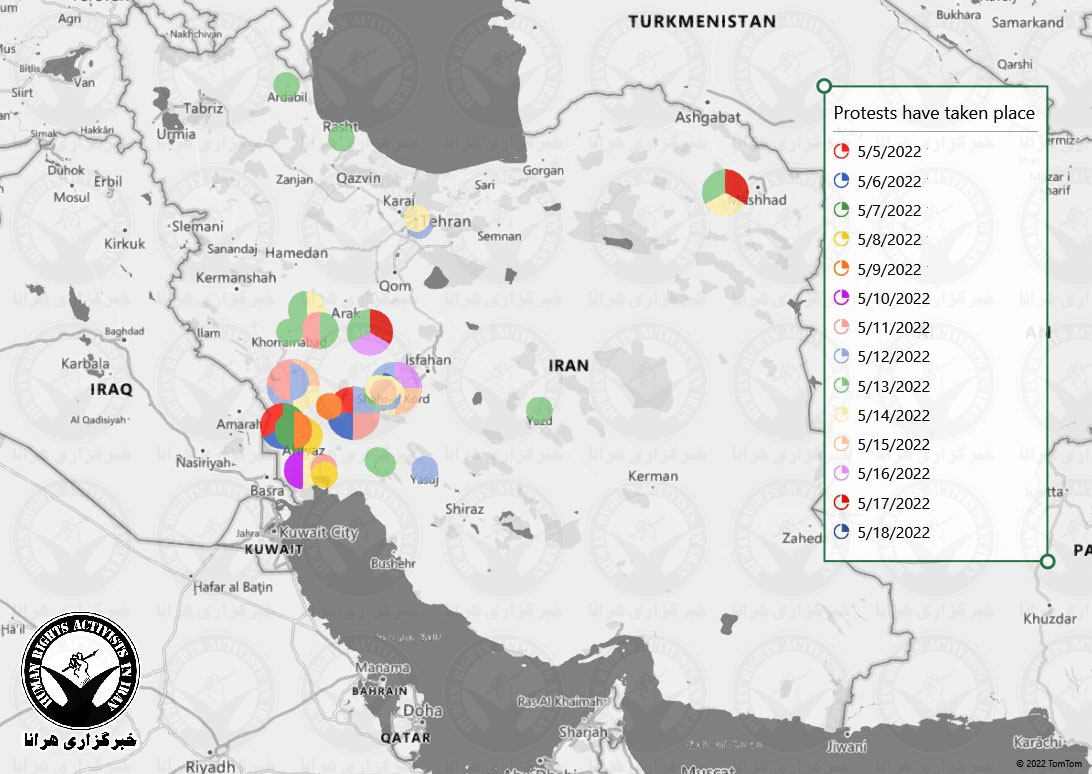
In total, 53 protests have been recorded. Moreover, 45 times, the attempts to start a protest were foiled due to the heavy presence of police and security forces in the streets. 

The map below shows the locations of 53 protests and the time periods.
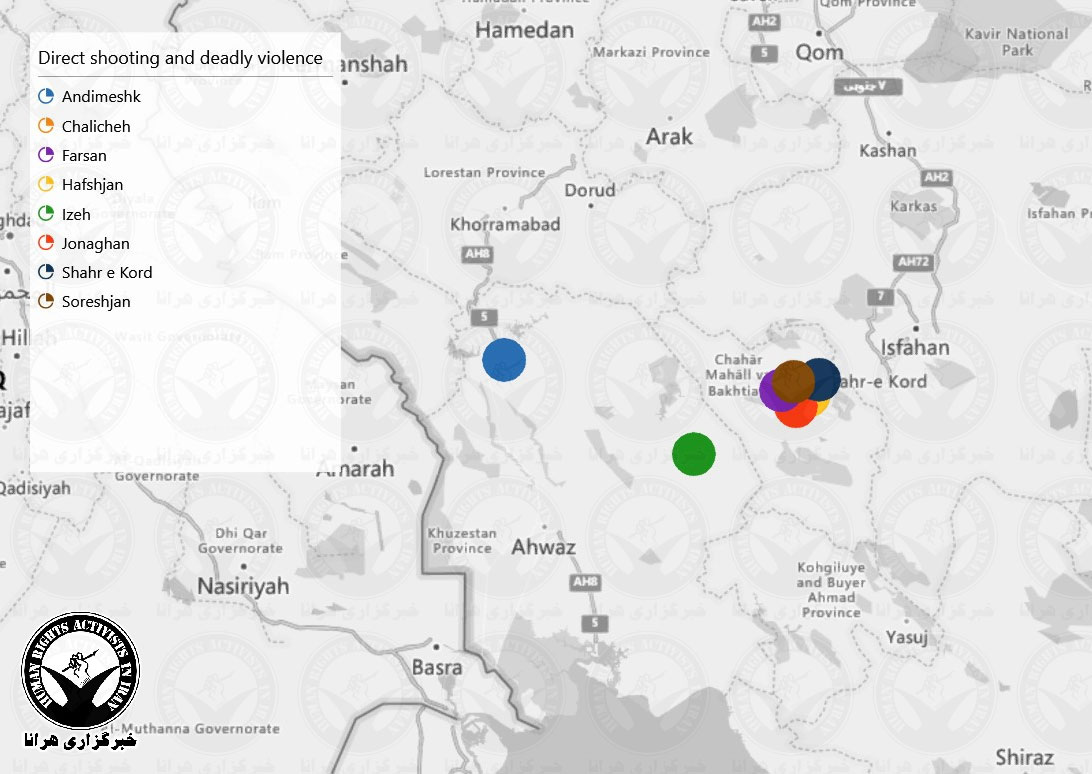
During these protests, at least on 22 occasions in 14 cities, the police and security forces used tear gas, warning shots, pellet guns and in some cases heavy weapons against the protestors. In nine cities, tear gas and in 14 cities warning shots were used to scatter the crowds. In eight cities, security forces fired straight toward the crowds. Reportedly, security forces have used pellet guns, Kalashnikov assault rifles and paintball guns to disperse the protestors.

The map below shows the places where crackdowns and unrestrained shootings have been reported.
Since the beginning of the protests on Friday, May 6, the government disrupted the internet in several areas in Ahvaz in an attempt to prevent the protests. In the days that followed, Internet disruption was also reported in at least 10 cities.

In addition to intentional Internet disruption, the press was banned from covering the protests.

According to the reports obtained from local sources, at least 449 individuals were arrested during the protests.

So far, six people have been confirmed dead. These people have been identified as Pishali Ghalebi Hajivand (Dezful), Saadat Hadipour (Hafshejan), Jamshid Mokhtari Junaqani (Junaqan), Omid Soltani (Andimeshk), Hamid Ghasempour (Farsan City), and Behrooz Eslami (Babaheydar). HRANA can only confirm the reports on the death of the first two individuals mentioned above.

From all videos of protests which are circulating on social media, HRANA has verified the authenticity of 30 video reports which compilation you can watch below:


Protests Spread to at least 20 Cities in Iran 

According to HRANA, the news agency of Human Rights Activists, in recent days, triggered by soaring food prices, protests sparked in at least 20 cities in Iran. Protests took place in Dezful, Shahrekord, Andimeshk, Izeh, Junaqan, Khorramabad, Fashafouyeh, Farsan, Borujerd, Dehdasht, Dorud, Ardabil, Neyshabur, Suq, Rasht, Ahvaz, Yazd, Shadegan, Susangerd, and Yasuj. On Sunday, May 15, 2022, despite the tightening of security measures, the protest continued in several cities.

From the outset, the regime disrupted internet services in several cities in an attempt to prevent the protests.

On Friday, May 6, 2022, following the call on social media for rallying against soaring bread prices, in some cities in Khuzestan Province, the Iranian regime tightened security measures on the streets and disrupted internet and phone services to disrupt protests. Nonetheless, the day after, protests broke out in various cities of Khuzestan Province and beyond. Since then, the protests have continued in more than 20 cities. In most cases, protests turned violent by the police and security forces who used tear gas, warning shots, and pellet guns to scatter the crowds.

During the unrest, dozens of people were arrested. HRANA has obtained the identity of 20 of the individuals who were arrested in Ahvaz, 13 in Susangerd, 7 in Suq, and five in Shawr.

The regime forces have killed at least two protestors during the unrest, of which, one death has been confirmed by the city of Shahrekord’s representative in Iran’s Majles (parliament).

HRANA Recap: This Week’s Protests in Iran

According to HRANA, the news agency of Human Rights Activists, a number of protests took place this week in Iran, many of which were continuations of ongoing movements.  Read our recap below for details, photos, and videos from the demonstrations.

Saturday, October 23

A group of contracted teachers and educators from the counties of Chaharmahal and Bakhtiari Province assembled in front of the government building in Shahrekord to protest this year layoffs.

“126 teachers have been fired this academic year,” one protestor stated at the demonstration. “These layoffs happened only to the educators of this province. The teachers with the same conditions, all over the county, continue their work.”, he added.

Sunday, October 24

Workers for a heap leaching project at the copper mine Sungun Varzaghan assembled and protested their unpaid benefits this Sunday. 

Monday, October 25

In various cities across the country, judiciary personnel assembled in front of their local justice buildings and protested worsening job conditions and the failure of authorities to address their demands.

These protests were held in Tehran, Zanjan, Hamedan, Qom, Arak, Babol, Borujerd, Chaedgan, Firuzabad, Kerman, Khandab, Kuhrang, Meybod, Lenjan, Sari, Mehr, Nahavand, Urmia, Paveh, Rumeshkan, Semirom, Shahrekord, Shirvan,Shut, Taft, Razan, Eslamshahr, and Tuyserkan.

A group of patients with the blood disorder thalassemia assembled in front of the Ministry of Health and Medical Education building in Tehran. They protested the shortage of medicine and the institution’s shortcomings in addressing their issues.

A number of retirees on the pension fund of steel corporation Fulad traveled from various cities to Tehran and assembled in front of the pension fund building. As a symbolic act, they spread tablecloths without any food to show they hardly afford living costs. They asked for a pension above the poverty line, free medical treatment and closing the gap in pension incomes. They claimed that Fulad’s pension fund has breached regulations.

A group of teachers and educators in Rafsanjan City who has passed the recruitment exam taken by the Ministry of Education assembled in front of the building of this ministry in Rafsanjan.

“We are 62 teachers and all have been passed the recruitment exam, nonetheless, we have not been recruited,” one of the teachers commented. He added,  “Given that the Ministry of Education needed more than 200 teachers and there are a lot of local labour forces to be hired, why do they recruit from other cities?”

A number of athletes and paralympic medalists assembled in front of the government building in Damghan City. They protested the mismanagement of the county Ministry of Sport and Youth, as well as a shortage of sports facilities. According to these protestors, the sport salon allocated to them is often closed and each time they have to wait three hours for using the salon.

Bus and minibus drivers working in the transportation service of Southern Pars (Asaluyeh and Bandar-e Kangan) assembled outside the premises of the refineries. They protested against low wages in comparison to increasing transportation costs.

“Our wage is lower in comparison to the vehicle depreciation costs,” one protestor said, “and even though it is not enough, they delay payment.”

A number of young job seekers in Shushtar city assembled in front of the Karun Agro-industry Complex. They asked for recruitment of local job seekers in this industry complex. They find it unfair that, despite having several big corporation in this city, many skilled and educated workers remain jobless.

Some personnel of the Real Estate Registration Organization of Iran assembled and protested in front of the office of a member of the parliament in Qazvin.

A group of market workers in the border village Sheykh Salleh assembled to protest against the assigning  of border affairs to a non-native company.

Tuesday, October 26

A number of workers of Omidiyeh Water and Wastewater Company assembled in front of the government building of this city.

These workers said that despite promises from supervisors, they have four-month unpaid wages. Moreover, the end of year bonuses and three years end of service benefits have not been paid. They have protested several times in the past, but every time, they have not received an adequate response from authorities.

The retirees of Imam Khomeini hospital in Karaj assembled in front of this hospital to promote their demands on Tuesday.

For the second day, the retirees of the pension fund of the steel corporation Fulad assembled in front of the pension fund building in Tehran.

A group of retirees and working personnel of airline company Homa assembled in front of the building of Iran Ministry of Roads & Urban Development. They asked for fair and timely wages. According to these protestors, not only is the pension insignificant, but also there have been significant payment delays.

A number of farmers from eastern Isfahan assembled in front of the building of the Ministry of Agriculture Jihad. They protested not receiving their water shares and rights.

Workers of contractor companies delivering services like gardening, maintenance and transport for Pars Oil and Gas Company assembled in Asaluyeh to demand increased wages, supplementary insurance, and implementation of the Job Classification plan.

In Isfahan and Yazd Provinces, a number of people with hearing impairment assembled in front of the buildings of the State Welfare Organization of Iran. They cited livelihood problems, including denial of right to housing and insurance, as the reasons for their protest.

Wednesday, October 27

For the third consecutive day, a group of workers of Gachsaran Petrochemical Company protested at their workplace and then in front of the government building of Gachsaran.

They said that the contractors discriminates against the native laborers and threatens them to be fired. Reportedly, these contractor companies have raised the wage of non-native labor but not the native ones.

Some personnel of the Azad University, unit “Yadegare Imam” in Shahr-e-Rey city assembled and protested at the university premises to protest ongoing mismanagement. Reportedly, this protest turned somewhat violent.

A number of people who have lost their money in their accounts with Cryptoland, a cryptocurrency exchange, protested in front of the Tehran Courthouse. They demanded that legal processing return their losses.

A number of disabled war veterans assembled in front of the building of the Foundation of Martyrs and Veterans Affairs in Tehran. They protested poor living conditions and the non-implementation of some protective laws

Thursday, October 28

A number of workers of Khorramshahr municipality assembled in front of the building of the municipality to protest against a six-month delay in payment and other demands.

In Isfahan, a number of people with hearing loss assembled in front of the buildings of the State Welfare Organization of Iran.

A number of workers of the Kut-Abdollah municipality protested in front of the Governorate building of Khuzestan Province. They asked for the payment of their delayed wages.